Philippa Gregory - Earthly Joys
Здесь есть возможность читать онлайн «Philippa Gregory - Earthly Joys» — ознакомительный отрывок электронной книги совершенно бесплатно, а после прочтения отрывка купить полную версию. В некоторых случаях можно слушать аудио, скачать через торрент в формате fb2 и присутствует краткое содержание. Жанр: Историческая проза, на английском языке. Описание произведения, (предисловие) а так же отзывы посетителей доступны на портале библиотеки ЛибКат.
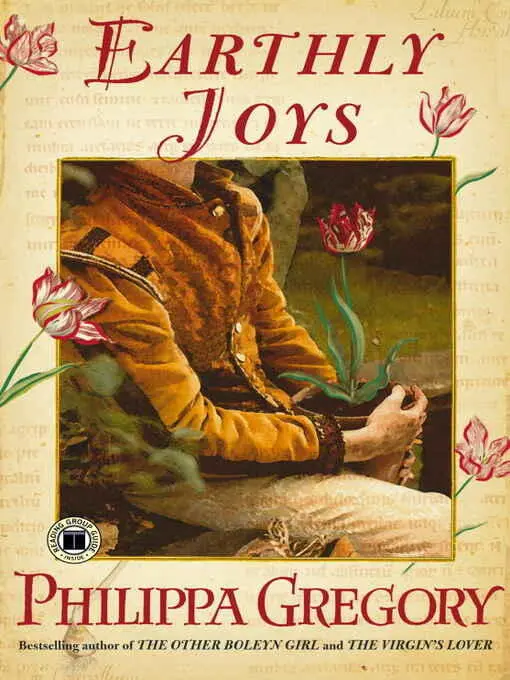
- Название:Earthly Joys
- Автор:
- Жанр:
- Год:неизвестен
- ISBN:нет данных
- Рейтинг книги:3 / 5. Голосов: 1
-
Избранное:Добавить в избранное
- Отзывы:
-
Ваша оценка:
Earthly Joys: краткое содержание, описание и аннотация
Предлагаем к чтению аннотацию, описание, краткое содержание или предисловие (зависит от того, что написал сам автор книги «Earthly Joys»). Если вы не нашли необходимую информацию о книге — напишите в комментариях, мы постараемся отыскать её.
Earthly Joys — читать онлайн ознакомительный отрывок
Ниже представлен текст книги, разбитый по страницам. Система сохранения места последней прочитанной страницы, позволяет с удобством читать онлайн бесплатно книгу «Earthly Joys», без необходимости каждый раз заново искать на чём Вы остановились. Поставьте закладку, и сможете в любой момент перейти на страницу, на которой закончили чтение.
Интервал:
Закладка:
He had thought his father defeated, and was pressing his advantage while he had it. But John raised his head and looked hard at his son. “Think again,” he counseled him.
They ate dinner in awkward silence and then J put on his hat and went out into the darkness, carrying only a small lantern to light his way.
“Where’s he going?” John asked Elizabeth.
“To evening prayers, at the big house,” she said.
“They have prayer meetings on my lord’s doorstep?”
“Why not?”
“Because the king has ruled how the church services are to be arranged,” John said firmly. “And they are to be done by a certified vicar in church on Sunday.”
“But Buckingham’s own mother is a papist,” Elizabeth pointed out. “And the queen herself. They do not obey the king and the archbishop. And they do far worse than simple men reading their Bible and praying in their own language to God.”
“You cannot compare Her Majesty with simple men, with J!”
She turned her calm face to him. “I can, and I do,” she said. “Except that my son is a godly young man who prays twice a day and lives soberly and cleanly while the queen…”
“Not another word!” Tradescant interrupted her.
She shook her head. “I was only going to say that the queen’s conscience is her own concern. I know that my son takes nothing but what is his own, bows to no graven idols, avoids priests and their wickedness and says nothing against the king.”
John said nothing. It was undeniable that the queen did all of these things. It was undeniable that the queen was a wilful papist who had sworn that she hated her husband and hated his country, and would neither speak the language nor smile at the people.
“Whatever his conscience, J has taken the duke’s wage,” John pointed out. “He is his man while he draws that wage. The duke, right or wrong.”
Elizabeth got up from the table and stacked the dinner platters for washing. “No,” she said gently. “He works for the duke until he can find himself another, better master. Then he can leave him, he can leave without a moment’s regret. He has sworn no loyalty, he has given no promise. He does not belong to the duke until he is released by death. He does not follow the duke, right or wrong.”
She looked across at John. The candle on the table showed the heaviness around his eyes, and the determination in her face. “It is only you who are so bound,” she said. “By your own love for him. And by an oath of your own making. Not J. You have bound yourself, John; but my son, thank God, is free.”
John heard in the kitchen of New Hall that the duke’s homecoming had been sweeter than his own. The whole royal court had ridden out of London to meet him in a great cavalcade of riders with seventy coaches carrying the ladies to throw rose petals and rosewater and greet the returning hero. The queen alone had avoided his triumphal return, but only her immediate household had stayed away and sulked. The king had thrown a great dinner to celebrate the triumphal return, and after dinner he had drawn Buckingham away from the crowds and into his private bedchamber and the two men had spent the night together, alone.
“The evening together, you mean,” John suggested. “The duke will have gone to his wife, the Duchess Kate, at night, when the dinner was over.”
The messenger from London shook his head. “He lay that night with the king,” he said firmly. “In the king’s own bed in the king’s own bedchamber.”
John nodded briefly and turned away. He did not want to hear more.
“And he sent a letter for you,” the man went on, digging into his pocket.
Tradescant wheeled around. “A letter! You damned fool, why did you not say so at once?”
“I did not think it was urgent-”
“Of course it’s urgent. He may want me at a moment’s notice; you may have delayed me with your kitchen gossip and your nonsense about beds and nights and rose petals-”
John dragged the letter from the man’s hand and took two stumbling strides to be away from him, so no one could see the words on the page. He glanced at the seal, the duke’s own familiar seal, broke it and unfurled the page. He had written in his own hand. John tightened his grip on the paper. It was in his own idiosyncratic spiky handwriting, and it was headed “John-”
The relief was almost too much. He could hardly see the words as the paper shook in his hand. The duke had summoned him; the sharp word on the quayside meant nothing. Buckingham wanted him at his side and now their life would begin together as they had planned.
“Grave news?” the messenger enquired from behind John.
John flattened the letter to his body. “Private,” he said shortly and took the letter out into the garden like a stolen sweetmeat to devour on his own. He found the knot garden deserted and he walked down one of his own neat paths and sat on a small stone seat at the end of a miniature avenue. Then, and only then, he opened the letter for his lord’s commands.
John -
A ship, the Good Fortune , is in the Pool of London with a dozen boxes of curiosities for my rarities room. They are goods from India, carved ivory and worked rugs and the like, some gold and some silver cabinets. Also there is a small box of seeds which will be of interest to you. Do fetch them to New Hall for me, or send someone you can trust. I shall be at Whitehall for Christmas with my king. – Villiers.
That was all. There was no message bidding him to Whitehall, no summons. There was no word of love or even remembrance. He was not cast off, he was not a spurned lover. He did not stand high enough for rejection. Buckingham had simply forgotten the promises, forgotten the nights and moved on to other things.
John sat on the stone seat for a long time with the letter in his hand, the high skies of Essex arched cold and gray above his head. Only when the cold of the stone seat and the cold of the winter winds had chilled him to the very bone did he stir and realize that the coldness was from the world around him, and not seeping icily into his veins from his heart.
“I have to go to London,” Tradescant remarked to J. They were working side by side in the duke’s rose garden, pruning the year’s growth down to sharp sticks cut carefully on the slant.
“Can I go for you?” J asked.
“What for?”
“I could help you.”
“I’m not in my dotage,” John said. “I think I can get to London and back with a wagon on my own.”
“If you are carrying valuables…”
“Then I’ll hire a man with a musket.”
“You might like my company…”
“Or I might prefer to travel alone. What’s the secret, J? You never liked London before?”
J straightened up and pushed his plain hat back on his head. “I would like to visit a young woman,” he announced. “You could come and see her too. Her parents would make us both very welcome.”
John stood up, one hand on his aching back. “A young woman? What young woman?”
“Her name is Jane. Jane Hurte. Her father has a mercer’s shop near to the docks. While you were away, a package came for his lordship and they sent me down to London to fetch it. Mother wanted some buttons and I stepped into the Hurtes’ shop. Jane Hurte took my money and we had a few words of conversation.”
John waited, taking care not to smile. There was something deeply endearing about this stilted account of courtship.
“Then I took a lift with the sheep fleeces down to the market, and visited her again.”
“In June?” John asked, thinking of shearing time.
“Yes. And then the duchess wanted something fetched from the London house, so I went down on the cart with her maid and spent the day with the Hurtes.”
Читать дальшеИнтервал:
Закладка:
Похожие книги на «Earthly Joys»
Представляем Вашему вниманию похожие книги на «Earthly Joys» списком для выбора. Мы отобрали схожую по названию и смыслу литературу в надежде предоставить читателям больше вариантов отыскать новые, интересные, ещё непрочитанные произведения.
Обсуждение, отзывы о книге «Earthly Joys» и просто собственные мнения читателей. Оставьте ваши комментарии, напишите, что Вы думаете о произведении, его смысле или главных героях. Укажите что конкретно понравилось, а что нет, и почему Вы так считаете.