Philippa Gregory - Earthly Joys
Здесь есть возможность читать онлайн «Philippa Gregory - Earthly Joys» — ознакомительный отрывок электронной книги совершенно бесплатно, а после прочтения отрывка купить полную версию. В некоторых случаях можно слушать аудио, скачать через торрент в формате fb2 и присутствует краткое содержание. Жанр: Историческая проза, на английском языке. Описание произведения, (предисловие) а так же отзывы посетителей доступны на портале библиотеки ЛибКат.
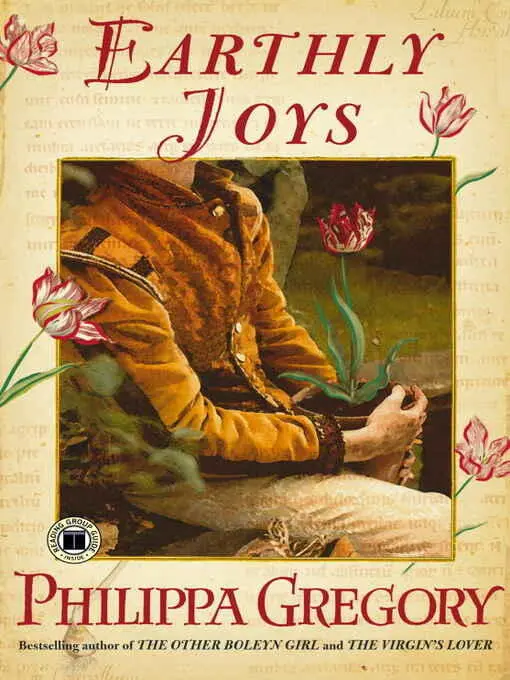
- Название:Earthly Joys
- Автор:
- Жанр:
- Год:неизвестен
- ISBN:нет данных
- Рейтинг книги:3 / 5. Голосов: 1
-
Избранное:Добавить в избранное
- Отзывы:
-
Ваша оценка:
Earthly Joys: краткое содержание, описание и аннотация
Предлагаем к чтению аннотацию, описание, краткое содержание или предисловие (зависит от того, что написал сам автор книги «Earthly Joys»). Если вы не нашли необходимую информацию о книге — напишите в комментариях, мы постараемся отыскать её.
Earthly Joys — читать онлайн ознакомительный отрывок
Ниже представлен текст книги, разбитый по страницам. Система сохранения места последней прочитанной страницы, позволяет с удобством читать онлайн бесплатно книгу «Earthly Joys», без необходимости каждый раз заново искать на чём Вы остановились. Поставьте закладку, и сможете в любой момент перейти на страницу, на которой закончили чтение.
Интервал:
Закладка:
“He won’t be long,” Elizabeth said without conviction.
“You cannot know that.”
“I know he will come as soon as he can.”
“You know he will come when the duke has finished with him, and not a moment sooner. Besides, he loves traveling; if he gets the chance he will be off around Europe again. Did he leave you with an address where we can reach him?”
“No.”
“Or money?”
“No.”
J sighed heavily and spooned broth. When his bowl was empty he took the last piece of bread and wiped it carefully around, mopping up the gravy. “So at the end of the month I shall have to go to the almoner for his wages and he will swear they will be paid to him in Paris, and we will have to make do on my money until he returns.”
“We can manage,” Elizabeth said. “I have some put by, and he will make it up when he gets back.”
J knew how to bait his mother. “And he will be drinking and dining and living at a papist court. I doubt that there will be any church where he can say his prayers. He will come home crossing himself and needing a priest to pray for him.”
She went white at that. “He will not,” she said faintly.
“They say Buckingham himself is inclining that way,” J went on. “His mother is turned papist, or witch, or something.”
Elizabeth dropped her head and was silent for a moment. “Our Lord will keep him safe,” she said. “And he is a godly man. He will come home safe, to his home, to his faith.”
J tired of the sport of teasing his mother’s piety. “When I am a man I shall call no man master,” he asserted.
She smiled at him. “Then you will have to earn more money than your father has ever done! Every man has his better, every dog a master.”
“I shall never follow a man as my father follows the duke,” J said boldly. “Not the King of England himself. I shall work for my own good, I shall go on my own travels. I shall not be ordered to one place and then summoned away.”
Elizabeth put out her hand in a rare gesture of tenderness and touched his cheek. “I hope you will live in a country where great men do not exercise their power in such a way,” she said. It was the closest he had ever heard her come to any sort of radical thought. “I hope you will live in a country where great men remember their duty to the poor, and to their servants. But we do not live in such a world yet, my J. You have to choose a master and become his man and do his bidding. There is no one who does not serve another, whether you’re the lowest ploughboy or the greatest squire. There is always another above you.”
Instinctively he lowered his voice. “England will have to change,” he said softly. “The lowest ploughboy is questioning if his master has a God-given right to rule over him. The lowest ploughboy has a soul which is as welcome in heaven as the greatest squire’s. The Bible says that the first shall become last. That’s not the promise that nothing can ever change.”
“Hush,” Elizabeth said. “Time enough to speak like that when things have changed, if they ever do.”
“Things are changing now,” J insisted. “This king will have to deal with the people of the country. He will have to listen to Parliament. He cannot cheat on honest, good men, as his father did. We are tired of paying for a court which shows us nothing but luxury and sin. We will not be allied to papists; we will not be brothers to heretics!”
She shook her head, but she did not stop him.
“At New Hall there is a man who knows another man who says that there should be a petition against the king that should tell him his duties. That he cannot levy taxes without calling a parliament. That he must listen to his advisers in Parliament. That the duke should not rule over everything and scrape all the wealth into his own pocket. That orphans and widows should have the protection of the Crown, so that a man can die in peace and know that his estate will be well managed and not farmed by the duke for his own good.”
“Are there many that think this?” Her whisper was a thread of sound.
“He says so.”
Her eyes were wide. “Does any say so in your father’s hearing?”
J shook his head. “Father is known as the duke’s man through and through. But there are many, even in the duke’s own service, who know that the mood of the country is turning against the duke. They blame him for everything that goes wrong, from this hot weather to the plague.”
“What will become of us if the duke should fall?” she asked.
J’s young face was determined. “We would survive,” he said. “Even if the country never wanted another duke, it would always need gardeners. I should always find work and there will always be a home for you with me. But what would become of my father? He’s not just the duke’s gardener – he is his vassal. If the duke falls then I think Father’s heart will break.”
May 1625
John met his master in Paris as he had been ordered. He waited for him in the black-and-white marble hall of the great house until the double doors swung open and the duke was framed in the bright Paris sunlight. He was wearing diamonds in his hat, on his finely embroidered doublet. His cape was hemmed with brilliants which John hoped very much were glass but feared were also diamonds. He sparkled in the spring sunshine like the new leaves on a silver birch tree.
“My John!” he exclaimed with delight. “And have you brought all my clothes? I am reduced to rags!”
John found he was beaming with delight at the sight of his master. “So I see, my lord. I was afraid that I would find you looking very poor and mean. I have brought everything and your coach and six horses is coming behind me.”
Buckingham grasped him by the shoulder. “I knew you would do it for me,” he said. “I would trust no other. How are things at New Hall?”
“Everything is well,” John told him. “The garden is looking well, your water terrace is working and looks lovely. Your wife and mother are at New Hall and are both well.”
“Oh yes, gardens,” the duke said. “You must meet the gardeners to the French court; you will be impressed with what they do here. The queen will give me a note for you to introduce yourself to them.” He bent toward John and spoke softly in his ear. “The queen would give me a good deal more too, if I asked for it, I think!”
John found he was smiling at the shameless vanity of the man. “I know the Robinses, but I shall be pleased to see them again. And you have been amusing yourself.”
Buckingham kissed his fingertips like a Frenchman acknowledging beauty. “I have been in paradise,” he said. “And you shall come with me and we shall see the palace gardens together. Come, John, I shall change my clothes and I shall take you around the city. It’s very fair and very joyful, and the women are as easy as mares in heat. It’s a perfect town for me!”
John chuckled unwillingly. “My wife would be most distressed. I will go and see the gardens but I cannot go visiting women.”
Buckingham put his arm around Tradescant’s shoulders and hugged him tight. “You shall be my conscience then,” he said. “And keep me on the straight and narrow way.”
It could not be done. The Archangel Gabriel with a flaming sword could not have kept the Duke of Buckingham on the straight and narrow way in Paris in 1625. The French court was besotted with the English, a new prince on the throne, a French princess as his chosen bride and the handsomest man in Europe at court to fetch her to her new home. Crowds of women gathered outside Buckingham’s hôtel just to see him come and go, and to admire the astounding sight of his carriage and six, and the jewels and his clothes and his hat, the “bonnet d’anglais” which was copied by a hundred hatters as soon as they glimpsed it.
Читать дальшеИнтервал:
Закладка:
Похожие книги на «Earthly Joys»
Представляем Вашему вниманию похожие книги на «Earthly Joys» списком для выбора. Мы отобрали схожую по названию и смыслу литературу в надежде предоставить читателям больше вариантов отыскать новые, интересные, ещё непрочитанные произведения.
Обсуждение, отзывы о книге «Earthly Joys» и просто собственные мнения читателей. Оставьте ваши комментарии, напишите, что Вы думаете о произведении, его смысле или главных героях. Укажите что конкретно понравилось, а что нет, и почему Вы так считаете.