Jody Shields - The Winter Station
Здесь есть возможность читать онлайн «Jody Shields - The Winter Station» весь текст электронной книги совершенно бесплатно (целиком полную версию без сокращений). В некоторых случаях можно слушать аудио, скачать через торрент в формате fb2 и присутствует краткое содержание. Город: New York, Год выпуска: 2018, ISBN: 2018, Издательство: Little, Brown and Company, Жанр: Историческая проза, thriller_medical, на английском языке. Описание произведения, (предисловие) а так же отзывы посетителей доступны на портале библиотеки ЛибКат.
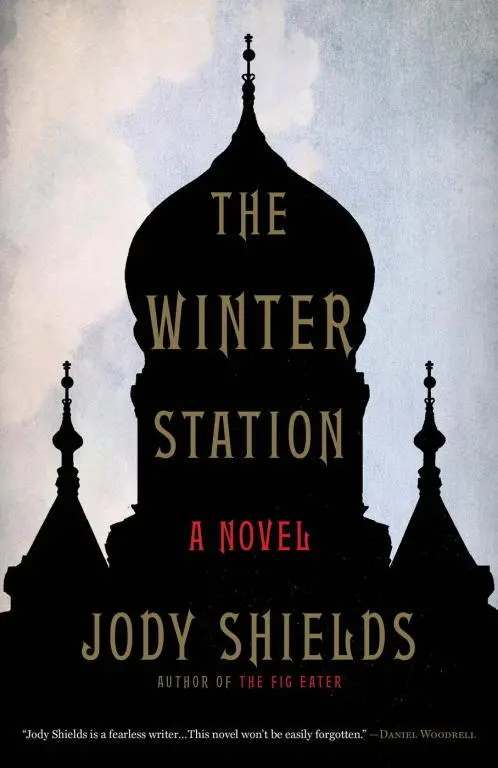
- Название:The Winter Station
- Автор:
- Издательство:Little, Brown and Company
- Жанр:
- Год:2018
- Город:New York
- ISBN:978-0-316-38532-9
- Рейтинг книги:5 / 5. Голосов: 1
-
Избранное:Добавить в избранное
- Отзывы:
-
Ваша оценка:
The Winter Station: краткое содержание, описание и аннотация
Предлагаем к чтению аннотацию, описание, краткое содержание или предисловие (зависит от того, что написал сам автор книги «The Winter Station»). Если вы не нашли необходимую информацию о книге — напишите в комментариях, мы постараемся отыскать её.
1910: people are mysteriously dying at an alarming rate in the Russian-ruled city of Kharbin, a major railway outpost in Northern China. Strangely, some of the dead bodies vanish before they can be identified.
During a dangerously cold winter in a city gripped by fear, the Baron, a wealthy Russian aristocrat and the city’s medical commissioner, is determined to stop this mysterious plague. Battling local customs, an occupying army, and a brutal epidemic with no name, the Baron is torn between duty and compassion, between Western medical science and respect for Chinese tradition. His allies include a French doctor, a black marketeer, and a charismatic Chinese dwarf. His greatest refuge is the intimacy he shares with his young Chinese wife—but she has secrets of her own.
Based on a true story that has been lost to history, set during the last days of imperial Russia, THE WINTER STATION is a richly textured and brilliant novel about mortality, fear and love.
The Winter Station — читать онлайн бесплатно полную книгу (весь текст) целиком
Ниже представлен текст книги, разбитый по страницам. Система сохранения места последней прочитанной страницы, позволяет с удобством читать онлайн бесплатно книгу «The Winter Station», без необходимости каждый раз заново искать на чём Вы остановились. Поставьте закладку, и сможете в любой момент перейти на страницу, на которой закончили чтение.
Интервал:
Закладка:
A woman in fine clothing sat cross-legged, her back against a pyramid. In front of her, the snow was bright with red, yellow, and green stains, and burned candles had melted into blackened ice-filled holes. She was dead, eyes closed, frozen upright. Someone—probably her family—had surrounded her with paper replicas of food, money, clothing, a horse, to provide for her in the afterlife, and their fragile colors had dissolved into the snow.
CHAPTER EIGHT
Three figures—identically dressed in white cotton coveralls, aprons, and close-fitting caps—waited outside the patients’ ward as if for some strange ceremony. The Baron and the doctors Maria Lebedev, Paul Haffkine, and Gerald Mesny were nearly unrecognizable in their cumbersome protective garb. Smiling, Maria Lebedev offered the Baron rubber gloves and officially introduced Dr. Haffkine, recently arrived in Manchuria.
“Welcome to Kharbin.” The Baron brought up Haffkine’s distinguished medical family. “Your uncle developed a remarkable vaccine to treat bubonic plague in India.”
“Thank you. I’ve also been working on a plague serum. It’s ready for trial here. I intend to make my mark.” Haffkine poked a wisp of dark hair under his cap.
The Baron wondered at the difficulties of a medical trial staged in this chaotic situation. “We certainly need a cure. Or a miracle.”
Haffkine didn’t appreciate the Baron’s attempt at humor and briefly wished him good luck before hurrying to another meeting.
Mesny led them along the corridor to a door posted with a warning sign, QUARANTINE, in Russian, Chinese, English, French, and German. “All the floors and walls have been completely sealed with metal strips to keep out rats. No one will be infected—or re-infected—by rats in this hospital.”
The Baron stopped. “I need a face mask.”
“A mask? No, a mask isn’t necessary. I don’t wear one. There’s little risk of infection.” Irritated, Mesny opened the door and entered the patients’ ward, reluctantly followed by Maria Lebedev. It was a breach of protocol to challenge a senior doctor.
With his first step into the room, the Baron cursed that fool Mesny for shaming him into compliance. Then he cursed himself. He should have worn a mask. Yet he didn’t leave, didn’t turn away, as if powerless to change his fate.
The white figures of the two other doctors moved ahead of him, as isolated as candles in the poorly lit ward. There were six iron beds with patients, separated at a distance from one another. The ward smelled of unwashed bodies and the bitter chemical odor of formalin. Someone coughed intermittently. He sensed the contamination that haunted the room, filled the thickness of the air, was layered on every surface, spread across his open eyes, entered his nose, his body. It was constant, invisible, like a vibration or music. Each bed held danger. His breath became irregular and he began to sweat in his bulky coverall. Certain he was using up a lifetime of blessings, he swore never to put himself at risk again if he escaped infection this time. This clarity shook him. He whispered, “God have mercy. Gospodi-pomiluy, ” as if these words were a charm against plague.
They stopped at the bedside of a pale young Russian man who didn’t seem to be in distress. He promptly sat up and quietly joked as Mesny listened to his chest and back with a binaural stethoscope.
The Baron noticed that Maria Lebedev maneuvered her clipboard like a shield to protect her from the patient. She recorded the patient’s pulse, rapid at 110 beats per minute, and his temperature, elevated at 38 degrees Celsius. “According to the chart,” she said, “his pulse increased fourteen beats per minute for each degree that his temperature rose. Breath slightly labored.”
“Good day, sir.” The Baron fought a feeling of dread and addressed the young man without getting too close. “Your name? Nikolai Ivanovich Popov? Yes? What is your profession?” Popov was a soldier who patrolled Central Station.
“Don’t bother with your questions,” Mesny directed. “All his information is in the file.” His harsh voice disturbed the patient, who moved fitfully under the blanket.
“You’ll have the file later.” Maria Lebedev fidgeted with the clipboard.
Mesny handed the stethoscope to the Baron. This was his test. Under intense scrutiny from the two doctors, he fumbled with the stethoscope, bent over, placed it on Popov’s chest. He angled his face away to avoid the man’s breath, trying not to touch him. The pounding of his own heart was louder and faster than Popov’s in the stethoscope. Disoriented, he immediately stood up, relieved the patient hadn’t coughed or sneezed.
The Baron managed to smile at the man. “Tell me, Nikolai Ivanovich, do you have pressure anywhere? A heaviness in your body?”
Popov’s fingers fluttered near the center of his chest, his expression anxious.
“Your chest aches? I will make a note. You have courage. It will help you through this time.” No platitudes, You’ll be fine, you’ll recover, God will bless you .
Popov rewarded him with a wavering grin. The Baron met his eyes, which was his gift. No one likes to look directly at the dying.
The Baron stepped away from the bed so the patient couldn’t hear the doctors’ discussion. “Can his fever be broken with cold compresses?”
“We’ve tried.” Mesny was increasingly irritated.
“That’s certainly very general. What specific measures were taken?”
Mesny frowned. “We have nothing but generalities to guide us, according to our expert colleagues. Unless Haffkine’s new medicine proves to be the nectar that cures. And brings him a medal from the czar.”
“God willing.”
“Yes. Then we can leave this place.”
The Baron asked Maria Lebedev about the patient’s current treatment.
“After the first major symptom of plague appears, he’ll have injections every six hours. Camphor, caffeine, or digitalin intravenously and subcutaneously. Oxygen or champagne can also be given.”
“These injections are successful? They ease lung congestion?” The Baron wasn’t convinced.
Mesny appeared less confident for the first time. “We haven’t treated many patients. But at the next stage, I anticipate Popov’s symptoms will become more severe. Coughing, bloody expectorate, high fever. Then we use stronger measures—morphia, argentum, unguentum Credé, or adrenaline.”
“Very resourceful.” He didn’t question Mesny’s choices. Morphia for pain. Argentum as a disinfectant. Unguentum Credé, a salve containing colloidal silver, distilled water, wax, and benzoinated lard, for bacterial inflammation. A compassionate doctor would reassure the patient there were many options for treatment. However, the Baron knew from the witches’ brew of injections that they were simply trying everything in hopes something would be effective. It was proof of desperation. He sensed Mesny was on the verge of telling the patient how much longer he’d live.
Maria Lebedev was also quick to anticipate Mesny’s potential blunder and suggested that they check the next patient.
As they approached an older Chinese man, they saw his breathing was spasmodic, guttural, and then he broke into loud, convulsive coughing. How could such a frail body produce such a wrenching sound? Exhausted, the man collapsed against his pillow. His face was ruddy, his lips pale blue, cyanotic. The Baron stepped back, refused Mesny’s invitation to check the patient’s respirations and heartbeat.
Mesny’s face locked into a scornful expression and he roughly pulled the patient into a sitting position. The sick man didn’t protest but was clearly uncomfortable as Mesny pushed aside his shirt and pressed the stethoscope to his chest. “Breathe.”
Читать дальшеИнтервал:
Закладка:
Похожие книги на «The Winter Station»
Представляем Вашему вниманию похожие книги на «The Winter Station» списком для выбора. Мы отобрали схожую по названию и смыслу литературу в надежде предоставить читателям больше вариантов отыскать новые, интересные, ещё непрочитанные произведения.









Обсуждение, отзывы о книге «The Winter Station» и просто собственные мнения читателей. Оставьте ваши комментарии, напишите, что Вы думаете о произведении, его смысле или главных героях. Укажите что конкретно понравилось, а что нет, и почему Вы так считаете.