Jody Shields - The Winter Station
Здесь есть возможность читать онлайн «Jody Shields - The Winter Station» весь текст электронной книги совершенно бесплатно (целиком полную версию без сокращений). В некоторых случаях можно слушать аудио, скачать через торрент в формате fb2 и присутствует краткое содержание. Город: New York, Год выпуска: 2018, ISBN: 2018, Издательство: Little, Brown and Company, Жанр: Историческая проза, thriller_medical, на английском языке. Описание произведения, (предисловие) а так же отзывы посетителей доступны на портале библиотеки ЛибКат.
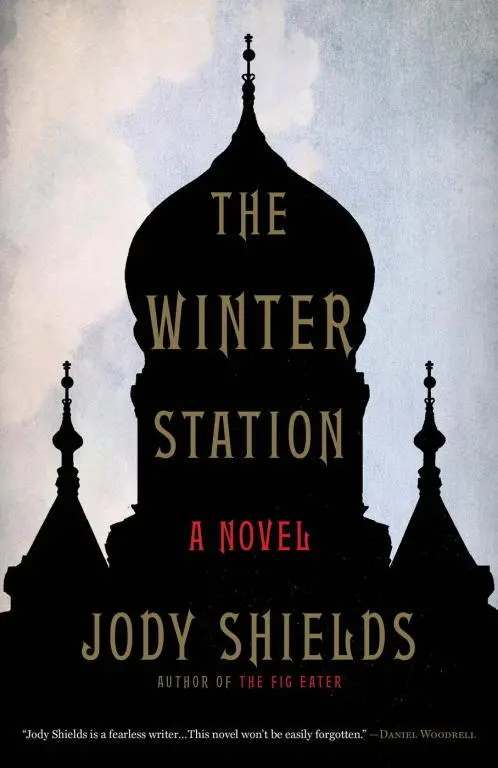
- Название:The Winter Station
- Автор:
- Издательство:Little, Brown and Company
- Жанр:
- Год:2018
- Город:New York
- ISBN:978-0-316-38532-9
- Рейтинг книги:5 / 5. Голосов: 1
-
Избранное:Добавить в избранное
- Отзывы:
-
Ваша оценка:
The Winter Station: краткое содержание, описание и аннотация
Предлагаем к чтению аннотацию, описание, краткое содержание или предисловие (зависит от того, что написал сам автор книги «The Winter Station»). Если вы не нашли необходимую информацию о книге — напишите в комментариях, мы постараемся отыскать её.
1910: people are mysteriously dying at an alarming rate in the Russian-ruled city of Kharbin, a major railway outpost in Northern China. Strangely, some of the dead bodies vanish before they can be identified.
During a dangerously cold winter in a city gripped by fear, the Baron, a wealthy Russian aristocrat and the city’s medical commissioner, is determined to stop this mysterious plague. Battling local customs, an occupying army, and a brutal epidemic with no name, the Baron is torn between duty and compassion, between Western medical science and respect for Chinese tradition. His allies include a French doctor, a black marketeer, and a charismatic Chinese dwarf. His greatest refuge is the intimacy he shares with his young Chinese wife—but she has secrets of her own.
Based on a true story that has been lost to history, set during the last days of imperial Russia, THE WINTER STATION is a richly textured and brilliant novel about mortality, fear and love.
The Winter Station — читать онлайн бесплатно полную книгу (весь текст) целиком
Ниже представлен текст книги, разбитый по страницам. Система сохранения места последней прочитанной страницы, позволяет с удобством читать онлайн бесплатно книгу «The Winter Station», без необходимости каждый раз заново искать на чём Вы остановились. Поставьте закладку, и сможете в любой момент перейти на страницу, на которой закончили чтение.
Интервал:
Закладка:
“There are so few women in Kharbin.”
“Women are a problem. Did you hear that the wives of Russian officials complained about the prostitutes on the train? Somewhere between St. Petersburg and Transbaikalia, the wives refused to sit in the same car with them. Maybe it was the women’s conversation? Or their perfume? So now unmarried women who travel to Kharbin sit separately from the married women on the train.” Chang grinned. “Russians scorn the Chinese. Now they scorn unmarried women. Russians are very cautious citizens.”
In the room behind them, men began to shout at each other.
The Baron raised his voice. “Russians also hate the Japanese.”
“Wise choice. You may pour the tea.”
The Baron carefully filled two cups. “Russians weren’t wise enough to avoid battle with Japan six years ago near Vladivostok. Now we have hundreds of Russian veterans wandering our streets, still carrying guns. Trying to live on miserable pensions.”
“I’ve seen them. I see everyone come and go from Churin’s. Watching is my work. I know when someone will sneer, mock me, when a hand will become a fist. I have my own revenge for these betrayals.” He delicately sniffed the steaming liquid in the cup. “I used to be stopped by people who thought I was a child, a boy, because of my size. Men called to me. I would skip, wave, pick up stones to toss like a child to lure them. I admit I was excited. I allowed men to follow me, then I’d shout at them in a deep voice. Or whirl around to show my face to see them jump. To frighten them. They learned a lesson from me.” His expression was mocking. “Although some men were furious at being tricked and threw things, chased me. I never walk on an empty street. Mercy, no. Some men did pay me. Their guilty coin.”
The Baron was troubled by the other man’s—what? Calculation?
Chang stared at the Baron, slightly reluctant to continue. “I had the idea to punish these men. Let them get close, then a little flick with a knife. Maybe my lesson would save a child from a bitter experience. You understand?”
“If you arrive bleeding in my office, no questions will be asked.”
“Don’t tell me to be careful.”
“Never.”
Chang leaned forward. “I’m certain I was approached by a Russian official. I recognized him a few days later when he walked into Churin’s.”
“Did he see you?”
“It’s difficult not to notice me.”
“What did he look like?”
“Everyone looks tall to me. He had a pale mustache. A fur hat. About your age.”
The Baron felt his face fold into sorrow. What could be done? Kharbin was a city of men, not mothers. “Every week, the ferries deliver women and children to their new masters, who meet them at the wharf. The newspaper reports this slave dealing but there are no arrests. No protests. Nothing boils.”
“Change has a fixed path. The poor slaves met their fate.” Responding to the Baron’s expression, he said, “There’s another old saying: Life commands us to climb a mountain of knife blades.”
“Yes.” The Baron’s fingers pressed against the teacup but he didn’t feel its comforting heat, his thoughts elsewhere, mind separated from body.
The Baron watched the hands and face of Dr. Wu Lien-Teh across the table in the hospital conference room, trying to anticipate the man’s strategy, waiting to see how he was revealed by fleeting expressions and movements. Wu rested his folded hands on the table, a schoolboy’s gesture. It was traditional etiquette for the Chinese to show their hands with great discretion. The Baron was ashamed of his judgment, his immediate assumption of superiority. Gazing around the table, he knew several of the other doctors—Zabolotny, Lebedev, Messonier, Mesny—were locked into an unspoken alliance against Wu, the foreign interloper. Their shared hostility was clear as ripples in water.
They hadn’t anticipated China would appoint their own representative as health commissioner to manage the epidemic. It was unprecedented. Dr. Wu had been given unusual power and then inserted it between them at the Russian hospital. But his youth, inexperience, and the fact that he wasn’t fluent in Mandarin or Russian reassured them that he was a puppet figure, someone to dismiss, work around. Wu had stepped into a cold winter.
Without hesitation, Wu confidently introduced himself in three languages, explaining the meeting would be conducted in English, the language shared by the majority. Zhu Youjing, his interpreter, would translate into Russian, Chinese, and French for benefit of the interns, medical staff, nurses, and volunteers seated along the sides of the conference room.
He continued, “Many questions about the plague can’t be answered at this point. But the first approach to any puzzle is to look at what surrounds it. Why were bodies of the plague victims abandoned? Was it self-preservation? Or because the bodies couldn’t be buried? Do the bacilli enter the body by contact with an infected person, hidden in their saliva or breath? Is it transferred by a contaminated object, such as bedding or clothing? Or a bite from an animal or insect? The situation is grave but we can control it at this early stage.”
Dr. Gerald Mesny, a French surgeon and professor at the Peiyang Medical College in Tientsin, immediately offered an answer. “Two years ago, I served as the official medical expert in Tongshan, where rats spread bubonic plague. Rats and their fleas also caused epidemics in Cochin-China, Hong Kong, and India. I worked in these locations. The plan is simple. Exterminate rats and plague will vanish.”
“I have another point of discussion.” Dr. Danylo Zabolotny had arrived in Kharbin five days ago from St. Petersburg. “I was told about a donkey whose owner died of plague in Kharbin. A second man purchased the animal, touched its bloody muzzle, and he died the next day. The terrible chain of infection will be stopped only by killing all animals contaminated with fleas, not just rats.” Zabolotny, a renowned bacteriologist from the Imperial Institute of Experimental Medicine, was a short-tempered man, vain about his appearance.
“Kill the mules, pigs, cats, and dogs that live with the dirty poor. Close the Chinese markets. Raze these filthy places. Every Chinese hovel in Fuchiatien must be burned.” Mesny sat back in his chair, polishing his spectacles, pleased with his drastic solution.
“For the love of God, we have no right to destroy homes. Where will you shelter thousands of people? Who will pay for their property?” The Baron’s stare circled around the faces at the table.
Zabolotny said, “We’re doctors. Housing isn’t our jurisdiction. The government must organize sheltering the homeless. A task for General Khorvat.”
“He’s correct. We do whatever necessary. Save your sympathy for the dirty poor.” Mesny directed his comments to Wu.
Uneasy murmurs from the others around the table. Maria Lebedev didn’t hide her anger.
The Baron said he had a story to illustrate his point. “I’ll talk you through a map of how plague spreads. I heard it from a friend. A woman brought a fine sable coat into a pawnshop. Five days later, the man at the counter died of plague. Then a second employee died of plague. The policeman who guarded the shop died. In twelve days, thirty-five people traced to the pawnshop died of plague, including the proprietor—a millionaire—and his entire family. The plague spread from person to person because of their close contact, not from fleabites. They infected each other. If you don’t agree, tell me your theory.”
Zabolotny crossed his arms against this challenge. “Simple. The sable coat was infected with fleas. The fleas carried plague, since they’d previously bitten rats infected with plague. Fleas jumped from one person to the next, bit them, and they all died.”
Читать дальшеИнтервал:
Закладка:
Похожие книги на «The Winter Station»
Представляем Вашему вниманию похожие книги на «The Winter Station» списком для выбора. Мы отобрали схожую по названию и смыслу литературу в надежде предоставить читателям больше вариантов отыскать новые, интересные, ещё непрочитанные произведения.










Обсуждение, отзывы о книге «The Winter Station» и просто собственные мнения читателей. Оставьте ваши комментарии, напишите, что Вы думаете о произведении, его смысле или главных героях. Укажите что конкретно понравилось, а что нет, и почему Вы так считаете.