Jody Shields - The Winter Station
Здесь есть возможность читать онлайн «Jody Shields - The Winter Station» весь текст электронной книги совершенно бесплатно (целиком полную версию без сокращений). В некоторых случаях можно слушать аудио, скачать через торрент в формате fb2 и присутствует краткое содержание. Город: New York, Год выпуска: 2018, ISBN: 2018, Издательство: Little, Brown and Company, Жанр: Историческая проза, thriller_medical, на английском языке. Описание произведения, (предисловие) а так же отзывы посетителей доступны на портале библиотеки ЛибКат.
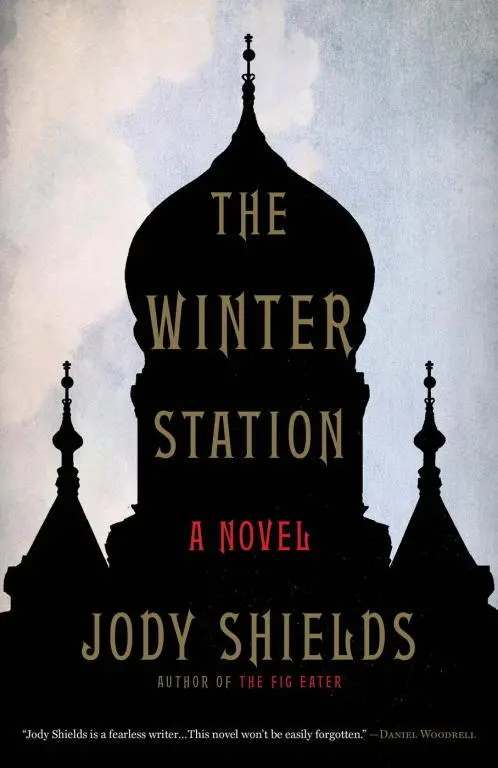
- Название:The Winter Station
- Автор:
- Издательство:Little, Brown and Company
- Жанр:
- Год:2018
- Город:New York
- ISBN:978-0-316-38532-9
- Рейтинг книги:5 / 5. Голосов: 1
-
Избранное:Добавить в избранное
- Отзывы:
-
Ваша оценка:
The Winter Station: краткое содержание, описание и аннотация
Предлагаем к чтению аннотацию, описание, краткое содержание или предисловие (зависит от того, что написал сам автор книги «The Winter Station»). Если вы не нашли необходимую информацию о книге — напишите в комментариях, мы постараемся отыскать её.
1910: people are mysteriously dying at an alarming rate in the Russian-ruled city of Kharbin, a major railway outpost in Northern China. Strangely, some of the dead bodies vanish before they can be identified.
During a dangerously cold winter in a city gripped by fear, the Baron, a wealthy Russian aristocrat and the city’s medical commissioner, is determined to stop this mysterious plague. Battling local customs, an occupying army, and a brutal epidemic with no name, the Baron is torn between duty and compassion, between Western medical science and respect for Chinese tradition. His allies include a French doctor, a black marketeer, and a charismatic Chinese dwarf. His greatest refuge is the intimacy he shares with his young Chinese wife—but she has secrets of her own.
Based on a true story that has been lost to history, set during the last days of imperial Russia, THE WINTER STATION is a richly textured and brilliant novel about mortality, fear and love.
The Winter Station — читать онлайн бесплатно полную книгу (весь текст) целиком
Ниже представлен текст книги, разбитый по страницам. Система сохранения места последней прочитанной страницы, позволяет с удобством читать онлайн бесплатно книгу «The Winter Station», без необходимости каждый раз заново искать на чём Вы остановились. Поставьте закладку, и сможете в любой момент перейти на страницу, на которой закончили чтение.
Интервал:
Закладка:
Andreev was his companion at Central Station, the two men dressed identically as the crowd around them in bulky sheepskin coats, their faces half hidden by immense fox-fur hats. Andreev had confirmed the shipment would arrive on the afternoon train from Mukden and the Baron was eager to collect medical supplies ordered months ago. They had spent over an hour in the train station, watching the crowd, drinking tea, their damp coats steaming in the heat from the immense blue-and-white-tile stove in the corner. The Baron resented waiting for the perpetually late trains but Andreev wouldn’t risk the goods being pilfered and then resurfacing later at the market at a higher price. He broke off a chunk of bubliki, a hard roll, and offered it to the Baron.
“The bread is firm enough to reset your jaw after breaking your teeth. To your health.”
He waved away Andreev’s offer of bread with a glum expression.
“Have you made peace with the new corpse?”
The Baron stared back at him.
“The corpse at the Railway Club reception. In the snow.”
“Hardly peace. May God have mercy. Gospodi-pomiluy .” Of course Andreev would know about the death. He was a hovering tiny eye, a fly, a shadow present during secret situations. “I’m prepared for the investigation promised by General Khorvat.”
“Any progress with his promise?” By the tone of Andreev’s voice, it was obvious he was aware nothing had happened.
“There is always another official who lost the paperwork or didn’t receive the paperwork.”
“We should just get on the next train and leave Kharbin. I doubt the situation will improve.” Andreev dodged a woman dragging a heavy pigskin suitcase. He made no offer of assistance.
The Baron encouraged this change of subject and asked Andreev if he’d traveled in Manchuria. He’d once mentioned visiting the remote northern territory, the ancestral home of the Manchu.
“Yes. I made an expedition with a guide. We encountered the Buryat, Oroqen nomads, and the salmon-skin tribe, who wore clothing made from the cured skin of giant river fish. The kaluga sturgeon were enormous. They said some were twice as long as a man. But the worst terror was blackflies. Black clouds that swarmed with a terrible noise like a machine. Our faces were covered with cotton masks, we put thin silk over the eye- and mouth holes, but the flies still got in. We barely uncovered our mouths to eat. The stinging flies drove the horses crazy. It was a wilderness. No place to leave our mark.” Andreev had been focused somewhere else but now his attention locked on the Baron. “Northern Manchuria is no refuge from Kharbin.”
“Are you considering another expedition?”
“Only if desperate.”
The Baron sensed his evasion clearly as if he’d made an about-face. “Now I’m curious.”
Andreev tossed his head, stirring the feathery thick fur on his hat. “My contacts told me Russian officials have ordered a great quantity of barbed wire.”
Andreev’s words stuck like tacks in his skin.
A whistle blast simultaneously brought a low vibration under their feet as the train shook its way onto the tracks behind the station. The crowd immediately swept toward the huge double doors, a force of movement linking the entire room. A wedge of cold entered when the station doors were flung open by a uniformed soldier.
The waiting room had cleared and the Baron pointed at a figure slumped against the far wall. Andreev turned, but the Baron was already moving quickly across the room.
The Baron knelt by the still figure, pulled his jacket aside to check his neck for a pulse. His hand was batted away by the end of a rifle, and he turned toward two soldiers. He stood up too slowly and they shoved him away. A blanket was thrown next to the man on the floor and the soldiers grabbed his arms and legs, still slightly flexible. The man’s arms flopped when he was dropped on the blanket. They carried the body, sagging in the blanket, toward a side door. A few people made the sign of the cross as the soldiers passed.
Andreev came over to him. “You should have given the soldiers orders. You’re a doctor.”
The Baron silently hurried after the soldiers, Andreev following.
Outside the station, they waited a moment for their eyes to conquer the glare on the snow. There was a narrow pathway, almost a tunnel, at the side of the building, carved in the deep snow by countless passengers. At its end, the soldiers were partially visible, swinging a long bundled shape into the back of a wagon.
Andreev raced ahead and the Baron struggled behind him, as slowed by the snow as if it were a thickness of blankets around his legs. Andreev reached the soldiers first, demanded to know where they were taking the body. The soldiers ignored him and yanked the tarp tightly over the corpse, secured it with rope at one side of the wagon. Andreev shoved a soldier and his fist swung back; the two men slipped and fell in the snow without injuring each other. Andreev staggered to his feet, swearing, wiping his wet face. Unconcerned, the soldiers drove away.
Andreev shoved the Baron into a waiting droshky. The driver whistled and they sped down Bolshoi Prospekt following the soldiers, the ice and mud thrown back by the horse stinging their faces. The cold air entered the Baron’s throat like a screw driving in, his breath condensing into hard rivulets of frost on his beard and collar. The soldiers’ wagon, tarp flapping, was just ahead of them and they expertly steered around an overturned cart. With evident pleasure, the Baron’s driver slowed to watch Russians and Poles furiously arguing over the cart in the street until Andreev shouted and pummeled his thick shoulders.
The driver reluctantly set the droshky in motion, steering recklessly until they hit deep ice ruts and tilted wildly to one side, the horsehide blanket sliding off Andreev’s legs. The two men clutched the seat for balance until the vehicle jolted upright. The soldiers’ wagon was far ahead, past the Iverskaya Church, but they quickly narrowed the distance until their wheels caught in a thick snowbank. The chase was over.
The Baron looked at Andreev. Two idiots. Risking themselves for what?
“They must be preparing to unload crates from the train by now.”
In the Baron’s mind, the dead Japanese woman had the peculiar frozen luminosity of a saint in distress, her hair loose and untidy, her soiled pink kimono pulled open roughly so that the men, the doctors, could access her heart and lungs. Her face serene above their cuts and knives.
He’d just confided this vision to Messonier. “She haunts me. I know the woman was already dead, but I pray that the men who cut her open laid a cloth over her eyes to hide their work. To be merciful.”
Across his cluttered office, Messonier waited for the kettle on the daisu to cool slightly. The warming teapot, filled with hot water, waited on the table behind him.
“Her body was cut up by a madman or a doctor,” the Baron said. “From the description, it sounds like an autopsy. An autopsy without consent is a violation. A sin.”
“An ugly incident. But who did the deed? And why?”
“The answer to why is that someone wanted to discover the cause of the woman’s death. Make a diagnosis. Who made the cuts on the body? Surely a doctor.” The Baron continued, his attention wandering from Messonier’s process of tea making. “I went to the inn at number five Koreyskaya Street, where her body was found. The place was disordered and I thought it was empty but a man attacked me. Nothing serious. I wasn’t harmed.” He grimaced. “But I noticed his face was unusually dark red and splotched. He was obviously ill.”
Читать дальшеИнтервал:
Закладка:
Похожие книги на «The Winter Station»
Представляем Вашему вниманию похожие книги на «The Winter Station» списком для выбора. Мы отобрали схожую по названию и смыслу литературу в надежде предоставить читателям больше вариантов отыскать новые, интересные, ещё непрочитанные произведения.









Обсуждение, отзывы о книге «The Winter Station» и просто собственные мнения читателей. Оставьте ваши комментарии, напишите, что Вы думаете о произведении, его смысле или главных героях. Укажите что конкретно понравилось, а что нет, и почему Вы так считаете.