Jody Shields - The Winter Station
Здесь есть возможность читать онлайн «Jody Shields - The Winter Station» весь текст электронной книги совершенно бесплатно (целиком полную версию без сокращений). В некоторых случаях можно слушать аудио, скачать через торрент в формате fb2 и присутствует краткое содержание. Город: New York, Год выпуска: 2018, ISBN: 2018, Издательство: Little, Brown and Company, Жанр: Историческая проза, thriller_medical, на английском языке. Описание произведения, (предисловие) а так же отзывы посетителей доступны на портале библиотеки ЛибКат.
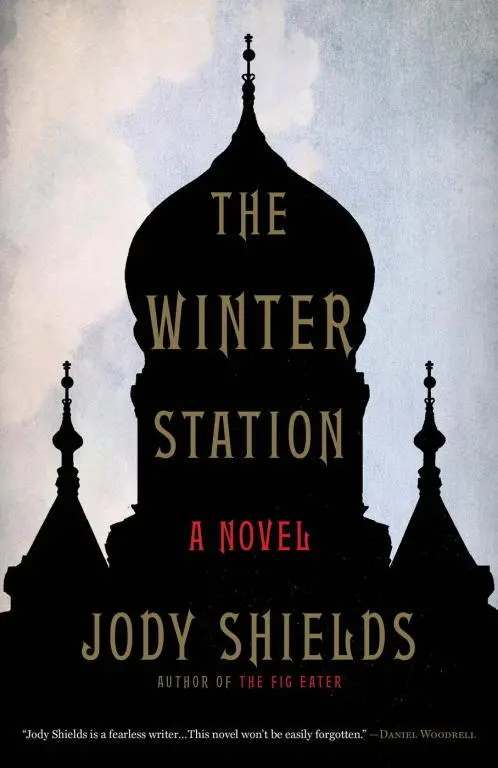
- Название:The Winter Station
- Автор:
- Издательство:Little, Brown and Company
- Жанр:
- Год:2018
- Город:New York
- ISBN:978-0-316-38532-9
- Рейтинг книги:5 / 5. Голосов: 1
-
Избранное:Добавить в избранное
- Отзывы:
-
Ваша оценка:
The Winter Station: краткое содержание, описание и аннотация
Предлагаем к чтению аннотацию, описание, краткое содержание или предисловие (зависит от того, что написал сам автор книги «The Winter Station»). Если вы не нашли необходимую информацию о книге — напишите в комментариях, мы постараемся отыскать её.
1910: people are mysteriously dying at an alarming rate in the Russian-ruled city of Kharbin, a major railway outpost in Northern China. Strangely, some of the dead bodies vanish before they can be identified.
During a dangerously cold winter in a city gripped by fear, the Baron, a wealthy Russian aristocrat and the city’s medical commissioner, is determined to stop this mysterious plague. Battling local customs, an occupying army, and a brutal epidemic with no name, the Baron is torn between duty and compassion, between Western medical science and respect for Chinese tradition. His allies include a French doctor, a black marketeer, and a charismatic Chinese dwarf. His greatest refuge is the intimacy he shares with his young Chinese wife—but she has secrets of her own.
Based on a true story that has been lost to history, set during the last days of imperial Russia, THE WINTER STATION is a richly textured and brilliant novel about mortality, fear and love.
The Winter Station — читать онлайн бесплатно полную книгу (весь текст) целиком
Ниже представлен текст книги, разбитый по страницам. Система сохранения места последней прочитанной страницы, позволяет с удобством читать онлайн бесплатно книгу «The Winter Station», без необходимости каждый раз заново искать на чём Вы остановились. Поставьте закладку, и сможете в любой момент перейти на страницу, на которой закончили чтение.
Интервал:
Закладка:
He called a greeting in Chinese. No answer.
He entered the corridor cautiously and moved toward the first room, curtained with heavy fabric. It folded into stiff angles as he slowly pulled it aside and ducked into the room. A small altar, a stack of bowls and mats against one wall. He knelt to examine the altar, the edge of the curtain brushing his shoulder. A rustle behind him in the corridor and a man blocked the doorway.
“Are you the cook? A guest here?” The Baron stood up very slowly, keeping a distance between them, snugging the hood of his coat around his neck as protection.
The man’s breath heaved and his arms flailed as if he were drowning inside his body. He gripped the curtain to steady himself against the wall. Even in the faint light, his face was visibly flushed, a dark liquid smeared over his chin. The Baron edged toward the door to get past him, avoid being trapped in the room. The stranger coughed repeatedly and gasped, clawing at the Baron’s coat. He twisted free, covering his nose and mouth, and blindly shoved the stranger into the wall, flimsy as a bundle of cloth.
Wind had stripped and tattered the cloth flags in front of shops along Novotorgovaya Street but sturdy signboards had been hammered into storefronts, the walls of buildings, fences, wagons, and secured with rope around newspaper kiosks and lampposts, all of them advertising fortune-telling, fu-ji divination, I-Ching readings, magic charms, cures for fever, chills, aches, coughs, ailments. The messages were like holes made by weapons, proof of battle.
The Baron and Li Ju walked down four streets and she counted thirty-five signs. They stopped to read a large wooden board, its painted letters legible behind the snow that streaked across it. “A woman recently arrived from Tashinchiao has remedies for lung problems.” The next sign promised a healer from Tientsin would cure all ill health. Fortunes told by a lady from Dairen. Fortunes told by a doctor, teacher, astronomer, scholar, priest.
She turned to him in fury. “Why didn’t you tell me about these signs?”
Several people on the street stopped and stared, shocked that a woman would speak to a man in that tone of voice.
“I didn’t wish to make you unhappy.”
“Something is wrong. Did you think I’d never see the signs myself? I can read. I’m not a child.”
He was silent to temper his reply. Not to meet anger with anger. In winter, conversation was fractional. Breathing in was a stab of cold air followed by a freezing rim around the lips as the voice was pushed out. Condensed moisture circled the nostrils, froze the inside of the nose. Ice formed on the eyelashes and eyebrows. He angled his head so Li Ju couldn’t see his face behind the fur hood of his jacket. He’d give her the thinnest reply. “Superstitious fools. Trying to stir up business for themselves.”
Li Ju answered with an exhale, an angry steam of breath.
Later, at home, their discarded boots wet on the tile floor, the troubling signs on the street were still between them.
“Explain the signs to me. They all offer help. Explain what I read.” Li Ju’s face solidified into a patient expression. “You know something. Or have suspicions.” She’d detected his unease.
“The healers and fortune-tellers are making money from ignorance. The signs are just signs. One sign creates another. Like bubbles.” His words were simple Chinese. When he was under stress, his command of the language faded; he grasped at words, forgetting the inflections at the end that could completely alter their meaning.
“People are frightened. I’ve heard talk in the market. They say the Russians kill people and steal their lungs, stomach, the guts from the dead, to make medicine. Is this true? Tell me. I’m not afraid.” She could provoke him into a response or confession with a threat of independence.
The servants were shadows outside the room, listening, waiting to take their coats, mop the wet floor. He lowered his voice. “A group of doctors and nurses from St. Petersburg and hospitals in China will soon arrive.”
“So they’re here because of what the Russians have done?”
“General Khorvat isn’t obligated to announce the new medical workers’ roles. The hospital staff will expand but it isn’t clear why this is necessary.” A kind of shame, a lack of confidence, made the skin around his eyes wrinkle. “I was told another doctor has been appointed to the Russian hospital here. A Chinese, Dr. Wu. Educated in England. With his background, this new doctor could be a peacemaker between the Chinese and Russians. The fighting cats and dogs. I just observe for now, since their plans work around me. I don’t know where in the circle I stand.”
“Will you lose your position with the hospital?”
His eyes dropped. “Everything will pass.” The gesture of his open hands was typically Russian, a silent code for her to decipher.
She helped him remove his coat, pulling off the stubborn sleeves one at a time. The bulky, wet fur coat weighed down her arms. “What if the signs are true and there is something to fear?”
He swung around to face her. “Five bodies have been found in Kharbin. Chinese, and possibly one dead Russian. One of the servants, a kitchen worker at the Railway Club, was taken ill and found dead in the snow after you left the reception.” He was surprised that he’d just described the man as ill rather than murdered. Was this a diagnosis? “Recently, a woman’s body was found in Fuchiatien. She was Japanese, an innkeeper. Her corpse was brutally examined. I don’t know how she died. But I’ll find the answer.” Distress in his voice.
Li Ju’s eyes widened. “Who will help you?”
He ignored her indirect reference to his age, which was certainly unintentional. “Messonier has good counsel. We’ve speculated that all the deaths may somehow be linked. But we’re only guessing.” He deliberately didn’t mention his conversation with Messonier about the deaths in Manchouli, Chalainor, and the other train stations.
The servants came in and bundled their boots and coats away, their faces impassive, although they must have overheard their conversation.
She closed her eyes, considered this for a moment. “You’re concerned about bodies but not the dead. Because the five unfortunates weren’t buried in their ancestral graves, they’ll have no peace in the afterlife. They are cursed to wander forever as ghosts.”
“Gospodi-pomiluy,” he whispered. “God have mercy.”
“Let’s go to bed.”
“I have work to do at my desk.” He kissed her, then left her alone with news of the woman’s strange death.
Very late that night, the Baron assembled the tools for calligraphy in his study. He daubed the brush on the inkstone. Waited to relax his shoulders, steady his hand. He was overwhelmed by a formless sensation, almost vertigo, and his hand trembled. The brush fell from his fingers and rolled across the paper, trailing black ink like a violent slash. He stared at the black spoiling the white.
Anxiety was familiar, like a vine inside his body, holding him upright. He wanted to quit, set the brush aside, as he’d once wished to leave during a lesson when unfairly criticized by his father, but he stubbornly remained at his desk to hide his unhappiness.
Fate had taken the lives of four men and one woman but they didn’t fall randomly as leaves. It wasn’t coincidence. It was a warning. Their deaths might never be solved. Perhaps it suited the individuals who controlled or monitored the situation.
After a moment, he picked up the brush, cleaned it, let it slide from his fingers. He stared at the black water, dissolved ink from his brush in the rinse jar. Opaque, deep as a well.
Читать дальшеИнтервал:
Закладка:
Похожие книги на «The Winter Station»
Представляем Вашему вниманию похожие книги на «The Winter Station» списком для выбора. Мы отобрали схожую по названию и смыслу литературу в надежде предоставить читателям больше вариантов отыскать новые, интересные, ещё непрочитанные произведения.










Обсуждение, отзывы о книге «The Winter Station» и просто собственные мнения читателей. Оставьте ваши комментарии, напишите, что Вы думаете о произведении, его смысле или главных героях. Укажите что конкретно понравилось, а что нет, и почему Вы так считаете.