Alison Weir - Captive Queen
Здесь есть возможность читать онлайн «Alison Weir - Captive Queen» весь текст электронной книги совершенно бесплатно (целиком полную версию без сокращений). В некоторых случаях можно слушать аудио, скачать через торрент в формате fb2 и присутствует краткое содержание. Год выпуска: 2010, ISBN: 2010, Издательство: BALLANTINE, Жанр: Историческая проза, на английском языке. Описание произведения, (предисловие) а так же отзывы посетителей доступны на портале библиотеки ЛибКат.
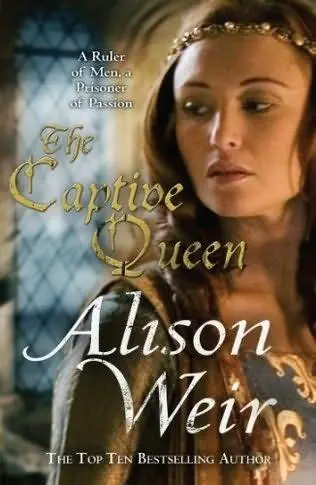
- Название:Captive Queen
- Автор:
- Издательство:BALLANTINE
- Жанр:
- Год:2010
- ISBN:978-0-345-52195-8
- Рейтинг книги:3 / 5. Голосов: 1
-
Избранное:Добавить в избранное
- Отзывы:
-
Ваша оценка:
Captive Queen: краткое содержание, описание и аннотация
Предлагаем к чтению аннотацию, описание, краткое содержание или предисловие (зависит от того, что написал сам автор книги «Captive Queen»). Если вы не нашли необходимую информацию о книге — напишите в комментариях, мы постараемся отыскать её.
Renowned for her highly acclaimed and bestselling British histories, Alison Weir has in recent years made a major impact on the fiction scene with her novels about Queen Elizabeth and Lady Jane Grey. In this latest offering, she imagines the world of Eleanor of Aquitaine, the beautiful twelfth-century woman who was Queen of France until she abandoned her royal husband for the younger man who would become King of England. In a relationship based on lust and a mutual desire for great power, Henry II and Eleanor took over the English throne in 1154, thus beginning one of the most influential reigns and tumultuous royal marriages in all of history. In this novel, Weir uses her extensive knowledge to paint a most vivid portrait of this fascinating woman.
Captive Queen — читать онлайн бесплатно полную книгу (весь текст) целиком
Ниже представлен текст книги, разбитый по страницам. Система сохранения места последней прочитанной страницы, позволяет с удобством читать онлайн бесплатно книгу «Captive Queen», без необходимости каждый раз заново искать на чём Вы остановились. Поставьте закладку, и сможете в любой момент перейти на страницу, на которой закончили чтение.
Интервал:
Закладка:
Henry grabbed the messenger violently by the collar of his leather jerkin.
“What are you implying?” he hissed, his face twisted in fury.
“Nothing, sire,” gasped the young man. “I but repeat what my master has asked me to tell you. Out of his great love for you, he thinks you should know that people are beginning to talk. He says that he himself would never question Madame the Duchess’s virtue, of course, but that others say this Bernard is her lover.”
Henry howled in rage. “How dare they? And how dare he presume so far? I’ll have him strung up for this! And worse!” He was shouting, and several men-at-arms who were drinking nearby turned curiously to look at their future king, exchanging glances among themselves. But he was unaware of their interest. He was remembering that Eleanor had not scrupled to take a troubadour to her bed in the past—and that she had deceived Louis over it.
“Tell me truthfully,” he growled, “think you there is any truth in these bruits? On your honor!”
“Sire, many say there cannot be, for the duchess’s love for you, my lord, is well known …”
“But others say there is!” Henry filled in, when the man fell silent.
“Some say she is in love with this Bernard.” The messenger swallowed hard.
Henry could not bear the thought. Eleanor was his, and his alone. He was no Louis to shun her bed and turn a blind eye to her infidelities. She was his wife, his duchess, and the mother of his heir.
With an effort, he mastered his fears and his fury.
“You may tell your master that I will deal with this,” he said gruffly, then strode off to the scriptorium to rouse his clerks, thinking that castration might be too good for this impudent Bernard de Ventadour. Yet, gripped by fury as he was, he knew his revenge must be more subtle than that. No breath of scandal must taint Eleanor’s name—and nothing must be allowed to sully what was between them. He must take care not to perpetuate the scandal. If this matter were handled discreetly, the gossip would soon die a speedy death. Yet the pain in his heart was searing. Had Eleanor betrayed him? Had she bestowed her smiles—or, God forbid, more—on this piddling poet? He must search out the truth, and soon. He would know when he saw her, he was certain, but that would not be for a while: he could not leave England just yet. In the meantime he had several weeks of mental torture to endure, imagining her in another man’s arms, rousing the interloper to passion as only she knew how, using all the tricks she had practiced on himself. Not to be borne!
At first he thought of murder. Covert and efficient, the body thrown in a river under cover of darkness, leaving no trace. Yet reluctantly, his innate sense of justice—which would one day make him a great king—asserted itself, and his fevered brain conjured up another plan.
“I have been summoned to England, madame,” Bernard said, rising from his elegant bow.
“To England?” She looked at her ladies, who seemed as puzzled as she did herself.
“Yes, madame. My lord duke wishes me to compose martial tunes for my lyre, to entertain his knights.” He looked downcast—almost desperate.
“It seems your fame has spread,” Eleanor said uneasily, wondering what else Henry had heard. Surely he had his hands full enough in England without going to the trouble of sending for a troubadour to entertain his knights?
“That is what the duke’s messenger told me, madame. But alas, I cannot bear to leave here, or say farewell to the person who is the most dear to me.”
“When the duke sends such a summons, you may not ignore it,” Eleanor said. “His patronage will be most valuable to you and add to your fame. You are a fortunate man.” Truth to tell, Bernard’s excessive displays of devotion were becoming a little exhausting, and she would not be sorry to see him go, for what had begun as a pleasant interlude was now becoming merely prolonged tedium, and a little embarrassing. Besides, she would soon be reunited with Henry. When the spring came, he had sent to say, he hoped to return to her. She was counting down the days until then.
Bernard was miserably aware that Eleanor was making no protest at his going to England, and hurt to realize that she was not even showing any sorrow. In the privacy of his chamber he wept bitter tears over her unkindness and the prospect of being parted from her, this wondrous being whose presence was so essential to his happiness. He tried to console himself with the notion that she was merely protecting herself by being so distant toward him—after all, his love for her was a secret, and she would not betray it by showing emotion in public—and even ended up convincing himself that this separation would secretly be as distressing for her as it was for him.
When he arrived, London was overcast, freezing, and deep in snow. To a man of the South, it felt like the edge of the world. Mourning the tragedy of his exile, he looked at the ice-bound river banks and thought longingly of far-off Aquitaine, and its beautiful duchess—and suddenly, miraculously, it seemed as if those banks were crowded with flowers, red, white, and yellow, in a glorious sunburst of color. He could almost smell their scent, and felt faint with longing. Then he looked again and the illusion was gone. He was convinced it had been a good omen that presaged his speedy return to his lady.
His need became an obsession. When he thought of Eleanor, his heart filled with joy and misery in equal measure. He was a man possessed. Shivering in his meager lodging in the shadow of Westminster Abbey, he composed song after song in her honor, as he waited for the duke’s summons to Westminster.
When it came, Bernard was disconcerted to find that Henry FitzEmpress—a steely-eyed, hawklike, terrifying young man—did not seem to be interested in discussing the martial songs he had been summoned to write. Instead, he began firing questions at him about his life at the court of Poitiers.
“Does Madame the Duchess welcome many troubadours like yourself?” he inquired aggressively; almost accusingly, Bernard thought. He had met with his duke in the lofty, magnificent stone hall that adjoined the King’s palace; it had been built, he had learned, by the Conqueror’s son, King William Rufus, just over fifty years before—and, like everywhere else in this godforsaken city, it was freezing.
“Yes, my lord. Her court is an academy of great culture,” Bernard enthused, shivering.
“And she has singled you out for special favor?” Henry went on.
Bernard nodded happily. “She has been most kind to me, a humble poet.”
“How kind?” Henry snapped. “I have heard disquieting rumors about you. Now I want the truth!” His face was suddenly puce with anger, his voice menacing.
Bernard quailed before him. Now the awful realization dawned, and he knew exactly why he had been summoned to England. Poor lady, he thought: this man surely is the Devil’s spawn, as people say.
“Sire, as God is my witness,” he declared hotly, “I have never compromised Madame the Duchess’s honor. It is more dear to me than my life. And she, sweet lady, would never condescend so far, I know it. She is much too virtuous. I beg you to believe me, sire.”
Henry looked at him hard. He wanted—needed—to believe him.
“These poems, though,” he said. “They speak of love.”
“Unrequited, sire,” Bernard told him, then pulled himself up. What was he saying? This harsh young man did not seem to understand the conventions of courtly love, so he hastened to explain. “In my land, it is permissible for a humble minstrel like myself to pay his addresses to the lady he loves, however exalted she be, or even wed to another. He might love her, but he would be most fortunate indeed if that love were ever reciprocated. I am devoted to Madame the Duchess, I do not deny it, but I never dared hope for her favors. I am content, as are many, to worship from afar. It is the custom. My lady has proved a most kind mistress to her servant, but that has been all, I assure you. I have been like a man without hope, sighing with love for her.”
Читать дальшеИнтервал:
Закладка:
Похожие книги на «Captive Queen»
Представляем Вашему вниманию похожие книги на «Captive Queen» списком для выбора. Мы отобрали схожую по названию и смыслу литературу в надежде предоставить читателям больше вариантов отыскать новые, интересные, ещё непрочитанные произведения.











Обсуждение, отзывы о книге «Captive Queen» и просто собственные мнения читателей. Оставьте ваши комментарии, напишите, что Вы думаете о произведении, его смысле или главных героях. Укажите что конкретно понравилось, а что нет, и почему Вы так считаете.