Alison Weir - Captive Queen
Здесь есть возможность читать онлайн «Alison Weir - Captive Queen» весь текст электронной книги совершенно бесплатно (целиком полную версию без сокращений). В некоторых случаях можно слушать аудио, скачать через торрент в формате fb2 и присутствует краткое содержание. Год выпуска: 2010, ISBN: 2010, Издательство: BALLANTINE, Жанр: Историческая проза, на английском языке. Описание произведения, (предисловие) а так же отзывы посетителей доступны на портале библиотеки ЛибКат.
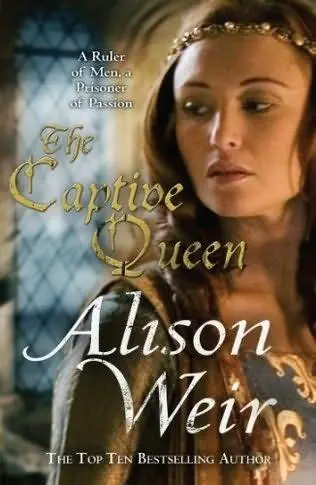
- Название:Captive Queen
- Автор:
- Издательство:BALLANTINE
- Жанр:
- Год:2010
- ISBN:978-0-345-52195-8
- Рейтинг книги:3 / 5. Голосов: 1
-
Избранное:Добавить в избранное
- Отзывы:
-
Ваша оценка:
Captive Queen: краткое содержание, описание и аннотация
Предлагаем к чтению аннотацию, описание, краткое содержание или предисловие (зависит от того, что написал сам автор книги «Captive Queen»). Если вы не нашли необходимую информацию о книге — напишите в комментариях, мы постараемся отыскать её.
Renowned for her highly acclaimed and bestselling British histories, Alison Weir has in recent years made a major impact on the fiction scene with her novels about Queen Elizabeth and Lady Jane Grey. In this latest offering, she imagines the world of Eleanor of Aquitaine, the beautiful twelfth-century woman who was Queen of France until she abandoned her royal husband for the younger man who would become King of England. In a relationship based on lust and a mutual desire for great power, Henry II and Eleanor took over the English throne in 1154, thus beginning one of the most influential reigns and tumultuous royal marriages in all of history. In this novel, Weir uses her extensive knowledge to paint a most vivid portrait of this fascinating woman.
Captive Queen — читать онлайн бесплатно полную книгу (весь текст) целиком
Ниже представлен текст книги, разбитый по страницам. Система сохранения места последней прочитанной страницы, позволяет с удобством читать онлайн бесплатно книгу «Captive Queen», без необходимости каждый раз заново искать на чём Вы остановились. Поставьте закладку, и сможете в любой момент перейти на страницу, на которой закончили чтение.
Интервал:
Закладка:
“Does he indeed?” she replied grimly. “Of course, he is a widower, so I can well imagine what they are. You have done gallantly to warn me.”
The lords and the captains were eager to be gone; their taut faces betrayed their alarm. This was what they had feared. “Madame, we cannot risk the bridge. We must go by another way,” the Count of Angoulême urged.
“À moi!” Eleanor cried, as her forebears had done many times in the field of battle, and spurred her horse, knowing they must hurry and get away from this place if they wished to avoid disaster. She had no mind to end her days as the Countess of Blois.
Moving by stealth along the river banks, one of Eleanor’s captains came upon a barge tethered to a jetty, which he gleefully appropriated. Huddled together in the sanctuary it offered, and almost crushed by such baggage as they could squeeze into the remaining space, Eleanor and her companions uttered not a word as the craft glided swiftly along the river, making its silent way toward Tours. Only when dawn broke did they relax enough to begin a debate as to which way they should now take.
“Let us make south for the Vienne, and cross the Creuse at Port-de-Piles,” Eleanor decided. On the other bank, the men-at-arms were waiting with the Archbishop, having been permitted to cross the bridge at Blois after convincing the guards they were merely escorting His Grace back to his diocese.
The further south they rode from the Loire, the safer Eleanor felt. But as they neared Port-de-Piles, another scout came hastening toward them.
“Go no farther, lady!” he cried. “There is an ambush lying in wait for you ahead.”
“God’s teeth!” Eleanor swore, as the Archbishop winced. “Another fortune hunter! Who is it this time?”
“I fear it is young Geoffrey of Anjou, lady, Duke Henry’s brother.”
“That young idiot? He’s still wet behind the ears, surely. Well, my good angel, for that you certainly are, we will disappoint him of his quarry. My lords!” Eleanor turned to the two counts, who were waiting grim-faced in their saddles. “What do you suggest?”
“We should swing south, madame, to where we can ford the Vienne, and then make a dash across country for Poitiers.”
“That makes sense,” Eleanor agreed, as the others voiced their approval of the plan, and the weary Archbishop craved leave to make his own way to Bordeaux. Having bidden the old man a quick, affectionate farewell, she wheeled around her horse and spurred it on, smiling to herself as she imagined young Geoffrey’s fury when he discovered that she had eluded him. How enraged Henry would be when he learned that his little brother had plotted to supplant him!
6
Poitiers, 1152
As the flat swaths of the Loire Valley had given way to the great plain of Poitou with its lush countryside, scattered castles, solid Romanesque churches, and stone longhouses with red-tiled roofs, Eleanor’s sense of elation burgeoned. It was the sight of those red tiles that had first moved her. You never saw such things in the dreary North. Soon, she would be home!
She had loosed her hair, as a gesture to her newly unwed status, and luxuriated in it streaming behind her in the warm wind that blew across from the Atlantic sea, which lay some miles to the west. Straight-backed she rode, her eager eyes on the road ahead, the road that led to her city of Poitiers. It could not be far now. She had donned her crimson bliaut with its fitted bodice and sweeping, gold-embroidered skirts and topped it off with a splendid blue mantle for her homecoming. And yes, there it was ahead, majestic on its promontory above the River Clain, her fair city! Here, the Romans had come in ancient times; here, Charles Martel had vanquished the Saracens long centuries before; here, in a fine church within the walls, lay the blessed relics of St. Radegonde, the queenly patron saint of Poitiers. And there were her people, bursting through the gates, clamoring to greet her, their duchess come back to her own.
How they cheered as she trotted at the head of her escort through the packed streets, her standard going before her! They called down blessings on her for her beauty, because she was one of them, and because she had booted out the hated French. As she was carried into the great cathedral of St. Pierre, there to give thanks for her safe homecoming, Eleanor vowed to herself that, with God’s help, she would henceforth dedicate her life to her people, and never again subject them to the hateful rule of a foreigner.
After mass on Easter Sunday, the duchess made her way in procession to the spacious ducal apartments in the Maubergeonne Tower of the palace of Poitiers, and took her place in the high chair of her ancestors in the circular council chamber. Colorful banners hung high on the sandy stone walls, which had been crudely painted with scenes of long-past battles. The chief vassals of Aquitaine, who had gathered for the festival at the duchess’s summons, seated themselves at the long table before her.
Their eyes were on her, their newly returned duchess; they were waiting to find out what she would be like as their liege lady, and—more importantly—whom she would marry. None of them had even considered the possibility of her ruling alone: she was a woman, and women were weak creatures, not fit to wield dominion over men. Yet she was her father’s daughter and they were loyal to her, most of them after their fashion, and would remain so provided she did not take a husband who would subvert their autonomy and interfere too much in the affairs of the duchy. Having just gotten rid of the hated French, they were unwilling to stomach another foreign interloper. But the duchess must marry and bear heirs, of course, and she must have a strong man as her protector: they accepted that. They had all been told of her plans to marry Henry of Anjou, and were agreed that the young Duke of Normandy—now also Count of Anjou and Maine after his father’s death—did not pose too much of a threat to them, however formidable his reputation. He would more than likely be preoccupied with this northern kingdom of England, which looked set to be his too one day—and he was young enough to be molded to their will.
Eleanor was surveying them all as they waited for the feasting to begin. She knew, from her father, and from bitter experience, that her vassals were all but ungovernable. Away from the courts of her chief cities of Poitiers and Bordeaux, entrenched in their remote castles and hilltop fastnesses, they could thumb their noses at ducal jurisdiction. So it was best to sweeten them now by clever diplomacy and gifts—and the Lord knew she had been generous enough with those already—to keep them friendly.
“Sirs,” she began, her voice low and mellifluous, “I have asked you here formally to inform you of the annulment of my union with King Louis, and to approve my coming marriage. You all know that I have consented to wed the Duke of Normandy, and that I must do so without the sanction of King Louis, who is overlord of us both, for he would surely refuse it.” A mischievous smile played around her lips. The lords looked at her approvingly: they understood such underhand dealings, and their resentment of the French was such that they were more than happy to overlook this blatant breach of feudal etiquette.
“Our wedding must be arranged without delay, or it might never take place at all,” Eleanor told them. “This marriage will seriously undermine the power of France, and if King Louis discovered my plans, even he, weakling that he is, might fight. Once Henry and I are wedded and bedded, he can do nothing about it.”
“You must send again to the duke, madame,” her uncle, Hugh of Châtellerault, urged. “What if your messenger has been intercepted?”
Читать дальшеИнтервал:
Закладка:
Похожие книги на «Captive Queen»
Представляем Вашему вниманию похожие книги на «Captive Queen» списком для выбора. Мы отобрали схожую по названию и смыслу литературу в надежде предоставить читателям больше вариантов отыскать новые, интересные, ещё непрочитанные произведения.








Обсуждение, отзывы о книге «Captive Queen» и просто собственные мнения читателей. Оставьте ваши комментарии, напишите, что Вы думаете о произведении, его смысле или главных героях. Укажите что конкретно понравилось, а что нет, и почему Вы так считаете.