Kathleen Kent - The Outcasts
Здесь есть возможность читать онлайн «Kathleen Kent - The Outcasts» весь текст электронной книги совершенно бесплатно (целиком полную версию без сокращений). В некоторых случаях можно слушать аудио, скачать через торрент в формате fb2 и присутствует краткое содержание. Город: New York, Год выпуска: 2013, ISBN: 2013, Издательство: Little, Brown and Company, Жанр: Историческая проза, Вестерн, на английском языке. Описание произведения, (предисловие) а так же отзывы посетителей доступны на портале библиотеки ЛибКат.
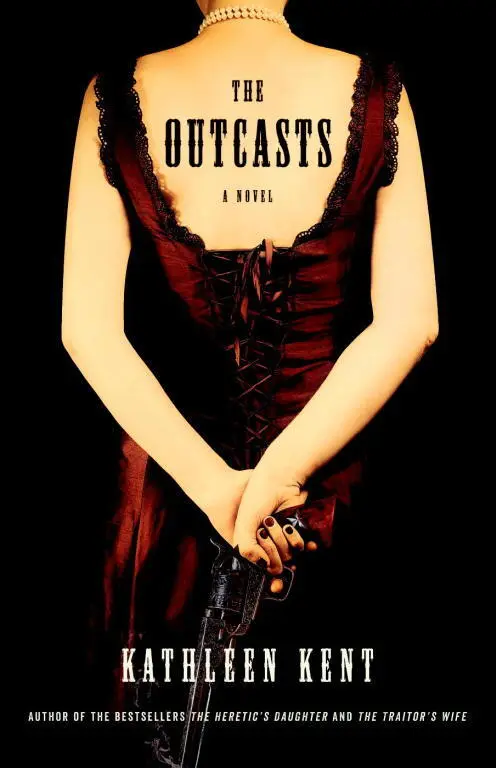
- Название:The Outcasts
- Автор:
- Издательство:Little, Brown and Company
- Жанр:
- Год:2013
- Город:New York
- ISBN:978-0-316-20613-6
- Рейтинг книги:3 / 5. Голосов: 1
-
Избранное:Добавить в избранное
- Отзывы:
-
Ваша оценка:
The Outcasts: краткое содержание, описание и аннотация
Предлагаем к чтению аннотацию, описание, краткое содержание или предисловие (зависит от того, что написал сам автор книги «The Outcasts»). Если вы не нашли необходимую информацию о книге — напишите в комментариях, мы постараемся отыскать её.
Meanwhile Nate Cannon, a young Texas policeman with a pure heart and a strong sense of justice, is on the hunt for a ruthless killer named McGill who has claimed the lives of men, women, and even children across the frontier. Who—if anyone—will survive when their paths finally cross?
As Lucinda and Nate’s stories converge, guns are drawn, debts are paid, and Kathleen Kent delivers an unforgettable portrait of a woman who will stop at nothing to make a new life for herself.
The Outcasts — читать онлайн бесплатно полную книгу (весь текст) целиком
Ниже представлен текст книги, разбитый по страницам. Система сохранения места последней прочитанной страницы, позволяет с удобством читать онлайн бесплатно книгу «The Outcasts», без необходимости каждый раз заново искать на чём Вы остановились. Поставьте закладку, и сможете в любой момент перейти на страницу, на которой закончили чтение.
Интервал:
Закладка:
Lucinda looked up at Jane and, reaching for her free hand, said, “I have the best possible nurse.”
For days, both Jane and May brought meals to her room and small parcels of food, preserved fruit or baked things, from the settlers wishing her well. May would leave in the mornings for the schoolhouse but stay with her in the afternoons, telling her of each student’s progress or slide towards unruliness. The girl would sit, or lie, at the end of Lucinda’s narrow bed, and after she gave her reports, she would press Lucinda for details of towns and cities far away or of the latest modes of ladies’ dress and hairstyles.
Several times a day, Bedford would appear at the bedroom door, awkward and concerned, staying only a moment to ask after her health.
On the third day of her recovery, she walked with May out into the shorn fields surrounding the house, their rustling progress flushing mourning doves from their hiding places. When Lucinda felt tired, they lay together side by side, the air cool, the earth radiating the sun’s heat like an oven-warmed plate. They could hear Jane calling them back inside, and they shushed each other and laughed like rude children hiding from a playmate. Lucinda turned onto her back and looked up at the clouds, and May rested her head on Lucinda’s shoulder, like a sweetheart. They lay so still that soon they could hear the renewed burring of doves nearby.
Lucinda then whispered into May’s ear the story of her own father taking her out into their hay field when she was a child and placing into her hands one tiny dove’s egg plucked from a nest that only his hunter’s eyes had seen.
“The egg burned in my hand with a surprising weight for so tiny an object,” Lucinda said. “A pulsing globe with the hidden warmth of the chick about to hatch.” She reached over and stroked May’s cheek. “He told me that I was like the dove, trapped in the shell of my infirmities, but that someday, if I was good, if I cleaved to God and all His admonitions, I would escape, perfect and whole.”
“But you did not escape,” May said.
“No, I did not escape.” The shell remained, Lucinda thought. Not the brittle casing of a dove’s egg, but an elastic, permeable membrane, one that accepted light and air, sounds and awakenings, but that kept her body imprisoned. “He committed me to a madhouse,” she said.
“Oh,” May cooed, and she wrapped one arm more tightly around Lucinda’s neck.
Lucinda’s eyes closed with the pleasure of the embrace and the ambient warmth of the ground, and impulsively, she kissed the girl’s forehead. She then stood and gave her hand to May to preclude any more conversation, and they walked back to the house together.
Later, Lucinda sat alone for a while on the porch, wrapped in a blanket, savoring the fragile warmth of the November sun. Lucinda could see, in the distance, Lavada and Sephronia pushing Elam’s wheeled chair on their daily walk, the twin bell-like motions of their skirts sweeping up the dust of the path. May stepped out onto the porch holding a hairbrush and watched the women.
She said, “You would think they never had buzzards on their roof. But they do, and I’ve seen them.”
May unpinned Lucinda’s hair and began to brush it. It had become an afternoon practice, and Lucinda, who most times did not relish being touched, had come to look forward to the ritual. The brush was made of old embossed ivory, the boar bristles gentle on her scalp.
May said, “I’ve spoken to Father and told him I think you should stay with us. So we can care for you.”
Lucinda had tipped her head back and closed her eyes, drowsy and relaxed. “And what did your father say to such a scandalous suggestion?”
“Well, he didn’t say no.” She continued brushing Lucinda’s hair for a moment, and then said, “I found the letter you were writing to your brother.”
Lucinda opened her eyes, her drowsiness gone. “Which letter?”
“The letter you had been writing in the little storage house. Before you had your fit.”
Lucinda searched her mind for her last few moments before losing consciousness. She remembered being inside the shed, but she had forgotten about the letter until May reminded her of it. And there was no clear memory of what she had written before hearing the noises that led her to find Tobias.
May set the brush down and moved to sit on the railing across from Lucinda.
Keeping her face expressionless, Lucinda asked, “Where is the letter now?”
“In a book by your bed.” May tilted her head and smiled in a way that made Lucinda clench her teeth. “I put it there to keep it safe.”
Lucinda’s tapestry bag had been delivered to the Grant home by Euphrastus during the first few days of her illness. As soon as she was able, Lucinda had searched to make certain that the money she had taken and the gun were still at the bottom of the bag. She had not thought to assure herself that her letters had not been discovered.
May had been swinging her legs, idly kicking the railing struts, but she stopped abruptly. “I think I’ve tired you out. I’ll help you back to your room.”
May led Lucinda up the stairs and into bed. After smoothing the bedcovers, she leaned down and kissed Lucinda on the cheek. She stood, brushing the hair from her neck, and asked, “What’s your brother’s name?”
Lucinda paused for a moment before answering. “Bill,” she said.
“Will your brother come and visit, do you think?”
Lucinda reached out and cupped May’s face in one hand. “He may need to.”
As soon as May had left the room, Lucinda picked up the book and saw it was one from Bedford’s library. She found the letter, pulled it out, and read what she had written: I progress as the Trusted Teacher. You will be pleased to know that I am now friend to the one who is of interest to you…
Her impulse was to laugh out loud with relief. She couldn’t have written a more innocuous beginning to a letter if she had tried.
Bedford appeared at the bedroom door, and seeing Lucinda reading the letter, he started to leave. But she called him back and he stayed for a while, talking of inconsequential things. The fading light cast doleful shadows under his eyes, and she thought perhaps he’d been losing sleep on her account.
He told her, “Your stay in this house has, for me, been a gift.” He looked shyly down at his hands and she waited patiently through the long pause for him to continue.
Finally he asked, “May I continue to call on you once you have returned to the Wallers?”
She lowered her chin modestly and said, “Yes.”
The next day, May insisted on a picnic by the bayou, and she packed a basket with the best of the neighbors’ gifted food for Lucinda, herself, and Jane. They moved quietly while passing the Waller house, May whispering to Lucinda, “Lavada will want to come too if she sees us, and it will be tedious beyond endurance.”
They walked close to a mile along a narrow path to a clearing surrounded and shaded by tall trees, and Lucinda was astonished to see Elam sitting in his wheeled chair unattended. He was situated facing the water, rigid and motionless as usual, a quilt tucked around his lap.
Jane shook her head. “They leave him like that, sometimes for hours. Mr. Waller says there are too many women in the house, and that solitude builds fortitude for Elam. It’s cruel.”
Turning her back to the chair, May said, “It gives me the willies.”
They began to eat the roasted meats and pickled vegetables, salty and still tasting of summer, but Lucinda watched Elam’s unmoving form, believing he was not as insensible as the women in his family believed him to be. Once, when he had been parked outside the schoolhouse, Lucinda noticed that he was in full sun and went to move him into the shade. She waved her hand across his face to chase away a wasp, and his nostrils flared at the smell of the scent on her wrist. She brought her face level with his and thought she saw the slightest gleam of recognition in his eyes. She told him, “I know what it’s like to be made a prisoner in your own body.”
Читать дальшеИнтервал:
Закладка:
Похожие книги на «The Outcasts»
Представляем Вашему вниманию похожие книги на «The Outcasts» списком для выбора. Мы отобрали схожую по названию и смыслу литературу в надежде предоставить читателям больше вариантов отыскать новые, интересные, ещё непрочитанные произведения.




Обсуждение, отзывы о книге «The Outcasts» и просто собственные мнения читателей. Оставьте ваши комментарии, напишите, что Вы думаете о произведении, его смысле или главных героях. Укажите что конкретно понравилось, а что нет, и почему Вы так считаете.