Kathleen Kent - The Outcasts
Здесь есть возможность читать онлайн «Kathleen Kent - The Outcasts» весь текст электронной книги совершенно бесплатно (целиком полную версию без сокращений). В некоторых случаях можно слушать аудио, скачать через торрент в формате fb2 и присутствует краткое содержание. Город: New York, Год выпуска: 2013, ISBN: 2013, Издательство: Little, Brown and Company, Жанр: Историческая проза, Вестерн, на английском языке. Описание произведения, (предисловие) а так же отзывы посетителей доступны на портале библиотеки ЛибКат.
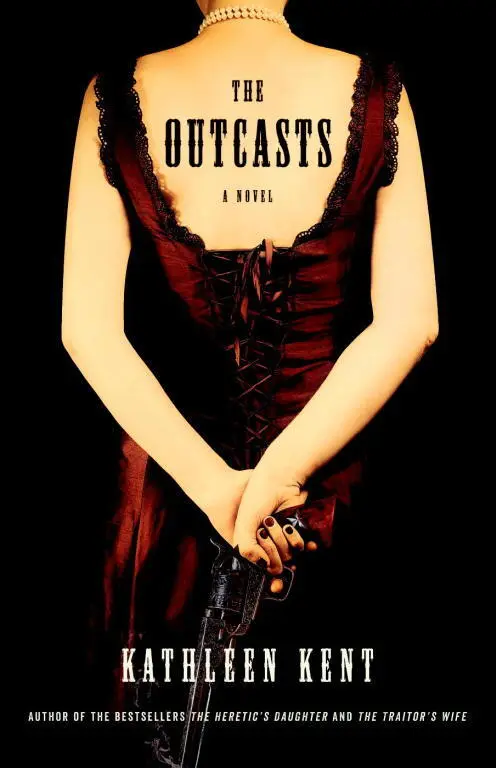
- Название:The Outcasts
- Автор:
- Издательство:Little, Brown and Company
- Жанр:
- Год:2013
- Город:New York
- ISBN:978-0-316-20613-6
- Рейтинг книги:3 / 5. Голосов: 1
-
Избранное:Добавить в избранное
- Отзывы:
-
Ваша оценка:
The Outcasts: краткое содержание, описание и аннотация
Предлагаем к чтению аннотацию, описание, краткое содержание или предисловие (зависит от того, что написал сам автор книги «The Outcasts»). Если вы не нашли необходимую информацию о книге — напишите в комментариях, мы постараемся отыскать её.
Meanwhile Nate Cannon, a young Texas policeman with a pure heart and a strong sense of justice, is on the hunt for a ruthless killer named McGill who has claimed the lives of men, women, and even children across the frontier. Who—if anyone—will survive when their paths finally cross?
As Lucinda and Nate’s stories converge, guns are drawn, debts are paid, and Kathleen Kent delivers an unforgettable portrait of a woman who will stop at nothing to make a new life for herself.
The Outcasts — читать онлайн бесплатно полную книгу (весь текст) целиком
Ниже представлен текст книги, разбитый по страницам. Система сохранения места последней прочитанной страницы, позволяет с удобством читать онлайн бесплатно книгу «The Outcasts», без необходимости каждый раз заново искать на чём Вы остановились. Поставьте закладку, и сможете в любой момент перейти на страницу, на которой закончили чтение.
Интервал:
Закладка:
He took his hand away and Nate kept his eye focused on the scope. Deerling’s voice had been carefully neutral, but every gesture the man made seemed to be a show of strength, couched in a warning and tethered to some vague threat, like the big bite, given to him under the guise of merciful relief for some unforeseen danger.
Nate exhaled slowly, resighted, and pulled the trigger; his shoulder jerked violently with the explosion, and the ridge around his right eye smarted from the scope’s recoil into his face.
They walked to the tree, leading their horses, counting off the distance—over six hundred yards. Nate saw that although he hadn’t hit the center of the tree, the shot had torn the bark off its side like an artillery shell.
Deerling scratched at the splintered wood with a fingernail and smiled. “Not one man in fifty could have made that shot, Nate. You’ll be useful yet.”
They mounted and rode at a faster pace, making Harrisburg before noon. After settling their horses into the stable, they walked up the main street and into the marshal’s office.
The marshal, a big man named Prudone, listened to Deerling recount their search across the entire state and then regarded them in frank disbelief. “Where did you say you started from?”
“Franklin,” Deerling said, casting a critical eye at the man’s desk, which was scattered with papers and the remnants of past meals.
“You must want McGill bad.” The marshal shook his head. “That was cowardly business in Houston. But he’s long gone.”
“I don’t think so.”
Prudone appraised Deerling with a half smile. Nate had initially thought the marshal looked like a man whose greatest battle in recent years had been finding a way to fasten his belt. But now, looking closer, he wasn’t so sure that was the case.
Prudone made a dismissive gesture with his hand. “Believe me, if McGill was still in the county, I’d know about it. I’ve got reliable scouts and more than a few deputies. There’s been no upset within the past month other than the cattle thieves we adjudicated yesterday. The six of them are stacked up like cordwood now outside the undertaker’s.”
A small vessel under Deerling’s eye pulsed. He said, “Then you won’t mind if we spend the night in your quiet town.”
“No, Captain, you’re certainly welcome.” The smile had disappeared. “We have two fine saloons, a beer hall, and a bordello that is, so I’ve heard, clean. Just a couple rules, and one suggestion. First, don’t carry your guns into the cathouse. It annoys the regulars. Second, no card-playing past midnight, because it annoys me. And finally: I’m a federal marshal. I trump both you and your governor-appointed friend here. My suggestion is you remember that.”
Deerling looked at the marshal for a moment but then nodded and motioned for Nate to follow him out. Halfway down the street, Deerling and Nate crossed to the other side, and the two of them stood in the shadow of a storefront, watching the door to the marshal’s office.
Nate asked, “What’re we doing?”
“Wait and see.”
The door opened and the marshal walked in the opposite direction from them, then entered a building with a sign reading Texas and New Orleans Telegraph Company. A few minutes later, he emerged and returned to his office.
Nate followed Deerling back up the street to the telegraph office, and they stood for a moment outside, peering through the window. The operator, a man with the creased and worried face of a hound, was sitting behind a shallow counter, alone in the room.
Nate said to Deerling, “Just find a way to give me a moment alone in there, without him in the room.”
The ranger nodded and they walked in and greeted the operator.
Deerling said, “I’d like to send a message to a fellow ranger at Company E at Fort Inge, but I don’t know if the telegraph goes that far.”
“Fort Inge?” the operator said. “God help your friend, then, sir. They were just attacked by about five hundred Comanche and Lipan. I can send the telegraph to Austin, but that’s as far as it goes. Then it’s mule relay.”
Deerling engaged the operator for a while, listening to the gruesome particulars of the attack, the number of injured and killed. Finally, he asked the man to point out the best place for a meal and led him onto the porch. It took only a moment for Nate to peer over the counter and read the destination of the previous telegraph sent by the marshal.
The men thanked the operator, and when he called after them asking if they still wanted to send the telegram, Deerling shook his head somberly and said, “No. I don’t believe my friend will need it now.”
Twenty paces on Deerling asked, “Well?”
Nate said, “Lynchburg.”
“What did the message say?”
“Just three words. Texas law here. ”
Deerling sucked air through his teeth and for the second time that day put a hand on Nate’s shoulder. “We’re close.”
They wandered in and out of the two saloons but it wasn’t until the beer hall that they got anything beyond cold stares and nervous tics. There were a few older men seated at a table; the rest of the room was empty.
Once the barkeep had heard their story, he looked grim. He rested his elbows on the bar, keeping his voice low. “I heard what happened to that family. The woman lived, you say? Well, I don’t know what kind of blessing that is, seeing her husband and children are dead.
“Listen, I was sheriff in Goliad before I opened this place. It steams me no end to see what’s goin’ on.”
The barkeep was quiet for a moment, letting two of the customers shuffle past and out into the street.
He then leaned over the bar towards Deerling again and said, “McGill was here, him and two others, a few months ago. McGill has more than a nodding acquaintance with our marshal. Prudone gives them protection and they give him a take. I tell you, one of these days someone is going to settle on Prudone with a bullet to the skull.”
“McGill have any keen interests the last time he was here?”
The barkeep walked to the far end of the bar, squatted down, reached behind a salt barrel, and pulled out a small sack. He put his hand in the sack and palmed something. Making sure the customers weren’t watching, he placed what he was holding on the bar in front of Deerling. It was a gold coin, larger than a quarter, nicked and slightly concave, as though something of great weight had rolled over it.
“A man came in here a few times. He was some kind of farmer, and not a very successful one. Drank a few beers and he started talking. Tellin’ everyone within earshot that he’d found gold on his land. I didn’t pay him any mind, but the story must have spread, because McGill showed up and started buying him whiskey at the saloon, trying to make him talk more. Something about it rattled the farmer, though, because he left town. But not before stopping off for one last beer. He didn’t have any money left except this. Well, he plops it down on the counter and I just about broke my jaw. I don’t know much about coins, but I know it’s old. He said it was just one of many. A whole treasure’s worth. He paid for that last beer with this.”
Deerling picked up the coin and turned it in his hands. He showed Nate the markings on the coin, and Nate said, “That’s not any Confederate money.”
Deerling asked the barkeep, “You gonna find some trouble over this?”
“Not if you don’t tell anyone.”
“What was the farmer’s name?”
“I don’t know, and that’s the honest-to-God truth.”
“Where’d he come from?”
“Not sure. I’d never seen him before.” The barkeep took the coin back from Nate. “But he might have told McGill where he was from. He was sure drunk enough. And in that case, if that farmer is still alive, it’s only because McGill hasn’t found his gold yet.”
Читать дальшеИнтервал:
Закладка:
Похожие книги на «The Outcasts»
Представляем Вашему вниманию похожие книги на «The Outcasts» списком для выбора. Мы отобрали схожую по названию и смыслу литературу в надежде предоставить читателям больше вариантов отыскать новые, интересные, ещё непрочитанные произведения.









Обсуждение, отзывы о книге «The Outcasts» и просто собственные мнения читателей. Оставьте ваши комментарии, напишите, что Вы думаете о произведении, его смысле или главных героях. Укажите что конкретно понравилось, а что нет, и почему Вы так считаете.