Eleanor Catton - The Luminaries
Здесь есть возможность читать онлайн «Eleanor Catton - The Luminaries» весь текст электронной книги совершенно бесплатно (целиком полную версию без сокращений). В некоторых случаях можно слушать аудио, скачать через торрент в формате fb2 и присутствует краткое содержание. Год выпуска: 2013, ISBN: 2013, Издательство: Granta Publications, Жанр: Историческая проза, Современная проза, на английском языке. Описание произведения, (предисловие) а так же отзывы посетителей доступны на портале библиотеки ЛибКат.
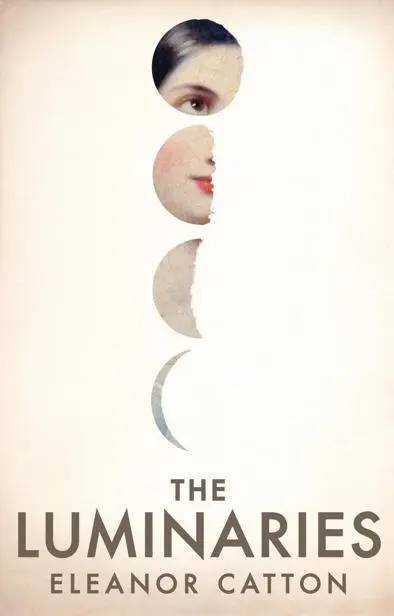
- Название:The Luminaries
- Автор:
- Издательство:Granta Publications
- Жанр:
- Год:2013
- ISBN:9781847085931
- Рейтинг книги:5 / 5. Голосов: 1
-
Избранное:Добавить в избранное
- Отзывы:
-
Ваша оценка:
The Luminaries: краткое содержание, описание и аннотация
Предлагаем к чтению аннотацию, описание, краткое содержание или предисловие (зависит от того, что написал сам автор книги «The Luminaries»). Если вы не нашли необходимую информацию о книге — напишите в комментариях, мы постараемся отыскать её.
The Luminaries — читать онлайн бесплатно полную книгу (весь текст) целиком
Ниже представлен текст книги, разбитый по страницам. Система сохранения места последней прочитанной страницы, позволяет с удобством читать онлайн бесплатно книгу «The Luminaries», без необходимости каждый раз заново искать на чём Вы остановились. Поставьте закладку, и сможете в любой момент перейти на страницу, на которой закончили чтение.
Интервал:
Закладка:
Gascoigne stood immediately. Mannering, who looked suddenly alarmed, stepped back several paces and withdrew one of his pistols from its holster. He held it against his thigh, to conceal it from view, and nodded for Gascoigne to lift the latch.
On the threshold, standing with his stick set at a rather rakish angle from his body and his hat tipped back from his brow, was Harald Nilssen. He bowed, and was just about to make his introduction to Gascoigne when he perceived, over the latter’s shoulder, Dick Mannering, standing awkwardly, with one arm held stiff at his side. Nilssen burst out laughing.
‘ Well ,’ he said. ‘Seems I’m two steps behind you, Dick. Everywhere I go today—there you are, and you got there first! Hello, Mr. Gascoigne. My name’s Harald Nilssen. I’m very pleased to make your acquaintance. I do hope I’m not interrupting anything.’
Gascoigne bowed courteously, though his expression remained cold. ‘Not at all,’ he said. ‘Do come in.’
‘I had come to talk with you about Anna Wetherell,’ Nilssen said cheerfully, wiping his boots, ‘but I see I’ve been pipped at the post!’
Gascoigne closed the door and said, ‘What about Anna?’
At the same time, Mannering said, ‘Steady up, Mr. Nilssen.’
Nilssen answered Gascoigne. ‘Well, it concerns something rather peculiar,’ he said. ‘So perhaps it’s not for all ears. But listen: I don’t want to interrupt you. I can easily come back when you’re not otherwise engaged.’
‘No, please,’ Gascoigne said. ‘Mr. Mannering was just leaving; he just told me so himself.’
It vexed Mannering to be excluded in this way. ‘What’s it all about?’ he said to Nilssen.
Nilssen made a short bow. ‘It is a very delicate situation; I do apologise.’
‘Hang delicate ,’ Mannering said. ‘You needn’t conceal anything from me , for God’s sake: we’re in this together! Is this about the widow? Or about the gold?’
Nilssen was uncomprehending. ‘The Wells fortune?’ He turned to Gascoigne. ‘Are you mixed up in that , then?’
Gascoigne was looking very amused all of a sudden. ‘It seems I am being interrogated from all quarters at once,’ he said. ‘Are you also wearing pistols, Mr Nilssen? You really ought to confess them, if you are.’
‘I’m not wearing pistols,’ Nilssen said. He glanced at Mannering, and saw the revolver in his hand. ‘What’s that for? What are you doing?’
But Mannering did not answer: he was caught, momentarily, between all that he wished to conceal from Nilssen, and all that he wished to conceal from Gascoigne. He hesitated, wishing that he had not already mentioned the widow and the gold.
‘Mr. Mannering was just showing me his second-issue Smith and Wesson,’ Gascoigne said conversationally. ‘That cylinder takes seven cartridges, apparently.’
‘Oh,’ Nilssen said—but he looked suspicious. ‘What for?’
Again Mannering’s explanation stalled in his throat. He did not wish Nilssen to know about the gold hidden beneath Gascoigne’s bed … but he did not wish Gascoigne to know about the Crosbie Wells debacle, and Ah Quee, and Ah Sook, and opium, and all that was to be discussed at the Crown Hotel that very evening.
‘It’s a delicate situation,’ Gascoigne said, putting in for the older man. He leaned towards Nilssen. ‘All I can tell you is that Mr. Mannering here has a source of very good information in Miss Anna Wetherell, and the information comes by way of Mr. Edgar Clinch.’
‘That’s enough out of you,’ said Mannering, finding his tongue at last. ‘Nilssen. What’s your news about Anna? What’s your business?’
But Nilssen misunderstood Mannering’s intention, in pressing him to speak upon this subject in front of Gascoigne. He remembered that Pritchard’s letter had mentioned pistols, and Anna, and indirectly, Edgar Clinch—for Pritchard had said a strange event had taken place in Anna’s rooms at the Gridiron Hotel that very afternoon. Of course! Nilssen thought suddenly. Their ‘delicate situations’ must be one and the same.
‘Look here,’ he said, holding up his hand. ‘I believe we’re talking about the same thing after all. If Mr. Gascoigne’s in on the secret, then we may as well wait until everyone’s assembled at the council, and share our stories then. Save telling everything twice. Shall I see you both at the Crown?’
Mannering exhaled.
‘I am afraid,’ Gascoigne said presently, ‘that I am not in on the secret, and I have not been invited to a council at the Crown.’
There was a silence. Gascoigne looked at Nilssen, and then at Mannering. Mannering looked at Gascoigne, and then at Nilssen. Nilssen was looking at Mannering. He had a very apologetic expression upon his face.
‘Now you’ve done it,’ the magnate said. He uttered an oath, put away his pistol, and then levelled his finger at Gascoigne. ‘All right,’ he said. ‘There’s nothing for it—though I’m d—ned if your presence is welcome, and I’ll be d—ned if I don’t keep you in my sights until the evening’s over, and beyond. Put your coat on. You’re coming along.’
MERCURY IN SAGITTARIUS
In which Walter Moody meditates upon the mystery at hand; we learn what happened on his journey from Dunedin; and a messenger brings unexpected news.
There was a silence in the smoking room of the Crown Hotel—a silence that, for a moment, seemed to still the breath of every man, and still the smoke that rose in coils from the pipes, the cigarettes, the cheroots, and the cigars.
It was past midnight. The darkness had rounded the corners of the room, and the cones of light cast by the spirit lamps now seemed robust and warming, where before they had been faint and chill. Strains of Saturday night filtered in from the street—an accordion, distant shouting, an infrequent whoop, hoof beats. It had stopped raining, though the cloud had not yet cleared, and the gibbous moon showed only as a squarish patch of light in the lowering sky.
‘That’s it,’ said Thomas Balfour. ‘That’s it. That’s where we’d got to.’
Moody blinked and looked around him. Balfour’s narrative, disjunctive and chaotic as it was, had indeed accounted for the presence of every man in the room. There by the window was the Maori carver, Te Rau Tauwhare, who had been Crosbie’s loyal friend in life, though he had unwittingly betrayed him at the last. There in the farthest corner was Charlie Frost, the banker who had engineered the sale of Wells’s house and land, and opposite him, the newspaperman Benjamin Löwenthal, who had heard about the death within mere hours of its occurrence. Edgar Clinch, purchaser of Wells’s estate, was sitting on the sofa beside the billiard table, smoothing his moustache with his finger and thumb. There by the fire was Dick Mannering, whoremonger, theatre owner, and close associate of Emery Staines; there behind him was Ah Quee, his enemy. There with a cue in his hand was the commission merchant, Harald Nilssen, who had discovered in Crosbie Wells’s cottage not only an enormous fortune, but a corked phial of laudanum, half empty, which had been purchased at Joseph Pritchard’s drug hall. The latter, of course, was sitting nearest Moody; on his other side was Thomas Balfour, lackey to the politician Lauderback, whose shipping crate had lately disappeared. There in the wingback armchair next to Balfour was Aubert Gascoigne, who had paid Anna Wetherell’s bail, and had uncovered another, smaller fortune hoarded in her orange whoring gown. Behind him was Ah Sook, peddler of opium, keeper of the den at Kaniere, and former associate of Francis Carver, who had discovered, that very afternoon, that Crosbie Wells had once been rich. And there, finally, leaning against the billiard table with his arms folded across his chest, was the chaplain Cowell Devlin, who had committed the hermit’s body to its final resting place upon the terrace at Seaview.
Читать дальшеИнтервал:
Закладка:
Похожие книги на «The Luminaries»
Представляем Вашему вниманию похожие книги на «The Luminaries» списком для выбора. Мы отобрали схожую по названию и смыслу литературу в надежде предоставить читателям больше вариантов отыскать новые, интересные, ещё непрочитанные произведения.






Обсуждение, отзывы о книге «The Luminaries» и просто собственные мнения читателей. Оставьте ваши комментарии, напишите, что Вы думаете о произведении, его смысле или главных героях. Укажите что конкретно понравилось, а что нет, и почему Вы так считаете.