Eleanor Catton - The Luminaries
Здесь есть возможность читать онлайн «Eleanor Catton - The Luminaries» весь текст электронной книги совершенно бесплатно (целиком полную версию без сокращений). В некоторых случаях можно слушать аудио, скачать через торрент в формате fb2 и присутствует краткое содержание. Год выпуска: 2013, ISBN: 2013, Издательство: Granta Publications, Жанр: Историческая проза, Современная проза, на английском языке. Описание произведения, (предисловие) а так же отзывы посетителей доступны на портале библиотеки ЛибКат.
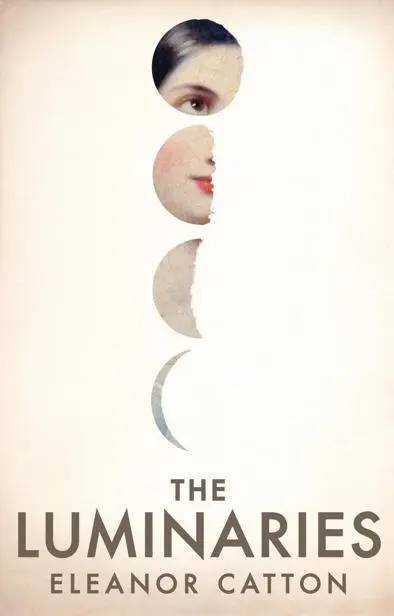
- Название:The Luminaries
- Автор:
- Издательство:Granta Publications
- Жанр:
- Год:2013
- ISBN:9781847085931
- Рейтинг книги:5 / 5. Голосов: 1
-
Избранное:Добавить в избранное
- Отзывы:
-
Ваша оценка:
The Luminaries: краткое содержание, описание и аннотация
Предлагаем к чтению аннотацию, описание, краткое содержание или предисловие (зависит от того, что написал сам автор книги «The Luminaries»). Если вы не нашли необходимую информацию о книге — напишите в комментариях, мы постараемся отыскать её.
The Luminaries — читать онлайн бесплатно полную книгу (весь текст) целиком
Ниже представлен текст книги, разбитый по страницам. Система сохранения места последней прочитанной страницы, позволяет с удобством читать онлайн бесплатно книгу «The Luminaries», без необходимости каждый раз заново искать на чём Вы остановились. Поставьте закладку, и сможете в любой момент перейти на страницу, на которой закончили чтение.
Интервал:
Закладка:
Shepard waited for a lull in the conversation, which came about within moments, owing to his imposing presence in the room. Devlin turned an inquiring face up at him, and Shepard said, ‘Good afternoon, Reverend. Hand me your Bible, would you please?’
Devlin frowned. ‘My Bible?’
‘If you wouldn’t mind.’
The chaplain placed his palm over the book. ‘Perhaps you might simply ask me what it is you seek,’ he said. ‘I pride myself that I do know my scriptures rather well.’
‘I do not doubt it; and yet browsing is a pleasure to me,’ Shepard replied.
‘But of course you have a Bible of your own!’
‘Of course,’ Shepard agreed. ‘However, it is the hour of my wife’s devotions, and I do not like to disturb her.’
For a moment Devlin considered extracting the purloined deed himself—but its charred aspect would surely not escape the gaoler’s comment, and in any case, he was surrounded by felons; where would he hide the thing?
‘What is it that you are looking for, exactly?’ he said. ‘A verse—or an allusion—?’
‘You are very chary of your Bible, for a man of God,’ Shepard snapped. ‘Heavens, man! I only wish to look through the pages! You will deny me that?’
And Devlin was obliged to surrender it. Shepard, thanking him, took the book back to his private residence, and closed the door.
Devlin’s sermon on rote prayer was perversely applicable to the ensuing half hour, for it was with a ritual circularity that his attention kept straying to the gaoler’s study, where the man would be seated behind his desk, turning the thin pages of the book in his great white hands. Devlin did not guess that Shepard might have known about the deed that he had concealed between the testaments, for his nature was not a suspicious one, and he did not take pleasure, as some men did, in believing himself to have been betrayed. He hoped, as the minutes dragged by, that Shepard would restrict his reading to the more ancient parts of the text; he hoped that the book would be returned to him with the charred deed undiscovered and untouched. Devlin knew very well that Shepard’s faith was of a staunchly Levitican variety; it was not unreasonable to hope that he might confine his browsing to the Pentateuch, or to Chronicles and Kings. He was hardly likely to favour the minor prophets … but the Gospels were standard fare, most especially for a Sunday. He was very likely to turn there, whatever his persuasion, and in that case he would almost certainly come across the hidden page.
Finally the afternoon’s discussion came to an end, and Devlin, in a posture of some dread, took his leave of the felons in his spiritual charge. The duty sergeant nodded goodbye, stifling a yawn; Devlin let himself out; a hush fell over the gaol-house. He crossed the courtyard, mounted the steps to the porch of the gaoler’s cottage, and knocked upon the door.
From within Shepard’s deep voice bid him to enter; Devlin did so, and crossed the calico hallway to the gaoler’s study. The door was open; Devlin saw at once that his Bible lay open on the gaoler’s desk, with the charred slip of paper on top of it, in full view.
On this 11th day of October 1865 a sum of two thousand pounds is to be given to MISS ANNA WETHERELL, formerly of New South Wales, by MR. EMERY STAINES, formerly of New South Wales, as witnessed by MR. CROSBIE WELLS, presiding.
Shepard folded his hands and waited for his guest to speak.
‘Something I found,’ Devlin said. ‘But it’s no use to anyone.’
‘No use to anyone?’ Shepard queried, pleasantly. ‘Why on earth do you say that?’
‘It’s invalid,’ Devlin said. ‘The principal hasn’t signed. Therefore it’s not legal.’
Cowell Devlin, like all men who will not admit fault to themselves, was loath to admit fault to any other man. He became very arch and condescending whenever he was accused of doing ill.
‘No indeed,’ said Shepard. ‘It’s not legal.’
‘It’s not binding —that’s what I meant,’ Devlin said, with a slight frown. ‘It’s not binding, in the legal sense.’
Shepard did not blink. ‘Which is rather a shame, wouldn’t you say?’
‘Why is that?’
‘If only Emery Staines had signed it—why, half of the fortune discovered at Crosbie Wells’s cottage would belong to Anna Wetherell! That would be a turn of events, would it not?’
‘But the fortune in the hermit’s cottage never belonged to Emery Staines.’
‘No?’ Shepard said. ‘Forgive me: you seem to be rather more certain of that fact than I am.’
Cowell Devlin knew very well that the gold in Crosbie Wells’s cottage had originated from four gowns, sewn up by Lydia Wells, purchased by Anna Wetherell; he knew that the gold had been siphoned and then retorted by the goldsmith Ah Quee, only to be stolen by Staines, and concealed in Wells’s cottage at some point thereafter. He could not say any of this to Shepard, however; instead he said, ‘There is no reason to think that the fortune belonged to Mr. Staines.’
‘Beyond the fact that Mr. Staines vanished upon the day of Mr. Wells’s death, and Mr. Wells was not, to popular understanding, a man of means.’ Shepard stabbed the deed with his index finger. ‘This certainly seems pertinent, Reverend, to our case at hand. This document appears to indicate that the fortune originated with Staines—and that Staines meant to give half of it— exactly half—to a common prostitute. I would hazard to guess that Crosbie Wells, as his witness, was keeping the fortune for him, when he died.’
This was a reasonable hypothesis. Perhaps Shepard was right upon the latter point, Devlin thought, though of course he was mistaken upon the former. Aloud he said, ‘You are right that it seems pertinent; however, as I have told you already, the contract is not valid. Mr. Staines has not signed his name.’
‘I presume that you found this deed in Crosbie Wells’s cottage, the day you went to collect his remains.’
‘That is correct,’ Devlin said.
‘If you have kept such careful custody of it,’ Shepard said, ‘then I dare say it occurred to you how very valuable this deed might be. To certain persons. To Anna Wetherell, for instance. By this paper’s authority, she could become the richest woman this side of the Southern Alps!’
‘She could not,’ Devlin said. ‘The deed is unsigned.’
‘If it were to be signed,’ Shepard said.
‘Emery Staines is dead,’ Devlin said.
‘Is he?’ Shepard said. ‘Dear me. Another certainty that we do not share.’
But Cowell Devlin was not easily intimidated. ‘The promise of great riches is a dangerous thing,’ he said, folding his hands across his navel in the clerical way. ‘It is a temptation like no other, for it is the temptation of great influence and great opportunity, and these are things we all desire. If Miss Wetherell were to be told about this deed, her hopes would be falsely raised. She would start dreaming of great influence and great opportunity; she would no longer be contented with the life she led before. This was a circumstance I feared. I therefore resolved to keep the information to myself, at least until Emery Staines was either recovered, or found to be dead. If he is found dead, I will destroy the deed. But if he lives, I shall go to him, and show him the paper, and ask him whether he wishes to sign it. The choice would be his own.’
‘And what if Staines is never found?’ the gaoler said. ‘What then?’
‘I made my decision with compassion, Mr. Shepard,’ Devlin said firmly. ‘I feared very much what would happen to poor Miss Wetherell, should that deed of gift be made public, or should it fall into the wrong hands. If Mr. Staines is never found, then no hopes will be dashed, and no blood spilled, and no faith lost. I judge that to be no small mercy. Don’t you?’
Читать дальшеИнтервал:
Закладка:
Похожие книги на «The Luminaries»
Представляем Вашему вниманию похожие книги на «The Luminaries» списком для выбора. Мы отобрали схожую по названию и смыслу литературу в надежде предоставить читателям больше вариантов отыскать новые, интересные, ещё непрочитанные произведения.





Обсуждение, отзывы о книге «The Luminaries» и просто собственные мнения читателей. Оставьте ваши комментарии, напишите, что Вы думаете о произведении, его смысле или главных героях. Укажите что конкретно понравилось, а что нет, и почему Вы так считаете.