Eleanor Catton - The Luminaries
Здесь есть возможность читать онлайн «Eleanor Catton - The Luminaries» весь текст электронной книги совершенно бесплатно (целиком полную версию без сокращений). В некоторых случаях можно слушать аудио, скачать через торрент в формате fb2 и присутствует краткое содержание. Год выпуска: 2013, ISBN: 2013, Издательство: Granta Publications, Жанр: Историческая проза, Современная проза, на английском языке. Описание произведения, (предисловие) а так же отзывы посетителей доступны на портале библиотеки ЛибКат.
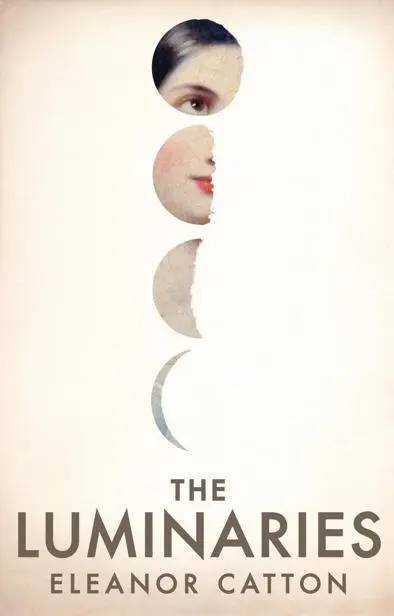
- Название:The Luminaries
- Автор:
- Издательство:Granta Publications
- Жанр:
- Год:2013
- ISBN:9781847085931
- Рейтинг книги:5 / 5. Голосов: 1
-
Избранное:Добавить в избранное
- Отзывы:
-
Ваша оценка:
The Luminaries: краткое содержание, описание и аннотация
Предлагаем к чтению аннотацию, описание, краткое содержание или предисловие (зависит от того, что написал сам автор книги «The Luminaries»). Если вы не нашли необходимую информацию о книге — напишите в комментариях, мы постараемся отыскать её.
The Luminaries — читать онлайн бесплатно полную книгу (весь текст) целиком
Ниже представлен текст книги, разбитый по страницам. Система сохранения места последней прочитанной страницы, позволяет с удобством читать онлайн бесплатно книгу «The Luminaries», без необходимости каждый раз заново искать на чём Вы остановились. Поставьте закладку, и сможете в любой момент перейти на страницу, на которой закончили чтение.
Интервал:
Закладка:
‘The investment will be returned to me?’ said Nilssen.
‘Not at all,’ said Shepard. He tossed the table napkin onto his plate. ‘In fact I consider that a most unreasonable request, given that the work is already well underway.’
Nilssen worked his mouth. At length he said, ‘I understand.’
‘You will not break your digger’s code.’
‘No.’
‘Incredible.’
‘I am sorry.’
Shepard pushed his plate away, becoming brisk. ‘Mr. Lauderback’s letter will be published to-morrow in the Times ; I have an advance copy here.’
Nilssen saw that there was an opened letter on the table next to the gaoler’s plate. He stepped forward, putting out his hand. ‘May I—?’
But Shepard ignored him. ‘The letter,’ he went on, raising his voice slightly, ‘does not refer to you by name. You should know that I will be writing to the editor myself tonight, in order to correct that omission. My response will be published below Mr. Lauderback’s, as a formal reply.’
Nilssen tried again. ‘May I read it?’
‘You may read it to-morrow in the paper, along with every other man in Westland.’ Shepard uttered the phrase with a dangerous emphasis.
‘All right,’ Nilssen said. He withdrew his hand. ‘I take your meaning.’
Shepard paused before adding, ‘Unless, of course, there’s something that you’d like to tell me.’
In a voice of loathsome dejection, Nilssen said, ‘Yes.’
‘Yes?’
‘Yes—there’s something.’
Poor Harald Nilssen! Thinking that he might regain the gaoler’s trust by means of a second transgression, as though by committing a second disloyalty, he might reverse the fact of the first! He had conceded in a panic—for it crushed Nilssen’s spirit to be held in low esteem by other men. He could not bear to know that he was disliked, for to him there was no real difference between being disliked, and being dislikeable; every injury he sustained was an injury to his very selfhood. It was for reasons of self-protection that Nilssen dressed in the latest fashions, and spoke with affectation, and placed himself as the central character of every tale: he built his persona as a shield around his person, because he knew very well how little his person could withstand.
‘Pray continue,’ Shepard said.
‘It’s about—’ (Nilssen cast about wildly) ‘—Mrs. Wells.’
‘Indeed,’ Shepard said. ‘How so?’
‘She was Lauderback’s mistress.’
Shepard raised his eyebrows. ‘Alistair Lauderback was cuckolding Crosbie Wells?’
Nilssen thought about it. ‘Yes, I suppose he was. Well, it would depend on when Crosbie and Lydia got married, of course.’
‘Go on,’ Shepard said.
‘The thing is—the thing is—he was blackmailed—Lauderback, I mean—and Crosbie Wells took home the ransom. That’s the fortune, you see—in Crosbie’s cottage.’
‘How did this blackmail happen? And how do you know about it?’
Nilssen hesitated. He did not trust the gaoler’s expression, which had suddenly become very greedy and intense.
‘How do you know about it?’ Shepard demanded.
‘Somebody told me.’
‘Who?’
‘Mr. Staines,’ said Nilssen—settling upon the man to whom he could do the least damage, in the short term at least.
‘Was he the blackmailer—Staines?’
‘I don’t know,’ said Nilssen, momentarily confused. ‘I mean, yes, maybe.’
‘Are you with him, or against him?’
‘I—I don’t know.’
Shepard looked annoyed. ‘What have you got on him, then?’ he said. ‘You must have something on the man, if you’re not sure about your allegiance.’
‘There was a deed of gift,’ Nilssen said miserably. ‘In Crosbie Wells’s stove—partly burned, as though someone tried to destroy it. The chaplain found it. When he went to the cottage to collect the body, the day after his death. He didn’t tell you about it; he kept it for himself. He didn’t tell Dr. Gillies either.’
Shepard betrayed no flicker of emotion at all. ‘What kind of a deed of gift?’
Nilssen briefly detailed the particulars of the contract. He kept his eyes upon a spot some three feet to the left of the gaoler’s face, and squinted oddly—for a bubble of despair was growing in his chest, pushing out against his breastbone. He had meant to reassure the gaoler of his loyalty by betraying this secret; now he saw that he had only confirmed his disloyalty, and his worthlessness. And yet—despite his misery—there was something terribly relieving about speaking of the Crown conspiracy aloud. He felt that a great weight was being lifted off his shoulders, just as he felt that a terrible weightlessness was settling in its place. He glanced at the gaoler quickly, and then away.
‘Is Devlin your man?’ Shepard said. ‘Did you tell Devlin about this investment—and did he tell Lauderback?’
‘Yes,’ Nilssen said. ‘That’s right.’ (What kind of wretched man was he—to accuse a clergyman ? But of course it was only half a lie … and better to accuse one man than all twelve.) ‘I mean,’ he added, ‘I only suppose he told Lauderback. I don’t know. I’ve never spoken to Lauderback about anything at all—as I told you.’
‘So Devlin is Lauderback’s man,’ Shepard said.
‘I don’t know about that,’ said Nilssen. ‘I don’t know about that at all.’
Shepard nodded. ‘Well, Mr. Nilssen,’ he said, rising from the table. ‘That concludes our discussion, I think.’
It panicked Nilssen still further to be dismissed. ‘The part about the deed,’ he said. ‘It’s just—if you’re going to mention it to the Reverend—’
‘I imagine that I will, yes.’
‘Well—can you leave my name out of it?’ said Nilssen, with a look of pure misery on his face. ‘You see: I can tell you where he’s keeping it—the deed, I mean—and that way you can come upon it yourself, and there’s no bridges broken on my end. Will you do that?’
Shepard studied him without pity. ‘Where does he keep it?’
‘I won’t tell you until you give your word,’ said Nilssen.
Shepard shrugged. ‘All right.’
‘Do you give your word?’
‘Upon my honour, I will not speak your name to the chaplain of the gaol,’ Shepard snapped. ‘Where does he keep it?’
‘In his Bible,’ said Nilssen, very sadly. ‘In his Bible, between the Old Testament, and the New.’

Since the construction of the gaol-house had begun in earnest Cowell Devlin and George Shepard had not seen a great deal of one another, save for in the evenings when Shepard returned from the construction site at Seaview to write his letters and tally his accounts. Devlin, who found the atmosphere of the temporary Police Camp much improved in Shepard’s absence, had not pursued a deeper intimacy with the other man. Had he been pressed to pass judgment on the gaoler’s character, he might, after a long pause, have conceded that he pitied Shepard’s rigidity, and mourned the evident displeasure with which Shepard seemed to regard the world around him; after another pause, he might have added that he wished Shepard well, but did not expect the relations between them to develop beyond their present capacity, which was strictly professional, and none too warm.
That day was a Sunday, however, and construction on the terrace had halted for the day. Shepard had spent the morning at chapel, and the afternoon in his study at the Police Camp, from which place Harald Nilssen was now very rapidly departing; Devlin, who had recently returned from the Kaniere camp, was in the temporary gaol-house, preaching to the felons on the subject of rote prayer. He had brought his battered Bible with him, as he always did whenever he left his tent, though the nature of that day’s sermon was such that he had had no cause to open it that afternoon; when Shepard stepped into the gaol-house it was lying, closed, upon a chair at Devlin’s side.
Читать дальшеИнтервал:
Закладка:
Похожие книги на «The Luminaries»
Представляем Вашему вниманию похожие книги на «The Luminaries» списком для выбора. Мы отобрали схожую по названию и смыслу литературу в надежде предоставить читателям больше вариантов отыскать новые, интересные, ещё непрочитанные произведения.





Обсуждение, отзывы о книге «The Luminaries» и просто собственные мнения читателей. Оставьте ваши комментарии, напишите, что Вы думаете о произведении, его смысле или главных героях. Укажите что конкретно понравилось, а что нет, и почему Вы так считаете.