Stewart Binns - Crusade
Здесь есть возможность читать онлайн «Stewart Binns - Crusade» весь текст электронной книги совершенно бесплатно (целиком полную версию без сокращений). В некоторых случаях можно слушать аудио, скачать через торрент в формате fb2 и присутствует краткое содержание. Город: London, Год выпуска: 2012, ISBN: 2012, Издательство: Penguin Books, Жанр: Историческая проза, на английском языке. Описание произведения, (предисловие) а так же отзывы посетителей доступны на портале библиотеки ЛибКат.
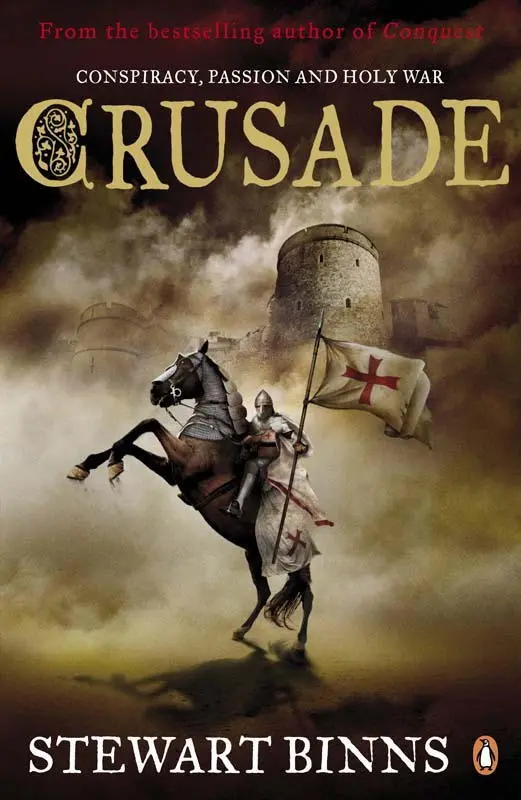
- Название:Crusade
- Автор:
- Издательство:Penguin Books
- Жанр:
- Год:2012
- Город:London
- ISBN:978-0-241-95758-5
- Рейтинг книги:3 / 5. Голосов: 1
-
Избранное:Добавить в избранное
- Отзывы:
-
Ваша оценка:
Crusade: краткое содержание, описание и аннотация
Предлагаем к чтению аннотацию, описание, краткое содержание или предисловие (зависит от того, что написал сам автор книги «Crusade»). Если вы не нашли необходимую информацию о книге — напишите в комментариях, мы постараемся отыскать её.
In the face of chaos and death, Edgar and his allies form a secret brotherhood, pledging to fight for justice and freedom wherever they are denied. But soon they are called to fight for an even greater cause: the plight of the Holy Land. Embarking on the epic First Crusade to recapture Jerusalem, together they will participate in some of the cruellest battles the world has ever known, the savage Siege of Antioch and the brutal Fall of Jerusalem, and together they will fight to the death.
Crusade — читать онлайн бесплатно полную книгу (весь текст) целиком
Ниже представлен текст книги, разбитый по страницам. Система сохранения места последней прочитанной страницы, позволяет с удобством читать онлайн бесплатно книгу «Crusade», без необходимости каждый раз заново искать на чём Вы остановились. Поставьте закладку, и сможете в любой момент перейти на страницу, на которой закончили чтение.
Интервал:
Закладка:
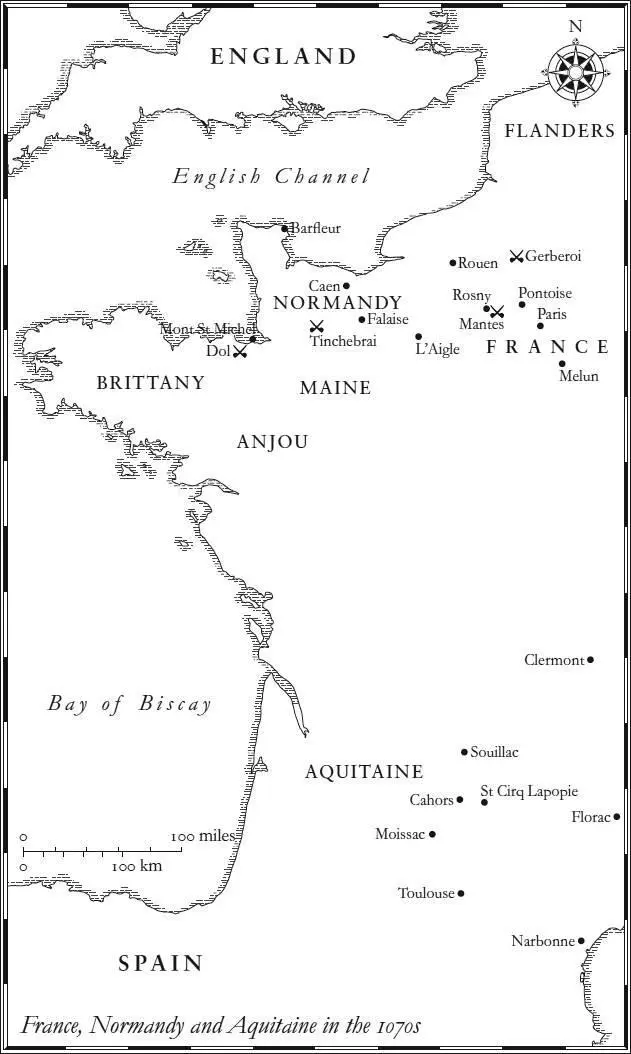
MAP 2
France, Normandy and Aquitaine in the 1070s
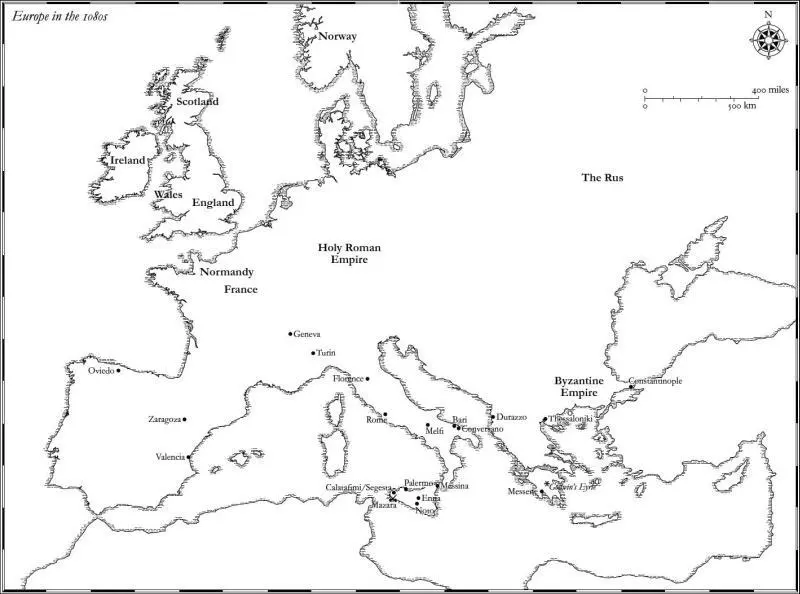
MAP 3
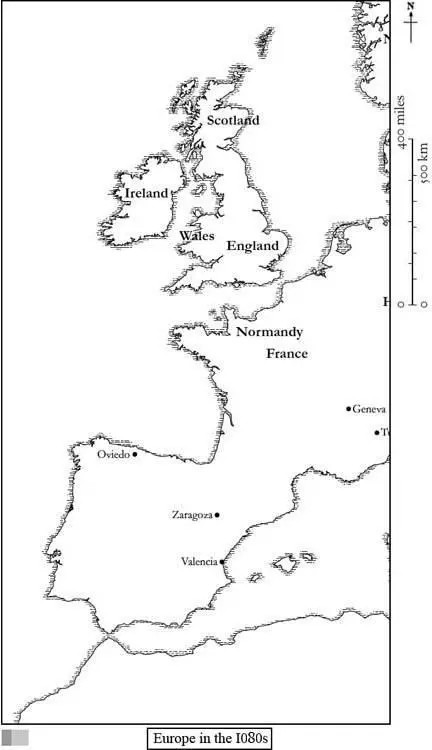
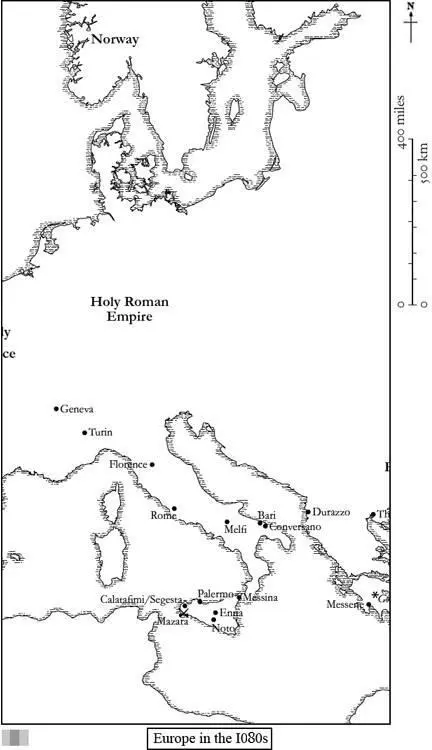
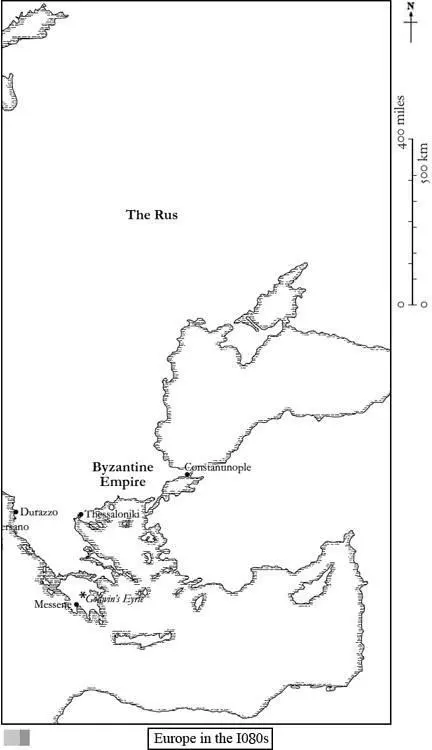
Europe in the 1080s
MAP 4
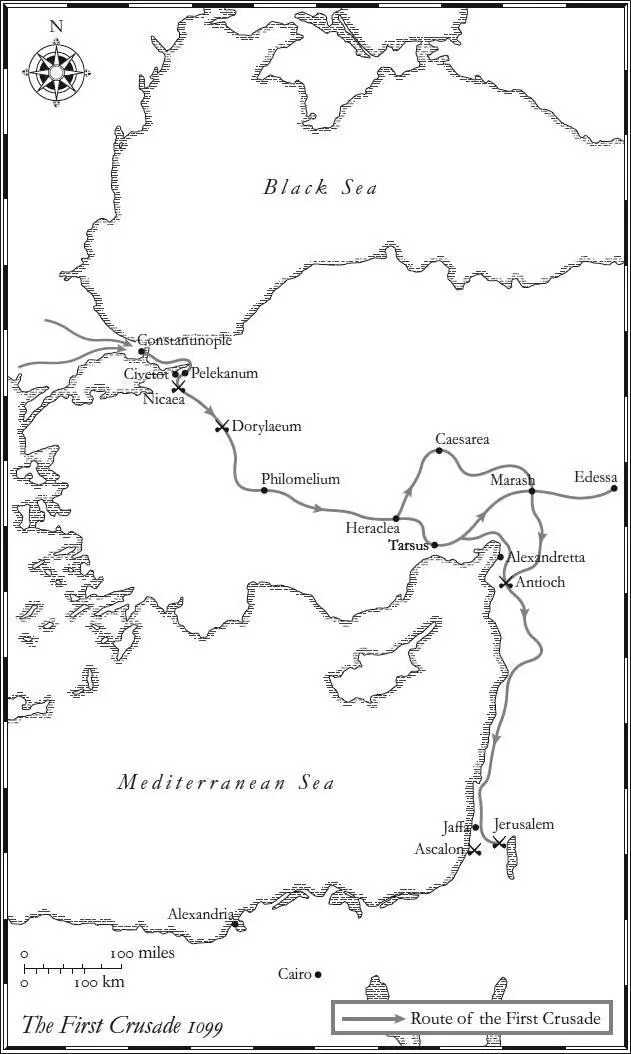
The First Crusade 1099
Glossary
A medieval religious hermit who devoted his or her life to prayer and frugality. Greatly revered by the local community, they often lived in small stone cells built against the walls of churches.
Atabeg, Atabek, or Atabey is a hereditary title of nobility of Turkic origin, indicating a governor of a nation or province who is subordinate to a monarch. The word is a compound of two Turkic words: from ata, ‘ancestor’, and beg or bey, ‘leader, prince’. The title was common during the Seljuk rule of the Near East in the twelfth century. It was also used in Mesopotamia.
The Anglo-Saxon name for the heir to the throne.
A huge wooden war club, believed to have been carried by the Duke of Normandy as a sort of mace signifying his authority. It may well have been a weapon used in earnest by his Viking ancestors.
A fortified settlement of several buildings, or even a small town, often on a commanding hilltop position.
A gold coin from the Byzantine Empire.
The great ancient forest of middle England.
The Saxon name for a town or city.
A naval-based elite warrior, the seaborne equivalent of a housecarl and a forerunner of a modern-day marine.
Castles, fortresses and fortified walled cities were the main form of defence in the Middle Ages and a variety of catapult devices were used against them. As well as attempting to breach the walls, missiles and incendiaries could be hurled inside, or early forms of biological warfare deployed, such as diseased carcases, putrid garbage or excrement. The most widely used catapults were the following:
Similar to a giant crossbow and designed to work through torsion. Giant arrows were used as ammunition, made from wood and with an iron tip.
Designed to throw heavy projectiles from a bowl-shaped bucket at the end of an arm. With a range of up to 1,300 feet they were relatively simple to construct, and wheels were added to increase mobility. Mangonels are sometimes referred to as ‘onagers’. Onager catapults initially launched projectiles from a sling, which was later changed to a bowl-shaped bucket.
The springald’s design was similar to that of the ballista, effectively a crossbow propelled by tension. The springald’s frame was more compact, allowing for use inside tighter confines, such as the inside of a castle or tower.
Trebuchets were probably the most powerful catapult employed in the Middle Ages. The most commonly used ammunition was stones, but the most effective involved fire, such as firebrands and the infamous ‘Greek fire’. Trebuchets came in two different designs: traction, which were powered by people; and counterpoise, powered by a weight on the short end of an arm. A simplified trebuchet was known as a ‘couillard’, where the trebuchet’s single counterweight was split, swinging on either side of a central support post.
The dynastic name of the Kings of Wessex, who ultimately became Kings of England, from Egbert, King of Wessex in 820, to Edward the Confessor’s death in 1066. The only exceptions were the three Danish kings, Cnut and his sons Harold Harefoot and Harthcnut, between 1016 and 1042. The name reputedly derives from Cerdic, a prince of the West Saxons from circa 600, who was an ancestor of Egbert, the first King of England, but he is a figure who may be more myth than reality.
Armour made from linked iron rings ( see hauberk).
A church builder or architect.
William, son of Robert, Duke of Normandy, was given the suffix ‘Clito’. It is the Latinized equivalent to ‘Atheling’ – heir to the throne.
A squadron, twenty-five strong, of Norman cavalry.
A tribute paid by the Saxons of England to persuade Viking raiders to return to Scandinavia and leave the people unharmed and their goods intact. The first Danegeld was paid in 856 (10,000 pounds of silver) and more was handed over in 991, 994, 1002 and 1007 when King Athelred bought two years of peace for 36,000 pounds of silver. Two more payments were made in 1012 and in 1016 when Cnut the Great became King of England and paid for his invasion fleet with a geld of over 80,000 pounds of silver.
The denier was a Frankish coin created by Charlemagne in the Early Middle Ages. It was introduced together with an accounting system in which twelve deniers equalled one sou and twenty sous equalled one livre. This system, and the denier itself, served as the model for many of Europe’s currencies, including the British pound, Italian lira, Spanish peseta and the Portuguese dinheiro. The British equivalent of the denier was the penny, 240 of which made up one British pound, or 20 shillings. The symbol for both the old denier and the penny used in the United Kingdom and elsewhere was ‘d’. The name ‘denier’ was derived from the name of the Roman coin the denarius.
A Norman war horse. The Normans had four designations of horse: a destrier (for use in battle); a palfrey (a good riding horse); a rouney (an ordinary riding horse); and a sumpter (a packhorse).
An Arab cavalryman, usually carrying a status similar to the European knight.
The personal war banner of Harold Godwinson, bearing the woven image of an ancient warrior wielding a war club.
A Sufic (mystical Islamic) term that has some similarities to ‘chivalry’ and ‘virtue’. It was also a name of an ethical urban organization or ‘guild’ in medieval Muslim realms that emphasized honesty, peacefulness, gentleness, generosity, hospitality and avoidance of complaint in life.
The massed ‘citizen army’ of the Anglo-Saxon kings before the Norman invasion. Each local leader held a retinue of chosen companions whose duty it was to protect his lord’s life. In return, the lord was expected to share the booty of war with his loyal supporters. The collective of these lords’ men formed the king’s fyrd ( see also housecarls).
Strangulation by a ligature around the neck, usually applied from behind. The Byzantines used bow strings. There are examples from antiquity and from many different cultures, the most infamous being the official execution method used in Spain as late as the 1970s. The victim was bound in a chair and a metal band placed around the throat, which was then tightened by a screw mechanism from behind. Sometimes a spike was attached to the screw to hasten death by penetrating the spinal cord.
Читать дальшеИнтервал:
Закладка:
Похожие книги на «Crusade»
Представляем Вашему вниманию похожие книги на «Crusade» списком для выбора. Мы отобрали схожую по названию и смыслу литературу в надежде предоставить читателям больше вариантов отыскать новые, интересные, ещё непрочитанные произведения.






Обсуждение, отзывы о книге «Crusade» и просто собственные мнения читателей. Оставьте ваши комментарии, напишите, что Вы думаете о произведении, его смысле или главных героях. Укажите что конкретно понравилось, а что нет, и почему Вы так считаете.