Vladimir Bartol - Alamut
Здесь есть возможность читать онлайн «Vladimir Bartol - Alamut» весь текст электронной книги совершенно бесплатно (целиком полную версию без сокращений). В некоторых случаях можно слушать аудио, скачать через торрент в формате fb2 и присутствует краткое содержание. Город: Berkeley, Год выпуска: 2012, ISBN: 2012, Издательство: North Atlantic Books, Жанр: Историческая проза, на английском языке. Описание произведения, (предисловие) а так же отзывы посетителей доступны на портале библиотеки ЛибКат.
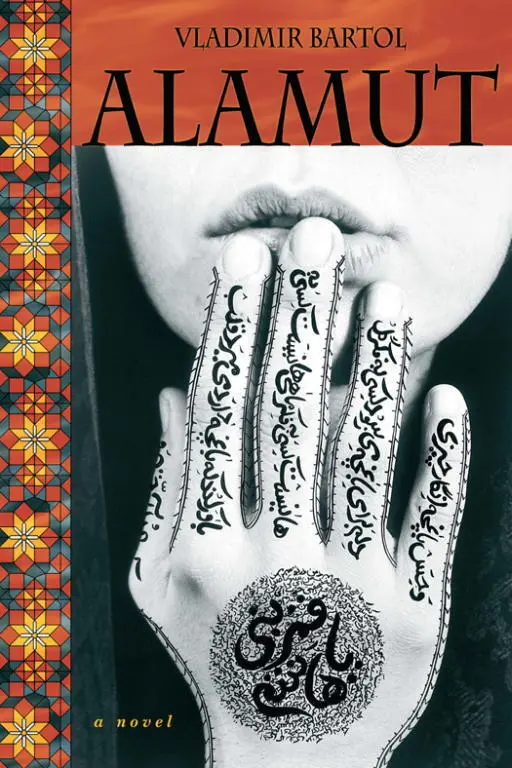
- Название:Alamut
- Автор:
- Издательство:North Atlantic Books
- Жанр:
- Год:2012
- Город:Berkeley
- ISBN:9781583946954
- Рейтинг книги:2.8 / 5. Голосов: 5
-
Избранное:Добавить в избранное
- Отзывы:
-
Ваша оценка:
Alamut: краткое содержание, описание и аннотация
Предлагаем к чтению аннотацию, описание, краткое содержание или предисловие (зависит от того, что написал сам автор книги «Alamut»). Если вы не нашли необходимую информацию о книге — напишите в комментариях, мы постараемся отыскать её.
Alamut — читать онлайн бесплатно полную книгу (весь текст) целиком
Ниже представлен текст книги, разбитый по страницам. Система сохранения места последней прочитанной страницы, позволяет с удобством читать онлайн бесплатно книгу «Alamut», без необходимости каждый раз заново искать на чём Вы остановились. Поставьте закладку, и сможете в любой момент перейти на страницу, на которой закончили чтение.
Интервал:
Закладка:
Hasan laughed, but his eyes were moist.
“My old friend knows what’s pleasant in the world,” he said. “A slight dizziness in the morning from wine, a beautiful girl at your feet, and then you really are like a king.”
Miriam continued:
The face flushed red, soon followed by the Heart—
Hand reaching out to test the Vintner’s Art:
In every drop a little bit of Me
And all the drops together form a World apart.
“The universe is in you and you’re in the universe. Yes, Omar once said that.”
Hasan grew pensive.
“How I love him! How I love him!” he whispered, half to himself.
Miriam concluded:
A Book of Verses underneath the Bough,
A Jug of Wine, a Loaf of Bread—and Thou
Beside me singing in the Wilderness—
Oh, Wilderness were Paradise enow!
“What a simple truth!” Hasan exclaimed. “Spring in bloom and a girl pouring wine in your cup. Who needs paradise after that! But our fate is to struggle with the sultan and forge our dark plans.”
Both of them were silent for a while.
“Earlier you were going to tell me something, ibn Sabbah,” Miriam finally said.
Hasan smiled.
“That’s right, there’s something I’ve been wanting to tell you, but I don’t know how best to go at it so you’ll understand. For twenty years I’ve carried around a secret inside me and hidden it from the world, and now that the time has come for me to share it with someone for the first time, I can’t find the words.”
“You’re becoming more and more difficult to understand. You say you’ve been carrying a secret around for twenty years? And this secret has to do with these gardens? With overthrowing the kingdom of Iran? This is all very murky.”
“I know. It has to be, until I explain it. These gardens, those girls, Apama and her school, and ultimately you and I, the castle of Alamut and what’s behind it—all these things are elements of a long-range plan that I’ve transformed from fantasy into reality. Now we’ll see if my assumptions have been right. I need you. We’re on the verge of a great experiment. There’s no going back for me. It’s hard for me to express this.”
“You always amaze me, Hasan. Speak. I’m listening carefully.”
“To help you understand me better, I’ll reach far back into my youth. As you know, I was born in Tus and my father’s name was Ali. He was an opponent of Baghdad and the Sunna, and I often heard discussions of these things at home. All these confessional disputes about the Prophet and his heirs seemed vastly mysterious and attracted me with an uncanny force. Of all the warriors for the Muslim faith, Ali was closest to my heart. Everything about him and his descendants was full of mystery. But the thing I found most moving was the promise that Allah would send someone from his line into the world as the Mahdi, to be the last and greatest of the prophets. I would ask my father, I would ask his relatives and friends to tell me what would be the signs of al-Mahdi and how we were to recognize him. They weren’t able to tell me anything specific. My imagination was fired up. One moment I saw the Mahdi in this or that dai or believer, in this or that peer, and on lonely nights I would even wonder if I weren’t the awaited savior myself. I burned, I practically burned to learn more about this teaching.
“Then I heard that a certain dai by the name of Amireh Zarab was hiding in our town, and that he was fully initiated into all of the mysteries of the coming of the Mahdi. I asked around about him, and one older cousin of mine who wasn’t particularly fond of the Shia told me that the dai belonged to the Ismaili sect, and that the adherents of that sect were secretly sophists and godless freethinkers. Now I was really interested. Not yet twelve years old, I sought him out and immediately leapt at him with my questions. I wanted to hear from his mouth whether the Ismaili doctrine was really just a cover for freethinking and, if so, what that meant for the coming of the Mahdi. In a tone of the utmost derision, Amireh Zarab began explaining the Ismailis’ external doctrine: that Ali was the Prophet’s sole legitimate heir, and that Ismail’s son Mohammed, the eighth in the line of Ali, would some day return to earth as al-Mahdi. Then he split hairs about the other Shiite sects and blasted the ones that held that the twelfth imam, who wouldn’t be from the line of Ali, would appear to the faithful as al-Mahdi. All of this squabbling over individuals struck me as trivial and pathetic. There wasn’t the slightest hint of a mystery about it. I returned home, dissatisfied. I decided that from then on I wouldn’t worry about these doctrinal disputes and that, like my peers, I would enjoy more readily attainable things. And I probably would have succeeded, if only another Ismaili refiq by the name of Abu Nedjm Saradj hadn’t passed through our town about a year later. Still furious at his predecessor for not being able to reveal any mysteries to me, I searched him out and began deriding him for the pedantry of his doctrine, which I said was every bit as ridiculous as Sunnism. I said that neither he nor his adherents knew anything definite about the Mahdi’s coming and that they were just leading poor, truth-seeking believers on.
“The whole time I was raining this abuse down on him, I expected him to leap at me and throw me out the door. But the refiq listened to me patiently. I noticed a sort of satisfied smile playing around his mouth. When I finally ran out of words, he said, ‘You’ve passed the test with honors, my young friend. I predict that one day you will become a great and powerful dai. You’ve reached the point where I can reveal the true Ismaili doctrine to you. But first you have to promise me that you won’t share it with anyone until you’ve been initiated.’ His words struck me to the quick. So my hunch had been right after all, and there was a mystery? I made the promise with my voice shaking, and he told me, ‘The doctrine of Ali and Mahdi is just bait for the masses of believers who hate Baghdad and venerate the name of the Prophet’s son-in-law. However, to those who can understand, we explain, as Caliph al-Hakim established, that the Koran is the product of a muddled brain. The truth is unknowable. Therefore we believe in nothing and have no limits on what we can do.’ It was as though I’d been struck by lightning. The Prophet a man with a muddled brain? His son-in-law Ali an idiot for believing him? And the teaching of the coming of the Mahdi, that glorious, mystery-laden teaching of the coming of a savior, just a fairy tale dreamt up for the common masses? I shouted at him, ‘What is the point of deceiving people?!’ He looked at me sternly. ‘Don’t you see we’ve become slaves of the Turks?’ he said. ‘And that Baghdad is in league with them, and the masses are discontented? To them the name of Ali is sacred. We’ve used it to unite them against the sultan and the caliph.’ My tongue felt paralyzed. I ran home as if I were out of my mind. I threw myself down on my bed and cried. For the last time in my life. My magical world had been dashed to pieces. I got sick. For forty days and nights I hovered between life and death. Finally the fever broke. My strength came back. But it was an entirely new person reawakening to life.”
Hasan stopped speaking and grew pensive. Miriam, who hadn’t moved her gaze away from his mouth the whole time, asked him, “How is it, ibn Sabbah, that you believed that godless doctrine right away, when the previous teacher had completely disillusioned you?”
“Let me try to explain it to you. It’s true that the first dai had proclaimed a number of very definite ‘truths,’ but behind them I sensed something that aroused my suspicion. They didn’t fulfill my curiosity, my longing for truth, for some higher knowledge. I tried to accept them as the real truth, but my heart rejected them. It’s true, I didn’t immediately grasp what the second teacher told me, either. But his doctrine settled on my soul like a vague premonition of something dark and awful that would someday open up to my understanding. My reason tried to reject it, but my heart welcomed it in. When I recovered from the illness, I decided to order my whole life in such a way that when I matured I would reach a state where the refiq’s assertion would go without saying—or else that I would clearly recognize its fallacy. ‘You have to test whether the refiq’s claims hold,’ I told myself, ‘in real life.’ I decided to study everything, not leaving out anything that people knew. The opportunity soon came. Youth being what it is, I couldn’t keep quiet about it. I started discussing the issues troubling my spirit with anyone who cared to listen. My father already had the reputation of secretly being a Shiite and got frightened. To dispel suspicions that he was an infidel, he sent me away to a school in Nishapur, run by Muafiq Edin, a man known widely as a learned lawyer and a Sunni dogmatist. That’s where I got to know Omar Khayyam and the eventual grand vizier, Nizam al-Mulk.
Читать дальшеИнтервал:
Закладка:
Похожие книги на «Alamut»
Представляем Вашему вниманию похожие книги на «Alamut» списком для выбора. Мы отобрали схожую по названию и смыслу литературу в надежде предоставить читателям больше вариантов отыскать новые, интересные, ещё непрочитанные произведения.










Обсуждение, отзывы о книге «Alamut» и просто собственные мнения читателей. Оставьте ваши комментарии, напишите, что Вы думаете о произведении, его смысле или главных героях. Укажите что конкретно понравилось, а что нет, и почему Вы так считаете.