Dan Smith - The Child Thief
Здесь есть возможность читать онлайн «Dan Smith - The Child Thief» весь текст электронной книги совершенно бесплатно (целиком полную версию без сокращений). В некоторых случаях можно слушать аудио, скачать через торрент в формате fb2 и присутствует краткое содержание. Город: New York, Год выпуска: 2013, ISBN: 2013, Издательство: Pegasus Books, Жанр: Историческая проза, Триллер, на английском языке. Описание произведения, (предисловие) а так же отзывы посетителей доступны на портале библиотеки ЛибКат.
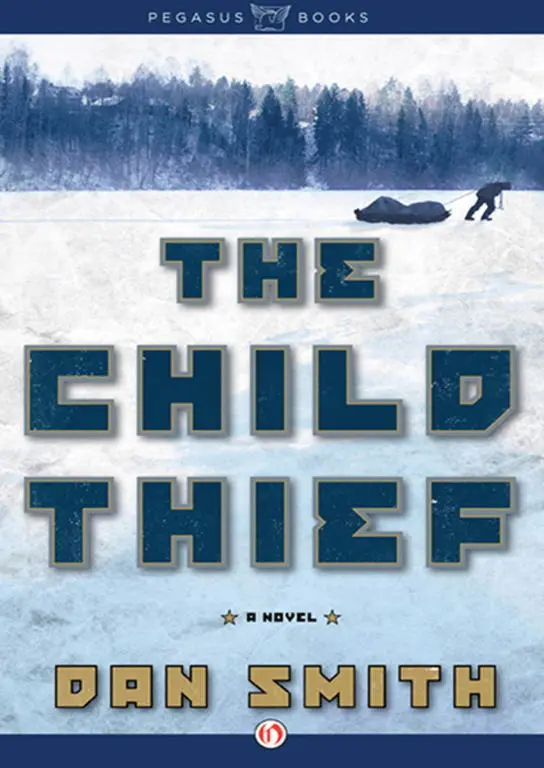
- Название:The Child Thief
- Автор:
- Издательство:Pegasus Books
- Жанр:
- Год:2013
- Город:New York
- ISBN:9781480419445
- Рейтинг книги:5 / 5. Голосов: 1
-
Избранное:Добавить в избранное
- Отзывы:
-
Ваша оценка:
The Child Thief: краткое содержание, описание и аннотация
Предлагаем к чтению аннотацию, описание, краткое содержание или предисловие (зависит от того, что написал сам автор книги «The Child Thief»). Если вы не нашли необходимую информацию о книге — напишите в комментариях, мы постараемся отыскать её.
and
, a troubled First World War veteran races across the frozen steppe of 1930s Ukraine to save a child from a shadowy killer with unthinkable plans. December 1930, Western Ukraine. Luka is a war veteran who now wants a quiet life with his family. His village has, so far, remained hidden from the advancing Soviet brutality, but everything changes the day the stranger arrives, pulling a sled bearing a terrible cargo. The villager’s fear turns deadly and they think they can save themselves, but their anger has cursed them: when calm is restored, a little girl has vanished. Luka is the only man with the skills to find who could have stolen a child in these frozen lands - and besides, the missing girl is best friend to Luka’s daughter, and he swears he will find her. Together with his sons, Luka sets out in pursuit across lands ravaged by war and gripped by treachery. Soon they realise that the man they are tracking is no ordinary criminal, but a skilful hunter with the child as the bait in his twisted game. It will take all of Luka's strength to battle the harshest of conditions, and all of his wit to stay a step ahead of Soviet authorities. And though his toughest enemy is the man he tracks, his strongest bond is a promise to his family back at home.
The Child Thief — читать онлайн бесплатно полную книгу (весь текст) целиком
Ниже представлен текст книги, разбитый по страницам. Система сохранения места последней прочитанной страницы, позволяет с удобством читать онлайн бесплатно книгу «The Child Thief», без необходимости каждый раз заново искать на чём Вы остановились. Поставьте закладку, и сможете в любой момент перейти на страницу, на которой закончили чтение.
Интервал:
Закладка:
Both boys were huddling themselves with their arms, their teeth chattering. They had scarves across their mouths and noses, I could see the movement beneath, and I could see the colour of the skin that was exposed. They needed warmth, just like I did.
‘Find some wood,’ I told them, ‘but stay close. Don’t get lost.’
While they collected wood, I took my entrenching tool and used it to shovel snow into a pile in front of the place where I intended to build the fire. Petro was right to be worried about Dimitri’s murderer, but not because he might follow us. I suspected he was not a man who would tackle us by coming close; experience suggested he would always look to take a shot from a distance, and that’s what we had to concern ourselves with. So I built a wall high enough to hide the light from the fire, forming an arc to shield us.
The trees were not close together in this wood, and their branches were naked, but they still offered protection from the storm, allowing me to work without too much difficulty, and it was calm enough for the boys to find wood.
By the time they returned, I had dug a shallow pit and laid a small bed of tinder made from wood shavings and pieces of cotton which I kept in a tin in my satchel. I also had a handful of fire sticks I’d made earlier in the winter and always took when I was hunting. These were short tubes of thick paper packed with woodcuttings and sealed with fat. I placed one on top of the tinder and used a knife to make shallow cuts in the driest pieces of wood the boys had brought, propping them against each other in a cone over the bed of tinder. When that was done, Petro and Viktor crouched beside me, protecting the area from the wind as I struck a match, putting it to the cotton.
Within a few seconds the flames had given enough heat to light the fire stick, which burned well and long enough to light the kindling.
The three of us sat around the fire, desperate for its warmth, willing it to succeed despite the weather. We protected it as best as we could; feeding it as it grew, developing it until we had to sit back from it so we didn’t burn ourselves.
Under other circumstances we might have undressed, given our clothes time to dry, but it was unthinkable that we’d sit here without any protection, so we stayed as close to the fire as possible, offering the wettest parts of our clothing to its drying heat.
The flames rose and cut into the grey, sawing in the wind, crackling, giving the fire’s lightest embers to the storm. And we held our hands to it, praying to it, begging it to keep us warm.
After a while, the three of us sitting in silence, I reached into my satchel and took out the sausage and bread that Natalia had packed for us. I had tried to wrap it back into the cotton, as she had done, but the cloth was in two pieces now and my hands had been too cold to do as I had asked them. The sausage had come loose from the cloth and it was covered with lint and dirt from the inside of the satchel. I brushed it off and cut it into three pieces. They were small, no longer than my thumb and not much thicker, but it was better than nothing. I tore the bread into three chunks and passed one to each of the boys.
‘What now?’ Viktor asked as he finished the last bite of his bread. He clapped his gloved hands to dust away the crumbs, his palms making a hollow banging sound as they came together.
‘You think he’ll come after us?’ Petro said.
‘No. I think he’s the kind who waits.’ I took a packet of cigarettes from my pocket. The card was soggy, the lid wrinkled and ill-fitting because the weather had penetrated it. It came away in my hands when I opened it and I could see the cigarettes inside were wet. It didn’t matter. I needed to smoke. I removed one glove and picked out a cigarette, fumbling with numb fingertips. The tobacco was damp and there were brown spots on the paper.
‘What makes you think that?’ Viktor asked. ‘That he’s the kind who waits.’
‘He works like a sharpshooter.’ I took a burning stick from the fire and touched the tip to the cigarette. ‘Wounding a man and trying to draw out his comrades was a trick we all used.’
‘We? You were a sharpshooter? You never told us that.’
‘It was never important.’ I threw the stick back into the flames.
‘I bet you were good, though,’ Viktor said. ‘The best.’
‘The Germans were the best. We were good, but their rifles were second to none. And they had scopes, like this one.’ I clamped the cigarette in my mouth and lifted the rifle onto my knee. ‘That man out there has to be using something like this; otherwise he could never have shot like that. Not at that range.’
‘Where would he get a rifle like that?’ Petro asked.
‘Where did you get it from?’ Viktor said.
I dragged on the cigarette. ‘A German.’
‘You shot him?
‘Yes.’
‘Where?’ asked Petro.
I hesitated, then put a fingertip to the side of my head.
‘No,’ he said. ‘I meant where were you? When was it?’
‘Does it matter?’
‘I just wondered, that’s all. You never say much about it.’
I ran my hands along the stock of the German rifle, feeling the smoothness of it. ‘It was in Galicia in the summer of 1917,’ I said. ‘Our final offensive against the central powers, which would make you… just four years old at the time.’
‘You’d never seen us,’ Petro said. ‘Did you even know our names?’
‘I knew your names. Your mother wrote to me, and I thought about you all the time.’
‘You never thought about coming home, though?’ he asked.
‘Sometimes. But I was a soldier; I had a duty.’
‘You must have been afraid.’
‘How was it?’ Viktor said. ‘Being in the army.’
‘Not good. Morale was low, officers always being demoted and replaced, soldiers refusing to act without discussing everything with their committees.’ I looked at Petro. ‘Some soldiers did just go home. They abandoned their posts and left their brothers to fight alone.’
‘The beginning of the revolution,’ Petro said.
I smiled. ‘We thought it was going to be Utopia. No more oppression, no more rich and poor.’
‘So tell us how you got the rifle,’ Viktor said.
I thought for a moment, taking myself back. There had been times when these things had filled my thoughts, but the years had moved on and I had learned to put many of the memories away. I kept them behind a strong door in my mind that was rarely opened now.
‘Well, when the artillery began to fire in the last days of June, we knew something big was happening. They only ever fired like that when they were going to make us push hard. They went on for two days, driving some of the men so mad they screamed and screamed.’
I shook my head to dispel the sound of those guns and took another drag on the cigarette. I watched my sons by the fire. Viktor was sitting on a small log, his forearms resting on his thighs, his body leaning forward as he listened. His eyes were alive, the flames reflected in his pupils.
‘Go on, Papa.’
‘On the first morning of July we came out of the trenches and advanced on the Austro-Hungarians, driving them back. It was the first time we’d been out of our holes in many days. We were the first into the ruins of a town I don’t even know the name of, a place with buildings smashed and blown apart by our shelling. We thought it was deserted, but we were wrong. Shots fired from somewhere in the rubble took down two soldiers before the rest of us had time to find protection.’
‘The sharpshooter,’ Viktor said.
‘Mm. The shots were well placed and both men were still alive. They lay in the open, calling for help, dying slowly while the rest of us stayed hidden.’
Читать дальшеИнтервал:
Закладка:
Похожие книги на «The Child Thief»
Представляем Вашему вниманию похожие книги на «The Child Thief» списком для выбора. Мы отобрали схожую по названию и смыслу литературу в надежде предоставить читателям больше вариантов отыскать новые, интересные, ещё непрочитанные произведения.








Обсуждение, отзывы о книге «The Child Thief» и просто собственные мнения читателей. Оставьте ваши комментарии, напишите, что Вы думаете о произведении, его смысле или главных героях. Укажите что конкретно понравилось, а что нет, и почему Вы так считаете.