Dan Smith - The Child Thief
Здесь есть возможность читать онлайн «Dan Smith - The Child Thief» весь текст электронной книги совершенно бесплатно (целиком полную версию без сокращений). В некоторых случаях можно слушать аудио, скачать через торрент в формате fb2 и присутствует краткое содержание. Город: New York, Год выпуска: 2013, ISBN: 2013, Издательство: Pegasus Books, Жанр: Историческая проза, Триллер, на английском языке. Описание произведения, (предисловие) а так же отзывы посетителей доступны на портале библиотеки ЛибКат.
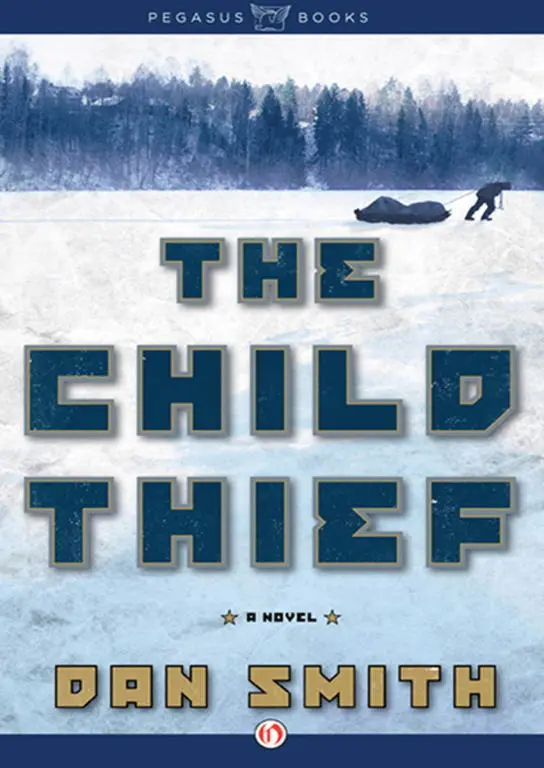
- Название:The Child Thief
- Автор:
- Издательство:Pegasus Books
- Жанр:
- Год:2013
- Город:New York
- ISBN:9781480419445
- Рейтинг книги:5 / 5. Голосов: 1
-
Избранное:Добавить в избранное
- Отзывы:
-
Ваша оценка:
The Child Thief: краткое содержание, описание и аннотация
Предлагаем к чтению аннотацию, описание, краткое содержание или предисловие (зависит от того, что написал сам автор книги «The Child Thief»). Если вы не нашли необходимую информацию о книге — напишите в комментариях, мы постараемся отыскать её.
and
, a troubled First World War veteran races across the frozen steppe of 1930s Ukraine to save a child from a shadowy killer with unthinkable plans. December 1930, Western Ukraine. Luka is a war veteran who now wants a quiet life with his family. His village has, so far, remained hidden from the advancing Soviet brutality, but everything changes the day the stranger arrives, pulling a sled bearing a terrible cargo. The villager’s fear turns deadly and they think they can save themselves, but their anger has cursed them: when calm is restored, a little girl has vanished. Luka is the only man with the skills to find who could have stolen a child in these frozen lands - and besides, the missing girl is best friend to Luka’s daughter, and he swears he will find her. Together with his sons, Luka sets out in pursuit across lands ravaged by war and gripped by treachery. Soon they realise that the man they are tracking is no ordinary criminal, but a skilful hunter with the child as the bait in his twisted game. It will take all of Luka's strength to battle the harshest of conditions, and all of his wit to stay a step ahead of Soviet authorities. And though his toughest enemy is the man he tracks, his strongest bond is a promise to his family back at home.
The Child Thief — читать онлайн бесплатно полную книгу (весь текст) целиком
Ниже представлен текст книги, разбитый по страницам. Система сохранения места последней прочитанной страницы, позволяет с удобством читать онлайн бесплатно книгу «The Child Thief», без необходимости каждый раз заново искать на чём Вы остановились. Поставьте закладку, и сможете в любой момент перейти на страницу, на которой закончили чтение.
Интервал:
Закладка:
Then others began to peel away from the pack. Like a serpent shedding its skin, the layers stripped back as the villagers woke from their trance and edged away in silence.
They left their agitator until only Dimitri was left before the tree, looking up at the naked body twisting on the rope. A gentle rotation. The man’s head tipped to one side, his eyes bulging, revolving until his back was visible, his narrow torso, the spine clear under thin skin, his emaciated buttocks, the red marks where he’d been kicked. Then he swung round to show his face again, the ragged beard covering most of his neck and face. More marks on his chest and legs. His genitals exposed. No dignity. No mercy. No pity.
I left Josif to wonder at what his people had done and I stepped away from the door. There was no sound but for the breeze that brushed the surface of the snow and skimmed the gentle valley. The sun still shone low in the sky, a faded orange arc made ill defined by a thin layer of cloud. The world was still a beautiful crisp blue and white. My boots made hardly a sound as I stepped in the prints of those who had come to my door that morning. I walked in their footsteps without being one of them, and I went to the place where they had brought dishonour and humiliation upon themselves.
At Dimitri’s side I looked up at the hanged man, at peace on the end of a rope. I considered cutting him down, taking him to the cemetery and putting him in the ground – the stranger deserved some dignity at least – but I chose not to. The man’s body had another purpose now: to act as a reminder to the people who had done this. I knew as well as anyone that people are capable of terrible things but must recognise the things they have done. Without that recognition, they are nothing more than animals, empty of any feeling.
‘Shame on you,’ I said. My voice was hoarse and my words were quiet. ‘Shame on you, Dimitri Spektor. Shame on your family. Shame on this whole damn village.’
Dimitri continued to stare up at the hanged man.
‘Is this what you wanted?’ I asked him. ‘Is it?’
Dimitri opened his mouth, but whatever words he intended to say were caught in his throat. They stuck there and refused to come out.
‘Does this make our children safe?’ I asked him.
He stared as if no thought could pass through his mind, then he blinked, shook himself and refocused. ‘I didn’t do this.’
‘You were part of it. You led it. You caused it.’
‘Don’t be so damn self-righteous. I didn’t want this. I—’
‘What did you want? What did you think was going to happen? You knew what you were doing, Dimitri; don’t pretend this was an accident.’
He swallowed hard. ‘What now?’
‘Now? Now you have to live with it.’
I left Dimitri standing alone and went back to my family. Viktor and Petro were at the window, their faces at the glass as I approached.
When I went into the house, Viktor was still holding the revolver. Lara was clinging to Natalia.
‘What the hell is happening to them?’ I said.
‘People are afraid of what’s coming,’ she told me. ‘And who can blame them?’
‘It’s no excuse.’
Natalia looked down at our daughter, but Lara showed no sign of understanding.
‘Close the shutters,’ I told my sons. ‘I don’t want Lara to see what Uncle Dimitri has done.’
‘But… all those people,’ Petro said. ‘How could they do that?’ He was even paler than usual. His brow creased so tight in bewilderment that the bridge of his nose wrinkled. He looked as if he’d woken in the night and forgotten where he was.
‘I don’t want to talk about it,’ I said.
‘To do that to another man. They just—’
‘Not now.’
‘But, Papa…’
‘I said I don’t want to talk about it.’
‘Shouldn’t we cut him down or something?’
‘Petro!’ I turned on him. ‘I don’t want to hear about it.’
‘He’s only asking,’ Natalia said. ‘He’s—’
I slammed my fist hard on the table and raised my voice so it filled the small room. ‘Don’t talk about it. I don’t want to hear it. Don’t talk about it any more.’
Natalia pulled Lara closer, placing her arms so they covered the child’s ears.
‘Please.’ I lowered my voice. ‘I don’t want to talk about it.’ I held up a hand and bowed my head. I closed my eyes and took a deep breath. When I looked back at my wife, I nodded an apology before glancing at my children, each in turn. Then I went to the door. I hesitated, took hold of the old iron handle and pulled it open.
I stepped out into the cold and glanced at the hanged man as I yanked the door shut. I let my gaze linger on the body for a moment, then I turned and headed round the back of the house.
Entering the barn, the chickens complained at my intrusion but soon settled. The ones which had ventured out from the coop scurried back inside to the warmth.
I went to the pile of belongings from the man’s sled and took up a milking stool to sit down before them. A small collection of essentials and a few items that meant nothing.
The fact that he had the weapons though told me something important. There had been so much gun registration and confiscation – the last being just a year ago – that few farmers were armed. Unauthorised possession of a gun was punishable by hard labour. It was a way of pulling the peasants’ teeth – take away his weapons and you remove his ability to fight. It made life easier for the authorities when they came to enforce collectivisation if the farmers had no means of striking back. But this man, like me, had kept his weapons, and that confirmed my belief that he was a soldier. Because whichever army the man had fought for, our recent history was so filled with war and violence that no man who had ever been a soldier would willingly give up his arms.
Searching the rest of his belongings, I felt even more kinship with this unknown man. An aluminium water bottle, heavy and hard with its frozen contents. It was the same as the one I owned, issued to those of us who fought in the Imperial Army. A trenching shovel still in its leather sheath. Just like the one I owned. A black spike bayonet. And a leather satchel almost identical to the one I used to carry ammunition for my own rifles. There were other things too, essentials for a man who intended to live away from civilisation, but it was the satchel which took my eye.
I leaned down and lifted it to my knees, where I let it rest for a moment, feeling the cold of it against my legs. Putting my hands on top of it and turning my face to the ceiling of the barn, I paused to give a thought for the dead man, then I nodded to myself and opened the satchel.
Inside there was a handful of ammunition for the weapons he’d been carrying, the brass casings loose in the bag. There was a flat tin bound with a black and orange striped ribbon. When I turned the tin in my hands, I saw that in the place where the ribbon was knotted, a medal hung from the material. I had never seen one like it, but I knew what it was and what it meant. If the man with the sled was the owner of this medal – if he had earned it – then this man had not been my brother. He had not been my kin. He would most probably have been an officer.
I had fought on the front with many different officers during the Great War before the revolution. Men who’d been bred for self-sacrifice and honour. Men who’d had those things so thoroughly ingrained in their personalities they were unable to turn and walk away when they saw death coming for them. I had stood in bloody water up to my knees with them, lain in the mud among the bodies of my comrades, thrown myself at enemy lines for them. They were men who became outraged at the growth of battlefield committees and were confused by soldiers who refused to fight without committee agreement. The words and status of the officers was useless against the growing feelings of inequality among their men, and many of them were lynched by revolutionary squads refusing to fight.
Читать дальшеИнтервал:
Закладка:
Похожие книги на «The Child Thief»
Представляем Вашему вниманию похожие книги на «The Child Thief» списком для выбора. Мы отобрали схожую по названию и смыслу литературу в надежде предоставить читателям больше вариантов отыскать новые, интересные, ещё непрочитанные произведения.





Обсуждение, отзывы о книге «The Child Thief» и просто собственные мнения читателей. Оставьте ваши комментарии, напишите, что Вы думаете о произведении, его смысле или главных героях. Укажите что конкретно понравилось, а что нет, и почему Вы так считаете.