Nicola Griffith - Hild
Здесь есть возможность читать онлайн «Nicola Griffith - Hild» весь текст электронной книги совершенно бесплатно (целиком полную версию без сокращений). В некоторых случаях можно слушать аудио, скачать через торрент в формате fb2 и присутствует краткое содержание. Город: New York, Год выпуска: 2013, ISBN: 2013, Издательство: Farrar, Straus and Giroux, Жанр: Историческая проза, на английском языке. Описание произведения, (предисловие) а так же отзывы посетителей доступны на портале библиотеки ЛибКат.
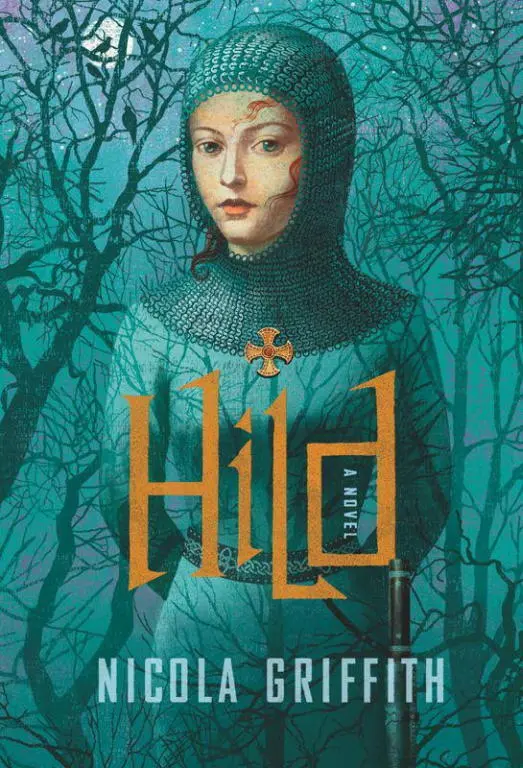
- Название:Hild
- Автор:
- Издательство:Farrar, Straus and Giroux
- Жанр:
- Год:2013
- Город:New York
- ISBN:978-0-374-28087-1
- Рейтинг книги:5 / 5. Голосов: 1
-
Избранное:Добавить в избранное
- Отзывы:
-
Ваша оценка:
Hild: краткое содержание, описание и аннотация
Предлагаем к чтению аннотацию, описание, краткое содержание или предисловие (зависит от того, что написал сам автор книги «Hild»). Если вы не нашли необходимую информацию о книге — напишите в комментариях, мы постараемся отыскать её.
But now she has only the powerful curiosity of a bright child, a will of adamant, and a way of seeing the world—of studying nature, of matching cause with effect, of observing her surroundings closely and predicting what will happen next—that can seem uncanny, even supernatural, to those around her.
Her uncle, Edwin of Northumbria, plots to become overking of the Angles, ruthlessly using every tool at his disposal: blood, bribery, belief. Hild establishes a place for herself at his side as the king’s seer. And she is indispensable—unless she should ever lead the king astray. The stakes are life and death: for Hild, for her family, for her loved ones, and for the increasing numbers who seek the protection of the strange girl who can read the world and see the future.
Hild is a young woman at the heart of the violence, subtlety, and mysticism of the early Middle Ages—all of it brilliantly and accurately evoked by Nicola Griffith’s luminous prose. Working from what little historical record is extant, Griffith has brought a beautiful, brutal world—and one of its most fascinating, pivotal figures, the girl who would become St. Hilda of Whitby—to vivid, absorbing life.
Hild — читать онлайн бесплатно полную книгу (весь текст) целиком
Ниже представлен текст книги, разбитый по страницам. Система сохранения места последней прочитанной страницы, позволяет с удобством читать онлайн бесплатно книгу «Hild», без необходимости каждый раз заново искать на чём Вы остановились. Поставьте закладку, и сможете в любой момент перейти на страницу, на которой закончили чтение.
Интервал:
Закладка:
Flick flick. “Fifty-four gold scillings and eighty-six-score and eight pennies. Less the eight for my service.”
“Three,” said Fursey. Hild picked up another gold coin, smaller, the same size as the silver penny but heavier. The Frank wiped at his eye. Lintlaf twitched. The lustre, like the sheen of run honey or parsnips cooked in butter, made her want to put it in her mouth; she put it down reluctantly. Fursey and the Frisian haggled for a while and settled on a fee of five pennies, with a promise of custom if they exchanged the second chest. Hild was dazed. Scores, hundreds of coins. And that was only one chest.
Coins were power of themselves. They didn’t need a king uncle or an almost-queen mother or the strength of a seer’s gaze. She could take a gold scilling or a silver penny and offer it anywhere in the wīc and everyone would understand its worth. And there would be no weighing of hacksilver or a gold ring, no haggling and accusations of inferior workmanship, just the weight of these Frankish and Roman and Byzantine coins.
She took two-thirds in gold scillings and one-third in silver pennies. The money changer counted the coins into small sueded sacks stamped with his mark. Fursey laid them in plump lines along the bottom of the chest. The two bearer wealh and Gwladus watched as if under a spell. Lintlaf watched the Frank. Fursey watched Hild. Hild told Fursey to set aside the short sack of four scillings and one sack of pennies and carry them himself. Now they would buy.
They were a strange procession. Word spread fast from the money changer’s table. Hild was recognised: a tall maid with fathomless eyes, a very big knife, and the pig’s blood still on her skirts. But they remembered she had paid, and paid well, for that pig. Every stall holder cried out as she passed and sent boys running alongside with lengths of cloth, or tiny glass bottles, or a basket of honey cakes.
Hild bought and bought until the wealh were staggering and even Fursey was carrying a sack of small items. Lintlaf kept his hands free for his sword, though Fursey noted that this would do him no good if he didn’t keep his mind free of the sway of Gwladus’s hips. Gwladus herself carried three bolts of cloth, finely woven but plain Kentish stuff in apple colours—green, russet, gold—shoes fit to her feet, and, most precious of all, a thin silver bracelet with a red glass stone.
One enterprising stall holder sent two piping boys to follow them and blow jaunty tunes until they would come see his wares. Hild remembered the stall: a green cloth laid over the table and cunning little steps built beneath to show a cascade of luxury geegaws. She stopped before a row of tiny matching red glass bottles with gilded stoppers. The stall holder encouraged her to smell the oils: rose, myrrh, sandalwood. She bought them for Hereswith, to remind her of Hild when she left to live with the North Folk with Æthelric. She bought lesser oils—rosemary, sage, lavender—for Mildburh and Ædilgith and Folcwyn. Then she saw an ivory comb carved with a goat and inlaid with gold and thought of Begu, scrambling like a goat up the hill, hair springing free of her braid. She would send it. She could. Writing and coin. She could send a message and gift to anyone, anywhere. She could watch and weave the pattern of the world. And all she had to do to earn the gifts to turn into coin was to see clearly, to see first.
She let Fursey negotiate prices while she looked over the rest of the items laid out on the green cloth. A silver hand mirror polished on one side and chased on the other, with an ivory handle, for Onnen. Gwladus suggested a small chest of unguents to go with it, “In case the lady is getting old and her face is changing.”
Now she needed something for Cian.
They moved on to the weapons stall. Lintlaf’s eye was caught by a small knife with a blue glass pommel and blue-tooled sheath strapped for the forearm. “Try it on,” Hild said, and when Lintlaf did, and beamed and flexed his muscles to test the fit, she gestured for Fursey to pay. Lintlaf’s lord and oath-keeper was Edwin, only he could give swords and hilt rings, but this knife was more ornament than a tool of death to be employed at the lord’s word. Giving it was permissible.
“Last time there was a cunning buckle knife,” she said to the stall holder.
“This, lady?” He held up the massive gilded bronze buckle but, perhaps mindful of her last marketplace performance with a blade, did not pass it to her.
“Show me.”
He obliged by putting two fingers in clever looped handles and pulling free a wicked tooth of a blade three inches long.
Hild and Gwladus were halfway up the steps to the door to the women’s quarters, carefully sheltering their burdens from the drizzle, when they heard Hereswith shouting. They looked at each other. Hild shrugged; they couldn’t stand out here in the wet. They went in.
The housefolk—four of them, all tight-shouldered and tense—did not look up, but Mildburh and Hereswith turned. Mildburh was red-faced, unhappy. Hereswith’s face was gelid and pale, like custard.
“And what unwelcome news do you bring this time?” Hereswith said. “Am I to die horribly in childbed?”
Hild had no idea how to respond.
“Oh, don’t stand there like a carving. Come in and keep out the rain. Tell me, what dreadful news does Ma have now?”
“I brought these. For you.” And she held out the silk-wrapped packet.
Hereswith took it, unwrapped the first fold, and burst into tears.
“But you don’t even know what it is,” Hild said, and to her consternation Hereswith wrapped her arms around her and wept harder. “What is it? Are you ill? What’s the matter?” She motioned Gwladus forward. “Here, I brought you buttermilk, too. It’s still cool from the dairy. Here.” She put the cup in her sister’s free hand. She didn’t know what else to do. “And summer ale for Mildburh.” It was Mildburh’s favourite. Always know what they like , her mother said. They will love you for it.
And then Mildburh started crying, too.
“Please, stop,” Hild said. “Please. Here.” She sat on the bed and tugged gently at Hereswith’s arm. “Sit. What’s wrong?”
Hereswith wouldn’t sit, but Mildburh did, clutching her ale.
Hereswith threw her buttermilk at a hanging of a hart hunt. It dripped solemnly.
“I’m to wed this Æthelric and follow him to the stinking fen that he calls home.” Drip. “Where he already has a woman.” Drip. “You didn’t predict that, did you, little seer? A princess of the South Gyrwe. A woman and two children.”
Drip. Drip. Drip.
Breguswith, hand wrapped around the pendant she wore, smiled, and said to Hild, “It isn’t a fen. Not all of it. And of course the man already has a woman, he’s a man isn’t he? He’s sworn to set the strumpet aside—sworn to me, and to Edwin, his overking.”
Hild wondered how much that meant. A man was lord of his own hall, king or no. And it was as Eorpwald’s brother, Æthelric ætheling of the South Folk, he had sworn to Edwin, not as Ecgric, lord of the North Folk. Ecgric prince—and ally of the South Gyrwe and East Wixna.
“Besides, the Gyrwe woman’s given him only daughters. He’s more in need of an heir than a peaceweaver. One son, or even the hope of one, from your sister and the woman will be forgotten. And Hereswith will have Ædilgith and Folcwyn with her, and six gesiths—hardly alone.”
Breguswith let go of her pendant: the biggest garnet Hild had ever seen, cut like a seashell and set among slices of the same stone. The workmanship was as fine as the Svear’s but by a different hand. Kentish.
Читать дальшеИнтервал:
Закладка:
Похожие книги на «Hild»
Представляем Вашему вниманию похожие книги на «Hild» списком для выбора. Мы отобрали схожую по названию и смыслу литературу в надежде предоставить читателям больше вариантов отыскать новые, интересные, ещё непрочитанные произведения.



Обсуждение, отзывы о книге «Hild» и просто собственные мнения читателей. Оставьте ваши комментарии, напишите, что Вы думаете о произведении, его смысле или главных героях. Укажите что конкретно понравилось, а что нет, и почему Вы так считаете.