Nicola Griffith - Hild
Здесь есть возможность читать онлайн «Nicola Griffith - Hild» весь текст электронной книги совершенно бесплатно (целиком полную версию без сокращений). В некоторых случаях можно слушать аудио, скачать через торрент в формате fb2 и присутствует краткое содержание. Город: New York, Год выпуска: 2013, ISBN: 2013, Издательство: Farrar, Straus and Giroux, Жанр: Историческая проза, на английском языке. Описание произведения, (предисловие) а так же отзывы посетителей доступны на портале библиотеки ЛибКат.
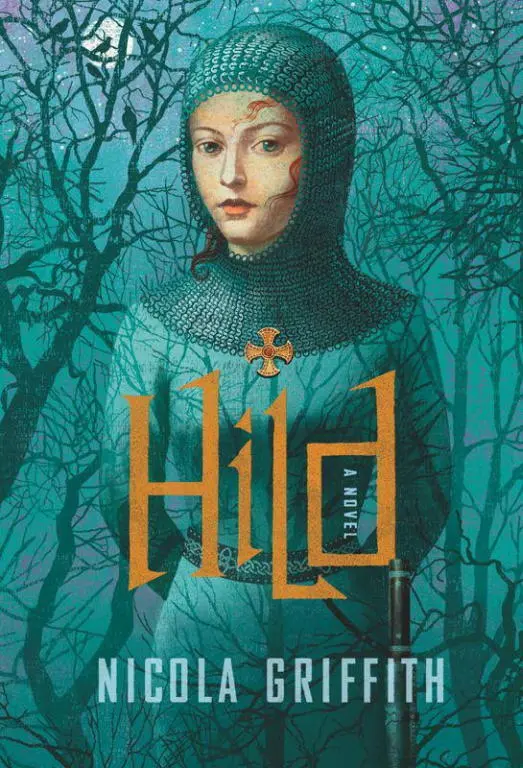
- Название:Hild
- Автор:
- Издательство:Farrar, Straus and Giroux
- Жанр:
- Год:2013
- Город:New York
- ISBN:978-0-374-28087-1
- Рейтинг книги:5 / 5. Голосов: 1
-
Избранное:Добавить в избранное
- Отзывы:
-
Ваша оценка:
Hild: краткое содержание, описание и аннотация
Предлагаем к чтению аннотацию, описание, краткое содержание или предисловие (зависит от того, что написал сам автор книги «Hild»). Если вы не нашли необходимую информацию о книге — напишите в комментариях, мы постараемся отыскать её.
But now she has only the powerful curiosity of a bright child, a will of adamant, and a way of seeing the world—of studying nature, of matching cause with effect, of observing her surroundings closely and predicting what will happen next—that can seem uncanny, even supernatural, to those around her.
Her uncle, Edwin of Northumbria, plots to become overking of the Angles, ruthlessly using every tool at his disposal: blood, bribery, belief. Hild establishes a place for herself at his side as the king’s seer. And she is indispensable—unless she should ever lead the king astray. The stakes are life and death: for Hild, for her family, for her loved ones, and for the increasing numbers who seek the protection of the strange girl who can read the world and see the future.
Hild is a young woman at the heart of the violence, subtlety, and mysticism of the early Middle Ages—all of it brilliantly and accurately evoked by Nicola Griffith’s luminous prose. Working from what little historical record is extant, Griffith has brought a beautiful, brutal world—and one of its most fascinating, pivotal figures, the girl who would become St. Hilda of Whitby—to vivid, absorbing life.
Hild — читать онлайн бесплатно полную книгу (весь текст) целиком
Ниже представлен текст книги, разбитый по страницам. Система сохранения места последней прочитанной страницы, позволяет с удобством читать онлайн бесплатно книгу «Hild», без необходимости каждый раз заново искать на чём Вы остановились. Поставьте закладку, и сможете в любой момент перейти на страницу, на которой закончили чтение.
Интервал:
Закладка:
Fursey rose and suggested smoothly that his lordship should pay no mind. For all knew that some Irish, especially the wicked Ui Neill, were known to be mad, to succumb to drink, to get too close to their horses and beat their dogs, and who could blame an Anglisc lord for not knowing the difference?
Hild, who had been living on this wild moor by the sea for some weeks now and, tutor or not, new friend Begu or not, was homesick and heartsick, listened but said nothing. More and more now she could tell the difference between what was real and what was a mix of memory and nightmare; more and more she felt sure that if she spoke she would be speaking to the living, not ghosts. Often now, Fursey’s instruction on letters and Latin seemed like something of this world and not the next. But still the effort of deciding whether or not it was right to speak would bring the memories: the Irish rising like a tide, the slip and slide in the mud on the mouth of the Tine, the cries of Osric, where is Osric? answered by ever more howling Irish. She felt the bruises still of the scramble into the boat, the fighting for space, the rock and tilt of the boat as an Irishman grabbed the gunwale with both hands…
She turned away from that memory. She would make friends with this willow man who also didn’t like to talk.
She crouched in the grey-brown sedge on the edge of the rhyne and watched. It might be spring half a mile away, down in the valley along the beck, but here, high on the marshy moor by the sea, it was a harsh, colourless world. Here there was no greening blossom, no curve of burbling stream or round river rocks. The rhynes ran spear-straight into the horizon, the willow beds running between them, all under a tin-grey sky. Steel-coloured water lapped and slapped against the dirt banks, and the willow canes, not yet in leaf, rattled and shook like tally sticks.
She wished Begu could be there, but Begu had been careless about keeping warm in the rain and she had been breathed on by sidsa and her nose was dripping. Onnen—who somehow had taken over Mulstan’s hall within a day of their arrival seven weeks ago—had ordered her to bed with a hot stone. So Hild had left her seax and belt with Begu, on the grounds that the willow man might be frightened by it, and wore her old sash instead. Then she had set out under the wide, scudding grey sky and found him here on the rhyne, the ditch between the withy beds, cutting white willow poles and stacking them in bundles, upright, in the water.
She had been watching the white-haired man and the black-and-white dog all morning. They were never apart. They knew she was there.
The willow man had looked at her sidelong once or twice and talked to his dog, whom he called Cú, or Dog, but more loudly than he would have if they’d been the only hot-blooded things on the moor.
The water slapped, the canes rattled, and man, girl, and dog all looked at the sky—clouds piling together, no longer tin but lead—then at one another. Hild, encouraged, stood, came closer—oh, her shoes were more mud cake than leather now—and pointed at the willow man, at his crinkly white hair, and said one of the Irish words she knew, “Bán.”
And he laughed, showing a toothless mouth, then loosed a torrent of Irish at her. His accent was strange. She understood three words of it, ingen (maid), saxain (Anglisc), and occoras (hunger), and shook her head. “ Mall ,” she said, “ mall ” (slow), and he said it all again. “ Mall ,” she said again and furrowed her brow while lifting her eyebrows: Please. And Cú tilted his head and whined, and then Bán spoke one more time in a jumbled Anglisc-British-Irish mix, and Hild listened with her whole skin, the way she listened to rooks in the field or wind in the trees. She understood, she thought. He was asking her if she was hungry.
She sat in the mud—Onnen would scold her raw—offered a fist to Cú, the first dog she had allowed near her since she watched Od eat the guts of Osric’s man, and repeated back to Bán as well as she could, with the words he had used, that she, the Anglisc maid, whose name was Hild, had hunger, a little, but that when she returned she would be very well provided for. And he nodded, but shook his fingers dismissively in that Irish way, just like Fursey, and tutted, and unfastened the sack at his waist and offered her half his cheese and a bite of onion, and a dip in the coarse grey salt collected in the seam of his sack.
When he waved the cheese Cú went painfully still and drooled and looked sad, as dogs do, and Hild and Bán laughed together and settled comfortably on the edge of the high bank between withy beds, where it was a little drier, and shared the cheese while Cú followed the movement of hand to mouth, and looked sadder and sadder. Both Hild and Bán were wise in the way of dogs, and they gave him none, and he stopped looking sad and instead went to sleep. And after, Bán let her climb into his flat-bottomed boat and coast up and down the rhyne with him while he used his little sharp knife to slide up along the grain of the growing willow rods, faster than she could see at first, and snick snick snick cut the little buds off the growing poles so they wouldn’t come in crooked. Overhead the clouds scudded and darkened and closed tighter than a lid upon the world, and again they glanced, man, girl, and dog, at the sky, and Hild persuaded him to come to the kitchen at the hall of Mulstan.
At the door, it was Guenmon, not Onnen, who gave her muddy shoes a look, Guenmon who raised an eyebrow at Bán and then said to Hild, “Don’t sit. Either of you. You’re all over mud.”
“He’s my guest.”
“Guest, is it? Well, Onnen would have my hair if she saw me feeding you in that state. And you dressed like that. Though it’s nice to see you’ve taken off that sword-knife.”
“I give him guest rights,” she said, and she gave Guenmon the look she’d perfected in the months she’d been apart from her mother, months of having to demand the rights of prince and priest and light of the world while in the guise of a rangy, chestnut-haired girl with a strong-boned face. And Guenmon, as everyone did when faced with that swelling gaze, sighed and gave in. “There’s some of my pasties, you know where they are, and I’ll fetch ale. But you’ll sit on the stoop til that mud dries, or Onnen—”
“Will have your hair, yes.” Hild took off her shoes, pulled a stool close to the shelf, stood on it—carefully, for her hose feet were wet—and lifted down the basket with the napkin-wrapped pasties. She handed one to Bán, took one for herself. “Where is she?”
“With the little mistress.” Guenmon set a poker to heat in the fire and then, despite her earlier words, took down two of the better copper cups and one wooden one, and from a walnut chest—she unlocked it with the latch-lifter that would usually hang on the belt of the lady of the hall—took a glazed clay pot of precious spice and added a pinch to each cup.
“Is she well?” Begu had looked miserable—dripping nose, sore throat, earache—but sturdy this morning. Being breathed on by sidsa could be a chancy business, yes, but usually only for infants and the very old.
“Nothing staying warm won’t cure. But that Onnen does fuss…” She shook her head and poured ale from a jar into the cups, and Hild understood this to be a comment on Onnen’s solicitousness for the lord’s daughter, and by extension the widowed lord himself. The lord, too, had been extravagant in his courtesies to Onnen, and the people of the hall—servants and highfolk alike—looked on with those wry smiles that Hild had seen grown-ups exchange before at these times. Perhaps they would mate. She had wanted to talk to Cian about it last night but Cian was being unaccountably surly, and Begu was already tucked up in her very own linden-wood bed. Onnen had sniffed at that when they’d first arrived—a ten-year-old girl, daughter of a country thegn and a deposed British lordling’s daughter, with her own bed and feather mattress! Wasteful, wasteful to build a whole miniature bed for a child—but had changed her tune quickly enough when Mulstan had made them all so welcome.
Читать дальшеИнтервал:
Закладка:
Похожие книги на «Hild»
Представляем Вашему вниманию похожие книги на «Hild» списком для выбора. Мы отобрали схожую по названию и смыслу литературу в надежде предоставить читателям больше вариантов отыскать новые, интересные, ещё непрочитанные произведения.





Обсуждение, отзывы о книге «Hild» и просто собственные мнения читателей. Оставьте ваши комментарии, напишите, что Вы думаете о произведении, его смысле или главных героях. Укажите что конкретно понравилось, а что нет, и почему Вы так считаете.