Nicola Griffith - Hild
Здесь есть возможность читать онлайн «Nicola Griffith - Hild» весь текст электронной книги совершенно бесплатно (целиком полную версию без сокращений). В некоторых случаях можно слушать аудио, скачать через торрент в формате fb2 и присутствует краткое содержание. Город: New York, Год выпуска: 2013, ISBN: 2013, Издательство: Farrar, Straus and Giroux, Жанр: Историческая проза, на английском языке. Описание произведения, (предисловие) а так же отзывы посетителей доступны на портале библиотеки ЛибКат.
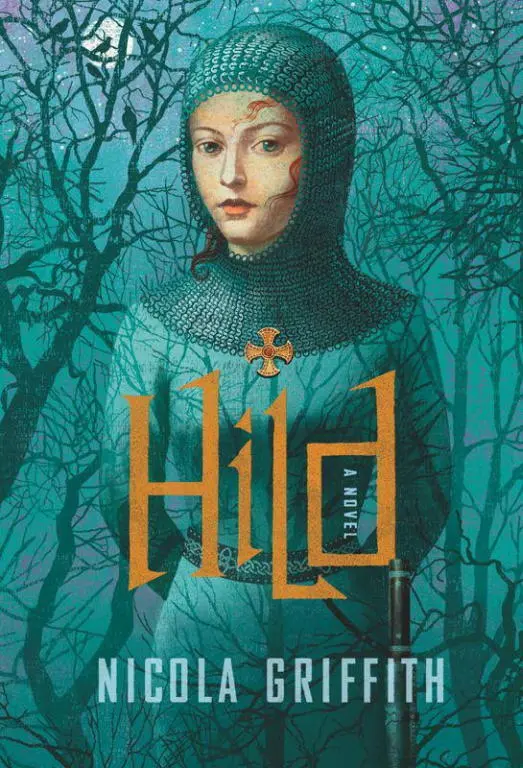
- Название:Hild
- Автор:
- Издательство:Farrar, Straus and Giroux
- Жанр:
- Год:2013
- Город:New York
- ISBN:978-0-374-28087-1
- Рейтинг книги:5 / 5. Голосов: 1
-
Избранное:Добавить в избранное
- Отзывы:
-
Ваша оценка:
Hild: краткое содержание, описание и аннотация
Предлагаем к чтению аннотацию, описание, краткое содержание или предисловие (зависит от того, что написал сам автор книги «Hild»). Если вы не нашли необходимую информацию о книге — напишите в комментариях, мы постараемся отыскать её.
But now she has only the powerful curiosity of a bright child, a will of adamant, and a way of seeing the world—of studying nature, of matching cause with effect, of observing her surroundings closely and predicting what will happen next—that can seem uncanny, even supernatural, to those around her.
Her uncle, Edwin of Northumbria, plots to become overking of the Angles, ruthlessly using every tool at his disposal: blood, bribery, belief. Hild establishes a place for herself at his side as the king’s seer. And she is indispensable—unless she should ever lead the king astray. The stakes are life and death: for Hild, for her family, for her loved ones, and for the increasing numbers who seek the protection of the strange girl who can read the world and see the future.
Hild is a young woman at the heart of the violence, subtlety, and mysticism of the early Middle Ages—all of it brilliantly and accurately evoked by Nicola Griffith’s luminous prose. Working from what little historical record is extant, Griffith has brought a beautiful, brutal world—and one of its most fascinating, pivotal figures, the girl who would become St. Hilda of Whitby—to vivid, absorbing life.
Hild — читать онлайн бесплатно полную книгу (весь текст) целиком
Ниже представлен текст книги, разбитый по страницам. Система сохранения места последней прочитанной страницы, позволяет с удобством читать онлайн бесплатно книгу «Hild», без необходимости каждый раз заново искать на чём Вы остановились. Поставьте закладку, и сможете в любой момент перейти на страницу, на которой закончили чтение.
Интервал:
Закладка:
Ædilgith tapped the side of Hild’s hand and motioned for her to pay attention to the tension on the yarn between them. “I like this colour.”
“It’s uneven,” Hild said, thinking about the East Anglisc. Good enough only for housefolk.
Ædilgith glared at her. Hild glared back. After a moment Ædilgith decided to ignore the insult. “Folc thinks that if the year is as rich as it seems it could be, and trade is good and the king generous, we might buy indigo. Think of it. Weld and indigo would make a green bright as a grebe’s feather.”
“Like your eyes,” Hild said, to be friends again. Ædilgith was notoriously vain about her eyes. Her most prized possession was a beryl ring, and Hild had overheard her tell Folcwyn that she wouldn’t marry any man who couldn’t give her beryls for her ears and green garnets for her veil band. Hild wondered who Hereswith might marry, then remembered that mention of her name in the king’s wagon. Already it seemed a long time ago. Hereswith’s bleeding had come more than a year since; it was past time, Onnen said, to find her a husband. But would she marry as peaceweaver to a victorious overking or as the gemæcce of the cousin of the queen by marriage of a defeated northern warlord? It all depended not only on Cwenburh but on the fight for the Isle of Vannin, and they’d had no word.
Hild did what she always did when she couldn’t influence a thing; she stopped thinking about it.
Cwenburh was sitting quietly, leaning against Teneshild, who was laughing at Æffe, who was pointing at the newly whitewashed wall opposite the doorway. “Yes,” Æffe was saying. “Coloured paint on the walls, like the undercroft in York. Anything you like. I saw it in Frankia, oh, long ago.”
“A picture of anything?” Teneshild said.
“The queen had a picture of rutting couples which she kept covered by a tapestry except when she and her women would be undisturbed.”
Now everyone was listening.
“Hung like stallions, they were.”
“Sounds uncomfortable to me,” Burgen said.
Several women shifted on their stools.
“Mind you, in my younger days I saw a man once who would have put old Thuddor the Yeavering bull to shame.”
“Only saw?” Burgen said.
“Yes,” Æffe said with such regret that they all laughed. “He was my brother’s cowherd. He’d been rounding up the calves for gelding. It was a hot day. He didn’t know I was there. He pulled off his tunic and just poured water all over himself.” She grinned. “The water was very cold. He might have looked like Thuddor before he got wet but more like a freemartin after.”
Off-colour jokes followed, until Burgen began a more serious talk about how to keep your cunny slick so you could take your man inside as many times as you wanted, no matter how big his stick. She had dismissed goose grease, pondered flaxseed oil, and was about to discuss the merits of Frankish walnut oil when Cwenburh straightened and said, “Have you ever seen a fountain?”
A few older, well-travelled women, who knew what a fountain was, smiled, expecting another joke.
Burgen obliged. “All husbands are fountains if you treat them right.”
“No,” the queen said. “A real fountain, built of stone. Have you seen one?” In the strange white wax light, she looked pale. “I’ve heard that there’s one up by the great wall, at Caer Luel, a fountain that still works. That’s the picture I’d like on my bedchamber wall.”
“What’s a fountain?” Leofe said.
“It’s a white stone spout in a white stone courtyard from which water squirts like a whale’s breath.”
“Truly?” said Ædilgith.
“Oh, yes,” said Æffe, “and then the whole thing bursts into song and flies away.”
“No,” said Cwenburh, “no, it’s real. A Christ priest told me of it, once. He said in summer it was like standing by a waterfall, cool as a cave. Imagine, being cool as a cave in the middle of summer.” She wiped her neck. She was sweating. In winter.
Hild looked around, saw her mother watching the queen intently.
“A fountain,” Cwenburh said. “I would like a fountain. A picture of one at least, so that when I lie on my bed, when I lie on my bed…” And she bent suddenly in the middle like a hairpin.
Teneshild put a hand on Cwenburh’s shoulder. “My queen?”
Cwenburh cried out, forlorn as a bird in a net.
Breguswith stood. “Lie her down, lie her down now. Loosen her girdle.”
“It’s the babe,” Teneshild said.
“Yes, and too early. Hild, bring me my bundle. Ædilgith, go fetch cold water—cold, mind, for drinking—and you, ladies, if you will,” this to Æffe and Burgen, “please gather the tapers so I can see, and send everyone away, and then ask the housefolk for hot water. Mildburh, Hereswith, stay with me. The queen will have need of a kinswoman at this hour. No,” she said to Teneshild, who was lifting the curtain to Cwenburh’s bed alcove, “there’s no time for that. Onnen, help me.”
There was no time for anything. No time for Ædilgith to return with water, no time for farewells, time only for one long wail and a great slow seep of blood and a sigh, and the queen was dead.
Hild regarded her mother as she closed the queen’s eyes. Her mother’s hair was no longer the same colour as Hereswith’s. The rich honey shine was duller, as though dusted with ash, the way petals lose their brilliance before they shrivel and fall. But Hereswith was about to bloom. And thanks to her mother, when the time came she would take her place as peaceweaver.
Breguswith looked up, saw Hild watching her, and smiled. She didn’t say anything, but Hild knew what she was thinking: Thanks to me your prophecy has now come true. The king will give us everything we have dreamt of.
Hild lay on her stomach in the loft of the new Yeavering byre, looking down through the platform timbers at the old tom who liked to curl up in the straw between the milch cows. The faggots of tree hay prickled through her underdress but she barely noticed. Part of her mind was on the tom—his left ear was missing in a line too clean to be from a cat fight—and part was daydreaming of the war trail. She was going with the king and his war band when summer turned from green to gold. She would see a fountain, deeds worthy of song. She might be the one they sang about. She was the light of the world. Everything she said became true.
The tom liked to clean himself before curling up. He always began with his balls. He reminded her of the old thegns who had once been gesiths but now lived on land given by the king. When they came to visit they scratched themselves in hall, and after too much mead bored the young gesiths with stories of how hard it had been in their day, swearing that, by Thunor, if they didn’t have responsibilities at home, they’d stand with them in the shield wall and the youngsters would see a thing or two!
Perhaps she’d get to see a shield wall. Perhaps she would see patterns that no one else could. She might be worth a score of gesiths to a king who would listen…
The tom had cleaned his balls and his belly and was now working on his forepaws in that on-off, this-then-that way that meant he was falling asleep, when Hild heard her mother’s low voice.
“… can not. No. Anglisc ladies don’t tread the war trail.”
“But lowly wealh do?” Onnen. They were right beneath her. “For pity’s sake, she’s a child.”
She couldn’t see them; the gap between the timbers was in the wrong place. She inched to the edge of the platform then stopped. If they were facing her way they’d see her if she peered over. She flattened herself to the boards, willed her heart to stop its noisy banging, and listened hard.
Читать дальшеИнтервал:
Закладка:
Похожие книги на «Hild»
Представляем Вашему вниманию похожие книги на «Hild» списком для выбора. Мы отобрали схожую по названию и смыслу литературу в надежде предоставить читателям больше вариантов отыскать новые, интересные, ещё непрочитанные произведения.





Обсуждение, отзывы о книге «Hild» и просто собственные мнения читателей. Оставьте ваши комментарии, напишите, что Вы думаете о произведении, его смысле или главных героях. Укажите что конкретно понравилось, а что нет, и почему Вы так считаете.