Nicola Griffith - Hild
Здесь есть возможность читать онлайн «Nicola Griffith - Hild» весь текст электронной книги совершенно бесплатно (целиком полную версию без сокращений). В некоторых случаях можно слушать аудио, скачать через торрент в формате fb2 и присутствует краткое содержание. Город: New York, Год выпуска: 2013, ISBN: 2013, Издательство: Farrar, Straus and Giroux, Жанр: Историческая проза, на английском языке. Описание произведения, (предисловие) а так же отзывы посетителей доступны на портале библиотеки ЛибКат.
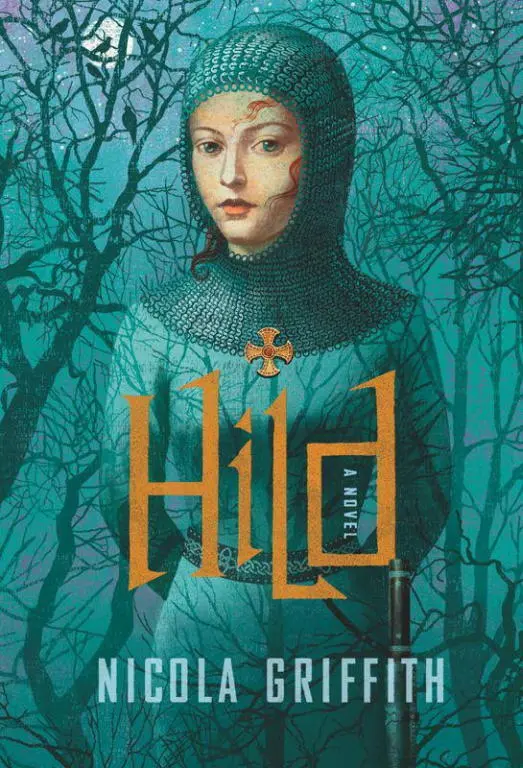
- Название:Hild
- Автор:
- Издательство:Farrar, Straus and Giroux
- Жанр:
- Год:2013
- Город:New York
- ISBN:978-0-374-28087-1
- Рейтинг книги:5 / 5. Голосов: 1
-
Избранное:Добавить в избранное
- Отзывы:
-
Ваша оценка:
Hild: краткое содержание, описание и аннотация
Предлагаем к чтению аннотацию, описание, краткое содержание или предисловие (зависит от того, что написал сам автор книги «Hild»). Если вы не нашли необходимую информацию о книге — напишите в комментариях, мы постараемся отыскать её.
But now she has only the powerful curiosity of a bright child, a will of adamant, and a way of seeing the world—of studying nature, of matching cause with effect, of observing her surroundings closely and predicting what will happen next—that can seem uncanny, even supernatural, to those around her.
Her uncle, Edwin of Northumbria, plots to become overking of the Angles, ruthlessly using every tool at his disposal: blood, bribery, belief. Hild establishes a place for herself at his side as the king’s seer. And she is indispensable—unless she should ever lead the king astray. The stakes are life and death: for Hild, for her family, for her loved ones, and for the increasing numbers who seek the protection of the strange girl who can read the world and see the future.
Hild is a young woman at the heart of the violence, subtlety, and mysticism of the early Middle Ages—all of it brilliantly and accurately evoked by Nicola Griffith’s luminous prose. Working from what little historical record is extant, Griffith has brought a beautiful, brutal world—and one of its most fascinating, pivotal figures, the girl who would become St. Hilda of Whitby—to vivid, absorbing life.
Hild — читать онлайн бесплатно полную книгу (весь текст) целиком
Ниже представлен текст книги, разбитый по страницам. Система сохранения места последней прочитанной страницы, позволяет с удобством читать онлайн бесплатно книгу «Hild», без необходимости каждый раз заново искать на чём Вы остановились. Поставьте закладку, и сможете в любой момент перейти на страницу, на которой закончили чтение.
Интервал:
Закладка:
“Yes, Uncle. But Pyr, I’m sure, will have a use for every one of them.”
“Oh, very well, pick your usual faithful hounds. But you’ll ride without my token.”
The Crow’s attention eased.
“Yes, Uncle.” She would have refused the token if offered. The point of the visit was to find out what kind of token she did or didn’t need.
She travelled with her household, a score of Edwin’s men to bolster the garrisons at Caer Loid and Aberford, and a wagon of goods those garrisons—and her own Menewood—couldn’t produce on their own. Some of the gesiths had recently healed wounds; she set an easy pace.
When they hit the old army street heading into Elmet, she turned in her saddle and said to Oeric, “Sing something! Something jaunty!” And so they marched into the cool wood singing about the Curly-Haired Cat from Caer Daun, who involved herself in an improbable number of adventures with an impressive variety of men.
When they left the shelter of the trees and crested the rise, she braced herself. But the new hall and tidy huts looked nothing like Ceredig’s palace, nothing like the long ago with Cian. The orchards might never have been, and the great gouge where the thorn had been torn from the earth was grassed over and partly hidden by a stout stockade. The old oak was still there, but next to a new church. The smoke seeping from the eaves was wood smoke, not peat, and a cow lowed where the geese had cackled. This was a royal vill, thoroughly Anglisc.
Arrayed before it, spear blades glittering in the sun, a row of armed men drawn up to greet her. She smiled. Clearly it didn’t matter to Pyr whether or not she bore a token.
Pyr and his new wife, the daughter of a local thegn, welcomed them with a feast, and every time Hild complimented him on a dish, he explained exactly where it came from and how he had made it possible. The swan? From the bywater north and east, which he knew about because of his careful survey last year. The salmon? Oh, yes, he’d not let the gesiths piss in the river east of the weir, so their breeding ground was clear. The medlar butter? Well, that was a lucky trade just this spring, though not really lucky because of course it was careful cultivation of the trade web the wealh—beg pardon, the Loides—had had since Ceredig was king. It had taken some patience to set up again, and careful negotiation…
Careful was his favourite word, and as she studied him from beneath half-lowered lids she wondered if he used it so often to counter the wealh reputation for recklessness and improvidence. What would it be like to grow up with that burden? But it was Pyr’s wealhness that made it possible for him to be steward of such an important vill without the king worrying too much. Even if Edwin didn’t visit often and mark it as his own, the local thegns wouldn’t follow a wealh. At least not a common wealh.
Pyr’s wife, Saxfryth, filled her cup anxiously. Hild reminded herself to guard her expression. They watched everything she did. She might not bear the token but they knew the songs, and she was still the king’s niece and seer. No doubt they wanted to be reeve and steward to whomever Edwin named ealdorman, and her word carried weight. She smiled at the woman and said, “I know another woman called Saxfryth who lives south and east of Aberford. She’s a fine weaver but could learn a thing or two from you when it comes to brewing. This is good mead.”
The woman blushed.
“Pyr, you and your wife are stewarding the king’s vill well. He’ll hear that from me.” Perhaps he blushed, too, but his skin was too sun-browned to tell.
She spent three days by the Aire, talking to everyone at the vill, spilling fulsome praise: for the sturdy stockade, the fine carving in the hall, the black earth and healthy coleworts in the kitchen garth, the strong hum of bees in the skeps along the garth’s edge. She listened to the groom talk about pasture for horses and the unwillingness of the local thegns to part with the right feed. She discussed with Saxfryth the best way to recruit more women; the hall was still sadly lacking in fine linens. She suggested to Pyr’s garthman that the place really did need an orchard and that, yes, she knew from experience apples and pears both would grow well just east of the stockade.
She talked and listened and sampled until the Caer Loid household began to relax. The king would be pleased, she said, over and over, but they still leapt to anticipate her needs, getting underfoot and irritating both her and Gwladus.
The nights were better. Hild reacquainted herself with Lweriadd and Sintiadd, both plumper than they had been but no less inclined to sly looks and slant comments. Sitting by the fire in the summer evening as Hild the daughter of the might-have-been king, not Hild the seer of the overking, speaking nothing but British, she felt her face setting in a new shape, happier, younger. But as she listened—to every joke, every complaint, every song, every tale of woe—she found that under their contentment ran a thin thread of unease, the sense of trouble a long, long way off. It took a while to tease out the thread: The thegns didn’t come to the hall to gossip and catch up on news as often as the Loides thought they should; the Anglisc were suspicious.
Suspicious of what? That the Loides were in league with the Christ, and so with the wealh priest web, and so with the spies of the men who would overrun Elmet in their quest to bring down Edwin king.
Had they not heard that Edwin king had just won a great victory over the Welsh? she asked. Yes, yes indeed, Lweriadd said. She knew that; everyone who ate barley cake knew that. She knew that half the Christ priests around here were sons of priests who had inherited their books and couldn’t spell more than their names. But the wheat-eating Anglisc were suspicious. Where was Cadwallon? they asked. Who was hiding him? Who was plotting with him? She knew that Cian Boldcloak had the Welsh king bottled up tight in one of his green valleys—set a king to catch a king, eh? and such a handsome one!—but the Anglisc thought all wealh were the same.
The next morning she told Pyr that instead of riding directly for Menewood she would personally escort the gesiths to their post at Aberford: In case Paulinus had any spies in hall, she told him the lady Breguswith would enjoy hearing how the weaving progressed there.
Morud guided them north and east to Brid’s Dike, past Berewith, and on to Aberford.
She smelt Aberford before they rode over Becca Bank. She reined in, closed her eyes. Smoke, stale urine, lye, dung, and, sweetening it all, weld. “They’ve been busy,” she said. “There must be a score of women working on cloth here.”
The men sent as relief for the Aberford garrison glanced at one another, and one touched his breast where no doubt his amulet hung, but Oeric and the others exchanged knowing looks—except for Grimhun, who fidgeted with his arm ring and leaned forward in his saddle. Hild waved him on. “Go on,” she said. “Go see what they’ve made of your walls.”
He bent his head gratefully and kicked his horse into a canter.
The rest of them followed at a jingling trot.
Aberford was an oddly segregated settlement: gesiths in a long house by the banks to the west of the road, women in a series of huts on the east. The east was bright with swaths of yellow, green, brown, and smaller patches of red and blue and black: cloth drying on racks and lines. Goats were tethered—goats had a tendency to eat good wool—and children pulled weeds from plots of weld and other dye plants. A lost-looking duck paddled back and forth on a newly dug pond.
Hild stayed long enough to meet the garrison commander and Heiu, the woman Breguswith had put in charge of the cloth workers. Hild complimented her on her cloth—Begu was right, it was very fine—and promised that on her way back she would spend a little more time inspecting the weaving huts and talking about supplies.
Читать дальшеИнтервал:
Закладка:
Похожие книги на «Hild»
Представляем Вашему вниманию похожие книги на «Hild» списком для выбора. Мы отобрали схожую по названию и смыслу литературу в надежде предоставить читателям больше вариантов отыскать новые, интересные, ещё непрочитанные произведения.







Обсуждение, отзывы о книге «Hild» и просто собственные мнения читателей. Оставьте ваши комментарии, напишите, что Вы думаете о произведении, его смысле или главных героях. Укажите что конкретно понравилось, а что нет, и почему Вы так считаете.