Nicola Griffith - Hild
Здесь есть возможность читать онлайн «Nicola Griffith - Hild» весь текст электронной книги совершенно бесплатно (целиком полную версию без сокращений). В некоторых случаях можно слушать аудио, скачать через торрент в формате fb2 и присутствует краткое содержание. Город: New York, Год выпуска: 2013, ISBN: 2013, Издательство: Farrar, Straus and Giroux, Жанр: Историческая проза, на английском языке. Описание произведения, (предисловие) а так же отзывы посетителей доступны на портале библиотеки ЛибКат.
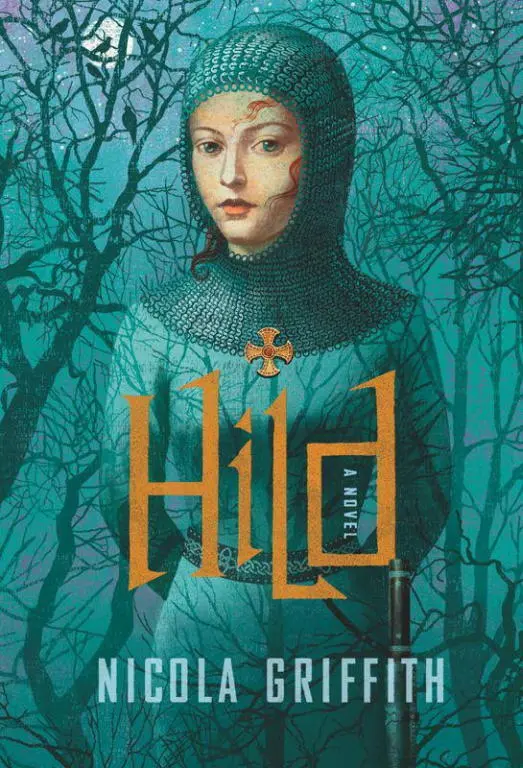
- Название:Hild
- Автор:
- Издательство:Farrar, Straus and Giroux
- Жанр:
- Год:2013
- Город:New York
- ISBN:978-0-374-28087-1
- Рейтинг книги:5 / 5. Голосов: 1
-
Избранное:Добавить в избранное
- Отзывы:
-
Ваша оценка:
Hild: краткое содержание, описание и аннотация
Предлагаем к чтению аннотацию, описание, краткое содержание или предисловие (зависит от того, что написал сам автор книги «Hild»). Если вы не нашли необходимую информацию о книге — напишите в комментариях, мы постараемся отыскать её.
But now she has only the powerful curiosity of a bright child, a will of adamant, and a way of seeing the world—of studying nature, of matching cause with effect, of observing her surroundings closely and predicting what will happen next—that can seem uncanny, even supernatural, to those around her.
Her uncle, Edwin of Northumbria, plots to become overking of the Angles, ruthlessly using every tool at his disposal: blood, bribery, belief. Hild establishes a place for herself at his side as the king’s seer. And she is indispensable—unless she should ever lead the king astray. The stakes are life and death: for Hild, for her family, for her loved ones, and for the increasing numbers who seek the protection of the strange girl who can read the world and see the future.
Hild is a young woman at the heart of the violence, subtlety, and mysticism of the early Middle Ages—all of it brilliantly and accurately evoked by Nicola Griffith’s luminous prose. Working from what little historical record is extant, Griffith has brought a beautiful, brutal world—and one of its most fascinating, pivotal figures, the girl who would become St. Hilda of Whitby—to vivid, absorbing life.
Hild — читать онлайн бесплатно полную книгу (весь текст) целиком
Ниже представлен текст книги, разбитый по страницам. Система сохранения места последней прочитанной страницы, позволяет с удобством читать онлайн бесплатно книгу «Hild», без необходимости каждый раз заново искать на чём Вы остановились. Поставьте закладку, и сможете в любой момент перейти на страницу, на которой закончили чтение.
Интервал:
Закладка:
Her mother stood remote as a totem, as though she had never felt a thing in her life. Hild supposed she looked the same. But in their ways they had fought for every single life, fought as thin chests heaved and lips turned blue, fought as a dozen women prayed, frantically, feverishly, begging Christ and his mother, Mary, and all his saints to help, just this once. Never , they said aloud, careless of their secrets, I’ll never do this, or that again . And God had listened to five of them, but Hild didn’t know why; their prayers had sounded the same as the rest, and their guilty secrets.
She had fought and lost. And none of the secrets she had heard were useful.
At the foot of Ad Gefrin, the little shaggy cattle in the tithe stockade huddled close against the wind. Not as many of them as there should be, she noted, and all those of bad temperament, bad health, and bad luck. Men tried to underpay every year, but this felt different.
A band of local chiefs on their ponies, wrapped in cloaks, also huddled close. Several wore their cloaks with a hint of wealh style—a subtle check, old tribal colours, pinned here and there with an old-fashioned brooch. She thought she might even have glimpsed a torc—the thick, twisted kind usually found only in hoards, except when hauled out and worn for battle—gleaming from one old man’s throat.
The north was turning, she could feel it. At night, when they rode in from the hills with their tithe of cattle, she could hear it: Not all of them spoke Anglisc all the time. The songs they sang were of old battles, of Coel Hen, only they weren’t slow and sad and glorious, they were hard and bright and fierce. The men of the north tasted change in the wind and were remembering old slights, complaining of heavy tribute and ill omens.
They knew that Oswald Iding was marrying the niece of Beli of Alt Clut. They knew Eochaid Buide had died and been succeeded by Connad Cerr mac Connell, but that behind Connad waited Domnall Brecc, young and strong—and friend and champion of the Idings. They knew the north was beginning to ally against the Yffings, while to the south and mountainous west, Penda and Cadwallon rode horses to death in their eagerness to exchange messages. Edwin was not a lucky king, they said. The Christ was not a generous god.
She wondered what else they were saying now, in their little mounted huddle, but she made no attempt to approach and listen unnoticed. She was taller than any of them, and better dressed, and wearing more gold than an ætheling. They knew who she was. She was an ælf, a freemartin, a hægtes. She was an angel, a maid, a butcher-bird. She was rich, she was subtle, she could break your mind and read your heart. She had the ear of the king. The mouth of the gods. She could call the weather or sway a battle. She could speak any tongue of man and many of beasts. She would listen, she would feed you, and a gift from her hand had a way of multiplying. She walked in the night, invisible, said some, like Cait Sith. She could tell you where to plant or how to birth your cow. She could set a loom that would weave a cloak that would make you famous. She would hold your hand if you were dying, hold it like your sister might, or your mother. No doubt she would fuck your sister, or your mother, or your brother—maybe even your cow, for good measure. She could heal you or poison you, charm you, charm away your warts, charm the birds from the trees, fly up into a tree.
The rumours were inventive and always changing. “Bring me every word,” she said to Morud, to Gwladus, to Oeric. “If I’m rumoured to turn into a frog and eat flies, I want to know.”
They brought her rumours and gossip. The more she heard, the worse her dreams became.
Two nights after the burial, Begu woke her. “That’s the second time you’ve kicked me. Why are you doing this to yourself?”
“They’re afraid of me.”
“Well, of course they are. You kill people. You save people. And you may as well be a carved totem for all the talking you do.”
Begu bumped her forehead against Hild’s shoulder, like a cat hoping for a stroke.
“You should talk to people. Ordinary people, about ordinary things. Like you used to with Cian.”
Cian, who said nothing when others called her a freemartin.
“… out hunting all the time, ever since you and— Well. I don’t like the way Uinniau behaves when he’s with them. So. People. You have to talk to them. And I don’t mean freemen who only talk to other people who don’t matter. I mean people like Lintlaf.”
“He’s not ordinary. He’s the chief of the king’s gesiths.”
“You know what I mean. People listen to him.”
“I don’t want to talk to Lintlaf.” She would rather kill him.
“You should try.” She turned over and tugged at the blankets. “I’m going back to sleep.”
“But what should I talk about?”
“Anything! Just open your mouth and let words fall out. But not tonight. Go to sleep.”
And so Hild spent more time with people. She helped the kitchenfolk seek out fresh shoots for soups and stews. She consulted with the drovers on the state of the countryside they’d travelled, the turns of the weather. She let Wilnoð clutch her hand as she wept, and gave Bassus the Elder a small keg of white mead to share with the queen’s other men, enough to drink until he sang through his tears and swore vengeance on the men of the north for bringing ill luck upon his house. Mead produced greater miracles than all the prayers in the world. Mead was the key to good fellowship. A better gift, sometimes, than gold. Her Menewood was good country for bees: She must remember to send word to Rhin for more mead as and when he could manage it. Or she could talk to the king about trading with the Franks for more. But then it would be the king’s gift, the king’s favour, not hers.
She attended Mass twice a week, bringing different of her gesiths each time, and eating with them afterwards, and dicing, or telling them to find a woman to patch their jackets, as suited each. She smiled at their jokes and offered opinions on their swordplay, which they accepted as they would advice from the king.
She consulted with the queen on an embroidery for Dagobert, newly king of Frankia, to remind him of their trade agreements. She sketched out a weave pattern she had thought of while watching wind in the grass at the edge of the ash coppice: a subtle ripple like ripe grain waving in the sun, like water as fish rose to feed, the flick and turn of bird flocks across a dawn sky. A spin-pattern weave that suggested ripe land and riches. On top would be an embroidery of royal blue, gold, and silver: wealth on wealth. She mentioned that, if it were possible, it might be good to make something, too, for Æthelric, prince of the Anglisc North Folk. He and the folk of the Gyrwe, south and north, were all that stood between an alliance of the middle and East Anglisc against their northern kin.
There was something about alliances she could not quite see, but the more she thought about it the less clear it became, so she set it aside for later.
She approached Cian just once. He was with Lintlaf and Oswine. They were cleaning their weapons by the fire: young lords, brothers of the shield wall, discussing the ætheling Eadfrith. They didn’t see her in the shadow.
“… heard he was talking to the East Angles and the Kentishmen.”
“Talking,” Cian said. He dipped his twig carefully in his bowl of oil. “He’s good at talking.”
Oswine slapped his sword. “This does my talking!”
Lintlaf and Cian exchanged glances, and Hild didn’t like the amused contempt they shared for the hostage who thought he was a gesith.
She withdrew unseen.
Cian was better around Uinniau, but Uinniau spent as much time as he could with Begu. Hild didn’t know who Cian’s latest bed partner was. Perhaps he hadn’t had a chance to find one while being princely with the two guests of the king and riding around as a shining example of wealh and Anglisc friendship. She didn’t like princely Boldcloak much. She missed her Cian. Missed the Cian she might have told of misjudging bandits and what eagles saw.
Читать дальшеИнтервал:
Закладка:
Похожие книги на «Hild»
Представляем Вашему вниманию похожие книги на «Hild» списком для выбора. Мы отобрали схожую по названию и смыслу литературу в надежде предоставить читателям больше вариантов отыскать новые, интересные, ещё непрочитанные произведения.









Обсуждение, отзывы о книге «Hild» и просто собственные мнения читателей. Оставьте ваши комментарии, напишите, что Вы думаете о произведении, его смысле или главных героях. Укажите что конкретно понравилось, а что нет, и почему Вы так считаете.