Wu Ming - Altai
Здесь есть возможность читать онлайн «Wu Ming - Altai» весь текст электронной книги совершенно бесплатно (целиком полную версию без сокращений). В некоторых случаях можно слушать аудио, скачать через торрент в формате fb2 и присутствует краткое содержание. Год выпуска: 2013, Издательство: Verso, Жанр: Историческая проза, на английском языке. Описание произведения, (предисловие) а так же отзывы посетителей доступны на портале библиотеки ЛибКат.
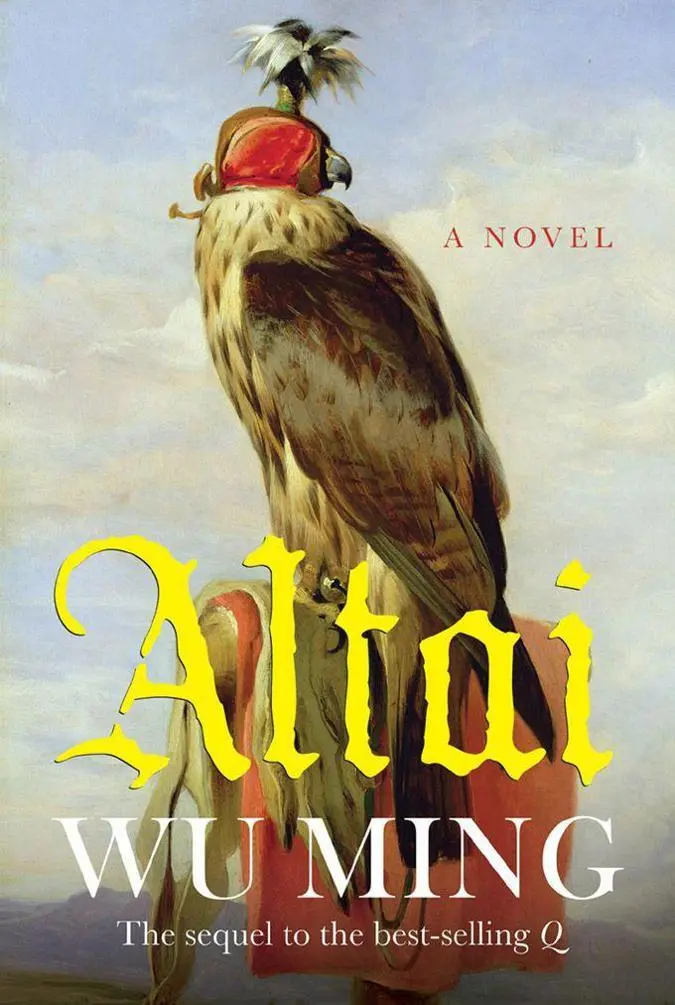
- Название:Altai
- Автор:
- Издательство:Verso
- Жанр:
- Год:2013
- ISBN:нет данных
- Рейтинг книги:3 / 5. Голосов: 1
-
Избранное:Добавить в избранное
- Отзывы:
-
Ваша оценка:
Altai: краткое содержание, описание и аннотация
Предлагаем к чтению аннотацию, описание, краткое содержание или предисловие (зависит от того, что написал сам автор книги «Altai»). Если вы не нашли необходимую информацию о книге — напишите в комментариях, мы постараемся отыскать её.
Through a series of deadly political games leading all the way to the Sultan’s palace in Constantinople, De Zante and his companions spiral headfirst toward a conflict in which the great empires of the Republic of Venice and the Ottomans threaten the very foundations of civilization.
Altai — читать онлайн бесплатно полную книгу (весь текст) целиком
Ниже представлен текст книги, разбитый по страницам. Система сохранения места последней прочитанной страницы, позволяет с удобством читать онлайн бесплатно книгу «Altai», без необходимости каждый раз заново искать на чём Вы остановились. Поставьте закладку, и сможете в любой момент перейти на страницу, на которой закончили чтение.
Интервал:
Закладка:
Prelude, Al Mukha, 27 Dhu al-Hijjah 976
The Sultan’s galleys came in sight of Mokha as evening fell. The monsoon breeze swelled the sails with sticky air, heavy as a tunic drenched in boiling water. On the shore, a line of white walls rose just above the sand, between the warm sea and the mountain backdrop from which the rebels had come down.
According to the information in the admiral’s possession, the city had surrendered without a blow being struck. The inhabitants had refused to fight, the Ottoman garrison had fled, and the Indian merchants had sailed their feluccas to Abyssinia, on the other side of the Red Sea.
“We’re half a mile away, Pasha,” the bombardier informed him. “Where do you want to strike?”
The admiral unrolled a map and studied the coast once more. Mokha had neither gates nor bastions. The Zaydi gangs had taken the city on foot, with the complicity of a cowardly population. Both would soon know the price to be paid for betrayal. In essence, there were only two buildings armed with cannons.
“The Bey’s palace is too close to the mosque,” he said, pointing to the vertical of the big minaret. “Aim to starboard, at that isolated tower.”
From the fo’c’sle the order echoed to the oarsmen’s benches, and the galley maneuvered into firing position.
The gunner swabbed the middle culverin. Into its mouth he slipped the bundle of charge and a spadeful of sawdust, followed by six blows of the tamping rod. Then he picked up a sixty-pound ball and rolled it into the bronze barrel. He poured the priming powder into the touchhole, lit the fuse at the end of the linstock and waited.
“Elevation four,” the bombardier commanded, as he was handed the incandescent scepter. In the meantime, five more gunners repeated the same operations with the lower-caliber weapons.
“Fire!” the admiral cried.
The explosion scattered a school of dolphins and startled the gulls. The culverin recoiled on the deck, coming to a halt against the mainmast. When the smoke dispersed, the tower they had been aiming at still appeared solidly in place. The other cannons were ready to fire, but no response came from the city: no gunfire, no shouts, nothing.
The admiral told the bombardier to stay prepared, then commanded that the vessel head farther down the coast and aim for the dock.
All of a sudden, beyond the pall of heat, dust and salt, the mirage of a banner appeared, flapping red against the wind, above the highest roof of the government building. Because he wasn’t in the first flush of youth, and his eyesight wasn’t what it was, he asked his second-in-command to help him.
“Captain, do you see that banner, too?”
The other man nodded.
“And do you recognize it?”
The captain leaned against the side and narrowed his eyes: three half-moons in a green oval on a red ground. “It looks like, I don’t know, but, no, that’s impossible, it couldn’t. .”
“So?”
“It looks like the Sultan’s banner, Pasha. Our banner.”
The old man sits at the table and writes. There is still enough light coming in through the window; the lamps are not yet lit. Once he has finished a page, he stacks it on the pile to his left: it’s at least a hand’s-breadth high, ten years of memories for each finger. Worn-out sheets of paper, ink-scarred, written in a threadbare Latin that the old man patches up with Turkish, Arabic, German, Venetian terms. Saint Jerome and Saint Augustine wouldn’t recognize their language of choice.
He spreads a new page out in front of him, straightens his back and dips his pen.
“They’re coming,” a voice says behind him. “What should we do?”
It’s Ali. The old man didn’t even hear him coming upstairs. Old age and salt air are ruining his hearing. He turns around, his fingers stroking his white beard.
“How many?” he asks in Arabic.
“Eight galleys.”
“Fine. Call the people. We’ll go and welcome them at the customs post.”
Ali is about to reply, but a distant explosion interrupts their conversation. The two men wait, motionless, like statues of flesh. Sounds of collapsing masonry burst through the window. The old man gets up, ignoring a pain in the small of his back. He looks up and sees, about thirty yards away, the smashed roof of a house, below the watchtower.
“It’s a challenge,” he announces. “If we don’t respond, they won’t fire again. That’s the rule.” He goes back to his desk and puts the manuscript back in a big leather bag. He picks up the ebony stick resting against his chair and, with the help of this, goes downstairs, with Ali walking ahead of him.
There were at least two thousand people crowding by the arch leading from the dock to the city. Veiled women holding babies in their arms, wrinkled old men in white robes, children naked from head to toe. Men and boys all had one protruding cheek, swollen with intoxicating leaves, and at their waists they each wore a curved dagger, more as an ornament than a dangerous weapon. The only martial-looking young men were lined up in the front row: a group of about thirty Arabs, Indians and Africans, each wearing only a wide tunic.
In front of them stood a solemn-looking old man with his head wrapped in a turban. The admiral approached, followed by the galley captains. Once he was standing in front of the old man he looked him up and down like a camel he was thinking of buying.
“So it’s true,” he said at last. “You are. .”
“Ismail al-Mukhawi,” the other man cut in. “Welcome to Mokha, Pasha.”
“A spy told us you’d stayed in the city with your men, and the Zaydis didn’t dare touch you. So you liberated Mokha all by yourself?”
“They left at night, as soon as they knew of your arrival. There was no need to fight.”
“And months ago, when they got here?” The admiral’s voice was now quivering with indignation. “You didn’t need to fight then, either?”
The old man spread his arms, as if to embrace the city and its people. “Mokha has no defenses, and there were thousands of rebels. No amount of resistance would have held them back.”
“The fact remains that the captain of the janissaries ordered the inhabitants to respond to the attack, and he wasn’t listened to.”
Ismail rested a hand on his chest. “The responsibility is mine. I promised these people that the Zaydis would do them no harm. Events proved me right.”
“Far from it!” the admiral roared. “You are a merchant, you think about business, and the mountain rebels don’t seem like true enemies to you, because they produce the coffee you are so fond of. I, on the other hand, am a man of arms, and I think quite differently. Anyone who doesn’t fight the Sultan’s enemies is a traitor, and that is how he should be treated.”
“If we were enemies, we wouldn’t be here to welcome you, Pasha.”
“Welcome me? As far as I’m concerned, you’re here to surrender!”
“Even an old man like me can see that it isn’t a white flag that’s flying from the bey’s palace; it’s the Sultan’s banner. And if it has returned to its place, it certainly isn’t thanks to the governor.”
With a sudden impulse of rage, the admiral turned round and ordered his men to load their arquebuses and have their bows at the ready.
The youths behind the old man brought their hands to their belts, as if to untie their robes. A moment later, every one was holding a pistol and, in the other hand, a whip of big metal strips as long as a man. Behind them, at the same moment, a hundred blades emerged from their scabbards.
The admiral drew his sword and put himself almost nose to nose with the old man. “Thank Yossef Nasi,” he said between his teeth. “If it weren’t for the fact that you represent him, I would make you repent for not fighting when it was time.”
Читать дальшеИнтервал:
Закладка:
Похожие книги на «Altai»
Представляем Вашему вниманию похожие книги на «Altai» списком для выбора. Мы отобрали схожую по названию и смыслу литературу в надежде предоставить читателям больше вариантов отыскать новые, интересные, ещё непрочитанные произведения.









Обсуждение, отзывы о книге «Altai» и просто собственные мнения читателей. Оставьте ваши комментарии, напишите, что Вы думаете о произведении, его смысле или главных героях. Укажите что конкретно понравилось, а что нет, и почему Вы так считаете.