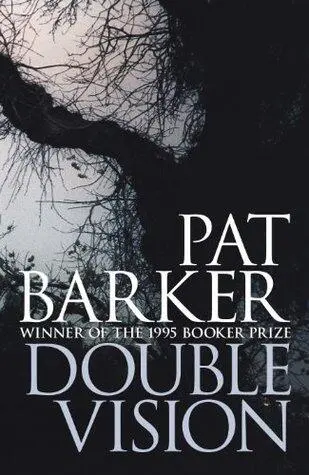
Pat Barker - Double Vision
Здесь есть возможность читать онлайн «Pat Barker - Double Vision» весь текст электронной книги совершенно бесплатно (целиком полную версию без сокращений). В некоторых случаях можно слушать аудио, скачать через торрент в формате fb2 и присутствует краткое содержание. Год выпуска: 2003, Издательство: Penguin, Жанр: Историческая проза, на английском языке. Описание произведения, (предисловие) а так же отзывы посетителей доступны на портале библиотеки ЛибКат.
- Название:Double Vision
- Автор:
- Издательство:Penguin
- Жанр:
- Год:2003
- ISBN:нет данных
- Рейтинг книги:3 / 5. Голосов: 1
-
Избранное:Добавить в избранное
- Отзывы:
-
Ваша оценка:
Double Vision: краткое содержание, описание и аннотация
Предлагаем к чтению аннотацию, описание, краткое содержание или предисловие (зависит от того, что написал сам автор книги «Double Vision»). Если вы не нашли необходимую информацию о книге — напишите в комментариях, мы постараемся отыскать её.
In the aftermath of September 11, reeling from the effects of reporting from New York City, two British journalists, a writer, Stephen Sharkey, and a photographer, Ben Frobisher, part ways. Stephen returns to England shattered; he divorces his duplicitous wife and quits his job. Ben follows the war on terror to Afghanistan and is killed.
Stephen retreats to a cottage in the country to write a book about violence, and what he sees as the reporting journalist's or photographer's complicity in it. Ben's widow, Kate, a sculptor, lives nearby, and as she and Stephen learn about each other their world speedily shrinks, in pleasing but also disturbing ways. The sinister events that begin to take place in this small town, so far from the theaters of war Stephen has retreated from, will force him to act instinctively, violently, and to face his most painful revelations about himself.
Double Vision — читать онлайн бесплатно полную книгу (весь текст) целиком
Ниже представлен текст книги, разбитый по страницам. Система сохранения места последней прочитанной страницы, позволяет с удобством читать онлайн бесплатно книгу «Double Vision», без необходимости каждый раз заново искать на чём Вы остановились. Поставьте закладку, и сможете в любой момент перейти на страницу, на которой закончили чтение.
Интервал:
Закладка:
‘What sort of things?’
‘Chisels, mallets, scrapers.’
‘Nothing’s missing?’
‘No, and they haven’t been moved far. A few inches.’
‘You’re sure?’
‘Positive. He’s got a key, he knows the combination on the burglar alarm — he has to, because he sometimes delivers stuff outside working hours.’
‘Why would he do that?’
‘I don’t know.’
‘He doesn’t touch the figure?’
‘Not the Christ. Some of the others have moved. The group in the corner. They shift about a bit.’
‘You haven’t confronted him with it?’
‘No. It’s mad. Nothing’s missing. Nothing’s been damaged. And I suppose I keep thinking if I don’t say anything it’ll go away.’ She looked directly at him. ‘It could be me. I’m sure I don’t need to spell it out. I have been in better states.’
‘I don’t think it’s you.’
She smiled, then laughed. ‘Good.’
‘You think he’s getting a bit obsessed?’
‘A bit. He’s really got into it —’
‘No, I meant with you.’
She considered for a moment. ‘No, I don’t think so. I’m old enough to be his mother.’
‘As Jocasta said.’
‘Oh, c’mon.’
She was laughing now, slightly flushed. How long since she’d thought of herself as an attractive woman? But he knew the answer to that. To the day. Almost to the hour.
‘Anyway, he’s got a girlfriend. Justine Braithewaite. The vicar’s daughter.’
He managed not to show surprise. He didn’t for a moment believe anything was still going on, but he remembered how reluctant Justine was to go out to any of the local pubs or restaurants. She’d always said she didn’t want to bump into any of her father’s nosy parishioners. But perhaps there was another explanation. He wasn’t jealous, but he was surprised, and a bit hurt, that he hadn’t been told.
A few minutes later he paid the bill and followed Kate into the car park. ‘You’re right about that place. It’s very good.’
As they left the shelter of the building, a gust of wind caught them. She staggered, and he put out a hand to steady her.
‘March coming in like a lion,’ she said, pushing the hair away from her face.
Battling across the car park, they had to turn their heads sideways to escape the wind that threatened to snatch the breath from their mouths.
She almost shouted, ‘Are you going back to Goya?’
‘Yes, I think I’d better. Can we arrange a time for me to come across and look at prints?’
‘I’ve got to go to the hospital tomorrow. They’re going to give me an anaesthetic to try to free up the shoulder. How about Tuesday?’
‘Fine. See you then.’
It was impossible to talk. He saw her into her car and waved as she turned off into the road.
Sixteen
Next morning the book from Peter arrived, with a short note giving his address and telephone number. Normally Stephen would have put it aside to read later, but by now his curiosity had been awakened. This was Justine’s boyfriend — ex-boyfriend. Why on earth hadn’t she mentioned his name?
Peter’s story ‘Inside the Wire’ was longer than the other pieces in the issue, though the potted biography at the end of the book gave less information than other contributors had thought necessary. His MA was mentioned, but almost nothing else.
Andrea White teaches Art inside a high-security prison. When people expressed surprise that her entire working life was spent locked up with some of the country’s most dangerous men, and asked if she did not feel nervous, she replied that she often felt safer inside the prison than she did waiting at the bus stop after dark to start the long journey home.
Andrea lives in a one-bedroom flat, in an area that was supposed to rise but hadn’t risen yet. A year before, she’d split up with her boyfriend. Two years before that, she’d had an abortion after her boyfriend decided he was too young to be saddled with a family. Now, despite his fear of being a child bridegroom, he’s married and his wife is pregnant. Andrea passes her sometimes trundling her trolley round Sainsbury’s.
Once safely home, Andrea puts on soup for supper — home-made — warming it through, gently, as you should, while cutting the bread — home-made, warm from the oven. She knows all about the deep demoralization of the microwave, does Andrea, and she wants none of it — she’s fighting back. But it’s a precarious little life she leads — trying and failing to get over the boyfriend, getting drunk at a party and having a one-night stand, but lacking the emotional toughness not to feel bad about it afterwards. Next morning, getting up and staring at herself in the mirror, she notices that the creases at the corners of her eyes look deeper when she’s tired, and then she drags herself off to work.
She’s a good teacher, though she rarely encounters any actual talent. The prisoners generally go in for disturbingly sentimental portraits of children, chocolatebox flowers, gooey pictures of Christ — Peter was very good on the links between sentimentality and brutality. But one prisoner, James Carne, is doing something different. He returns again and again to a single image: a figure of indeterminate sex, the face hidden by bandages or tape, enclosed in a double helix of barbed wire. It’s a bit like the Amnesty International candle. ‘Did you,’ she asks James, ‘have the Amnesty International candle in mind when you drew it?’ ‘No,’ says James. ‘But you were thinking of imprisonment and the impossibility of escape?’ ‘Oh, yes.’
Andrea’s starved of meaning, so she attaches meaning to this. After a while she begins to suggest that perhaps he should do something else. ‘When I’m outside,’ he says. ‘Shut up in here I can’t think about anything else.’
She goes out of the prison gate, feels the wind and rain on her face, sees the barbed wire outside the high perimeter walls, hears the snapping of scraps of cloth and paper caught on the barbs. Of course he can’t do anything else. It was stupid and insensitive of her to think that he could.
James is a tall, rather good-looking man, muscles toned from long hours spent in the gym, obsessively working out. Andrea’s feelings for him, though, have nothing to do with physical attraction — or so she tells herself, hurrying through the weekend’s shopping so she’ll have time to go to the hairdresser.
James notices the new haircut, as he notices the shorter skirts, the brighter lipstick, the way the lipstick bleeds ever so slightly into the lines around her mouth. He watches her tug the skirt down over her knees when she catches him looking at her. He’s a man who notices things.
Without actually saying so, he implies that he’s innocent of the crimes for which he was sentenced, and she believes him. How could a murderer, a drugs dealer, an armed robber or a rapist — Andrea prefers to remain vague about the details of precisely what it is that James didn’t do — paint pictures as sensitive, as beautiful, as this? The figures glow inside their cages of barbed wire.
And then he comes out. He waits for her at the bus stop where so often in the past she has felt afraid, with the floodlit rain-streaked walls of the prison towering over her.
There was no suspense. The ending had never been in doubt, and yet Stephen couldn’t stop reading. There’s a horrible fascination in watching an innocent human being become complicit in their own destruction. The violence, like everything else, was beautifully controlled, neither shirked nor lingered over. Barbed wire figured prominently, as did masking tape.
Andrea died a terrible death because she projected her own values on to an image created by somebody else for his own purposes. Stephen felt enormous compassion for her, but then he wondered whether he was not projecting his own values into the story, doing, in fact, exactly what Andrea had done with the paintings. You bring everything you are, everything you’ve ever experienced, to that encounter with the sculpture, the painting, the words on the page. But behind the smoke the sibyl crouches, murmuring too low for you to catch the words, ‘Ah, but I don’t mean what you mean.’
Читать дальшеИнтервал:
Закладка:
Похожие книги на «Double Vision»
Представляем Вашему вниманию похожие книги на «Double Vision» списком для выбора. Мы отобрали схожую по названию и смыслу литературу в надежде предоставить читателям больше вариантов отыскать новые, интересные, ещё непрочитанные произведения.






Обсуждение, отзывы о книге «Double Vision» и просто собственные мнения читателей. Оставьте ваши комментарии, напишите, что Вы думаете о произведении, его смысле или главных героях. Укажите что конкретно понравилось, а что нет, и почему Вы так считаете.