Calvin Baker - Dominion
Здесь есть возможность читать онлайн «Calvin Baker - Dominion» весь текст электронной книги совершенно бесплатно (целиком полную версию без сокращений). В некоторых случаях можно слушать аудио, скачать через торрент в формате fb2 и присутствует краткое содержание. Год выпуска: 2007, Издательство: Grove Press, Жанр: Историческая проза, на английском языке. Описание произведения, (предисловие) а так же отзывы посетителей доступны на портале библиотеки ЛибКат.
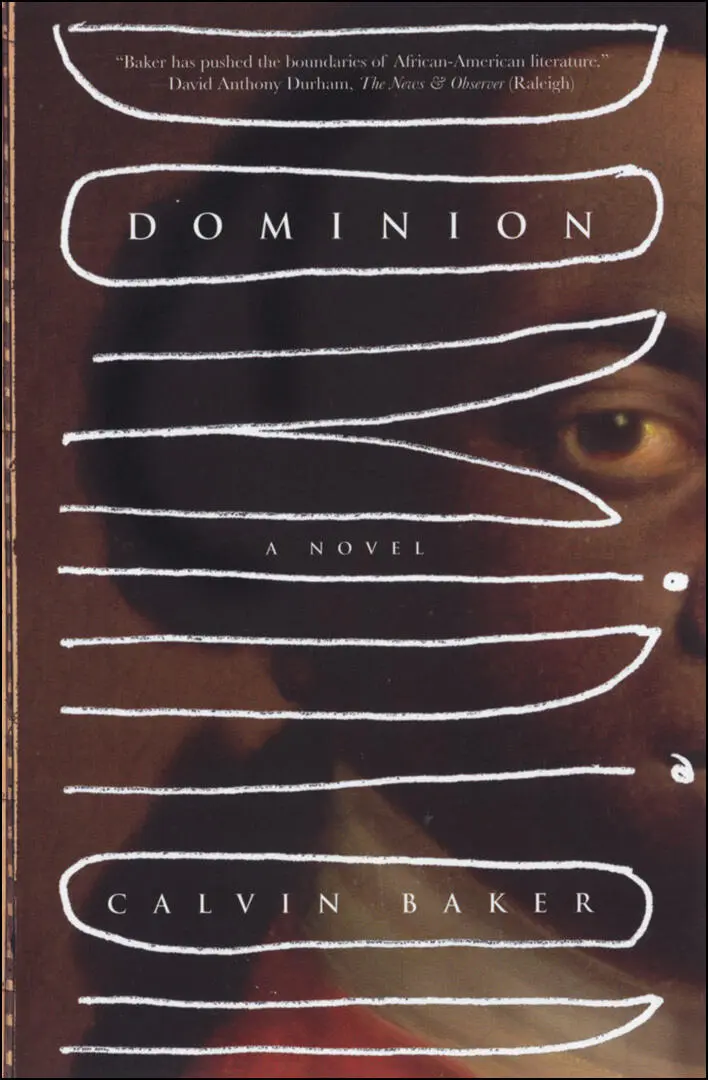
- Название:Dominion
- Автор:
- Издательство:Grove Press
- Жанр:
- Год:2007
- ISBN:нет данных
- Рейтинг книги:5 / 5. Голосов: 1
-
Избранное:Добавить в избранное
- Отзывы:
-
Ваша оценка:
Dominion: краткое содержание, описание и аннотация
Предлагаем к чтению аннотацию, описание, краткое содержание или предисловие (зависит от того, что написал сам автор книги «Dominion»). Если вы не нашли необходимую информацию о книге — напишите в комментариях, мы постараемся отыскать её.
, he was named a “Notable First Novelist” by Time magazine. Since his second novel,
, Baker has continued to be acclaimed by the major media from the
to
. Now, with Dominion, Baker has written a lush, incantatory novel about three generations of an African American family in the years leading up to the Revolutionary War. Dominion tells the story of the Merian family who, at the close of the seventeenth century, settle in the wilderness of the Carolinas. Jasper is the patriarch, freed from bondage, who manages against all odds to build a thriving estate with his new wife and two sons — one enslaved, the other free. For one hundred years, the Merian family struggles against the natural (and occasionally supernatural) world, colonial politics, the injustices of slavery, the Revolutionary War and questions of fidelity and the heart. Footed in both myth and modernity, Calvin Baker crafts a rich, intricate and moving novel, with meditations on God, responsibility, and familial legacies. While masterfully incorporating elements of the world’s oldest and greatest stories, the end result is a bold contemplation of the origins of America.
Dominion — читать онлайн бесплатно полную книгу (весь текст) целиком
Ниже представлен текст книги, разбитый по страницам. Система сохранения места последней прочитанной страницы, позволяет с удобством читать онлайн бесплатно книгу «Dominion», без необходимости каждый раз заново искать на чём Вы остановились. Поставьте закладку, и сможете в любой момент перейти на страницу, на которой закончили чтение.
Интервал:
Закладка:
“On the contrary,” the man answered, directing him toward a pail of water to wash in. “It is not people who do, but the market. People ain’t smart enough. But the market is brilliant, and it can price anything — that horse, you, me, the pail — it makes no difference; the market will tell you exactly what everything is worth and will not lie or cheat you.
If you bring to her what she deems valuable, she will lavish you with reward. If you bring her something worthless or not to her wanting, she will taunt you and make you suffer as sure as getting beaten with a stick for squandering her time.
“You she wants, and knows exactly what a healthy seventeen-year-old Negro is worth. Tell me now if you have any skills that should be considered, because, like I said, I hate to be cheated. Besides, I think every man should have a clear idea what he is naturally worth.”
Perhaps it was from youthful pride, or perhaps he had fallen under that man’s brainwash, but Bastian answered him. “I was born free and am skilled at gunmaking.”
The kidnapper sucked his teeth. “Do you make shaky Negro guns or the good kind?”
“Me and my papa make the truest guns in three colonies. You can ask anybody that know guns.”
“Yessir,” his abductor said delightedly. “The market will know what you’re worth. Now me, I am only bold, and many men are that, but you are skilled at something there is need for, so I daresay you will go at a premium. You should be proud to be worth something. Tell me, what do they call the guns your daddy make?”
“They go by his name, Bastian Johnson,” the boy answered. “Same as mine.”
Upon hearing this the man whistled. “You are valuable indeed,” he said, taking his own pistol from its holster and showing it.
“I see you ain’t mean as you look,” Bastian replied brazenly, when he saw the pistol, as he put on his new clothes and followed his abductor out of the barn. They hitched the wagon again, then drove to the courthouse steps, where twice a month an auction was conducted.
When his turn came to go upon the block, Bastian was rigid with fear as the man who had taken him from his home announced his skills. “He is a seventeen-year-old Negro boy of fine build and exceptional skill. Owing to his good character he has never been touched by the lash, and he is a master gunmaker already, a skill he learned from the renowned Bastian Johnson.”
A murmur went through the crowd when the auctioneer mentioned this, and the bidding for him did indeed open with a frenzy, until a voice from the crowd called out, “That child is free and has been stolen from his family.” It was his Uncle Goodwin, out of breath as he came into the square.
Bastian had never been so happy as he was then to see his uncle, who had come to save him, and nearly cried like a child.
“You watch what you say,” Harris cautioned, pulling his gun from his waistband and pointing it at Goodwin. “His father owed money and sold the boy to pay his debt.”
“That is a bald lie,” Goodwin said, walking toward Harris.
Harris cocked his pistol, daring Goodwin to come any nearer.
“On what grounds are you calling this man a liar?” Someone challenged from the crowd.
“Because his father is my brother Bastian, who many of you know, and he would never do such a thing. First of all he has never had debt in his life, and secondly that’s the last way he would try to pay it.”
Now many of the men knew both Johnson brothers, and they began to discuss vigorously how everything should be allowed to play out.
“Do you have a bill of sale?” The auctioneer called to Harris.
Harris, who had long practiced his thievery, produced a forged document, which the auctioneer took and examined.
“It looks authentic to me,” the man announced. “The sale will proceed, Mr. Johnson.”
Goodwin, along with several members of the crowd, was outraged, but he had no choice. When the auction resumed, he joined in the bidding against the others for his nephew, torn between looking at the boy to comfort him, and not wanting to upset either of their emotions.
Goodwin, like his brother, was a trained craftsman, who made a decent living for any man, and he had ready enough cash. After those who were not serious about buying fell away, his chief rival in the competition for his nephew proved to be a colonel from the Royal Army. Against him Goodwin bid all he was worth, and all his brother was worth. When the man did not drop out of the auction, Goodwin kept bidding what he thought they might reasonably borrow from friends. After that he bet what was unreasonable, but the colonel was unmoved. He had entered into the contest to buy the boy and he intended to have him no matter the price. As Goodwin neared emotional exhaustion, the colonel looked at him coolly and could tell he was beyond his limit. He added then a thousand pounds to Goodwin’s last price.
It was exorbitant, and a murmur of shocked disbelief spread across the crowd’s lips, but it was the final price set fair by the market. Goodwin was defeated.
He looked at his nephew and began to weep on the courthouse steps.
The kidnapper Harris gloated perversely and said to his former property, “I told you you was worth more than me, boy.”
As the auctioneer swung his gavel down, Goodwin Johnson pushed his way through the crowd toward Bastian, and everyone parted to make way for him. When he emerged from the throng, though, instead of going to his nephew he charged at Harris, his fists ready for a fight. Unfortunately for the poor man, he was dealing with a rough sort who knew the use of a pistol better than he. He was outmatched again, and for the last time among his days. Harris, when he saw him coming, fired but once from the pistol. It was true and Goodwin fell to the ground.
Amidst all this, the colonel paid the bursar of the court, and the sum he turned over that day was the second highest ever recorded for a slave in that colony.
The highest price was the one Rudolph Stanton’s father had paid for his mother, who everyone said was a countess abducted from the court of the Ottomans, or else the consort of a pirate king from the Barbary Coast, or, more outlandishly, even the queen of Dahomey herself.
That she was noble was as certain as that she was a slave, and later she refused to reveal her origin from shame that her house could not redeem her.
Wherever she was from, she was queenly haughty and even the block could not steal that from her, and when the elder Stanton paid it was with a suitcase that required two men to lift it up, inside of which was naught but pure gold.
For Bastian a lesser sum was required, but the purchaser was no less pleased with his prize as they left the market.
three
The day after Mr. Johnson discovered what happened to his son it seemed the entire Negro population, free and enslaved, learned the boy’s fate at the very same time, and all began to descend on the Johnson house as if a call had gone out.
The Johnsons were not surprised when their nearest neighbors showed up, or when Bastian’s friends came to grieve his absence. And when the Darsons and the Merians arrived it was only slightly out of the ordinary, as both of them had boys Bastian’s age. However, when people began to arrive from as far away as Chase, and then from towns at the far edge of the county, they were caught completely unawares, but sensed something extraordinary was occurring. By that night their relatives from as far away as Knowleston had arrived as well, and the house overflowed with people, including a few who came only to see the scene of such misery.
All were welcomed there regardless of why they came, and there was a great gathering then of all in one place, such as had never before occurred. Mr. Johnson’s house was not large, but it was able to accommodate everyone who streamed in from the shops of the town and the surrounding farms that week, as they heard Bastian’s story. They came with gifts of food, pots of liquor, and instruments of music making such as those who played them thought appropriate.
Читать дальшеИнтервал:
Закладка:
Похожие книги на «Dominion»
Представляем Вашему вниманию похожие книги на «Dominion» списком для выбора. Мы отобрали схожую по названию и смыслу литературу в надежде предоставить читателям больше вариантов отыскать новые, интересные, ещё непрочитанные произведения.




Обсуждение, отзывы о книге «Dominion» и просто собственные мнения читателей. Оставьте ваши комментарии, напишите, что Вы думаете о произведении, его смысле или главных героях. Укажите что конкретно понравилось, а что нет, и почему Вы так считаете.