Calvin Baker - Dominion
Здесь есть возможность читать онлайн «Calvin Baker - Dominion» весь текст электронной книги совершенно бесплатно (целиком полную версию без сокращений). В некоторых случаях можно слушать аудио, скачать через торрент в формате fb2 и присутствует краткое содержание. Год выпуска: 2007, Издательство: Grove Press, Жанр: Историческая проза, на английском языке. Описание произведения, (предисловие) а так же отзывы посетителей доступны на портале библиотеки ЛибКат.
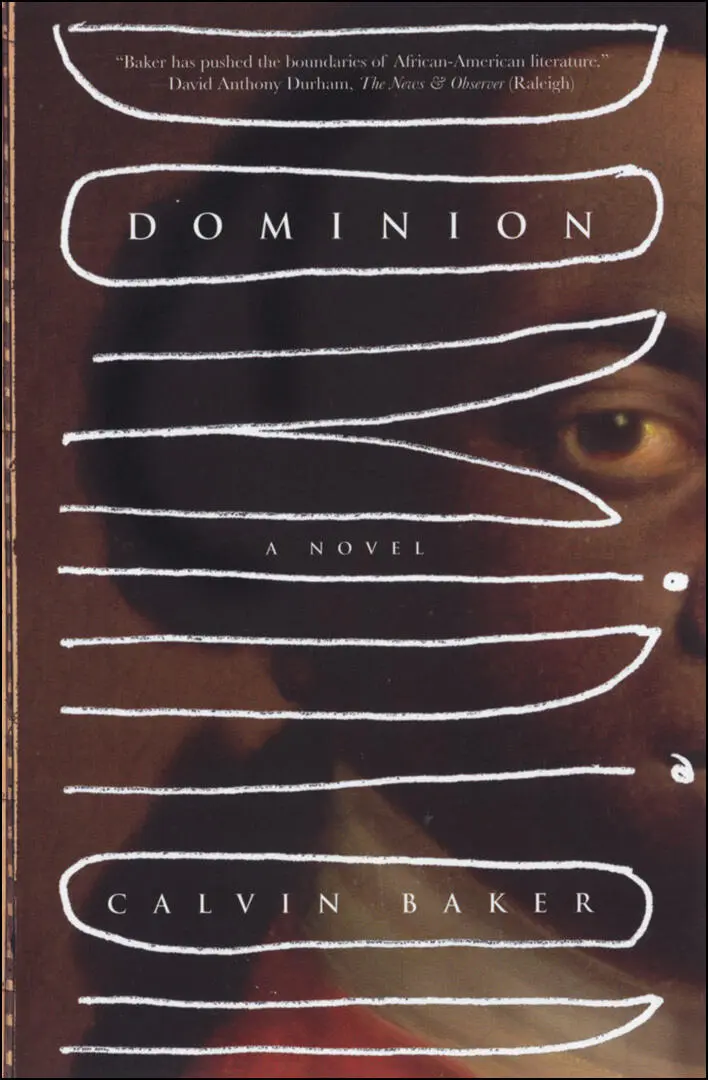
- Название:Dominion
- Автор:
- Издательство:Grove Press
- Жанр:
- Год:2007
- ISBN:нет данных
- Рейтинг книги:5 / 5. Голосов: 1
-
Избранное:Добавить в избранное
- Отзывы:
-
Ваша оценка:
Dominion: краткое содержание, описание и аннотация
Предлагаем к чтению аннотацию, описание, краткое содержание или предисловие (зависит от того, что написал сам автор книги «Dominion»). Если вы не нашли необходимую информацию о книге — напишите в комментариях, мы постараемся отыскать её.
, he was named a “Notable First Novelist” by Time magazine. Since his second novel,
, Baker has continued to be acclaimed by the major media from the
to
. Now, with Dominion, Baker has written a lush, incantatory novel about three generations of an African American family in the years leading up to the Revolutionary War. Dominion tells the story of the Merian family who, at the close of the seventeenth century, settle in the wilderness of the Carolinas. Jasper is the patriarch, freed from bondage, who manages against all odds to build a thriving estate with his new wife and two sons — one enslaved, the other free. For one hundred years, the Merian family struggles against the natural (and occasionally supernatural) world, colonial politics, the injustices of slavery, the Revolutionary War and questions of fidelity and the heart. Footed in both myth and modernity, Calvin Baker crafts a rich, intricate and moving novel, with meditations on God, responsibility, and familial legacies. While masterfully incorporating elements of the world’s oldest and greatest stories, the end result is a bold contemplation of the origins of America.
Dominion — читать онлайн бесплатно полную книгу (весь текст) целиком
Ниже представлен текст книги, разбитый по страницам. Система сохранения места последней прочитанной страницы, позволяет с удобством читать онлайн бесплатно книгу «Dominion», без необходимости каждый раз заново искать на чём Вы остановились. Поставьте закладку, и сможете в любой момент перейти на страницу, на которой закончили чтение.
Интервал:
Закладка:
In time she found he was a very jealous husband and snuck off with Purchase, at first to punish him. The second time, however, it had been because she had found she preferred to be with Purchase and had no want of punishing anyone, if such were possible.
They wrestled with this for the years they were on the road together, him telling her she was his wife and her saying it was difficult to find a difference between that and being his slave. Shamed, he would be silent a bit, but when she abandoned him for Purchase he beat her to within an inch of her life. The next day, heavy of heart, he gave two very popular sermons: the first was about the rights of slaves to freedom, and the second was about the duty of the wife and the pain of marriage. “Both are among the truest penance to God,” he claimed. That day they saved two dozen souls, more if one included the slaves one of the parishioners set free after the sermon.
Purchase was irresistible to her after that and she had come to him in Maryland intending to stay, until she found herself in the cage. When she returned to Oswin he at first took her in, and even kept her after he saw her condition, thinking perhaps it was his issue she bore. As soon as the child was born, though, he put them both out in the snow. He himself died very soon afterward, of an affliction either of the nervous system or of the blood. He had two different doctors and on this final diagnosis neither could agree.
That winter and spring husband, wife, and child were all content as could be in the warm little room above the shop, and when summer came they talked of visiting Stonehouses. It was put off because of Purchase’s work, which picked up during the warm months, and on account of the child still being so small, but Mary Josepha gave every impression of being the most diligent of mothers. She seemed to be rid of the wandering that was in her blood before.
When Purchase came upstairs from the workshop she would have a meal waiting for him, and on Sundays they went to the Baptist church together for worship and praying on the things they could find no other answers for, or refuge from, in daily life.
It was here she first felt the need to minister again. Even though Rhode Island was the most liberal of the colonies, there was not yet a significant congregation of people who professed as they did, for Purchase had come to be an adherent of her unorthodox beliefs as well. She expressed her dissatisfaction at first by attending different churches to hear what their ministers had to preach. Usually she went for no more than a week, but sometimes she would maintain interest in a congregation for as long as eighteen months before moving on, until she had been to nearly every church in Providence. In the end she knew it was simply no use. They were none of them as liberal as they preached, all were beholden to an ordering she recognized as false, and none could explain these falsehoods away.
She began to give sermons in the square on her own, but what had been popular among the country people caused a great sensation in the town. There were two principal charges brought against her. The first was that she was uneducated and so could not interpret the Gospels; no one claimed her to be heretical, because heresy requires knowing and they denied her ability in this endeavor. The second was that she was a woman and, on those grounds alone, should stop and desist.
When they brought the complaint, they first spoke to Purchase, but he supported her steadfastly. “If she has it to preach, I don’t see the harm. There’s a thousand churches in Providence.” The response did not endear him to anyone and soon his business began to decline, among both the whites and free Negroes.
Purchase told her it was nothing to cause them worry, and they would withstand the privations of opinion. For Mary Josepha, however, it was more than people talking against her, it was that she could not practice her chosen craft and belief. “It is my calling, and the price of God’s love has always been and ever will be suffering,” she repeated, and he knew this is what she truly believed and that he was in danger of her leaving. “Better a liar with true words than a false prophet and none of it worth telling.”
He did not want to know anything more about that kind of love and told her they would leave the state and return the coming autumn to his people at Stonehouses, where there was always a place for them.
What she wanted foremost was to preach, and to know again the feeling of bringing souls to God on what she thought of as reasonable terms, even if there was theater out in front of that. “I will have the same problem there as here,” she said. “The only way to keep going for me is to move and not rest still.” He told her they should at least try his people first before settling into that kind of life, as he did not think it would be any great bargain for any of them.
He returned from work one day soon after that to find her gone again, as he had all those days in the past. This time, however, he was not frantic in his action but very deliberate. It was northern autumn and already beginning to freeze over during the nights.
He dressed the boy in heavy shoes and a thick warm sweater underneath a heavy coat. His head was covered in a woolen hat. Purchase affixed a bag containing some coins of silver in the pockets of his coat and another of gold inside his sweater. He also wrote two notes, one for the messenger and another for the receiver.
He then took the boy in his arms and carried him out into the night and to the other side of Providence, down near the quays. It was the home of one of his friends and customers, a half-caste sailor named Rennton who belonged to the Antinomian church with his wife and often did business in the farmost reaches of the Crown’s possessions, including the southern colonies.
In his father’s arms the boy felt safe when they left the house, but soon a sense of dizziness overtook him as they bounded over the small hills, which looked enormous from his perspective, and moved toward the fish smell of the docks. He knew something strange was afoot, but when his father set him down on the unfamiliar porch and told him to stay quiet, the child obeyed. He was still quiet an hour later when Rennton came home and found him there, and in fact would not speak for two full days afterward.
Purchase he could not help but go off again after Mary Josepha, as he had those days in the past when she still had another man and he chased after her. Both of them like the original Fools, or else original Lament and Heartache.
Rennton took the child inside his little house and asked his wife to feed him from their pot. While the child ate he unpinned the note from his coat and went out to his neighbor’s place to have it read. He did not need anyone to tell him that something was amiss with the boy and that in likelihood he had been abandoned. It seemed too important a thing to guess at, though, and not be entirely certain. What if they only wanted to leave the child for a little while and then come back? But leaving him out there in the cold, Rennton knew, was the same as giving him away.
He apologized to his neighbor for coming at such an hour, but when he showed him the note the man marveled at the audacity of it. “Imagine them not just leaving the boy free and clear but leaving him with a lien they want you to pay off.” Rennton thanked him for reading the note and went back to his own house, puzzling more how Purchase could do something like that than the inconvenience it would cause him.
When he returned he told his wife what Purchase and Mary Josepha had done, and she argued with him that it was Purchase who had done more wrong, because Mary Josepha only left the child with its father, as you would if going to the market or away for a visit to relatives.
Читать дальшеИнтервал:
Закладка:
Похожие книги на «Dominion»
Представляем Вашему вниманию похожие книги на «Dominion» списком для выбора. Мы отобрали схожую по названию и смыслу литературу в надежде предоставить читателям больше вариантов отыскать новые, интересные, ещё непрочитанные произведения.






Обсуждение, отзывы о книге «Dominion» и просто собственные мнения читателей. Оставьте ваши комментарии, напишите, что Вы думаете о произведении, его смысле или главных героях. Укажите что конкретно понравилось, а что нет, и почему Вы так считаете.