Calvin Baker - Dominion
Здесь есть возможность читать онлайн «Calvin Baker - Dominion» весь текст электронной книги совершенно бесплатно (целиком полную версию без сокращений). В некоторых случаях можно слушать аудио, скачать через торрент в формате fb2 и присутствует краткое содержание. Год выпуска: 2007, Издательство: Grove Press, Жанр: Историческая проза, на английском языке. Описание произведения, (предисловие) а так же отзывы посетителей доступны на портале библиотеки ЛибКат.
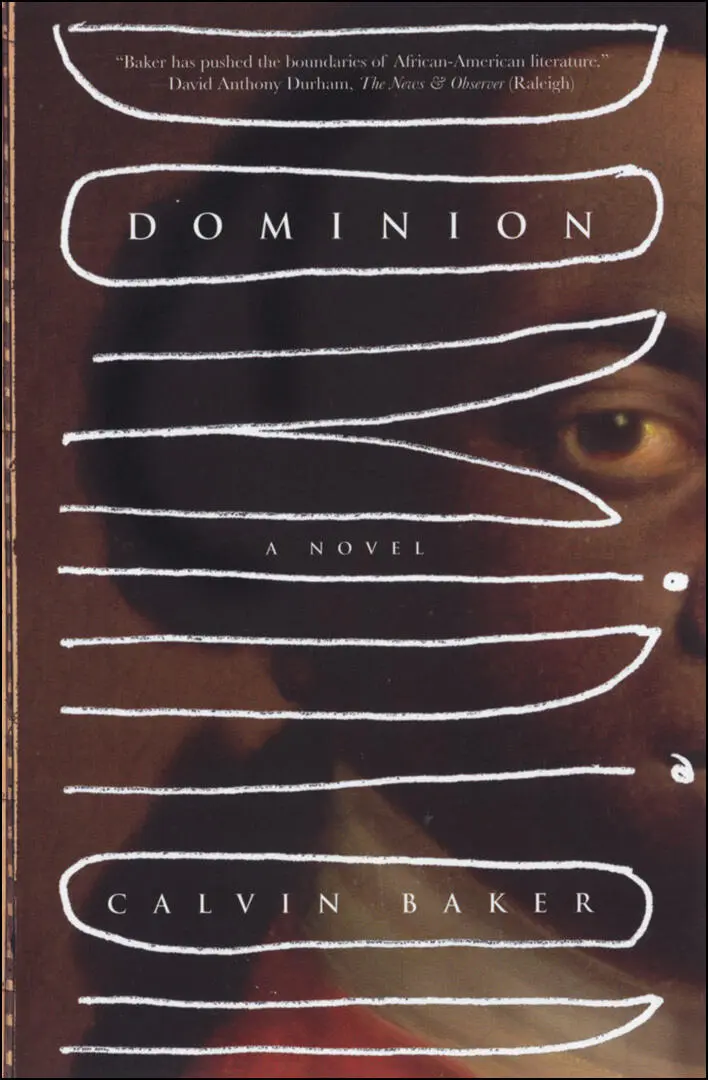
- Название:Dominion
- Автор:
- Издательство:Grove Press
- Жанр:
- Год:2007
- ISBN:нет данных
- Рейтинг книги:5 / 5. Голосов: 1
-
Избранное:Добавить в избранное
- Отзывы:
-
Ваша оценка:
Dominion: краткое содержание, описание и аннотация
Предлагаем к чтению аннотацию, описание, краткое содержание или предисловие (зависит от того, что написал сам автор книги «Dominion»). Если вы не нашли необходимую информацию о книге — напишите в комментариях, мы постараемся отыскать её.
, he was named a “Notable First Novelist” by Time magazine. Since his second novel,
, Baker has continued to be acclaimed by the major media from the
to
. Now, with Dominion, Baker has written a lush, incantatory novel about three generations of an African American family in the years leading up to the Revolutionary War. Dominion tells the story of the Merian family who, at the close of the seventeenth century, settle in the wilderness of the Carolinas. Jasper is the patriarch, freed from bondage, who manages against all odds to build a thriving estate with his new wife and two sons — one enslaved, the other free. For one hundred years, the Merian family struggles against the natural (and occasionally supernatural) world, colonial politics, the injustices of slavery, the Revolutionary War and questions of fidelity and the heart. Footed in both myth and modernity, Calvin Baker crafts a rich, intricate and moving novel, with meditations on God, responsibility, and familial legacies. While masterfully incorporating elements of the world’s oldest and greatest stories, the end result is a bold contemplation of the origins of America.
Dominion — читать онлайн бесплатно полную книгу (весь текст) целиком
Ниже представлен текст книги, разбитый по страницам. Система сохранения места последней прочитанной страницы, позволяет с удобством читать онлайн бесплатно книгу «Dominion», без необходимости каждый раз заново искать на чём Вы остановились. Поставьте закладку, и сможете в любой момент перейти на страницу, на которой закончили чтение.
Интервал:
Закладка:
“No, sir, Mr. Sorel,” his mother answered, “he’s just a boy and I don’t reckon he’s ready for tests.”
“Well, you have tested me already tonight, Ruth, so it’s my terms from here on.”
When they left the meeting his mother was crying sharply, and he drew near trying to console her. “I’ll pass whatever test he put me to,” he said.
Instead of being consoled, though, his mother began to cry even more, until he was afraid indeed.
That next morning a man came to their room to take him away. She gave him a kiss before relinquishing him. “They want everything,” she said. “If you ever make it back, just remember that. It is not human wanting that they have but something unmade and unnatural.”
He did not know what she meant for a long time, but he thought over what she had said as he sat in the back of the cart being carried away from her. When they arrived at the river, Mr. Sorel was there with some of his men and watched as those who had been sent to fetch him placed him in a large sack. The boy did not struggle but could only succumb to the power of his master’s men.
“Listen to me,” Sorel said, before they closed up the sack. “If you drown in this water your mother will get to have what she wants and go live with your sire, but if you live you will both stay on here exactly as you have been.”
He finished speaking and nodded for the men to close up the sack, crowding the child in dark fear. The boy breathed in quickly and deeply, hoping for air to be in him whenever the bag was tossed into the water. Finally, he felt himself up in the air; then a hard slap on the surface of the river and a frigid inrush of water as he hoarded his breath. The bag filled at first with a pocket of fresh air; then everything was water and he began to go very slowly to the bottom. He struggled against the sack, and struggled with it, until to his amazement it came open for him, and he began to swim up. As he swam he remembered his master’s words and thought whether to allow what it was his mother wanted so badly or what his body told him he ought.
As he thought of this, he felt a tap at his shoulder and Jannetje standing over him. He stood up to leave and made his way toward the door unsteadily, for he had been drinking the entire while. When he found his horse out in the pen, he brushed it briefly to give it some warmth, then stood in the stirrup.
As he began to head to Stonehouses, he looked back at Content’s place and saw Adelia in the kitchen through the snow. He stood there awhile, watching her in her movements against the yellow light from the warm room; then, when he thought he saw her turn to the window, spurred the horse for fear she might see him out there not knowing what to do.
eight
Purchase ranged the countryside in desolation after Mary Josepha left him, sometimes earning his living by honest means and sometimes in more expeditious fashion. A month after she went back to her husband he knew he would not forget her but made it through the winter alone as best he could. Nor was his heart heavy with anything else that winter, except failing in his union with her.
He was almost in Maryland before he found her again and, after much persuading, convinced her to come off with him. It seemed to him it was either easier than before or else he no longer felt the pain of what he went through. This time, so say the stories that eventually sprang up around the two of them and reached Berkeley, he swore he would employ all his powers of strength and intelligence to keep her. When she came to him then, in a rented room, he put a potion in her drink that made her sleep very sound. She awoke in an impenetrable cage of his besotted construction.
He had dreamed of that enclosure all the way from the border of Florida to where they were now. At night small details would come to him, and he would get up then and there to jot down a diagram of what had been revealed to him.
The bars of the jail were stronger even than the blade of the sword he had made for his father, and the lock was of ingenious design. No one would ever break it or learn its secret mechanism. The entire contraption was exceedingly light as well, so that it could be taken up and put in the back of a wagon, suspended in air, or even floated on water. Inside he tried to make it as comfortable as possible for her, and when they were not on the move it had a mechanism that allowed him to expand it and give her more room. In all those hours without her he had figured out how to make the cage perfect for what it was and escape-proof. If it was cruel he did not see it, only that it accomplished his goal and kept her near him.
The only time he opened the door was to give her food, or when he wanted to be with her. For a month she suffered this fate, until one day she suddenly warmed to him again, calling out for him to come to her of her own accord. They were happy like this for many weeks. It was after one of these episodes, though, that he awoke to find himself imprisoned in his own trap and Mary Josepha gone back to the Englishman.
It took him twice as long to escape the dungeon as build it. When he finally was able to let himself free he was bitter with a disgrace that forbade him from returning home, as he should have, so he continued roaming northward until he could forget or else find a way to redeem who he had become. He swore this time he would not go after her again either but reflect upon what he had learned those months, until the suffering itself had become a kind of balm and solace. “Suffering has always been the price of God’s love,” Mary Josepha used to say to him, when he had convinced her to come off with him, just before she left. He did not feel loved, though. He felt hated, and he was all the way down bitter with himself over what he had done. For he was no longer Purchase of Stonehouses but someone far removed.
He was working in Rhode Island in a shipyard when she finally came to him of her own free choice. She was with a small child and said Oswin had put her out, claiming to know it was not his and no way would it ever be passed off as such.
He took her in, and they lived for a while in great harmony, each forgiving the other for the things they had done to cause one another misery. They lived above the smithy where he worked, and the rooms were always warm from the furnace, and she set about making a home for the three of them there. He had long ago melted the cage down, and from its remains crafted a great wrought-iron bed, which they slept on as husband and wife, for she claimed that a man and woman could marry themselves to each other with no more officiating than that. That it was the way it had always been done until the church thought to step in and charge a fee, but the institution was still built of just two people.
Whatever this state was called, it was blissful to him, and he went to work regular most mornings, except those he stayed home to be with her. On those holidays he always worked late into the evening the following day so that they always had dependable meals and warm clothes against the seaside winters. From this routine, life in the house took on the contours of regularity that did much to ease both their minds.
She had come over from Africa not ten years earlier and Oswin had originally been her master, until he had a vision one night and immediately upon waking repented of how he lived, saying now that it was not proper for one human to own another. When he set his slaves free he had thirty other souls he had been responsible for during the previous portion of his life. He told them they were all permitted to go, but he said to Mary Josepha that he would be much pleased if she stayed with him of her own volition. It surprised her, for he had never seemed to so much as look at her before. She agreed to stay with him, and they were happy awhile.
Читать дальшеИнтервал:
Закладка:
Похожие книги на «Dominion»
Представляем Вашему вниманию похожие книги на «Dominion» списком для выбора. Мы отобрали схожую по названию и смыслу литературу в надежде предоставить читателям больше вариантов отыскать новые, интересные, ещё непрочитанные произведения.










Обсуждение, отзывы о книге «Dominion» и просто собственные мнения читателей. Оставьте ваши комментарии, напишите, что Вы думаете о произведении, его смысле или главных героях. Укажите что конкретно понравилось, а что нет, и почему Вы так считаете.