John Aston Warder - American Pomology. Apples
Здесь есть возможность читать онлайн «John Aston Warder - American Pomology. Apples» — ознакомительный отрывок электронной книги совершенно бесплатно, а после прочтения отрывка купить полную версию. В некоторых случаях можно слушать аудио, скачать через торрент в формате fb2 и присутствует краткое содержание. Жанр: foreign_prose, Биология, foreign_edu, foreign_antique, на английском языке. Описание произведения, (предисловие) а так же отзывы посетителей доступны на портале библиотеки ЛибКат.
- Название:American Pomology. Apples
- Автор:
- Жанр:
- Год:неизвестен
- ISBN:нет данных
- Рейтинг книги:5 / 5. Голосов: 1
-
Избранное:Добавить в избранное
- Отзывы:
-
Ваша оценка:
American Pomology. Apples: краткое содержание, описание и аннотация
Предлагаем к чтению аннотацию, описание, краткое содержание или предисловие (зависит от того, что написал сам автор книги «American Pomology. Apples»). Если вы не нашли необходимую информацию о книге — напишите в комментариях, мы постараемся отыскать её.
American Pomology. Apples — читать онлайн ознакомительный отрывок
Ниже представлен текст книги, разбитый по страницам. Система сохранения места последней прочитанной страницы, позволяет с удобством читать онлайн бесплатно книгу «American Pomology. Apples», без необходимости каждый раз заново искать на чём Вы остановились. Поставьте закладку, и сможете в любой момент перейти на страницу, на которой закончили чтение.
Интервал:
Закладка:
Upon the development of a cell in any living tissue, and its power of reproducing other cells, and upon its function of communicating by endosmosis and exosmosis with other like cells, depend all our success in propagating vegetables, whether from seeds or buds, and parts containing these. We must study the circumstances that favor the development of cells, if we would be successful in propagating plants. Each bud being considered an individual, and capable, under favorable circumstances, of taking on a separate existence, we can multiply any individual variety indefinitely, and be sure of having the same qualities of foliage and fruit that we admire in the original, and that we may desire to propagate. This applies equally to a group of buds, as in cuttings, grafts and layers, etc.; but, more wonderful still, there are cells capable of developing buds where none existed before, and even in tissues or parts of a plant where we do not usually find buds—hence we have a mode of propagation of many woody plants, by root cuttings, and by leaves, and even parts of leaves.
Propagation by Cuttings.—Many fruits are multiplied by this means. Healthy shoots of the previous year's growth are usually selected and taken when the parent is in a dormant state, or still better, when it is approaching this condition. Sometimes a small portion of the previous year's growth is left with the cutting, making a sort of heel ; when this is not to be had, or not preferred, the slip is to be prepared for planting by cutting it smoothly just below a bud, as this seems to be the most favorable point in many plants for the emission of roots. Some plants will throw out radicles at any point indifferently along the internodes or merithallus. The preference for heel-cuttings depends upon the fact, that near the base of the annual shoot there are always a great number of buds, many of which, however, being imperfectly developed, are inconspicuous, but though dormant, they seem to favor the emission of rootlets. Cuttings may be made to grow if taken at any period of their development, but when green and soft, they require particular conditions of heat and moisture in the soil, and atmosphere, that are only under the control of the professional gardener. They are usually taken in the dormant state, because they are then susceptible of being made to grow under the ordinary conditions of out-door gardening. If cut early in the season, on the approach of autumn, after the wood-growth has been perfected, they may be planted at once with good prospect of success, or they may be put into the soil, out of doors, in the cellar, or in a cold frame or pit, and a very important step in the progress of their growth will commence at once. The leafless sticks are not dead, and whenever the temperature will admit of the quiet interchange of fluids among their cells, this curious function will go on, and will be accompanied by the development or generation of new cells that soon cover the cut surfaces, constituting what the gardeners call the callus . This is the first step toward growth, and it most readily occurs when the earth is warmer than the air; hence the value of fall planting, whether of trees or of cuttings, if done before the earth has been chilled, and hence also, the importance of bottom heat in artificial propagation. If on the contrary the air be warm and the ground cold, the buds are often stimulated to burst forth, before the rootlets can have started. The expanding foliage which so delights the tyro in propagation, offers an extended surface for evaporation, the contained juices of the cutting itself are soon exhausted, no adequate supply is furnished, and the hopeful plant soon withers, or damps off, and dies. 13 13 Because it had no root, it withered away. Mat. 13, 6.
The cutting, like the seed, must have "first the root, then the blade." The length of time that is allowed for cuttings to prepare for rooting, if they are designed for spring planting, should be as great as possible, and the circumstances under which they are kept should be such as to favor the development of the cells, so that roots may form freely with the breaking of the buds, if not before.
Root-cuttings should be made in the spring, just before the usual period of the bursting of the buds in the plant to be propagated. The tendency to develop buds appears to be then most active. Gentle bottom heat, though not essential, is still very desirable, and will conduce to the success of the operation. Some plants are best propagated by this means, and those too, which never naturally produce suckers, may often be successfully grown by sections of the roots. All plants do not equally admit of propagation by division as cuttings, some woody tissues refusing to emit roots under almost any circumstances.
Nobody thinks of propagating the stone fruits, such as the cherry, plum, peach, or apricot, by attempting to plant cuttings, and yet some of these will emit roots very freely, as we may often observe when the shoots or trimmings are used as supports for plants in the green-house. The plum tree is exceedingly apt to form new roots when planted too deeply, and upon this fact depends the success or failure of the finer varieties when worked upon certain varieties of the wild stock. If the young trees are earthed up in the nursery, and set rather deeply in the orchard, they will soon establish a good set of roots of their own, emitted above the junction of the scion and stock, which is very preferable to the imperfect union and consequent enlargement that often results from using uncongenial stocks. The raspberry and blackberry do not grow so well from cuttings of the wood, which is always biennial in this genus, as they do from root-cuttings.
In some parts of the country, peaches are mainly produced, or the favorite varieties are multiplied, by planting the sprouts that come from the base of the trunk of the trees; these have little or no roots when taken off with the mattock, but they soon establish themselves and make good trees, bearing fruit like their parents, in soils and climate that are well adapted to this fruit.
Refined and scientific horticulture has been extensively applied to the multiplication of the grape, which is now produced in immense numbers, from single eyes, or buds. Formerly our vineyards were formed by planting long cuttings at once in the field in the stations to be occupied by the vines, or by setting them first in a nursery, whence they were transplanted to the vineyard, when one or two years old. Only the most refractory kinds, which would not grow readily in the field, or such as were yet rare, were propagated from cuttings, by using the single eye and artificial bottom heat. Now, however, the appliances of our propagators are called upon for the production of grape-vines by the million, and they find it advisable to multiply all the varieties in this manner. The propagation of the grape by using single eyes affords the most beautiful illustration of the subject of the individuality of buds, and though denounced by some as an unnatural, steam-forcing process, it is really an evidence of the advance of horticulture, since every step is supported by a philosophical reason, and the whole process, to be successful, is dependent upon the application to practice of well established scientific truths.
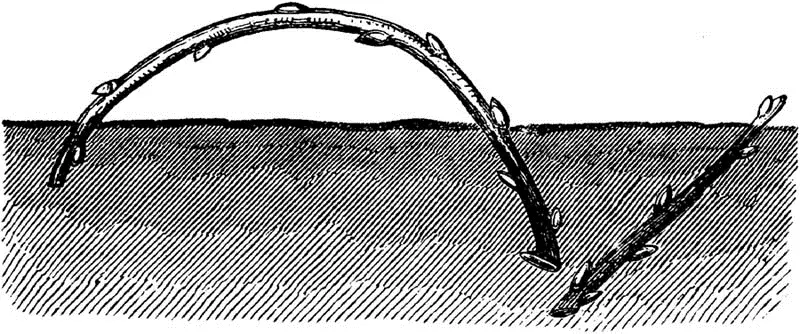
Fig. 1.—FRENCH AND COMMON MODES OF SETTING CUTTINGS.
It has already been stated that the first effect of cell-growth upon a cutting, is the production of a callus. This callus may form upon any cut surface, or even where the bark has been abraded. It is the first effort of nature to repair an injury by the reproduction of new parts; it is most generally found at the base of the cutting, but under favorable circumstances, it will be seen also at the upper end of the shoot if this has been placed in contact with the earth. Cuttings will sometimes be set up-side down, when we find the callus upon the smaller end, and roots will be emitted from that portion whence we should have expected to see the branches issue. Upon this fact, and to multiply the chances of living, has been based the French method, as it is called, or that of inserting both ends of the cuttings. The common mode, (fig. 1), is to set the cuttings in a slanting direction in the ground, so placed that the upper eye or bud only shall reach the surface. Formerly there was a preference for long cuttings, and these were often made eighteen inches or more in length. The practice with most of our cultivators has been modified in this particular, and they have reduced the length of the slips to six and eight inches, so as to have in grape wood about three or four eyes. Some have gone still further, and use but two, even for out-door planting of the grape, and some have been very successful when using but a single joint. The Germans have advocated longer cuttings, upon the theory that there was a retroaction in the pith of the internodes and in all the buds of the cutting, upon the lower point, enabling it to push roots more strongly from a long than from a short cutting. This theory has for its support the fact, that there is in such a cutting a larger amount of organizable matter to be developed into the new parts to be produced, and certainly, if neglected, short cuttings will be very apt to suffer from drought, but in practice, it is found that the short cutting plants have better roots, which are near the surface, and even those plants, grown from single eyes, are better burnished than long cuttings produced upon the old plan, which placed the roots deep in the soil.
Читать дальшеИнтервал:
Закладка:
Похожие книги на «American Pomology. Apples»
Представляем Вашему вниманию похожие книги на «American Pomology. Apples» списком для выбора. Мы отобрали схожую по названию и смыслу литературу в надежде предоставить читателям больше вариантов отыскать новые, интересные, ещё непрочитанные произведения.











Обсуждение, отзывы о книге «American Pomology. Apples» и просто собственные мнения читателей. Оставьте ваши комментарии, напишите, что Вы думаете о произведении, его смысле или главных героях. Укажите что конкретно понравилось, а что нет, и почему Вы так считаете.