Susan Hinton - The Outsiders
Здесь есть возможность читать онлайн «Susan Hinton - The Outsiders» весь текст электронной книги совершенно бесплатно (целиком полную версию без сокращений). В некоторых случаях можно слушать аудио, скачать через торрент в формате fb2 и присутствует краткое содержание. Год выпуска: 2006, ISBN: 2006, Издательство: Penguin Group US, Жанр: Проза, Современная проза, на английском языке. Описание произведения, (предисловие) а так же отзывы посетителей доступны на портале библиотеки ЛибКат.
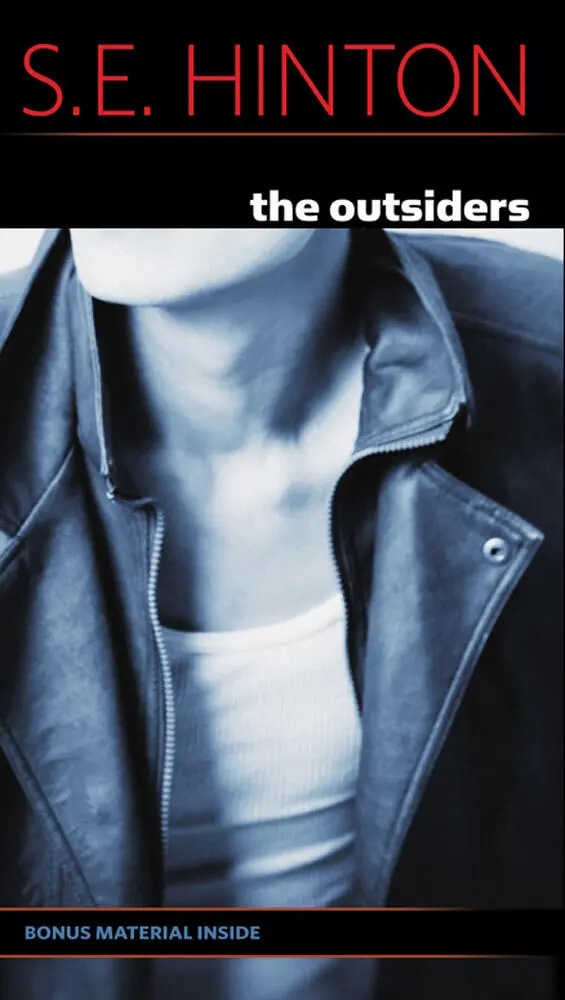
- Название:The Outsiders
- Автор:
- Издательство:Penguin Group US
- Жанр:
- Год:2006
- ISBN:9781101642610
- Рейтинг книги:3 / 5. Голосов: 6
-
Избранное:Добавить в избранное
- Отзывы:
-
Ваша оценка:
The Outsiders: краткое содержание, описание и аннотация
Предлагаем к чтению аннотацию, описание, краткое содержание или предисловие (зависит от того, что написал сам автор книги «The Outsiders»). Если вы не нашли необходимую информацию о книге — напишите в комментариях, мы постараемся отыскать её.
The Outsiders — читать онлайн бесплатно полную книгу (весь текст) целиком
Ниже представлен текст книги, разбитый по страницам. Система сохранения места последней прочитанной страницы, позволяет с удобством читать онлайн бесплатно книгу «The Outsiders», без необходимости каждый раз заново искать на чём Вы остановились. Поставьте закладку, и сможете в любой момент перейти на страницу, на которой закончили чтение.
Интервал:
Закладка:
Speaking with S. E. Hinton…
You were a sixteen-year-old high school student in Oklahoma when you wrote The Outsiders. Where did you get the idea for the story?
I was actually fifteen when I first began it. It was the year I was sixteen and a junior in high school that I did the majority of the work (that was the year I made a D in creative writing). One day a friend of mine was walking home from school and these “nice” kids jumped out of a car and beat him up because they didn’t like his being a greaser. This made me mad and I just went home and started pounding out a story about this boy who was beaten up while he was walking home from the movies — the beginning of The Outsiders. It was just something to let off steam. I didn’t have any grand design. I just sat down and started writing it. I look back and I think it was totally written in my subconscious or something.
So was there a real-life Ponyboy? A real Johnny?
Ponyboy’s gang was inspired by a true-life gang, the members of which were very dear to me. Later, all the gang members I hung out with were sure they were in the book — but they aren’t. I guess it’s because these characters are really kind of universal without losing their individuality.
How did you turn that inspiration for a story into such memorable characters?
When I write, an interesting transformation takes place. I go from thinking about my narrator to being him. A lot of Ponyboy’s thoughts are my thoughts. He’s probably the closest I’ve come to putting myself into a character. He has a lot of freedom, true-blue friends, people he loves and who love him; the things that are important to him are the things that are important to me. I think Ponyboy and Soda and Darry come out better than the rest of them because they have their love for one other.
What were you like as a teenager? Were you a Greaser; a Soc?
I was a tomboy — I played football, my close friends were guys. Fortunately, I was born without the need-to-belong gene, the gene that says you have to be in a little group to feel secure.
I never wanted to be classified as anything, nor did I ever join anything for fear of losing my individuality. I didn’t even realize that these guys, who were my good friends, were greasers until one day we were walking down the street and some guys came and yelled, “Greaser!” It’s funny to look at people you’ve known all your life, to suddenly see them as everyone else sees them, with their slicked-back hair and cigarettes hanging out of their mouths and their black leather jackets, and respond, “My God, they’re hoods.” You know them and know they’re not hoods, but they just look like hoods. I had friends on the rich side of town, too, and saw that they had their share of problems, also.
How did you pursue getting The Outsiders published?
When I wrote it I hadn’t thought of getting it published. But at school one day I mentioned to a friend that I wrote, and her mother happened to write children’s books. I gave her a copy of The Outsiders , and this woman showed it to a friend who had a New York agent. The agent liked it and sold it to the second publisher who read it. She has been my agent ever since. I received the contract from the publisher on graduation day!
What made you want to become a writer?
The major influence on my writing has been my reading. When I was young, I read everything, including cereal boxes and coffee labels. Reading taught me sentence structure, paragraphing, how to build a chapter. Strangely enough, it never taught me spelling.
I have always loved to write, almost as much as I love to read. I began goofing around with a typewriter when I was about twelve. I’ve always written about things that interest me, so my first years of writing (grades three through ten), I wrote about cowboys and horses. I wanted to be a cowboy and have a horse.
Writing is easy for me because I never begin to write unless I have something to say. I’m a character writer. Some writers are plot writers. I have to begin with people. I always know my characters, exactly what they look like, their birthdays, what they like for breakfast. It doesn’t matter if these things appear in the book. I still have to know. I get ideas for characters from real people, but overall they are fictional; my characters exist only in my head.
What books and authors inspire and influence you?
Well, as an adult, I can pick out a lot of authors who have influenced me. My favorite authors are Jane Austen, Mary Renault, F. Scott Fitzgerald, and Shirley Jackson. My favorite books are The Haunting of Hill House, Fire from Heaven, Emma , and Tender Is the Night . I like Kurt Vonnegut Jr.’s novels, but not his short stories, and the other way around for J. D. Salinger.
But people want to know your childhood influences, and I’ll have to say just books in general. I loved to read, and as soon as I learned how I was reading everything I could get my hands on. I was a horse nut, and Peanuts the Pony was the first book I ever checked out of the library. I still remember that book. The act of reading was so pleasurable for me. For an introverted kid, it’s a means of communication, because you interact with the author even if you aren’t sitting there conversing with her.
Why do you use your initials instead of your full name?
My publisher was afraid that the reviewers would assume a girl couldn’t write a book like The Outsiders. Later, when my books became popular, I found I liked the privacy of having a “public” name and a private one, so it has worked out fine.
When it was first published, the realism of The Outsiders shocked a lot of reviewers, but readers embraced the book. Did that surprise you?
No, I was pleased that people were shocked when The Outsiders came out. One of my reasons for writing it was that I wanted something realistic to be written about teenagers. At that time realistic teenage fiction didn’t exist. If you didn’t want to read Mary Jane Goes to the Prom and you were through with horse books, there was nothing to read. I just wanted to write something that dealt with what I saw kids really doing.
Why do you think the book has remained so popular through the years?
Every teenager feels that adults have no idea what’s going on. That’s exactly the way I felt when I wrote The Outsiders . Even today, the concept of the in-group and the out-group remains the same. The kids say, “Okay, this is like the Preppies and the Punks,” or whatever they call themselves. The uniforms change, and the names of the groups change, but kids really grasp how similar their situations are to Ponyboy’s.
Some portions were quoted from “ The Outsiders Conference & Readers Meet Author” from University of Utah’s Top of the News , November 1968; “S. E. Hinton: On Writing and Tex ” in Notes from Delacorte Press, Winter 1979/Spring 1980; “S. E. Hinton on Becoming a Writer” from teachers@random; “The Insider Outsider” in Interview , July 1999; and “Autobiographical Sketch” from the Educational Paperback Association.
THE OUTSIDERS Discussion Guide
1. One of the primary themes in The Outsiders is the struggle between the Greasers and the Socs (pronounced SOSH-es). Describe each group. What is the main source of tension between the two groups? Are the two groups really so different?
2. What other works have you read that adopt a similar thematic structure?
3. Have you ever felt like an outsider? Why did you feel that way, and how did it make you feel?
Читать дальшеИнтервал:
Закладка:
Похожие книги на «The Outsiders»
Представляем Вашему вниманию похожие книги на «The Outsiders» списком для выбора. Мы отобрали схожую по названию и смыслу литературу в надежде предоставить читателям больше вариантов отыскать новые, интересные, ещё непрочитанные произведения.





Обсуждение, отзывы о книге «The Outsiders» и просто собственные мнения читателей. Оставьте ваши комментарии, напишите, что Вы думаете о произведении, его смысле или главных героях. Укажите что конкретно понравилось, а что нет, и почему Вы так считаете.