Элис Макдермотт - The Ninth Hour
Здесь есть возможность читать онлайн «Элис Макдермотт - The Ninth Hour» весь текст электронной книги совершенно бесплатно (целиком полную версию без сокращений). В некоторых случаях можно слушать аудио, скачать через торрент в формате fb2 и присутствует краткое содержание. Год выпуска: 2017, ISBN: 2017, Издательство: Bloomsbury, Жанр: Проза, на английском языке. Описание произведения, (предисловие) а так же отзывы посетителей доступны на портале библиотеки ЛибКат.
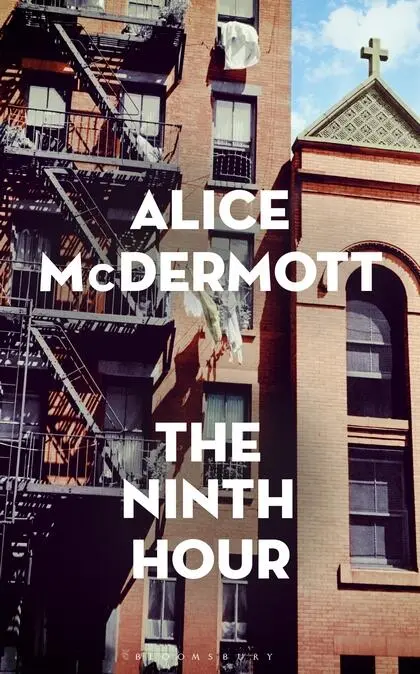
- Название:The Ninth Hour
- Автор:
- Издательство:Bloomsbury
- Жанр:
- Год:2017
- ISBN:9781408854624
- Рейтинг книги:5 / 5. Голосов: 1
-
Избранное:Добавить в избранное
- Отзывы:
-
Ваша оценка:
The Ninth Hour: краткое содержание, описание и аннотация
Предлагаем к чтению аннотацию, описание, краткое содержание или предисловие (зависит от того, что написал сам автор книги «The Ninth Hour»). Если вы не нашли необходимую информацию о книге — напишите в комментариях, мы постараемся отыскать её.
Sister St. Saviour, a Little Nursing Sister of the Sick Poor, catches the scent of fire doused with water and hurries to the scene: a gathered crowd, firemen, and the distraught young widow. Moved by the girl's plight, and her unborn child, the wise nun finds Annie work in the convent's laundry – where, in turn, her daughter will grow up amidst the crank of the wringer and the hiss of the iron.
In Catholic Brooklyn in the early part of the twentieth century, decorum, superstition and shame collude to erase Jim's brief existence; and yet his suicide, although never mentioned, reverberates through many generations – testing the limits of love and sacrifice, of forgiveness and forgetfulness.
In prose of startling radiance and precision, Alice McDermott tells a story that is at once wholly individual and universal in its understanding of the human condition. Rendered with remarkable lucidity and intelligence, The Ninth Houris the crowning achievement of one of today's finest writers.
The Ninth Hour — читать онлайн бесплатно полную книгу (весь текст) целиком
Ниже представлен текст книги, разбитый по страницам. Система сохранения места последней прочитанной страницы, позволяет с удобством читать онлайн бесплатно книгу «The Ninth Hour», без необходимости каждый раз заново искать на чём Вы остановились. Поставьте закладку, и сможете в любой момент перейти на страницу, на которой закончили чтение.
Интервал:
Закладка:
Sister Lucy said her older brothers had already left home when her mother died. Her father was a county tax commissioner who had given them all a comfortable life. A good man, but a serious, withholding man, a man of his times. He brought his mother from Germany to raise his only daughter. Sister Lucy said she was a smart girl in school but mostly silent at home after her mother’s death: a clenched fist.
Her German grandmother told young Sister Lucy that it was easier for a camel to pass through the eye of a needle than for a tax collector to avoid the torments of hell. But it could be done, if she prayed for her father’s soul.
“So that’s what I set out to do,” Sister Lucy said. “Save my father’s soul. All of seven years old.”
A rare smile disrupted that straight tight line that was Sister Lucy’s mouth. The two were on a bench in the park, sharing the bread-and-butter sandwiches Sister Lucy had brought from the convent.
She and her grandmother visited nearly every church in Chicago, determined to save her father’s soul. She knelt patiently beside the old woman. She prayed patiently at those cold altar rails, hour after hour, until her knees grew numb. In the gloom, the gaslight and candlelight, her eyes drifted to the holy scenes and statues behind the altar or over her head. Her eyes grew keen.
As a child, Sister Lucy said, she came to know the beige hills behind the mount called Golgotha as if she had walked them herself. She knew the tufts of weeds in the far distance, the shape of a small enclave of tombs farther still. She knew the feel of the yellow skull at the base of the cross as if she had run her own fingers over its dome; knew the flavor of the dust that covered the ground beneath the horny feet of the centurion. She saw the pallor that engulfed the world the moment Our Lord took His last breath.
Kneeling beside her pious grandmother, young Sister Lucy studied, too, Mary’s assumption into heaven, not merely blue sky and upturned eyes and hands, but the certain fold of cloth at her girded waist, the delicate toe touching a cloud, the brown and gold of a seraphim’s curl.
She knew the streets depicted in the Stations of the Cross—uneven paving stones and dark archways—the way the women Jesus greeted touched one another’s shoulders as they wept.
Kneeling beside her grandmother in churches all over the city, knees and feet grown numb, hands and face grown cold, young Sister Lucy entered so fully into these holy pictures (she knew the sharpness of the steel that pierced the Virgin’s heart, the velvet flesh of the Savior’s throat) that afterward, after she and the old woman left the church and went on with what had to be done, she found herself impatient to return. She found herself annoyed by any ordinary hour, angry to be detained by the petty things that concerned the world. She felt whoever stood before her stood in the way of what she most wanted to see: those places where the essential moments were unfolding, where time and eternity were doing battle, where the terrible death gave way—the stone moved from the mouth of the tomb—and breath returned, flesh grew warm again.
“However,” Sister Lucy said: those keen eyes that had brought her so vividly into the life of Christ could not be averted at will. When she returned to the streets after her hours of prayer, she saw with the same intensity the raw heel of a shoeless child, the pallor of a consumptive. She saw how the skim of filth, which was despair, which was hopelessness, fell like soot on the lives of the poor.
She saw what needed to be done. Saw that God expected her to do it.
Sister Lucy told Sally that she would have preferred the silence and the beauty of a contemplative’s life.
She said her heart clenched at what God asked of her. But she did not refuse.
Sister Lucy held Mrs. Gremelli’s swollen, shapeless leg in the palm of her hand. “Edema,” she told Sally, “when there is an accumulation of fluid like this,” and pressed a gentle thumb into the flesh. “See how the impression holds. Too much water.”
The leg was mottled with sores, some of them seeping. Kneeling before the old lady, Sister Lucy peered carefully at each lesion. “From the Latin,” Sister Lucy said, “ laesio , injury.” Mrs. Gremelli was a small, heavy woman who smiled toothlessly at Sally and the nun, her hands folded complacently over her mounded belly in its black dress. She had little English, and the small room where she lived was crowded with two beds, a couch, a small table and chair, an avalanche of boxes and newspapers. There was a table shrine with a statue of the Blessed Mother in one corner, squat votive candles crowded around it. There was the odor of garlic and garbage and candle wax. The son who lived with her was at work all day.
Sister Lucy cleaned the woman’s awful flesh with exquisite gentleness and then wrapped it in the fresh bandages that Sister Illuminata and her mother had rolled.
She pulled a clean black stocking up over Mrs. Gremelli’s neatly bandaged leg, up over the old, loose flesh of her thigh. She carefully straightened her skirt. Rising from her knees, Sister Lucy placed her hand on the woman’s head. Mrs. Gremelli, toothless, eyes clouded with cataracts, looked up at the nun, lifting her spotted arms into the air in gratitude and supplication. Mary at her assumption.
Leaving Mrs. Costello’s apartment on another morning, the woman crying softly behind them, Sister Lucy said, A woman’s life is a blood sacrifice. This was, she reminded Sally, our inheritance from Eve.
Although, Sister Lucy said, poverty and men made a bad situation—to be born female—worse still.
Sister Lucy paused on the sidewalk, Sally at her heels, to exchange a word with a pretty young woman who had greeted them warmly. Within minutes, the nun discovered that the girl was newly landed and looking for work. Sister wrote down the name and address of one of the women in the Ladies Auxiliary—a wealthy lady looking for domestic help. A good and safe job, Sister Lucy told Sally as they walked on, something to keep the girl from a premature marriage.
Going up the stairs of another tenement, they met a pregnant woman coming down with two small children before her and an infant riding her big belly. Sister Lucy stopped to look at the children. She clucked her tongue and circled her pinky over the bald patches on their scalps, the round red rash on the baby in its mother’s arms. “Ringworm,” she told Sally. “ Tinea is the proper term. Latin for a growing worm.” Sally felt herself shudder at the phrase. She looked at the inflamed flesh, the missing hair, and then looked away. “I like to use a paste of vinegar and salt,” Sister Lucy was saying. “Sister Jeanne adds a straw from the Christmas manger. Which is nonsense.” And then she said, reluctantly, “Although she does quite well with it.”
Sister Lucy took down the woman’s apartment number and promised that one of the nursing Sisters would be in to see her. “We’ll fix that,” she said.
And then she turned her attention to the mother herself, whose dress was slick with dirt and oil, whose hair was pinned up haphazardly under a grimy hat. “Is your husband good to you?” Sister Lucy asked.
Sister Lucy told Sally that a good husband was a blessing—a good husband who went to work every day and didn’t drink away his salary or lose it at the racetrack, didn’t beat his children or treat his wife like a slave—but a rare blessing at best.
She said, Even a good man will wear his wife thin. She said, Even a good wife might transform herself into a witch or a lush or, worse, an infant or an invalid, in order to keep her very good husband out of her bed.
Sister Lucy waited for Sally’s blush to fade—they were having another lunch, this time in the newly cleaned kitchen of the old widower Sister Lucy had just fed and bathed—before she added that some women, wealthy women as well as poor, chose the pretense of illness or delicacy, even madness, over the rough and tumble, the blood and strife, the mortal risks, of a married woman’s life.
Читать дальшеИнтервал:
Закладка:
Похожие книги на «The Ninth Hour»
Представляем Вашему вниманию похожие книги на «The Ninth Hour» списком для выбора. Мы отобрали схожую по названию и смыслу литературу в надежде предоставить читателям больше вариантов отыскать новые, интересные, ещё непрочитанные произведения.






Обсуждение, отзывы о книге «The Ninth Hour» и просто собственные мнения читателей. Оставьте ваши комментарии, напишите, что Вы думаете о произведении, его смысле или главных героях. Укажите что конкретно понравилось, а что нет, и почему Вы так считаете.