Элис Макдермотт - The Ninth Hour
Здесь есть возможность читать онлайн «Элис Макдермотт - The Ninth Hour» весь текст электронной книги совершенно бесплатно (целиком полную версию без сокращений). В некоторых случаях можно слушать аудио, скачать через торрент в формате fb2 и присутствует краткое содержание. Год выпуска: 2017, ISBN: 2017, Издательство: Bloomsbury, Жанр: Проза, на английском языке. Описание произведения, (предисловие) а так же отзывы посетителей доступны на портале библиотеки ЛибКат.
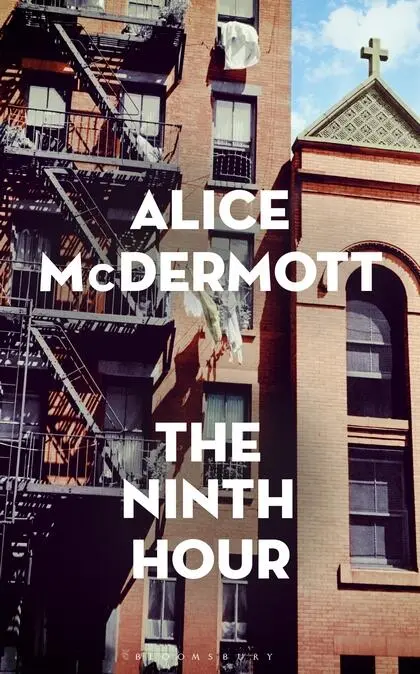
- Название:The Ninth Hour
- Автор:
- Издательство:Bloomsbury
- Жанр:
- Год:2017
- ISBN:9781408854624
- Рейтинг книги:5 / 5. Голосов: 1
-
Избранное:Добавить в избранное
- Отзывы:
-
Ваша оценка:
The Ninth Hour: краткое содержание, описание и аннотация
Предлагаем к чтению аннотацию, описание, краткое содержание или предисловие (зависит от того, что написал сам автор книги «The Ninth Hour»). Если вы не нашли необходимую информацию о книге — напишите в комментариях, мы постараемся отыскать её.
Sister St. Saviour, a Little Nursing Sister of the Sick Poor, catches the scent of fire doused with water and hurries to the scene: a gathered crowd, firemen, and the distraught young widow. Moved by the girl's plight, and her unborn child, the wise nun finds Annie work in the convent's laundry – where, in turn, her daughter will grow up amidst the crank of the wringer and the hiss of the iron.
In Catholic Brooklyn in the early part of the twentieth century, decorum, superstition and shame collude to erase Jim's brief existence; and yet his suicide, although never mentioned, reverberates through many generations – testing the limits of love and sacrifice, of forgiveness and forgetfulness.
In prose of startling radiance and precision, Alice McDermott tells a story that is at once wholly individual and universal in its understanding of the human condition. Rendered with remarkable lucidity and intelligence, The Ninth Houris the crowning achievement of one of today's finest writers.
The Ninth Hour — читать онлайн бесплатно полную книгу (весь текст) целиком
Ниже представлен текст книги, разбитый по страницам. Система сохранения места последней прочитанной страницы, позволяет с удобством читать онлайн бесплатно книгу «The Ninth Hour», без необходимости каждый раз заново искать на чём Вы остановились. Поставьте закладку, и сможете в любой момент перейти на страницу, на которой закончили чтение.
Интервал:
Закладка:
“Won’t that be nice,” Sally said.
Suddenly Mrs. Costello reached back, swatting at her hands. “Don’t pull.”
“I’m trying not to, Mrs. Costello,” Sally whispered. She ran her fingers through the last tangles, loosening the braid, releasing the human odor of what her mother called “winter scalp.” Carefully, tentatively, she began to brush out the wet ends, her hand held beneath them so she would not pull.
She asked Mrs. Costello, “Would you like a braid or a bun?” glancing up as she did, catching in the window before them the faint image of Mrs. Costello’s face and, hovering above it, herself, being so kind.
Mrs. Costello said, thoughtfully, “Oh my.” She bowed her head. “What do you like?” This was a new voice entirely, gentle and demure.
“I’ll braid it first,” Sally suggested. “Then I’ll coil it nicely. I do this for my mother sometimes.” Which wasn’t true. Her mother did her own hair. She couldn’t have said why she lied.
With more confidence now, she gently ran the brush over the woman’s scalp. Mrs. Costello’s head was small and her hair was thin—not like Sally’s own, she thought, not without vanity, which had a nice wave, or her mother’s, which was Irish thick and dark still, her crowning glory, she sometimes said. The brushing stirred the oil on Mrs. Costello’s scalp so that the roots of her hair began to grow as dark as the ends that were still wet from her bath. There were gray strands mingled with the blonde and Sally remembered Mr. Tierney last Christmas singing to his wife, “Darling, you are growing older, silver threads among the gold.” Three sheets to the wind, Mrs. Tierney had said, turning away from him as he tried to kiss her—his thick mustache and his wet lips—all of them laughing.
Mrs. Costello bowed her head as the brush ran through it. She seemed to purr a little, a pleasant humming in the back of her throat. There were hairpins in a dish on the dresser. Sally reached for them, glancing at the mirror as she did, at her own face under the short veil. There was a small wedding picture on the doily that covered the dresser top. Mrs. Costello was seated in a chair, two feet beneath her lace skirt. There was a bouquet of silk flowers on her lap. Her husband stood beside her, his bowler hat in the crook of his arm. It was a slimmer, darker version of the milkman she knew. Both of them were somewhat wide-eyed, serious, and maybe afraid. He looked very young. She looked somehow lifeless in her solemn beauty, like one of the china dolls that were slumped together on the dresser. The dolls’ faces, too, were finely shattered. One had a glass eye askew.
Sally turned back to the woman. Mrs. Costello was sitting calmly now, her hands in her lap. Sally felt a surge of pride: she was doing very well here. She coiled the thin braid into a golden bun and pinned it carefully. She patted it with her palms and then stepped around the wheelchair to look at the woman straight on. She bent down, smiling at her.
“You look very nice,” she said.
Mrs. Costello raised her head slowly, almost coyly. Her blue eyes sought Sally’s, and Sally stepped back a bit to smile at the woman, but then Mrs. Costello’s gaze slipped away, to the rooftops across the street. Her eyes grew distant and then glistened with tears.
“I have a pain,” Mrs. Costello whispered, and she pointed to the place where her foot should have been. “I’m in pain.” And then she looked at Sally straight on. Her mouth crumpled the way a child’s will when it can no longer resist its tears. Sally felt her own lips turn down in sympathy.
“I am abandoned and alone,” Mrs. Costello said.
Sister Lucy shouted “Nonsense” as she came into the room with the breakfast tray. She glanced at what Sally had done with the woman’s hair, but said only, “Step aside.” She placed the tray on the dresser, opened a small tea table that had been leaning beside the radiator. Sister’s bustling seemed to bring the woman back to herself. She narrowed her eyes.
“Have you told this girl what happened to me?” Mrs. Costello asked.
Sister Lucy was placing a tea towel over the woman’s chest. “What happened to you?” She seemed only vaguely interested.
Mrs. Costello indicated her missing leg with an abrupt, angry gesture. “My foot,” she cried. “My leg.” She looked at Sally. “I was bitten by a mad dog, in a yard. I startled him and he came after me. He might have gone for my throat.”
Sister Lucy was stirring sugar into Mrs. Costello’s tea. “That’s ancient history,” Sister Lucy said placidly.
But Mrs. Costello was now focused on Sally, appealing to her as she spoke. “I grabbed the pole so the devil wouldn’t drag me down. I scraped my cheek.” She touched her face. “They heard me cry out, the other women in the street did. They came running. A big man was with them. He beat the dog away and carried me home.” Mrs. Costello raised her two hands. “Oh, there was terrible blood.”
Sister Lucy said, “Eat your breakfast.” She turned to the hope chest at the foot of the bed, opened it, and took out new bed linen. There was the brief scent of cedar as the lid closed again—a green scent in the close room. She said to Sally, “That chamber pot needs emptying,” and indicated with her chin the wooden commode beside the bed.
But Mrs. Costello took Sally’s wrist to keep her there. “They wrapped the rags too tightly, the women did. Those biddies. My toes turned black. My husband had to carry me to the hospital in the milk cart.”
Infected by the woman’s indignation, Sally asked, glancing at Sister Lucy, who was paying no heed, “Didn’t anyone call the Sisters?”
And Mrs. Costello shook her head. “They did not,” she said.
“Someone should have called the Sisters,” Sally told her.
Sister Lucy spun on them both. “The chamber pot,” she said to Sally. And to Mrs. Costello, “Put your thoughts elsewhere, Mrs. Costello. Eat your breakfast and say your prayers.”
The nun returned to making up the bed, and Sally and Mrs. Costello exchanged a look that briefly allied them against her. Then Mrs. Costello let go of Sally’s wrist and lifted her tea. “This girl should know what happened to me,” she said to Sister Lucy, and blew gently over the cup. “Shame on you, Sister. You should have told her. How that dog came after me in the yard.”
Sister Lucy shook out the fresh sheet, let it billow over the thin mattress.
“And whose yard was it?” she asked. “Was it your own yard?”
Mrs. Costello waved her hand. “I don’t know whose yard it was,” she said.
Sister Lucy was smoothing down the sheet, leaning over the bed and spreading her arms like a swimmer. “Then you should have minded your own business,” she said. And then she said to Sally, “The chamber pot. Emptied and cleaned, if you please.”
Sally held her breath as she lifted the porcelain bowl from the seat. She averted her eyes from the yellow liquid and the strings of clotted blood. She emptied the bowl into the toilet and pulled the chain, then washed the thing out in the bathroom sink, uncertain if she should use the clean towel on the bathroom roll or find something else. She carried the wet bowl into the kitchen, thinking to dry it with the towels Mrs. Costello had used in her bath, but they, as well as the bed sheets and the nightgown, were already bundled neatly into a canvas bag, ready to be carried to the convent laundry. The kitchen restored to order. She waved the bowl in the air and carried it back to the bedroom still wet, hoping Sister Lucy wouldn’t see.
When Mrs. Costello had finished her breakfast, the tray removed, the dishes washed and dried and put away, Sister Lucy sent Sally through the three rooms with a dust mop and a broom, while she once more brought the woman to the commode and changed her cloth. And then placed a glass of milk and a plate of bread with butter and sugar on the tea tray, within the woman’s reach.
Читать дальшеИнтервал:
Закладка:
Похожие книги на «The Ninth Hour»
Представляем Вашему вниманию похожие книги на «The Ninth Hour» списком для выбора. Мы отобрали схожую по названию и смыслу литературу в надежде предоставить читателям больше вариантов отыскать новые, интересные, ещё непрочитанные произведения.





Обсуждение, отзывы о книге «The Ninth Hour» и просто собственные мнения читателей. Оставьте ваши комментарии, напишите, что Вы думаете о произведении, его смысле или главных героях. Укажите что конкретно понравилось, а что нет, и почему Вы так считаете.