Min Lee - Pachinko
Здесь есть возможность читать онлайн «Min Lee - Pachinko» весь текст электронной книги совершенно бесплатно (целиком полную версию без сокращений). В некоторых случаях можно слушать аудио, скачать через торрент в формате fb2 и присутствует краткое содержание. Город: NYC, Год выпуска: 2017, ISBN: 2017, Издательство: Grand Central Publishing, Жанр: Проза, на английском языке. Описание произведения, (предисловие) а так же отзывы посетителей доступны на портале библиотеки ЛибКат.
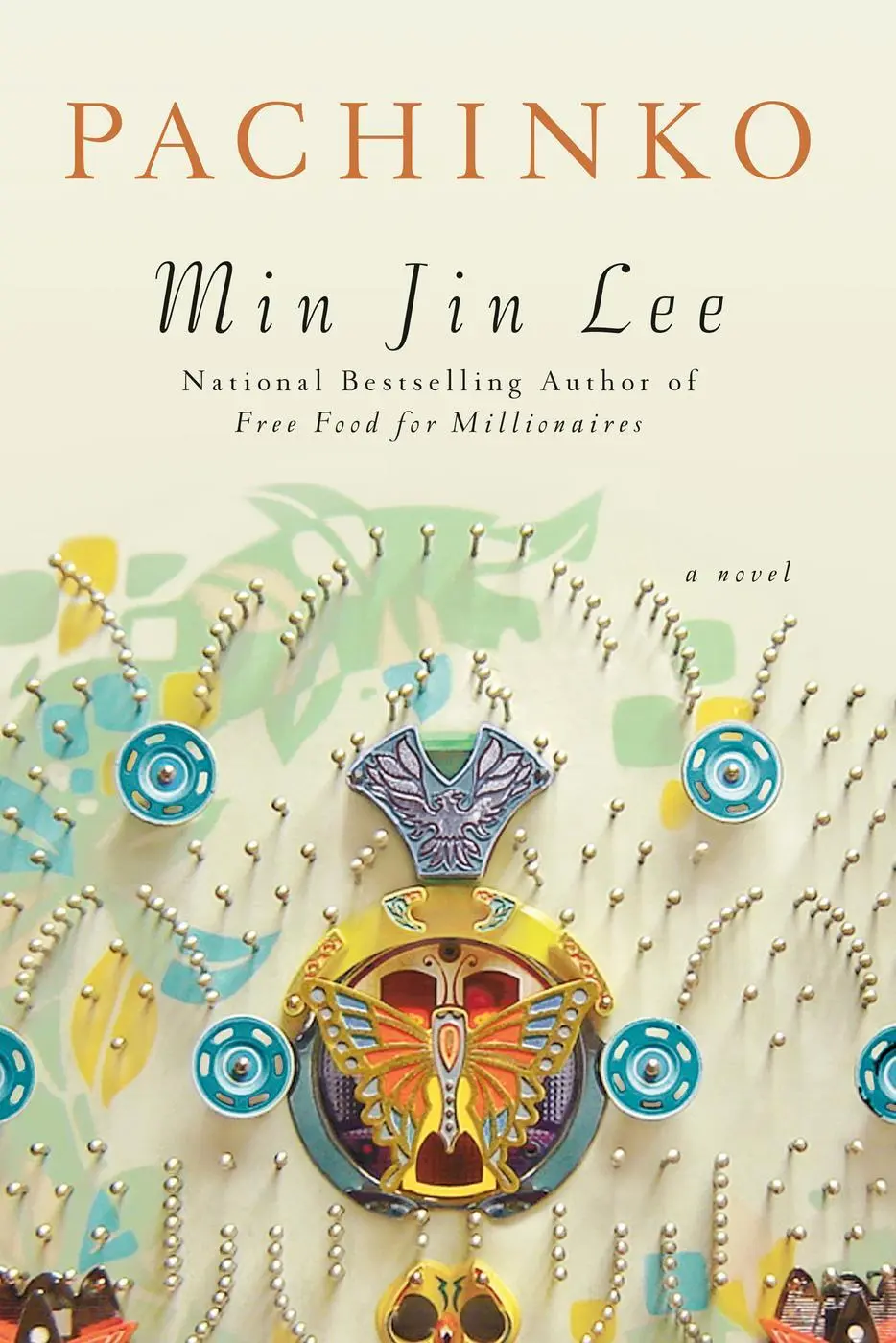
- Название:Pachinko
- Автор:
- Издательство:Grand Central Publishing
- Жанр:
- Год:2017
- Город:NYC
- ISBN:978-1-4555-6391-3
- Рейтинг книги:4.5 / 5. Голосов: 2
-
Избранное:Добавить в избранное
- Отзывы:
-
Ваша оценка:
Pachinko: краткое содержание, описание и аннотация
Предлагаем к чтению аннотацию, описание, краткое содержание или предисловие (зависит от того, что написал сам автор книги «Pachinko»). Если вы не нашли необходимую информацию о книге — напишите в комментариях, мы постараемся отыскать её.
Profoundly moving and gracefully told, PACHINKO follows one Korean family through the generations, beginning in early 1900s Korea with Sunja, the prized daughter of a poor yet proud family, whose unplanned pregnancy threatens to shame them. Betrayed by her wealthy lover, Sunja finds unexpected salvation when a young tubercular minister offers to marry her and bring her to Japan to start a new life.
So begins a sweeping saga of exceptional people in exile from a homeland they never knew and caught in the indifferent arc of history. In Japan, Sunja's family members endure harsh discrimination, catastrophes, and poverty, yet they also encounter great joy as they pursue their passions and rise to meet the challenges this new home presents. Through desperate struggles and hard-won triumphs, they are bound together by deep roots as their family faces enduring questions of faith, family, and identity.
Pachinko — читать онлайн бесплатно полную книгу (весь текст) целиком
Ниже представлен текст книги, разбитый по страницам. Система сохранения места последней прочитанной страницы, позволяет с удобством читать онлайн бесплатно книгу «Pachinko», без необходимости каждый раз заново искать на чём Вы остановились. Поставьте закладку, и сможете в любой момент перейти на страницу, на которой закончили чтение.
Интервал:
Закладка:
“How’s the house?” Hansu asked.
“I’ve never lived so well.”
Kim was telling the truth. “The meals are delicious. The house is very clean.”
“The women need a workingman to watch over them. But I worry that you’re too attached to the married one.”
“Boss, I’ve been thinking more about going back home. Not to Daegu, but to the North.”
“This again? No. End of discussion. I don’t care if you go to those socialist meetings, but don’t start believing that horseshit about returning to the motherland. The heads of Mindan are no better. Besides, they’ll kill you in the North, and they’ll starve you in the South. They all hate Koreans who’ve been living in Japan. I know. If you go, I will never support it. Never.”
“The leader Kim Il Sung fought against Japanese imperialism—”
“I know his guys. Some of them might actually believe the message, but most of them are just trying to collect a pay envelope each week. The ones in charge who live here are never going back. You watch.”
“But don’t you think we must do something for our country? These foreigners are cutting up the nation into—”
Hansu put both his hands on Kim’s shoulders and faced him squarely.
“You haven’t had a girl in such a long time that you can’t think straight.” Hansu smiled, then looked serious again. “Listen, I know the heads of both the Association and Mindan ”—he snorted—“I know them very, very well—”
“But Mindan ’s a mere puppet of the American—”
Hansu smiled at Kim, amused by the young man’s sincerity.
“How long have you worked for me?”
“I must’ve been twelve or thirteen when you gave me a job.”
“How many times have I really talked politics with you?”
Kim tried to remember.
“Never. Not really. I’m a businessman. And I want you to be a businessman. And whenever you go to these meetings, I want you to think for yourself, and I want you to think about promoting your own interests no matter what. All these people — both the Japanese and the Koreans — are fucked because they keep thinking about the group. But here’s the truth: There’s no such thing as a benevolent leader. I protect you because you work for me. If you act like a fool and go against my interests, then I can’t protect you. As for these Korean groups, you have to remember that no matter what, the men who are in charge are just men — so they’re not much smarter than pigs. And we eat pigs. You lived with that farmer Tamaguchi who sold sweet potatoes for obscene prices to starving Japanese during a time of war. He violated wartime regulations, and I helped him, because he wanted money and I do, too. He probably thinks he’s a decent, respectable Japanese, or some kind of proud nationalist — don’t they all? He’s a terrible Japanese, but a smart businessman. I’m not a good Korean, and I’m not a Japanese. I’m very good at making money. This country would fall apart if everyone believed in some samurai crap. The Emperor does not give a fuck about anyone, either. So I’m not going to tell you not to go to any meetings or not to join any group. But know this: Those communists don’t care about you. They don’t care about anybody. You’re crazy if you think they care about Korea.”
“Sometimes, I’d like to see my home again,” Kim said quietly.
“For people like us, home doesn’t exist.” Hansu took out a cigarette, and Kim rushed to light it.
Kim had not been back home in over twenty years. His mother had died when he was a toddler, and his tenant farmer father died not much later; his older sister did what she could for him but eventually married, then disappeared, leaving him to beg. Kim wanted to go to the North to help with the reunification efforts, but he also wanted to go to Daegu to clean his parents’ graves and do a proper jesa now that he could afford it.
Hansu took a long drag of his cigarette.
“You think I like it here? No, I don’t like it here. But here, I know what to expect. You don’t want to be poor. Changho-ya, you’ve worked for me, you’ve had enough food and money, so you’ve started to think about ideas — that’s normal. Patriotism is just an idea, so is capitalism or communism. But ideas can make men forget their own interests. And the guys in charge will exploit men who believe in ideas too much. You can’t fix Korea. Not even a hundred of you or a hundred of me can fix Korea. The Japs are out and now Russia, China, and America are fighting over our shitty little country. You think you can fight them? Forget Korea. Focus on something you can have. You want that married one? Fine. Then either get rid of the husband or wait until he’s dead. This is something you can fix.”
“She’s not going to leave him.”
“He’s a loser.”
“No, no, he’s not,” Kim said gravely. “And she’s not the kind of woman who’d just—” He couldn’t talk about this anymore. He could wait until Yoseb died, but it was wrong to want a man to die. He believed in many ideas, including the idea that a wife must be loyal to her husband. If Kyunghee left a broken man, she would be less worthy of his devotion.
At the end of the street, Hansu stopped walking and tilted his head toward a plain-looking bar.
“You want a girl now, or do you want to go back to the house and want someone else’s wife?”
Kim stared at the handle of the door, then pulled it open, letting his boss enter first before following him inside.
The new house in Osaka was two tatami mats larger than the old one and sturdier — built out of tile, solid wood, and brick. As Hansu had predicted, the bombings had razed the original house. Kyunghee had sewn their legal documents in the lining of her good coat, and when it came time, Hansu’s lawyer made the municipal government recognize Yoseb’s property rights. With the gift money Tamaguchi had given them when they left the farm, Yoseb and Kyunghee bought the vacant lot adjacent to their original house. They rebuilt their home with the help of Hansu’s construction company. Again, Yoseb told none of their neighbors that he was the owner of the house — it always being wiser to appear poorer than you are. The exterior of the house was nearly identical to the other dwellings on their street in Ikaino. The family had agreed that Kim should live with them, and when Yoseb asked him, he did not refuse. The women papered the walls with good-quality paper and bought strong, thick glass for their little windows. They spent a little extra for better fabric to make warm quilts and floor cushions and bought a low Korean dining table for meals and for the boys to do their homework.
Though from the facade the house didn’t look like much more than a roomy shack, inside was an exceptionally clean and well-organized house with a proper kitchen that had enough space to store their food carts overnight. It had an attached outhouse, which could be entered from the kitchen door. Yangjin, Sunja, and the boys slept in the middle room, which during the day served as the main room; Yoseb and Kyunghee slept in the large storage room by the kitchen, and Kim slept in the tiny front room, its two walls made up of paper screen doors. All seven of them — three generations and one family friend — lived in the house in Ikaino. Considering the neighborhood, their accommodations were almost luxurious.
Late in the evening, when Kim finally returned home from the bar, everyone was asleep. Hansu had paid for a Korean girl, an exceptionally attractive one, and Kim went to the back room with her. Afterward, he’d wanted to go to a bathhouse, but the ones near the house were closed for the night. He washed up as well as he could in the sink by the outhouse, but he still had the waxy flavor of the girl’s frosty pink lipstick in his mouth.
Читать дальшеИнтервал:
Закладка:
Похожие книги на «Pachinko»
Представляем Вашему вниманию похожие книги на «Pachinko» списком для выбора. Мы отобрали схожую по названию и смыслу литературу в надежде предоставить читателям больше вариантов отыскать новые, интересные, ещё непрочитанные произведения.











Обсуждение, отзывы о книге «Pachinko» и просто собственные мнения читателей. Оставьте ваши комментарии, напишите, что Вы думаете о произведении, его смысле или главных героях. Укажите что конкретно понравилось, а что нет, и почему Вы так считаете.