Min Lee - Pachinko
Здесь есть возможность читать онлайн «Min Lee - Pachinko» весь текст электронной книги совершенно бесплатно (целиком полную версию без сокращений). В некоторых случаях можно слушать аудио, скачать через торрент в формате fb2 и присутствует краткое содержание. Город: NYC, Год выпуска: 2017, ISBN: 2017, Издательство: Grand Central Publishing, Жанр: Проза, на английском языке. Описание произведения, (предисловие) а так же отзывы посетителей доступны на портале библиотеки ЛибКат.
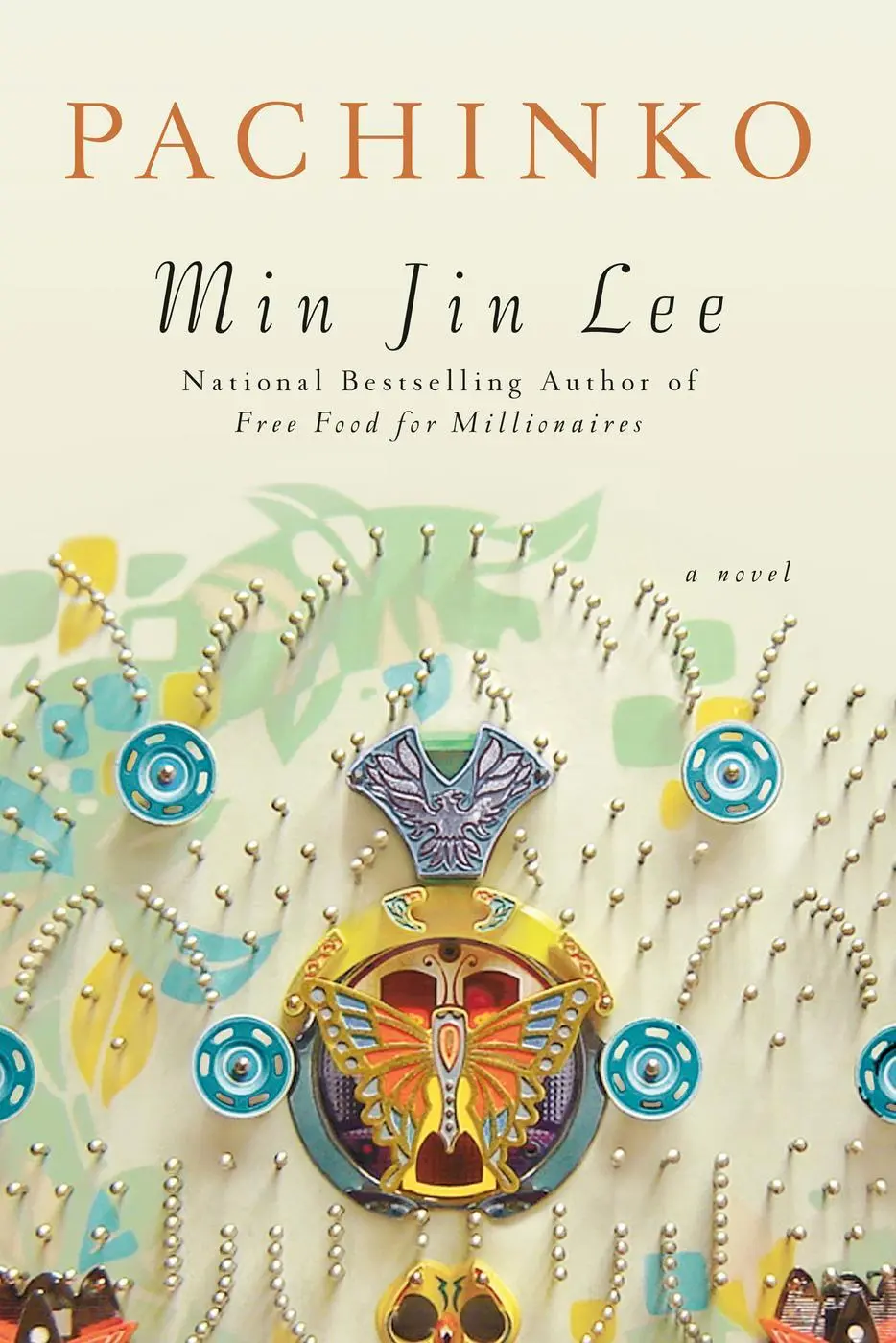
- Название:Pachinko
- Автор:
- Издательство:Grand Central Publishing
- Жанр:
- Год:2017
- Город:NYC
- ISBN:978-1-4555-6391-3
- Рейтинг книги:4.5 / 5. Голосов: 2
-
Избранное:Добавить в избранное
- Отзывы:
-
Ваша оценка:
Pachinko: краткое содержание, описание и аннотация
Предлагаем к чтению аннотацию, описание, краткое содержание или предисловие (зависит от того, что написал сам автор книги «Pachinko»). Если вы не нашли необходимую информацию о книге — напишите в комментариях, мы постараемся отыскать её.
Profoundly moving and gracefully told, PACHINKO follows one Korean family through the generations, beginning in early 1900s Korea with Sunja, the prized daughter of a poor yet proud family, whose unplanned pregnancy threatens to shame them. Betrayed by her wealthy lover, Sunja finds unexpected salvation when a young tubercular minister offers to marry her and bring her to Japan to start a new life.
So begins a sweeping saga of exceptional people in exile from a homeland they never knew and caught in the indifferent arc of history. In Japan, Sunja's family members endure harsh discrimination, catastrophes, and poverty, yet they also encounter great joy as they pursue their passions and rise to meet the challenges this new home presents. Through desperate struggles and hard-won triumphs, they are bound together by deep roots as their family faces enduring questions of faith, family, and identity.
Pachinko — читать онлайн бесплатно полную книгу (весь текст) целиком
Ниже представлен текст книги, разбитый по страницам. Система сохранения места последней прочитанной страницы, позволяет с удобством читать онлайн бесплатно книгу «Pachinko», без необходимости каждый раз заново искать на чём Вы остановились. Поставьте закладку, и сможете в любой момент перейти на страницу, на которой закончили чтение.
Интервал:
Закладка:
Sunja followed her and put her arm around Phoebe’s waist. Sunja was a head shorter than Phoebe.
“This is for both of you.” Phoebe gave her a box of candy from the Tokyo branch of an exclusive French chocolate shop.
Sunja smiled. “Thank you.”
Kyunghee untied the ribbon to take a peek. It was a large box of glazed fruits dipped in chocolate. Delighted, she said, “This looks expensive. You kids should be saving money at your age. But the candies look so delicious! Thank you.”
She inhaled the chocolate aroma dramatically.
“It’s so good to have you here,” Sunja said in Korean, folding Phoebe’s slender shoulders into her thick embrace.
Phoebe loved being with Solomon’s family. It was much smaller than her own, but everyone seemed closer, as if each member were organically attached to one seamless body, whereas her enormous extended family felt like cheerfully mismatched Lego bricks in a large bucket. Phoebe’s parents had at least five or six siblings each, and she had grown up with well over a dozen cousins just in California. There were relatives in New York, New Jersey, DC, Washington State, and Toronto. She had dated a couple of Korean American guys and had met their families, but Solomon’s family was different. Solomon’s family was warm but far more muted and intensely watchful. None of them seemed to miss anything.
“Is that for pajeon ?” Phoebe asked. The mixing bowl was filled with creamy pancake batter flecked with thin slices of scallion and chunks of scallops.
“You like pajeon ? So does Solomon! How does your umma make it?” Kyunghee asked; her tone was casual, though she held strong opinions about the ratio of scallions to shellfish.
“My mother doesn’t cook,” Phoebe said, looking only a little embarrassed.
“What?” Kyunghee gasped in horror and turned to Sunja, who raised her eyebrows, sharing her sister-in-law’s surprise.
Phoebe laughed.
“I grew up eating pizza and hamburgers. And lots of Kentucky Fried Chicken. I love the KFC corn on the cob.” She smiled. “Mom worked in my dad’s medical office as his office manager and was never home before eight o’clock.”
The women nodded, trying to understanding this.
“Mom was always working. She did all the medical paperwork at the dining table next to us kids while we did our homework. I don’t think she ever went to bed until midnight—”
“But you didn’t eat any Korean food?”
Kyunghee couldn’t comprehend this.
“On the weekends we ate it. At a restaurant.”
The women understood that the mother was busy and hardworking, but it seemed inconceivable to them that a Korean mother didn’t cook for her family. What would Solomon eat if he married this girl? What would their children eat?
“She didn’t have time. That makes sense, but does your mother know how to cook?” Kyunghee asked tentatively.
“She never learned. And none of her sisters cook Korean food, either.”
Phoebe laughed, because the fact that none of them cooked Korean food was a point of pride. Her mother and her sisters tended to look down at women who cooked a lot and constantly tried to make you eat. The four of them were very thin. Like Phoebe, they were the kind of women who were constantly moving around and seemed uninterested in eating because they were so absorbed in their work. “My favorite aunt cooks only on the weekends and only for dinner parties. She usually makes Italian food. Our family always meets at restaurants.”
Phoebe found it amusing to see their continuing shock and disbelief at such a mundane detail of her childhood. What was the big deal? Why did women have to cook, anyway? she wondered. Her mother was her favorite person in the world. “My brother and sisters don’t even like kimchi. My mother won’t even keep it in the refrigerator because of the smell.”
“ Waaah ,” Sunja sighed. “You really are American. Are your aunts married to Americans?”
“My aunts and uncles are married to non-Koreans. My brother and sisters married ethnically Korean people, but they’re Americans like me. My older brother-in-law, the lawyer, speaks fluent Portuguese but no Korean; he grew up in Brazil. America is full of people like that.”
“Really?” Kyunghee exclaimed.
“Who are your aunts married to?”
“I have aunts and uncles by marriage who are white, black, Dutch, Jewish, Filipino, Mexican, Chinese, Puerto Rican, and, let’s see, there’s one Korean American uncle and three Korean American aunts. I have a lot of cousins. Everyone’s mixed,” she added, smiling at the older women wearing spotless white aprons, who were paying such careful attention to what she was saying that it looked as if their minds were taking notes.
“When we get together, like on Thanksgiving and Christmas, it’s really fun.”
“I’ve met several of them,” Solomon said, worried that his grandmother and great-aunt wouldn’t approve of her family, although he could tell they were more curious than reproachful. Neither of them had ever said that he had to marry a Korean person, but he knew his father’s relationship with Etsuko made them uncomfortable.
When the frying pan was hot enough, Sunja poured a scant cup of the scallion pancake batter into it. She checked the edges and lowered the heat. Phoebe was lively and good for the boy, she thought. Her mother used to say a woman’s life was suffering, but that was the last thing she wanted for this sweet girl who had a quick, warm smile for everyone. If she didn’t cook, then so what? If she took good care of Solomon, then nothing else should matter, though she hoped that Phoebe wanted children. Lately, Sunja wanted to hold babies. How wonderful it would be not to have to worry about a war or having enough food to eat, or finding shelter. Solomon and Phoebe wouldn’t have to labor the way she and Kyunghee had, but could just enjoy their children.
“When are you going to marry Solomon?” Sunja asked, without shifting her focus from the frying pan. An older woman had a right to ask this sort of thing, though she was still a little afraid to do it.
“Yes, when are you two getting married? What are you waiting for? My sister and I have nothing to do — we’ll move to Tokyo if you want help with the babies and the cooking!” Kyunghee giggled.
Solomon shook his head and smiled at the three women.
“And this is when I go to the den and talk man stuff with Dad.”
“Thanks a lot, Solomon,” Phoebe said. She didn’t actually mind their questions, since she had been wondering about this, too.
Mozasu smiled, and the men left them in the kitchen.
Father and son sat down in the armchairs in the center of the large room. Baskets of fruits and bowls of nuts topped the glass and stainless-steel coffee table opposite the long low-back sofa. A stack of today’s Korean and Japanese newspapers remained half-read.
Mozasu turned on the television and lowered the volume on the news; he was scanning the ticker running across the screen with stock prices. The two often talked with the television on.
“How’s work?” Mozasu asked.
“Much easier than school. The boss is really great — a Japanese guy, but he went to college and business school in California.”
“California? Your mother would’ve liked that,” Mozasu said quietly. The boy resembled her so much, especially around the brow and nose.
“Where’s Etsuko?” Solomon stared at the blue background of the news screen. The newscasters were talking about a flood in Bangkok. “Is it Hana? She okay?”
Mozasu sighed. “Etsuko will fill you in. Give her a call.”
Solomon wanted to know more, but his father didn’t know about what had happened between the two of them. Mozasu never liked to talk about Hana, because she upset Etsuko so much.
Читать дальшеИнтервал:
Закладка:
Похожие книги на «Pachinko»
Представляем Вашему вниманию похожие книги на «Pachinko» списком для выбора. Мы отобрали схожую по названию и смыслу литературу в надежде предоставить читателям больше вариантов отыскать новые, интересные, ещё непрочитанные произведения.









Обсуждение, отзывы о книге «Pachinko» и просто собственные мнения читателей. Оставьте ваши комментарии, напишите, что Вы думаете о произведении, его смысле или главных героях. Укажите что конкретно понравилось, а что нет, и почему Вы так считаете.