Джеймс Хилтон - Morning Journey
Здесь есть возможность читать онлайн «Джеймс Хилтон - Morning Journey» весь текст электронной книги совершенно бесплатно (целиком полную версию без сокращений). В некоторых случаях можно слушать аудио, скачать через торрент в формате fb2 и присутствует краткое содержание. Год выпуска: 1951, Жанр: Проза, на английском языке. Описание произведения, (предисловие) а так же отзывы посетителей доступны на портале библиотеки ЛибКат.
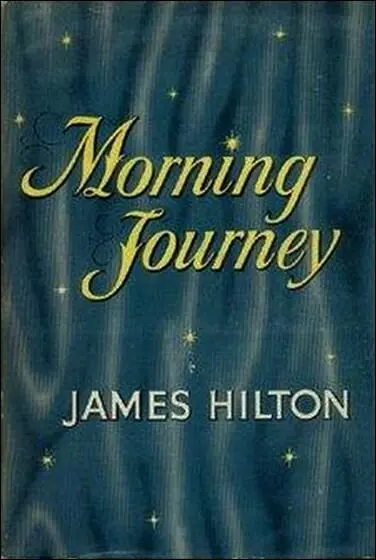
- Название:Morning Journey
- Автор:
- Жанр:
- Год:1951
- ISBN:нет данных
- Рейтинг книги:4 / 5. Голосов: 1
-
Избранное:Добавить в избранное
- Отзывы:
-
Ваша оценка:
Morning Journey: краткое содержание, описание и аннотация
Предлагаем к чтению аннотацию, описание, краткое содержание или предисловие (зависит от того, что написал сам автор книги «Morning Journey»). Если вы не нашли необходимую информацию о книге — напишите в комментариях, мы постараемся отыскать её.
Morning Journey — читать онлайн бесплатно полную книгу (весь текст) целиком
Ниже представлен текст книги, разбитый по страницам. Система сохранения места последней прочитанной страницы, позволяет с удобством читать онлайн бесплатно книгу «Morning Journey», без необходимости каждый раз заново искать на чём Вы остановились. Поставьте закладку, и сможете в любой момент перейти на страницу, на которой закончили чтение.
Интервал:
Закладка:
One evening she arrived at his house with a look that did not wear off after the first drink. He gave her time to tell him anything amiss that might have happened, and when she kept up the effort to talk gaily he asked what was the matter.
“The matter?… Why?… So I really AM a bad actress?”
“It’s because you know you don’t have to act with me, and that makes you half-act.”
“Oh, well, if that’s the case, I’ll tell you, though it’s not startling. I mean, it’s the sort of thing that’s happened before—and doubtless will again.”
“Trouble with the show?”
“MY show… No, not particularly. I had a letter from Paul this morning.”
He did not reply, and was surprised to find how fast his heart was beating.
She went on: “He’s in some kind of a mess with that film.”
“Serious?”
“I don’t know. It’s hard to tell from his letter what exactly has been happening, but he seems to have had trouble with the people who’re putting up the money. They’re trying to dispossess him—or something like that… CAN you be dispossessed of a film you’ve made yourself?”
“I should think so. It’s like any other property.”
“Well, of course to Paul it isn’t. He didn’t mind when I sold the house in the country—in fact, it was he who suggested it—but his WORK… that’s different. It’s like an artist having his own canvases seized for debt.”
“That could probably happen too, in certain circumstances. Is the film finished?”
“He says it is, but they want a different ending and he refuses to make one. I suppose it depends on the kind of contract… Well, let’s not have it spoil our evening. I didn’t intend to tell you—after all, why should you be burdened with someone else’s worries?”
He said: “If I had to answer that, I’d ask why you should be burdened by a rather difficult little problem child who doesn’t happen to be your own.”
“I see. Your son and my husband… you’d class them both as problems?”
“Aren’t they?”
“But I like Norris, and I don’t think you’d like Paul. Unless he happened to be in one of his charming moods.”
“You think I’d find him irresistible then?”
“I’ve known it to happen.”
“Does his letter ask your advice?”
“I’m afraid he’s had that—I told him at the outset to make sure of a good lawyer. I wish I could help him, but what can I do—from here? And if I went over to try to straighten things out—I can’t, of course —I’d probably find that the people he’s up against have a case.”
“You’ve known that happen too?”
“Yes.”
“Tell me… well, no, it’s little use even discussing things at this range… Would you like another drink?”
“Yes, I would. And I CAN talk of something else, I assure you. I’m not going to worry.”
For the rest of the evening it seemed that she didn’t, or perhaps she was only keeping a promise not to; they talked of other subjects and in some ways their conversation had never been livelier. Aunt Mildred, before she went up to bed, even commented on Carey’s high spirits—how well she was looking, evidently the week-ends at the farm agreed with her and so on. Later, when they were alone in the library, Austen said: “I don’t want to intrude, but I have certain contacts in Germany… people who could probably find out the facts about Paul’s situation… strictly for ourselves— Paul wouldn’t even need to know it was being done. Would you like me to write to them?”
She seemed touched by his offer, then amused by it. “You’re so tactful —you say Paul wouldn’t even need to know about it. As if he’d care.”
“Well, so much the better. Just an outside and impartial report. Until we have that there’s nothing else can be done.”
“I never thought there was. It’s kind of you, though, to suggest writing to your… contacts. They’re not private detectives, by any chance?”
He wondered what was in her mind to have said that. “No, just financial people, quite respectable, but they have a good nose for other people’s affairs.”
He cabled that night, after she had gone, and for ten days there was no reply except an acknowledgment; nor did she hear again from Paul. She told him that such a gap in her husband’s letter-writing need not be of any significance; he was alive and well, she knew that much from his regular letters to his mother. More and more Austen was getting acquainted with the structure of her life, and Paul’s mother was clearly a part of it. He was reluctant to put personal questions, but he did ask her once if these letters to the old lady contained any fresh news about his business troubles.
She answered: “Oh no, and they wouldn’t be likely to. She only gets GOOD news. He adores her—she’s the last person he’d worry if things were going wrong.”
A few days later Austen received a long communication whose contents made him postpone rather than expedite his next meeting with Carey. He had much to think about and decide. When he had done so he invited her to the farm for a week-end. On their usual Sunday morning walk Grainger was with them at first, discussing crops and animals; then when they were alone, Austen began with no preamble: “I have some information about Paul. He’s in the midst of a legal mix-up, and he does have a lawyer, of course, but I’m afraid—as you guessed—he hasn’t got too good a case.”
“They can’t put him in prison if he loses it, can they?”
“Oh no, it’s a purely civil action… Why, what makes you… ?”
He paused, reconsidering the question as too personal, but she answered without reluctance: “He once got into trouble in England over some money he’d borrowed to stage a play.”
“What happened?”
“The judge said he didn’t think he’d actually intended to defraud anyone… and anyhow, by that time a play I was in was making money so we could repay the amount.”
“I can see you’ve had your difficulties.”
“Yes… but after that Paul left all money affairs in my hands— that is, until recently. What sort of people is he fighting?”
“A few Berlin business men who’re much like other business men— they don’t like to lose money.”
“First of all, though, Paul spent his own money.”
“Yes, and to be fair, he seems to have been just as extravagant with that.”
“How about the film itself? Is it good?”
“My informant didn’t say. It’s probably the last thing anybody’s wondering about till the lawsuit is over—except you and Paul.”
“He’s not wondering. He KNOWS. He told me it was good.”
“Then why did you ask, Carey—unless you think he could be wrong?”
She suddenly put her hand to her eyes. “Yes, why DID I ask? He told me, and if I ever lose that kind of faith in him, I lose it in myself… perhaps that’s what’s been happening to me lately.”
“CAREY!”
She had a puzzled look. “It’s true, though. I don’t seem to be able to act any more.”
“Are you serious?”
“Yes, that’s the trouble. After all, it’s a comedy, and if I’m serious I’m no help.” She began to laugh, then. “Perhaps it’s only temporary, till I get used to a new situation. It’s odd—when I was a girl I had ambition to be a GREAT actress, which was absurd, because I haven’t it in me. When Paul came along he soon convinced me of that, but on the other hand he did make me a pretty big success—he saw SOMETHING in me and developed it more than I could ever have imagined or hoped for. But in a way I surrendered everything in the process—even ambition. I didn’t NEED ambition, with him around—his was enough for both of us, and of course everything he did included me—until lately. So now I have to get hold of myself, I suppose.”
Читать дальшеИнтервал:
Закладка:
Похожие книги на «Morning Journey»
Представляем Вашему вниманию похожие книги на «Morning Journey» списком для выбора. Мы отобрали схожую по названию и смыслу литературу в надежде предоставить читателям больше вариантов отыскать новые, интересные, ещё непрочитанные произведения.







Обсуждение, отзывы о книге «Morning Journey» и просто собственные мнения читателей. Оставьте ваши комментарии, напишите, что Вы думаете о произведении, его смысле или главных героях. Укажите что конкретно понравилось, а что нет, и почему Вы так считаете.