B. Traven - The Cotton-Pickers
Здесь есть возможность читать онлайн «B. Traven - The Cotton-Pickers» весь текст электронной книги совершенно бесплатно (целиком полную версию без сокращений). В некоторых случаях можно слушать аудио, скачать через торрент в формате fb2 и присутствует краткое содержание. Год выпуска: 1969, Издательство: Hill and Wang, Жанр: Проза, на английском языке. Описание произведения, (предисловие) а так же отзывы посетителей доступны на портале библиотеки ЛибКат.
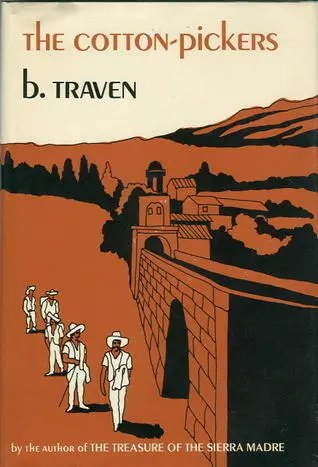
- Название:The Cotton-Pickers
- Автор:
- Издательство:Hill and Wang
- Жанр:
- Год:1969
- ISBN:нет данных
- Рейтинг книги:3 / 5. Голосов: 1
-
Избранное:Добавить в избранное
- Отзывы:
-
Ваша оценка:
The Cotton-Pickers: краткое содержание, описание и аннотация
Предлагаем к чтению аннотацию, описание, краткое содержание или предисловие (зависит от того, что написал сам автор книги «The Cotton-Pickers»). Если вы не нашли необходимую информацию о книге — напишите в комментариях, мы постараемся отыскать её.
—Book World
The Cotton-Pickers — читать онлайн бесплатно полную книгу (весь текст) целиком
Ниже представлен текст книги, разбитый по страницам. Система сохранения места последней прочитанной страницы, позволяет с удобством читать онлайн бесплатно книгу «The Cotton-Pickers», без необходимости каждый раз заново искать на чём Вы остановились. Поставьте закладку, и сможете в любой момент перейти на страницу, на которой закончили чтение.
Интервал:
Закладка:
“All right,” said Doux, straightening up, “I agree to fifteen.”
“Friday is pay day, for the whole week. Irregular or postponed pay days can no longer be permitted,” continued the Secretary.
“But I can’t pay just like that. It has been our practice to pay when we had available cash.”
The Secretary looked up. “What always has been your practice is neither here nor there. We are deciding what you must do from now on. We are at last putting a stop to abuses that have gone on here for hundreds of years. There is the work, here are the wages. And you must pay the wages just as punctually as you expect the men to do their work.”
“But that’s going to be difficult,” said Doux, defensively, “because if I pay out the wages like that I might find myself without sufficient cash to do the buying on Saturday.”
“That’s nothing to do with us. Wages must come first, or the workers will find themselves without sufficient cash to do their buying. And, in our view, it’s better for you to be short of cash than the workers.”
Doux was breathing heavily. “But the work week doesn’t end until Saturday. Why should I pay the wages on Friday?”
“Why? Why? You mean you don’t understand?” The Secretary affected surprise. “The worker gives you five days’ credit. He gives you his output for five whole days while you do business with the capital of his labor. Why should the worker be called upon to lend you his five days’ output? Actually, you should pay for the whole week in advance, on
Monday morning; that would be the proper thing to do. But we don’t want to go that far.”
“All right, then, I’ll agree to that, too. And to one full meal and rolls and coffee at another hour. So then, everything’s in order?” Doux got up.
“Sit down for a moment,” invited the Secretary. “There are still one or two minor points to settle. You must pay for the strike days.”
“Me? Pay for the strike days? Am I to pay for idleness too?”
“Striking is not idling,” said the Secretary firmly, “and if your men go on strike, you must pay their full wages. Otherwise, all you hotel and café proprietors could force us into a long strike and so whittle away our funds that we could never strike again. Oh, no, Señor, we’re not having anything like that. The strike is financed by us. We act as a kind of loan office for the workers, but you are the one who must pay for the strike. You had ample time to make up your mind whether or not to let it come to a strike. The cost of war must be borne by the party who needs peace in order to get on with his business.”
“This is the greatest injustice I’ve ever met,” exclaimed Doux.
“Well, if you like, I’ll enumerate the injustices that you and your kind have been perpetrating for years.”
“Obviously, I have no alternative but to pay for it all,” Doux admitted, dejectedly.
“And preferably today,” declared the Secretary, “for tomorrow it will cost you another day.”
“Then I’ll come back here before five o’clock and settle the whole business,” said Doux, and he got up for the second time.
“Bring a little extra with you,” the Secretary advised as he also got to his feet.
“Still more?” exclaimed Doux.
“Yes, I thought you wanted the café reopened now, not in two months’ time.”
“Isn’t that part of the bargain, if I agree to everything?” Doux was getting jumpy.
“By no means,” answered the Secretary. “The closing of the café was for reasons apart from the waiters’ strike. You know that as well as I do. You asked Inspector Lamas to give the pickets a beating.”
“I certainly did not!” insisted Doux.
“Obviously we don’t agree on that. In any case, it happened on your premises and so you must be held responsible for it. You might easily have prevented it.”
“Come on, then, tell me what else I’ve got to do,” urged Doux.
“You must pay ten thousand pesos into the funds of our union as compensation. As soon as you’ve paid it, we shall take over the guarantee to the Governor on your behalf. And then the café can be reopened.”
“Am I expected to pay ten thousand pesos?” Doux dropped into the chair again, breaking out in a cold sweat.
“You need not pay it; we’re not forcing you. But then the café will stay closed for two months,” the Secretary continued matter-of-factly. “And of course at the end of the two months you would have to pay the waiters retroactively. They must live. And we can’t allow them to take on any other work, since they must be ready to go to work for you as soon as you reopen your café. It would be too bad if you had no waiters on your reopening day.
“To make the situation clear to you, once and for all: It isn’t our intention to destroy business or even interfere with it, certainly not. It is, however, our intention and purpose to see to it that the worker gets not only a fair share of what he produces, but the share which is due him up to the maximum that the business can afford. And this maximum is much higher than you imagine. At present we’re conducting a thorough inquiry into the capacity of every branch of industry, and those branches which can’t bring a decent living wage to the worker must go to the wall. And we’ll see to it that they do. If such industries are important to the community, then we’ll see to it that the community guarantees the worker a decent living standard. For example, I wouldn’t swear to it that your café is indispensable to the community; but it’s there. And as long as you operate it to increase your own fortune, it must bring in enough to pay decent wages to the workers there. If the time comes when you can’t make a profit from it, you’ll close it down of your own accord.
“Well, Señor Doux, I’ve told you all this so that you won’t think we’re just a bunch of blackmailers. No, all we want is that the men who are making a fortune for you receive the share to which they’re entitled; and there’ll still be enough left over for you.”
Doux had only half understood what the Secretary was saying. He sat there, dazed. His head swam with the thought of laying out ten thousand pesos. He didn’t dare say yes for fear of his Señora, for he didn’t know what she’d prefer to do. Every day’s delay cost money. Yet, it would cost him more than the ten thousand pesos if the business had to remain closed for two months, with back pay on top of that. He kept juggling the figures in his head until he thought he’d go mad.
At last he got up. “I’ll think it over,” he said.
He left the office, went down the stairs, and stepped out into the street. He wiped the sweat from his face and gasped for air. Then he started walking home. The walk cooled him down, so that he calmly began to consider the matter. He sat on a park bench to make various calculations on a piece of paper and eventually reached the conclusion that it would be cheaper to pay up everything at once. But what about Señora Doux? If he went home first, there would be a scrap. If he said yes outright, she’d say, “Why don’t you say no?” And if he said no, she’d say, “Why don’t you say yes?”
Whatever he did would be wrong, for it would cost money, and a great deal of money; and anything that cost money and didn’t bring in double always caused a row with the Señora. At last, however, Doux was seized by a proud and manly courage which urged him, for once, to enforce his own independent will without consulting his wife. And he thought that he could best do this by shouldering the decision that was most likely to throw her into a rage: to go to the bank, draw out all the necessary money, and, without a word to his wife, go to the union office and settle everything without further ado.
Читать дальшеИнтервал:
Закладка:
Похожие книги на «The Cotton-Pickers»
Представляем Вашему вниманию похожие книги на «The Cotton-Pickers» списком для выбора. Мы отобрали схожую по названию и смыслу литературу в надежде предоставить читателям больше вариантов отыскать новые, интересные, ещё непрочитанные произведения.











Обсуждение, отзывы о книге «The Cotton-Pickers» и просто собственные мнения читателей. Оставьте ваши комментарии, напишите, что Вы думаете о произведении, его смысле или главных героях. Укажите что конкретно понравилось, а что нет, и почему Вы так считаете.