Clair Huffaker - The Cowboy and the Cossack
Здесь есть возможность читать онлайн «Clair Huffaker - The Cowboy and the Cossack» весь текст электронной книги совершенно бесплатно (целиком полную версию без сокращений). В некоторых случаях можно слушать аудио, скачать через торрент в формате fb2 и присутствует краткое содержание. Город: Las Vegas, Год выпуска: 2012, ISBN: 2012, Издательство: AmazonEncore, Жанр: Вестерн, на английском языке. Описание произведения, (предисловие) а так же отзывы посетителей доступны на портале библиотеки ЛибКат.
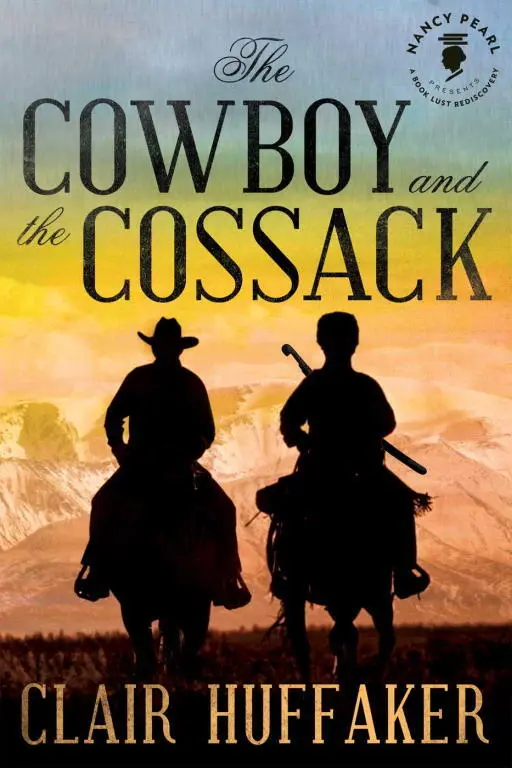
- Название:The Cowboy and the Cossack
- Автор:
- Издательство:AmazonEncore
- Жанр:
- Год:2012
- Город:Las Vegas
- ISBN:978-1-612-18369-5
- Рейтинг книги:3 / 5. Голосов: 1
-
Избранное:Добавить в избранное
- Отзывы:
-
Ваша оценка:
The Cowboy and the Cossack: краткое содержание, описание и аннотация
Предлагаем к чтению аннотацию, описание, краткое содержание или предисловие (зависит от того, что написал сам автор книги «The Cowboy and the Cossack»). Если вы не нашли необходимую информацию о книге — напишите в комментариях, мы постараемся отыскать её.
The Cowboy and the Cossack — читать онлайн бесплатно полную книгу (весь текст) целиком
Ниже представлен текст книги, разбитый по страницам. Система сохранения места последней прочитанной страницы, позволяет с удобством читать онлайн бесплатно книгу «The Cowboy and the Cossack», без необходимости каждый раз заново искать на чём Вы остановились. Поставьте закладку, и сможете в любой момент перейти на страницу, на которой закончили чтение.
Интервал:
Закладка:
And God, how beautiful and brave he was, roaring defiance and majesty toward us in what I swear he knew to be his final dark moments of danger and death.
Near Shad, Rostov said, “There is your Siberian kitten, Northshield.”
Shad raised his rifle. The rest of us were silent, and I was busy getting a lump in my throat.
Then, sighting in on the magnificent tiger, he called to Big Yawn, who was off to the far left. “Yawn! Come ’ere!”
And as Big Yawn was riding over toward us, Shad fired. His bullet slammed into and whined off a rock near the rear end of the tiger, and that made the giant cat’s mind up. My guess was that flying pieces of rock stung the tiger’s butt and tail, but however that may be, he took off like striped lightning on greased wheels at the empty space that Big Yawn had just vacated.
And he was gone so fast that the human eye could hardly keep up with him and watch him go.
Shad slowly returned his rifle to its saddle scabbard. “Goddamn,” he said quietly. “Missed.”
No one said anything, but I couldn’t help but think of the long ago time when Rostov had given the Montana puppy its freedom.
And after that, there was nothing left to do but ride back to the herd, which was settled down as though nothing had ever happened.
It was almost breaking daylight by then, and we were ready to move out within the hour.
There was only one problem, and that was the dead longhorn. I’d already joined up with Rostov, and we rode over to where it was lying after being dragged halfway up the hill by the huge tiger.
Shad got there at about the same time, and the two men studied each other for a moment.
It was Shad who first spoke. “Your kitten will be back.”
That was a lot of beef, a lot of meat and life lying there, and Rostov knew it. “He will be back. But that kitten is not mine. He’s yours.”
Shad shrugged. “I got a strong hunch he thinks he’s his own boss.” And then he swung down from Red and glanced at the dead bull. “We’ll leave this carcass for ’im. It’ll keep him an’ his family in groceries for a week or two—plenty a’ time for us t’ be long gone from here.”
“Sure.” I nodded. “An’ I guess, boss, that’s the only reason for leavin’ it then?”
He gave me a hard look. “That’s right.”
Rostov said quietly, “That’s an excellent way for a man to handle the situation we have here.”
Shad remounted. “It’s just a natural man’s way, anywhere in the world.” He rode down to the herd, and the cattle now started moving out with whoops and hollers from the cowboys encouraging and pushing them along their way.
As Rostov and I galloped to our point position far ahead, four of the words that Shad had used kept ringing in my mind. Those were the words “anywhere in the world.”
Shad had somehow come to be anywhere, and everywhere, in the world.
After riding in silence for a long time, Rostov finally said, “Northshield gave a full bull to the people of Vladivostok, and now to the tiger. In both cases, he was right.”
“He mostly tends t’ be right,” I said. And then I couldn’t help adding, “But he’s also kinda partial t’ that tiger.”
Rostov looked at me with those dark, penetrating eyes of his. And then he said quietly, “He’s not just partial to that tiger, Levi—he is that tiger.”
And then, in silence, we continued to ride on.
CHAPTER TWENTY-THREE
THE NEXT few weeks were about as peaceful and easygoing as any bunch of fellas could ask for. The weather stayed sunny and warm, and the nights were balmy and clear. The Siberian moon looming hugely over us was often so silvery bright you could read a book by it at midnight, if you had a book to read. Matter of fact, Old Keats proved the above fact by doing just the opposite. He went to doing a little writing while he was on the relaxed, contented herd at night and there was nothing much better to do.
I caught him at it in the middle of one brightly moonlit graveyard shift. Near camp I saddled Buck and rode out to relieve Keats, taking my time. From the top of a low hill, he could be seen easily, sitting his horse by the sleeping herd, his back to me. He was doing something with both hands, and I realized a minute later he’d been whittling with his pocketknife to sharpen the short stub of a pencil he sometimes carried on him. As I walked Buck on down the hill, his hooves nearly soundless in the soft earth, Old Keats stuck the fresh-sharpened pencil into his mouth to wet the lead. And then he started, or maybe continued, to put down something slowly and laboriously in a small writing tablet.
As I got closer to Keats, I heard him whisper two words to himself. “Beautiful…Beautiful.”
He was so wrapped up in whatever he was doing that I was just about near enough to reach out and touch him before he knew I was there. And when he finally did see me, his reaction was so sudden and startled that he damnere jumped out of his saddle.
“God damn it, Levi!” he grumbled, quickly putting away his pencil and writing tablet. “What’s the idea a’ sneakin’ up on me that way?”
“Well, hell,” I said, a little taken aback. “It just never occurred t’ me t’ fire some warnin’ shots.”
And then I suddenly understood, or at least was pretty sure that I did. Ever since I could remember as a kid, there’d been vague rumors that Old Keats, on very rare occasions when he was really deeply moved by something or other, actually did turn his hand to poetry. But if that was partly the reason for his nickname “The Poet,” he was awful secretive and touchy as hell about it. Nobody had ever been allowed to read one word of anything he’d ever written down, so that’s why after all those years the talk about him writing poetry had remained only a rumor.
But still, especially after that uncalled-for and strange reaction of his, I couldn’t help but ask him innocently, “What ya’ been writin’?”
“None a’ your goddamn business!”
For some reason, as grouchy and unreasonable as he was being, I couldn’t bring myself to be mad back at him. “I guess you’re right. It ain’t.”
Still frowning, he muttered, “Just don’t care t’ be snuck up on.”
“I really am sorry, Keats.”
His anger eased off gradually now, and he started filling his pipe. “Didn’t mean t’ jump on ya’ that way.”
“Well, I guess I coulda said hello or cleared m’ throat ’r somethin’.”
“Oh, hell,” he said, lighting a match. “Truth is, I’m just gettin’ old an’ crotchety.” He puffed on the pipestem until the tobacco was glowing, then blew out the match, broke it and threw it away. “It was me who was in the wrong, Levi. An’ I’m sorry.”
Before I could reply, he abruptly turned his horse and rode off back toward camp. And watching him go, I knew as plain as could be that neither one of us had been in the wrong. I’d just happened to catch him writing down something that was, somehow, so dear to him that he simply couldn’t bring himself to admit it, or even talk about it.
As he rode over the hill and out of sight, I murmured a thought to myself without even thinking about the fact that I was repeating the word he’d used earlier, “You beautiful old sonofabitch.”
Buck ignored what I said. I guess, by then, he was getting used to me talking to myself.
And then I shook the reins a little and began to walk Buck slowly around the edge of the drowsing herd.
During those easygoing weeks, Mushy, who was a sometime shoemaker, started using his spare time to fix our boots, most of which were getting pretty beat-up. To help in this worthy cause, Shad let him off night duty, so whenever we’d make camp Mushy would get out his trusty old dollar-fifty Economic Cobbler outfit, with its one upside-down iron foot sticking up, and hammer away at some needy person’s soles and heels.
Читать дальшеИнтервал:
Закладка:
Похожие книги на «The Cowboy and the Cossack»
Представляем Вашему вниманию похожие книги на «The Cowboy and the Cossack» списком для выбора. Мы отобрали схожую по названию и смыслу литературу в надежде предоставить читателям больше вариантов отыскать новые, интересные, ещё непрочитанные произведения.







Обсуждение, отзывы о книге «The Cowboy and the Cossack» и просто собственные мнения читателей. Оставьте ваши комментарии, напишите, что Вы думаете о произведении, его смысле или главных героях. Укажите что конкретно понравилось, а что нет, и почему Вы так считаете.