Paula Cohen - Gramercy Park
Здесь есть возможность читать онлайн «Paula Cohen - Gramercy Park» — ознакомительный отрывок электронной книги совершенно бесплатно, а после прочтения отрывка купить полную версию. В некоторых случаях можно слушать аудио, скачать через торрент в формате fb2 и присутствует краткое содержание. Жанр: unrecognised, на английском языке. Описание произведения, (предисловие) а так же отзывы посетителей доступны на портале библиотеки ЛибКат.
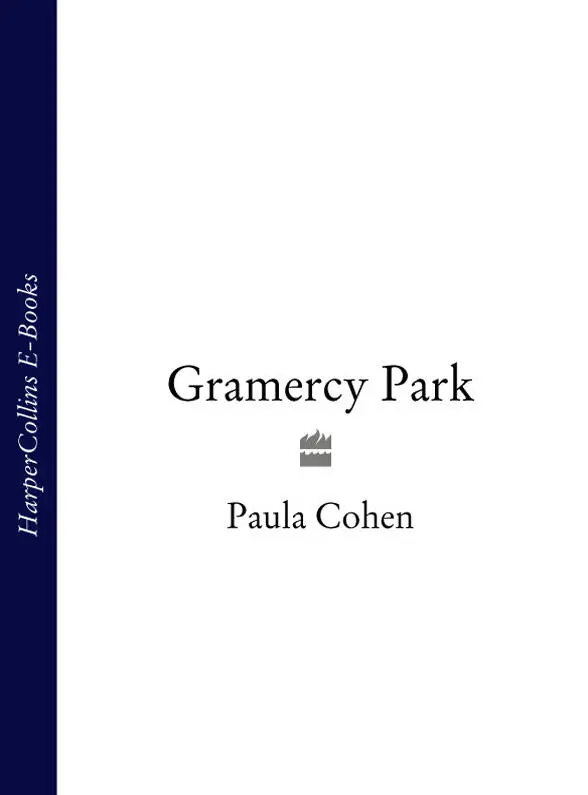
- Название:Gramercy Park
- Автор:
- Жанр:
- Год:неизвестен
- ISBN:нет данных
- Рейтинг книги:4 / 5. Голосов: 1
-
Избранное:Добавить в избранное
- Отзывы:
-
Ваша оценка:
Gramercy Park: краткое содержание, описание и аннотация
Предлагаем к чтению аннотацию, описание, краткое содержание или предисловие (зависит от того, что написал сам автор книги «Gramercy Park»). Если вы не нашли необходимую информацию о книге — напишите в комментариях, мы постараемся отыскать её.
Gramercy Park — читать онлайн ознакомительный отрывок
Ниже представлен текст книги, разбитый по страницам. Система сохранения места последней прочитанной страницы, позволяет с удобством читать онлайн бесплатно книгу «Gramercy Park», без необходимости каждый раз заново искать на чём Вы остановились. Поставьте закладку, и сможете в любой момент перейти на страницу, на которой закончили чтение.
Интервал:
Закладка:
At least entering the Slade house poses no problem. The kindly disposed Mr. Upton, perhaps in gratitude for the sublime singing that he had been privileged to hear, had presented the front-door key to Alfieri when the two men parted yesterday; and whether the house agent’s key had been the culprit then, or whether the lock had merely grown rusty from disuse, the front door gives no trouble today.
Upton has also left the generator in working fettle, and a simple push of a button is all that is needed to banish the darkness of the great hall. But Alfieri is reluctant to trouble that darkness now, overcome by the sense that such a disturbance in the house’s hushed equilibrium—a rude thrusting of light into the echoing dusk—might break the enchantment and cause both the magical child and her chamber to shiver into nothingness before he can reach her. He steps into the hall, to be enveloped once more by its whispering welcome, and, leaving the twilight intact, climbs the stairs.
If some part of him had believed that he would find her in the music room again today—as if she were, in fact, a ghost, forever haunting that particular chamber—that part of him is disappointed, as is the part which looks for her in her own room. She is off again, on another wander, and the prospect of speedily locating someone so very small in a house of this size is not bright. But now that he has come this far, the thought of leaving without seeing her again is suddenly unbearable to him; and reasoning that it is still beyond her strength to reach, and return from, the ground floor, he begins his search on the floor immediately above.
His reasoning is sound. He finds her, after several tries, in a book-lined study in the north wing, not far from the music room, seated by the window, gazing out at Gramercy Park. An open book lies forgotten on the table before her; and as the door swings open she turns her head, startled. At the sight of Alfieri her colorless face becomes even paler, and she rises to her feet, clutching the edge of the table.
Everything about her is as he remembers it, even her astonishing eyes with their burden of grief. They rest on his face now with something between shock and wonder, rendering him, once more, momentarily dumb.
“Forgive me,” he says, slow to find words with the weight of her gaze upon him. “I have frightened you again. I seem forever destined to terrify you when we meet.”
“You came back,” is all she says.
“Did you think I wouldn’t?”
“I didn’t know. I thought—to see the house, maybe.” And with the acknowledgment that she may not, indeed, be the object of his visit, a pink flush creeps up her face.
But Alfieri shakes his head, unable to take his eyes from her. “I have seen the house. Piccina , it is you that I needed to see again. I was afraid that—perhaps—I had frightened you, telling you that I would buy it.”
“There’s no one I would rather it belonged to.”
“You are very kind. But if I have caused you any pain …”
“You mustn’t think that.”
“And yet—forgive me, again—but your eyes were not so swollen yesterday, I think. You have been crying.”
“Ah, that,” she says, looking away at last, her fingers fidgeting and twisting. “That’s nothing. I slept badly last night. I often sleep badly.”
He watches her hands tearing at themselves, wanting to take them in his own hands, to quiet them. “My dear,” he says, “if I have been the cause of any discomfort, or troubled you in any way, I humbly beg your pardon. I would not hurt you for the world.”
The pity in his eyes is almost more than she can bear.
“I’m so glad you came back,” she whispers.
“I too. We had such a good talk yesterday.”
“Oh, yes.”
“And I am in no hurry today. Are you? Then, if you would—and if I am not imposing upon your hospitality—and if you do not think me so terribly ill-mannered for inviting myself—perhaps we might have another cup of tea together?”
Pausing for rest halfway up the stairs, leaning on his arm, she looks up at him, hesitantly.
“Will you forgive me for something too?” she says.
“Forgive you?” He smiles down into her face. “What could you possibly have done that would need my forgiveness”
“I was very impolite yesterday.”
“Impolite, my dear? In what way?”
“It was only after you left that I remembered … I never even asked what it is you do, and what has brought you to New York …”
He throws his head back in a shout of laughter, then raises her hand and kisses it … and still she is not afraid of him, for all his strangeness.
She is not naïve, and knows the reason for his return: his remorse at displacing her … and easing her loneliness may help to both soften the blow and relieve whatever compunction he feels for being the cause. But it does not matter why he is here; nothing matters, so long as she can watch him and listen to him—and, when he is not looking, hold the hand he had kissed against her mouth, or press it to her cheek.
If she is not changed from yesterday, neither is her room; it waits today just as it did then—as if time stands still here—and she pours out the tea and listens, her elbows on the table and her head resting on her hand. He speaks today of his country and his family, elaborating upon stories he only touched upon yesterday, taking inspiration from her bright, mobile face, for Clara says little but is an eloquent listener, and her expressions mirror his, nuance for nuance.
Both seem, in fact, to be listening as much with eyes as with ears. The face she watches is happy, wistful, darkly alive with the memories he tells, and she thinks that he must be lonelier than he knows, here in this strange land, and never takes her eyes from him until the tea is long gone and both suddenly realize that blue dusk has crept through the windows, and it is hard to see the other’s face across the table.
He leans back in his chair, smiling at her in the gathering darkness. “I must seem,” he says, “the most egotistical, self-indulgent man on earth. You should have stopped me long ago.”
“I loved listening,” she says. “You made them all come alive. I feel as if I know them now … especially Fiorina. I like her very much.”
“The baby, yes. The two of you would get along well. She is only a little older than you.”
Clara lifts her chin, her smile gone. “I am not a baby,” she says, rising from her chair.
Alfieri rises with her, protesting: “Miss Adler, I meant no disparagement of your years …” But she does not answer. Instead she takes a box of matches from a side cupboard and goes from table to table in silence, lighting the numerous candles set about the room—ten, fifteen, twenty—until the pretty chamber glows and flickers like a magic cave.
Alfieri watches her move about. By the candlelight’s soft sorcery he sees her for the first time as she should be: all traces of illness erased; and her body—as she bends to kindle a cluster of tiny flames, or stands on tiptoe to touch her lit taper to another on a high shelf—is not the body of a child.
“If you promise to forgive me,” he says quietly, lost once more in some half-remembered enchantment, “I promise not to tease you again.”
She does not answer at first, and he is wondering what to do to make amends when she says: “You spoke so much of your brothers and sisters.” She does not look at him, all her attention centered on the candles. “You spoke of them, and their children, and your mother and father, but you never once mentioned your wife.”
“Did I not?” He smiles at her, watching her light the last of the candles on the mantelpiece beneath her portrait. “That is because I have no wife to mention.”
Читать дальшеИнтервал:
Закладка:
Похожие книги на «Gramercy Park»
Представляем Вашему вниманию похожие книги на «Gramercy Park» списком для выбора. Мы отобрали схожую по названию и смыслу литературу в надежде предоставить читателям больше вариантов отыскать новые, интересные, ещё непрочитанные произведения.









Обсуждение, отзывы о книге «Gramercy Park» и просто собственные мнения читателей. Оставьте ваши комментарии, напишите, что Вы думаете о произведении, его смысле или главных героях. Укажите что конкретно понравилось, а что нет, и почему Вы так считаете.