Dr. Daniel - The Cancer Directory
Здесь есть возможность читать онлайн «Dr. Daniel - The Cancer Directory» — ознакомительный отрывок электронной книги совершенно бесплатно, а после прочтения отрывка купить полную версию. В некоторых случаях можно слушать аудио, скачать через торрент в формате fb2 и присутствует краткое содержание. Жанр: unrecognised, на английском языке. Описание произведения, (предисловие) а так же отзывы посетителей доступны на портале библиотеки ЛибКат.
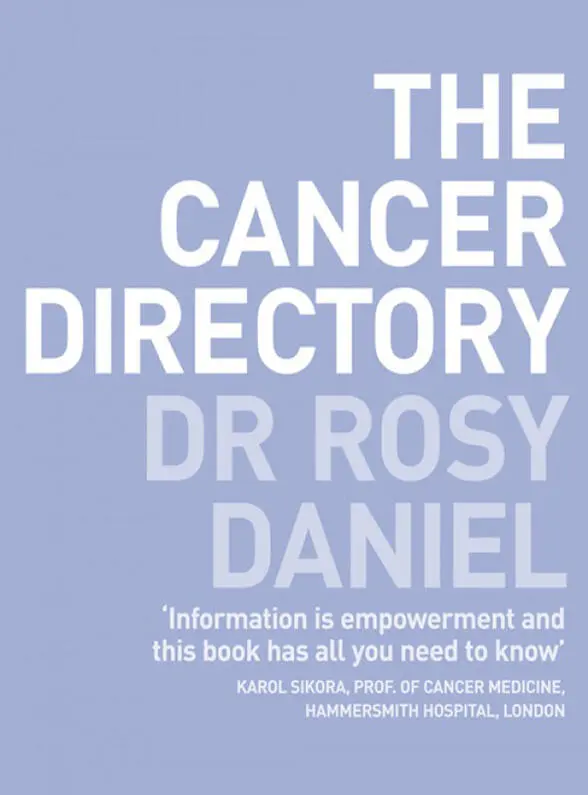
- Название:The Cancer Directory
- Автор:
- Жанр:
- Год:неизвестен
- ISBN:нет данных
- Рейтинг книги:3 / 5. Голосов: 1
-
Избранное:Добавить в избранное
- Отзывы:
-
Ваша оценка:
The Cancer Directory: краткое содержание, описание и аннотация
Предлагаем к чтению аннотацию, описание, краткое содержание или предисловие (зависит от того, что написал сам автор книги «The Cancer Directory»). Если вы не нашли необходимую информацию о книге — напишите в комментариях, мы постараемся отыскать её.
The Cancer Directory — читать онлайн ознакомительный отрывок
Ниже представлен текст книги, разбитый по страницам. Система сохранения места последней прочитанной страницы, позволяет с удобством читать онлайн бесплатно книгу «The Cancer Directory», без необходимости каждый раз заново искать на чём Вы остановились. Поставьте закладку, и сможете в любой момент перейти на страницу, на которой закончили чтение.
Интервал:
Закладка:
Quite often, because people are so anxious about what the treatment will do in the short term, they do not really hear or take on board what is being said about long-term side-effects. For example, a woman asking about chemotherapy treatment may be thinking about its effects on her hair, nails and energy levels, and whether she will be able to work and look after her children. She may completely miss the fact that, in the longer term, the chemo could cause infertility, depression or nerve damage.
While thinking about the possibility that tamoxifen treatment for breast cancer may cause weight gain, a woman may miss the point that it also carries a 5–10 per cent risk of causing endometrial cancer. Clearly, doctors and other healthcare professionals do not like to dwell on the downsides of treatment but, as mentioned earlier, it is better to be aware of and prepared for the worst-case scenario than having it sprung on you at a later date, facing you with a new set of losses and fears. It may be worthwhile having two separate discussions with your doctors or nurses – one about the short-term effects of the treatment and a blow-by-blow account of receiving the treatment; and another about the possible or likely long-term side-effects of the treatment.
A useful source of information about drug treatments is the drug information centre found in most big hospitals. This is usually staffed by helpful pharmacists, who will take the time to answer your questions or send you printed material about the medicines you are being offered. Pharmacists are far more knowledgeable about drugs and treatments than doctors and other healthcare professionals, and will have detailed information sheets and research data for each medicine being offered at their fingertips. If you do not have access to a big hospital, you can still speak to the pharmacist responsible for the oncology ward who will often be only too pleased to share his or her knowledge and experience with you.
Learning more about the proposed treatment
Make sure that you are asking the right person about the nature of the treatment – the consultant or nurses involved with each aspect of your treatment – and about any relevant details, be it surgery, chemotherapy, radiotherapy or hormone therapy (or any other forms of treatment on offer).
It is then wise to ask yourself if you are satisfied with the information that you have been given, or do you feel the need to seek a second opinion?
Reviewing Your Options
When reviewing your options for treatment and before you make your treatment decision, make sure you have collected together all the relevant information by going through the checklist below.
• Options on offer at the hospital in your area
• Range of options on offer at the leading centre of excellence for your particular cancer
• Options that might be available in other parts of the world
• Research trial alternatives
• Alternative cancer medicine choices
• Your integrated medicine complementary and self-help options.
Hopefully, all this information has given you clear guidance on how to find what options are available at your hospital, including getting the opinions of the different specialists mentioned, where appropriate.
If you would like an opinion from a centre of excellence, you need a referral from your GP or consultant. In the UK, it is usually possible to get such an opinion on the NHS if it is clear that the services offered by such a centre are more comprehensive than what is available in your own area. If you have health insurance, check first that your policy covers you for second or third opinions. Treatments in another country are unlikely to be covered by your health insurance, and you should check costs carefully before embarking on this route.
Sometimes, doctors in foreign medical centres are prepared to give an initial opinion of what they can offer you on the strength of letters from your consultants, and having seen your X-rays and/or scans. Because of major advances in digital technology, it is now also possible to send scans to distant locations via e-mail (not to mention by post or courier).
This form of consultation, while lacking the personal touch, can save costly and exhausting trips abroad unless there is likely to be a significant benefit.
How far you wish to go with this process of getting a ‘world picture’ is entirely up to you. For some, this may feel like far too great a burden whereas, for others, it will be a source of great comfort to know that no stone has been left unturned.
Reviewing your alternative cancer treatmentoptions is covered in Chapter 5. A great number of alternative cancer remedies are on offer around the world, with variable levels of information as to their effectiveness. In Chapter 5, you will find:
• basic information on how to use the most well-known alternative cancer medicines
• the approximate cost of their use
• the current level of scientific information about them
• whether you can self-administer them or not (i.e. are they available for sale, by prescription only or clinic-based?).
Reviewing what the complementary medicineand self-help approacheshave to offer is the subject of Chapters 7 and 8.
Making Treatment Decisions and Creating an Integrated Medicine Plan
Chapters 4 and 5 will tell you about the treatment choices that are available, and Chapter 6 offers a checklist to go through to make sure you are ready to make your final decision. Chapters 7 and 8 will help you to prepare for your treatment and find the relevant, effective complementary supportive care during treatment.
Once you are clear as to the choices you wish to make, it is wise to draw up your plan of action so that you remain crystal-clear about what you are going to do, how you are going to do it and with what support. If you need help in doing this, or a short cut, then seek specific guidance from an integrated medicine doctor (see the Resources Directory) to devise a medically supervised programme that is tailor-made for you and your needs.
If you choose to receive neither orthodox nor alternative medicine, you should proceed straight to Chapter 9 on the long-term health creation approach to recovery.
Meanwhile, if you are looking for creative solutions to help with troublesome symptoms, they can be found in Chapter 8.
CHAPTER 4 The medical frontier: getting the best orthodox treatment
The oncologist’s perspective by Professor Karol Sikora with cancer nurse Patricia Peat
This chapter covers the current best practices available at the most advanced treatment centres, giving you a benchmark against which to measure the treatment you are being offered locally. This information will enable you to check worldwide for the very best resources and treatments available for your individual situation. Advice will be given on how to obtain second and third opinions as and when necessary.
In the last 20 years, there have been dramatic strides in our understanding of what cancer is and how best to treat it. Some cancers that were almost uniformly fatal in the past, such as Hodgkin’s disease and testicular cancer, are now mostly curable, thanks to chemotherapy. We are more open about the diagnosis of cancer in society and there is much media interest in cancer stories – good and bad. We are also living longer, which means that, as cancer is more common in older people (due to the declining effectiveness of the immune system, and longer exposure to poor dietary habits and environmental pollutants), the incidence of the disease is increasing.
Читать дальшеИнтервал:
Закладка:
Похожие книги на «The Cancer Directory»
Представляем Вашему вниманию похожие книги на «The Cancer Directory» списком для выбора. Мы отобрали схожую по названию и смыслу литературу в надежде предоставить читателям больше вариантов отыскать новые, интересные, ещё непрочитанные произведения.








Обсуждение, отзывы о книге «The Cancer Directory» и просто собственные мнения читателей. Оставьте ваши комментарии, напишите, что Вы думаете о произведении, его смысле или главных героях. Укажите что конкретно понравилось, а что нет, и почему Вы так считаете.