Alan Garner - Collected Folk Tales
Здесь есть возможность читать онлайн «Alan Garner - Collected Folk Tales» — ознакомительный отрывок электронной книги совершенно бесплатно, а после прочтения отрывка купить полную версию. В некоторых случаях можно слушать аудио, скачать через торрент в формате fb2 и присутствует краткое содержание. Жанр: unrecognised, на английском языке. Описание произведения, (предисловие) а так же отзывы посетителей доступны на портале библиотеки ЛибКат.
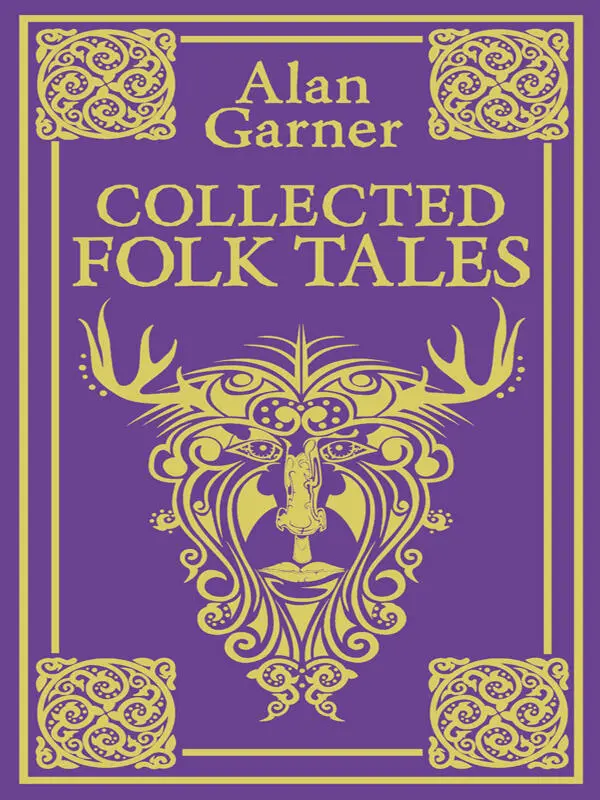
- Название:Collected Folk Tales
- Автор:
- Жанр:
- Год:неизвестен
- ISBN:нет данных
- Рейтинг книги:5 / 5. Голосов: 1
-
Избранное:Добавить в избранное
- Отзывы:
-
Ваша оценка:
Collected Folk Tales: краткое содержание, описание и аннотация
Предлагаем к чтению аннотацию, описание, краткое содержание или предисловие (зависит от того, что написал сам автор книги «Collected Folk Tales»). Если вы не нашли необходимую информацию о книге — напишите в комментариях, мы постараемся отыскать её.
Collected Folk Tales — читать онлайн ознакомительный отрывок
Ниже представлен текст книги, разбитый по страницам. Система сохранения места последней прочитанной страницы, позволяет с удобством читать онлайн бесплатно книгу «Collected Folk Tales», без необходимости каждый раз заново искать на чём Вы остановились. Поставьте закладку, и сможете в любой момент перейти на страницу, на которой закончили чтение.
Интервал:
Закладка:
 e was the finest hunter, the greatest fighter, the swiftest runner, of all the tribes of the Algonquin. She was the most beautiful, the most skilful, the boldest maiden.
He could summon chieftains’ daughters. She was beloved of warriors.
He wooed her. She mocked him.
She told all who listened of how he had come to her, humble, gentle, naked in his heart. The squaws cackled, and the braves jeered, and he lay in his tent and dared not show his tears. The tears chilled his soul.
It was the time for the tribe to move north for the Summer. They broke the Winter camp, and the village was bustle and noise, but still he lay in his tent and would not come out, nor would he speak. So they took the tent from over him, and left him alone on the prairie, while they went north after the deer and the buffalo.
When there was only the level sky to see him, and the silence to hear him, he moved about among the ashes of the dead fires, and the patches of earth, and the forsaken rubbish, gathering a broken bead, a scrap of rotted leather, a twist of rag, a spoilt headdress; and he took them to a sheltered place among the rocks, where some of the Winter’s snow still lingered. He gathered the snow, and heaped it, as the village children did, and trimmed it and smoothed it, and rounded a head, and put in stones for eyes and nose and teeth. Then he stuck the bits of rubbish here and there about the snow, and when he had finished he sang a song.
The tribe watched him come into the camp one cold dawn a week later. He had travelled through the nights to be with them, and by his side was a tall and fierce warrior, a young chieftain of the Cree by the marks on feather and skin. The name of this warrior was Moowis.
She looked on the chieftain, and loved him. Her mother offered the hospitality of their tent, but Moowis said that he was on a journey of hardship and that he must sleep out in the open, with no cover from the frosts of Spring. So she spent her days in pursuit of a chieftain’s love, and left him to the stars at night. And she soon came to her desire, for Moowis took her for his bride.
Yet still she could not bring the chieftain to the tent. “When we reach home, my home,” said Moowis, “we shall share everything. Until then, be patient,” and he gave her a glittering smile.
The Cree lands were further to the north than the tribe hunted, and Moowis seemed anxious to travel fast, so the new bride and groom took their leave, and her old love, the spurned one, was the last and gayest in the parting.
Moowis urged the way north, and would not allow for her softer strength, and he kept to shadows by day, and made most speed by night. She went with him on bleeding feet, uncomplaining at the hurt, as a chieftain’s wife should. She endured the edges of the rocks and the thorns of the woods when they came to the northern mountains. She planned the fine clothes she would wear, and the dressing of her tent, and was happy with Moowis, her lord and her love.
On the last day, the sun rose in a clear sky. The first scents of growing were in the air, and she followed Moowis up a long cliff path, with neither shade nor shelter. The straight back of her husband, which she had never seen bend in all their journey, went before her. His chieftain feathers were proud.
Yet there was something.
His body he pressed to the cliff, and for all his strength, there was less speed to his pace. She could keep with him easily. The doeskin across his shoulders sagged, the sleeves wrinkled, the legs were slack. And in the growing warmth of the sun dark patches spread like sweat.
“Have you the fever?” she said.
But Moowis did not speak again. He stopped, the headdress fell, and she crouched alone, the chieftain’s bride, on the mountain path, over a puddle of melt-water and some rags and feathers drying in the sun.
 inion the son of Gwalchmai was one fine morning walking in the woods of Treveilir when he beheld a graceful slender lady of elegant growth, and delicate feature, and her complexion surpassing every white and red in the morning dawn and the mountain snow, and every beautiful colour in the blossoms of wood, field and hill.
And then he felt in his heart an inconceivable commotion of affection, and he approached her in a courteous manner, and she also approached him in the same manner; and he saluted her, and she returned his salutation; and by these mutual salutations he perceived that his society was not disagreeable to her. He then chanced to cast his eye upon her foot, and he saw that she had hoofs instead of feet, and he became exceedingly dissatisfied.
But the lady gave him to understand that he must pay no attention to this trifling freak of nature. “Thou must,” she said, “follow me wheresoever I go, as long as I continue in my beauty.”
The son of Gwalchmai thereupon asked permission to go and say goodbye to his wife, at least.
This the lady agreed to. “But,” said she, “I shall be with thee, invisible to all but thyself.”
So he went, and the goblin went with him; and when he saw Angharad, his wife, he saw her a hag like one grown old, but he retained the recollection of days past, and still felt extreme affection for her, but he was not able to loose himself from the bond in which he was.
“It is necessary for me,” said he, “to part for a time, I know not how long, from thee, Angharad, and from thee, my son, Einion.” And they wept together and broke a gold ring between them; he kept one half and Angharad the other, and they took their leave of each other, and he went with the Lady of the Wood, and knew not where. A powerful illusion was upon him, and he saw not any place, or person, or object under its true and proper appearance, excepting the half of the ring alone.
And after being a long time, he knew not how long, with the goblin, the Lady of the Wood, he looked one morning as the sun was rising upon the half of the ring, and he bethought him to place it in the most precious place he could, and he resolved to put it under his eyelid; and as he was endeavouring to do so, he could see a man in white apparel, and mounted on a snow-white horse, coming towards him, and that person asked him what he did there; and he told him that he was cherishing an afflicting remembrance of his wife Angharad.
“Dost thou desire to see her?” said the man in white.
“I do,” said Einion, “above all things, and all happiness of the world.”
“If so,” said the man in white, “get upon this horse, behind me.” And that Einion did, and looking around he could not see any appearance of the Lady of the Wood, the goblin, excepting the track of hoofs of marvellous and monstrous size, as if journeying towards the north.
“What delusion art thou under?” said the man in white.
Then Einion answered him and told everything how it occurred ’twixt him and the goblin.
“Take this white staff in thy hand,” said the man in white, and Einion took it. And the man in white told him to desire whatever he wished for.
The first thing he desired was to see the Lady of the Wood, for he was not yet completely delivered from the illusion. And then she appeared to him in size a hideous and monstrous witch, a thousand times more repulsive of aspect than the most frightful things seen on earth. And Einion uttered a cry of terror; and the man in white cast his cloak over Einion, and in less than a twinkling Einion alighted as he wished on the hill of Treveilir, by his own house, where he knew scarcely anyone, nor did anyone know him.
Читать дальшеИнтервал:
Закладка:
Похожие книги на «Collected Folk Tales»
Представляем Вашему вниманию похожие книги на «Collected Folk Tales» списком для выбора. Мы отобрали схожую по названию и смыслу литературу в надежде предоставить читателям больше вариантов отыскать новые, интересные, ещё непрочитанные произведения.





Обсуждение, отзывы о книге «Collected Folk Tales» и просто собственные мнения читателей. Оставьте ваши комментарии, напишите, что Вы думаете о произведении, его смысле или главных героях. Укажите что конкретно понравилось, а что нет, и почему Вы так считаете.