Harold Shukman - Lenin - A biography
Здесь есть возможность читать онлайн «Harold Shukman - Lenin - A biography» — ознакомительный отрывок электронной книги совершенно бесплатно, а после прочтения отрывка купить полную версию. В некоторых случаях можно слушать аудио, скачать через торрент в формате fb2 и присутствует краткое содержание. Жанр: unrecognised, на английском языке. Описание произведения, (предисловие) а так же отзывы посетителей доступны на портале библиотеки ЛибКат.
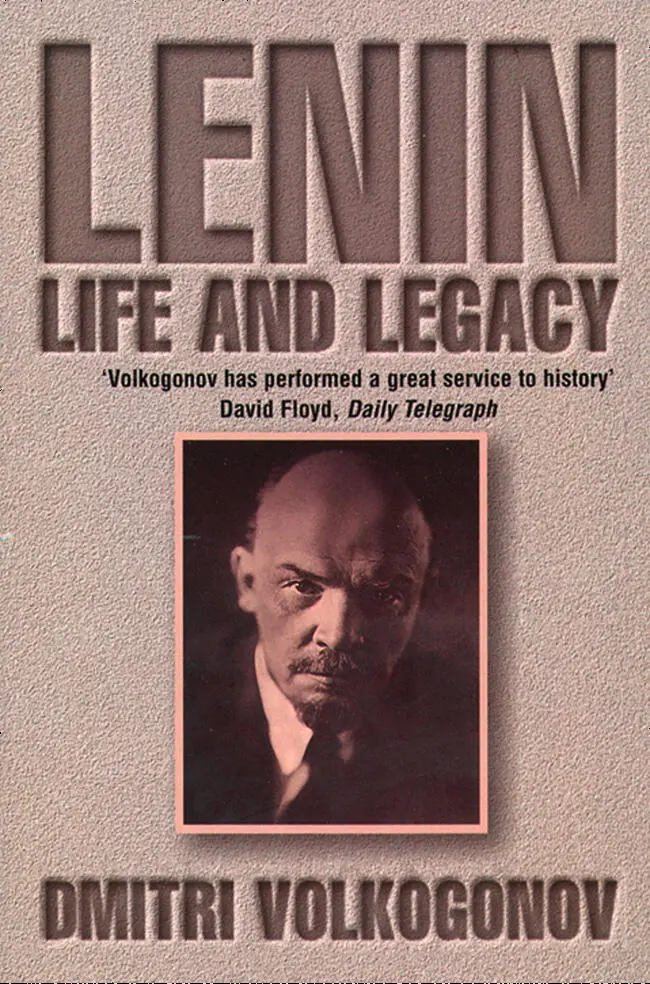
- Название:Lenin: A biography
- Автор:
- Жанр:
- Год:неизвестен
- ISBN:нет данных
- Рейтинг книги:4 / 5. Голосов: 1
-
Избранное:Добавить в избранное
- Отзывы:
-
Ваша оценка:
Lenin: A biography: краткое содержание, описание и аннотация
Предлагаем к чтению аннотацию, описание, краткое содержание или предисловие (зависит от того, что написал сам автор книги «Lenin: A biography»). Если вы не нашли необходимую информацию о книге — напишите в комментариях, мы постараемся отыскать её.
Lenin: A biography — читать онлайн ознакомительный отрывок
Ниже представлен текст книги, разбитый по страницам. Система сохранения места последней прочитанной страницы, позволяет с удобством читать онлайн бесплатно книгу «Lenin: A biography», без необходимости каждый раз заново искать на чём Вы остановились. Поставьте закладку, и сможете в любой момент перейти на страницу, на которой закончили чтение.
Интервал:
Закладка:
The context in which Lenin acquired his Marxism was the debate with romantic Populism. In one of his early works, ‘What is the Legacy we are Rejecting?’, he rightly criticized N.K. Mikhailovsky, one of the leading exponents of liberal Populism, for the Populist refusal to accept capitalism in Russia and for the Populist idealization of the peasant commune. 55 One can already detect in this article echoes that will soon become a hallmark of Leninist usage – ‘rubbish’, ‘slander’, ‘trivial trick’ – often as a substitute for real argument. It seems never to have occurred to Lenin to ask himself whether the dictatorship of the proletariat was compatible with the justice Marxism cherished as a fundamental idea. By what right should one class unconditionally command another? Could such a dictatorship achieve priority over the highest value, namely liberty?
Such questions did not trouble the young Lenin. When he accepted Marxism it was finally and irrevocably. He never questioned the socio-political concept of the doctrine, which was based in the last analysis on coercion as the solution to all contradictions in the interests of one class. He was never troubled by the viciousness and narrowness of this way of building the new society. It was not therefore surprising that when he became the ruler of that new society, his main preoccupation was with the punitive organs, the Cheka (the political police) and the State Political Administration, or GPU. Indeed, reading the minutes of Lenin’s Politburo after the seizure of power, it quickly becomes clear that there was scarcely a session that did not review measures for tightening the dictatorship of the proletariat – that is, the dictatorship of the Party – by widening the powers of the punitive bodies, legislating terror, ensuring the immunity of the new caste of ‘untouchables’ and the class ‘purity’ of its members. Thus, on 14 May 1921 the Politburo, with Lenin’s active encouragement, adopted a decision to widen the powers of the Cheka ‘in the use of the highest form of punishment’, i.e. the death penalty; 56 in January 1922 a further step was taken to strengthen the punitive function of the dictatorship and the guarantee of the ‘class line’ by the creation of the GPU, whose chief task was to struggle against counter-revolution using the widest range of physical and psychological force. And the courts ‘must include people chosen by the Cheka’. 57
As for the way these bodies were to act, Lenin himself set the style. When a cipher arrived from the Red Army in the Far East in August 1921 announcing the arrest of Baron Ungern von Sternberg, one of the leaders of the White forces in the Trans-Baikal region, Lenin personally raised the question of a trial at the Politburo. Naturally there were no objections, and he merely had to dictate the Politburo resolution as that of the highest Party tribunal: ‘The accusations must be sound, and if the proof is conclusive and beyond doubt, then a public trial should be set, conducted with the greatest despatch, and [Ungern] should be shot.’ 58 So much for a ‘trial’!
Nikolai Fedoseev could never have dreamed that the young man he met briefly in a station waiting-room in Siberia in 1897, as their paths into exile crossed, would turn out to be a major figure in twentieth-century history. The correspondence between the two men leaves no doubt that it was Fedoseev who had, however imperceptibly, given Vladimir Ulyanov another shove in the direction of revolution. When Lenin heard in the summer of 1898 that Fedoseev had killed himself at Verkholensk in Eastern Siberia, he was genuinely saddened. The death of the exile was embellished by romantic tragedy when his fiancée, Maria Gofengauz, living at Archangel in forced settlement, and with whom Lenin was acquainted, also killed herself. Lenin often recalled Fedoseev warmly. Gorky wrote that on one occasion, when Fedoseev was mentioned, Lenin became animated and said excitedly that if he’d lived, ‘he’d no doubt have been a great Bolshevik’. 59
For Lenin, Marxism meant above all one thing, and that was revolution. It was the revolutionary message of the doctrine that attracted him in the first place. He absorbed its ideas and propositions as a convinced pragmatist, and was less interested in the early humanistic writings of Marx and Engels than he was in those concerned with the class struggle. He plunged into the Marxist world of categories, laws, principles, legends and myths, and regarded Plekhanov with reverence, which may explain why the ideas he drew from Marxism were free of a purely ‘Western’ vision of historical evolution. He was entranced by Plekhanov’s On the Monistic View of History , published under the pseudonym of N. Beltov, a book in which, Potresov wrote, the author ‘brought the ten commandments of Marxism down from Mount Sinai and handed them to the Russian young’, and, as Nicolaevsky echoed, ‘introduced the Russian intelligentsia, above all the students, who were the avant-garde of the revolutionary army at the time, to undiluted revolutionary Marxism’. 60 Plekhanov wrote that ‘Chernyshevsky never missed an opportunity to mock the Russian liberals and to state in print that … he … had nothing in common with them. Cowardice, short-sightedness, narrow views, inactivity and garrulous boastfulness, these were the distinguishing features he saw in the liberals’. Plekhanov had taken as the epigraph for his book an extract from a letter Chernyshevsky had written to his wife in October 1862 when he was in the Peter-Paul Fortress in St Petersburg: ‘Our life together belongs to history: in hundreds of years from now our names will still be dear to people, and they will remember them with gratitude …’ 61 Lenin must have felt an affinity with these words. He was not vain or ambitious, he simply believed in his historic mission. Plekhanov’s works brought Lenin still closer to Chernyshevsky, and finally led him to the social democratic Bible, the works of Marx.
Plekhanov and Lenin would part in due course for reasons usually ascribed to differences over organization. I believe that this was a secondary cause, and that the real reason for their split was over attitudes to liberty. As early as the end of the century, Lenin, like Chernyshevsky before him, was already defining the main enemies of the working class as liberalism and so-called ‘Economism’, a sort of Russian trade unionism which encouraged the workers to organize and fight for a better economic life, while the intelligentsia would struggle for their political and civil rights. In Lenin’s view, and that of his followers, the liberals and ‘Economists’, by leading the workers away from political struggle, were denying them the opportunity to aim for socialist revolution. The Marxism preached by Lenin and the Bolsheviks had no place for liberalism and ‘Economism’, which in fact held the key to democratic change in Russia. To the end of his life, Lenin was therefore sympathetic to the early Plekhanov and openly hostile to the later one, who was to call Lenin’s 1917 policy ‘delirious’. It is interesting to note that when in April 1922 the Politburo discussed the publication of Plekhanov’s works, Lenin insisted that only one volume be compiled, and only of his early, ‘revolutionary’ writings. 62
If Lenin was not fond of late Plekhanov, he positively hated the Plekhanov of the revolutionary era. Plekhanov had seen through Lenin, he understood the essence and the danger of his line. In his 1910 article ‘A Comedy of Errors’, published in his Dnevnik sotsial-demokrata , he wrote that ‘only Lenin could have gone so far as “to ask myself in which month we should begin the armed uprising …”’. Lenin’s plans, which boiled down to a seizure of power, Plekhanov called utopian. 63 And indeed, as soon as the Bolsheviks had power in their hands, they quickly forgot many of their slogans and promises. Power for Lenin was the goal and the means to bring about his utopian designs.
Читать дальшеИнтервал:
Закладка:
Похожие книги на «Lenin: A biography»
Представляем Вашему вниманию похожие книги на «Lenin: A biography» списком для выбора. Мы отобрали схожую по названию и смыслу литературу в надежде предоставить читателям больше вариантов отыскать новые, интересные, ещё непрочитанные произведения.








Обсуждение, отзывы о книге «Lenin: A biography» и просто собственные мнения читателей. Оставьте ваши комментарии, напишите, что Вы думаете о произведении, его смысле или главных героях. Укажите что конкретно понравилось, а что нет, и почему Вы так считаете.