Beth Howard - Making Piece
Здесь есть возможность читать онлайн «Beth Howard - Making Piece» — ознакомительный отрывок электронной книги совершенно бесплатно, а после прочтения отрывка купить полную версию. В некоторых случаях можно слушать аудио, скачать через торрент в формате fb2 и присутствует краткое содержание. Жанр: unrecognised, на английском языке. Описание произведения, (предисловие) а так же отзывы посетителей доступны на портале библиотеки ЛибКат.
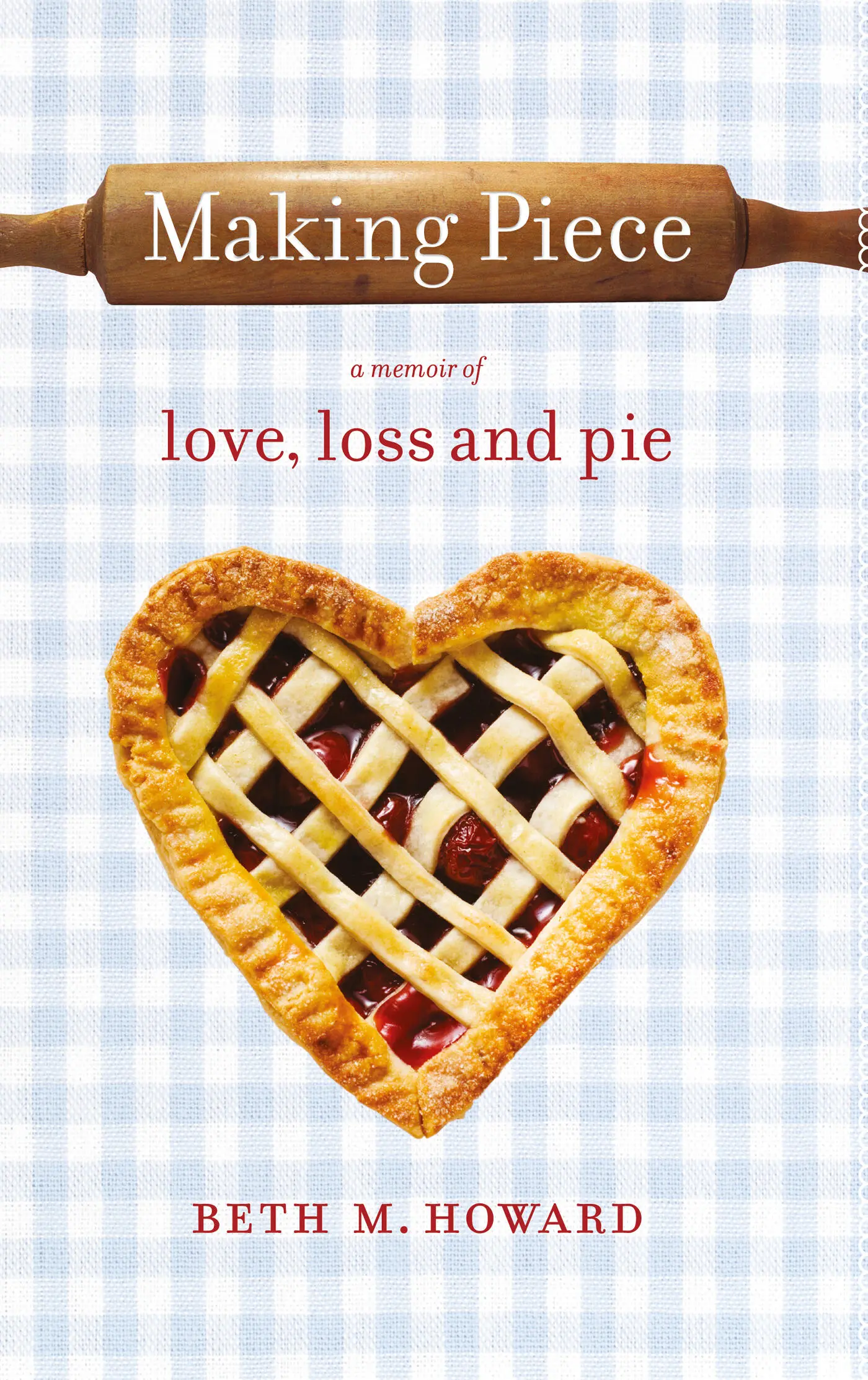
- Название:Making Piece
- Автор:
- Жанр:
- Год:неизвестен
- ISBN:нет данных
- Рейтинг книги:3 / 5. Голосов: 1
-
Избранное:Добавить в избранное
- Отзывы:
-
Ваша оценка:
Making Piece: краткое содержание, описание и аннотация
Предлагаем к чтению аннотацию, описание, краткое содержание или предисловие (зависит от того, что написал сам автор книги «Making Piece»). Если вы не нашли необходимую информацию о книге — напишите в комментариях, мы постараемся отыскать её.
Making Piece — читать онлайн ознакомительный отрывок
Ниже представлен текст книги, разбитый по страницам. Система сохранения места последней прочитанной страницы, позволяет с удобством читать онлайн бесплатно книгу «Making Piece», без необходимости каждый раз заново искать на чём Вы остановились. Поставьте закладку, и сможете в любой момент перейти на страницу, на которой закончили чтение.
Интервал:
Закладка:
The guesthouse was an A-frame studio above the detached garage belonging to the modern three-bedroom house in which Marcus and I had lived before moving to Mexico. In fact, had the guesthouse been available when we moved away, we would have rented it to keep as a home base. “It’s the perfect writer’s studio,” Marcus had said. He must have foreseen I wouldn’t last long south of the border. While the guesthouse was small (as in 400-square-feet), it was also airy with hardwood floors, white walls and high ceilings. Most important, factoring in the damp Pacific Northwest climate, it was well insulated, warm and dry. A place where I could sit by the fire and read my stack of books like, How to Go On Living When Someone You Love Dies, while listening to the steady rain falling on the skylights. Nestled in a stand of tall cedars, it was also very private. The one-room abode had the feel of a tree house—or, as I called it, The Grieving Sanctuary.
Of moving into the guesthouse, my German friend Joerg asked, “Are you sure that’s a good idea? You will be reminded of Marcus every time you walk in and out of that house.”
Joerg, who was based in Portland and had worked with Marcus, had become my go-to guy ever since I called him the day Marcus died and asked him to do the most difficult and undesirable task one could ask a friend: call Marcus’s parents in Germany and tell them their son—their only child—was dead. I speak a little German, but there was no way I would have been able to provide them with a coherent explanation of what had happened, especially since I couldn’t yet believe it myself.
Joerg, ever gracious and refined, complied and I was forever indebted to him. With this in mind, I was gentler in my reply than I might have been had it been anyone else asking the question. I didn’t get snitty and say, “Yeah? And I’m not reminded of him every time I drive past the Legacy Emanuel Hospital? Or how about when I hear the sirens from those American Medical Response ambulances? Those frickin’ ambulances are everywhere in Portland.”
Instead, I told him, “This place is full of good memories, Joerg. This is where I need to be. I know it.”
CHAPTER 4
Number four on my to-do list—after Grief Counseling, Thyroid Treatment and Apartment Hunting, but before Figure out What to Do with Marcus’s Stuff—was Get a Job. Not a stressful job. Not my usual PR, or web producer, or journalism career-type job, but a peaceful, part-time, nurturing kind of job. I knew just what I needed to do. Bake pie.
Eight years earlier, in 2001, I had left a grueling, lucrative web-producing job to become a minimum-wage-making pie baker. I had traded in my Banana Republic suits and high-rise office in San Francisco for an apron, overalls and a small, steamy kitchen in Malibu. Over the course of my yearlong “pie-baking sabbatical” my bank account dwindled down to nothing (try living on minimum wage in Southern California), but the joy, the friendships and the fulfillment I gained were something money couldn’t buy.
I recognized that the amount of pie therapy required to recover from the blow of Marcus’s death would be significantly greater than what I needed after my dot com job. But I still had faith that the healing powers of baking—the Zen-like calm induced by rolling dough, the meditative trance achieved while peeling apples, the satisfaction of seeing a pale crust turn golden brown—could once again be effective.
I hoped to recreate the restorative days of Malibu, where we had been a team of women making our various handcrafted specialties. British baker, Jane Windsor, whose wicked sense of humor and fabulous accent rivaled the deliciousness of her scones and brownies, had been the leader of the gang. We gabbed as we peeled, chopped and stirred. We had formed a small community, our own kind of support group, based around the comfort of cooking—while making comfort food. During those days, when I wasn’t caught up in the plucky conversation, I got lost in my own world, transported by the process of creating edible works of art in my tiny corner of the kitchen, lulled into tranquility by the constant hum of the convection ovens.
That Malibu baking job was a salve on a fresh scar. I’d been working eighty hours a week at a cutting-edge dot com at the height of the boom, where the environment was competitive and cutthroat. In this new Internet world, the race was on to create The Next Big Thing. To go public. To have an IPO with shares valued at $200 each. To become the next millionaire under forty. I worked so much that I was eating carryout dinners in Styrofoam containers at my desk and sleeping with my cell phone next to my pillow. At least it proved I was capable of hard work.
I stayed with that San Francisco grind for over a year and a half, so it also proved I could hold a job longer than my previous record of eight months. This was saying a lot for me in normal cubicle hell conditions, but as a serial freelancer, sticking it out in this atmosphere, the extreme sports of workplaces … well, I was proud of myself. I was stretching and growing, but I was like a deer in the headlights with the daily challenges. I had to learn the language of computers, a vocabulary that increased with new terms faster than I could memorize them. And I was tasked with managing a team of young web designers who didn’t want to be managed, let alone show up for work before 1:00 p.m. Yet I was as caught up in the frenzy as the next person, wanting to succeed. Who doesn’t want to be a millionaire? I was also burning out faster than the cash from the company’s last round of funding.
The thing that tipped me over the edge was not a matter of politics or sleep deprivation. It was philosophical. The company’s oxymoronic mandate was to create more and more realistic virtual environments.
“Make the audience believe they can feel the salt water spray on their face,” my bosses insisted of the sailboat event I produced. “Make them think they are on the rock face, right there with the climber,” they said of the mountaineering expedition I worked on.
“It’s a computer monitor, guys, not a national park,” I wanted to remind them.
Then new orders came down from the chief executive officer. We were to get people to spend more time on their computers. Stickiness was the Word of the Day. But this was an outdoor-adventure website. And seeing as I was a journalist whose personal mission was to use my writing to motivate people to actually go outdoors and exercise as a way to empower themselves, my bosses and I had a fundamental difference of opinion. We were a mismatched couple with irreconcilable differences. So I told them to take my six-figure job and shove it.
“I’m going to go do something real, something tactile,” I told them during my exit interview. “I’m going to go work with my hands. I’m going to make pie.”
Why pie? Answering that is about as easy as explaining why seemingly healthy Marcus dropped dead at the age of forty-three. If only the answer was as easy as “It was his time.” An answer which is about as inane as a mountain climber explaining he climbs Everest “because it’s there.”
But pie? Pie was practically programmed into my DNA. Pie was the reason my parents got married. My mom can still describe how it happened in detail, how she and my dad were both living in Milwaukee, Wisconsin. How my dad was studying to be a dentist and she had just graduated from nursing school. She lived with five other nurses in a one-bedroom apartment above my dad’s favorite bar. My mom had considered becoming a nun, but then she met my dad—a charming, funny, handsome guy, who played an impressive game of pool downstairs and who loved banana cream pie. Six months into their courtship, she saw her window of opportunity and invited my dad over for dinner. She kicked out her roommates for the evening and prepared a romantic feast of tuna casserole, red JELL-O “salad” and a made-from-scratch banana cream pie.
Читать дальшеИнтервал:
Закладка:
Похожие книги на «Making Piece»
Представляем Вашему вниманию похожие книги на «Making Piece» списком для выбора. Мы отобрали схожую по названию и смыслу литературу в надежде предоставить читателям больше вариантов отыскать новые, интересные, ещё непрочитанные произведения.








Обсуждение, отзывы о книге «Making Piece» и просто собственные мнения читателей. Оставьте ваши комментарии, напишите, что Вы думаете о произведении, его смысле или главных героях. Укажите что конкретно понравилось, а что нет, и почему Вы так считаете.