Seymour Hersh - The Dark Side of Camelot
Здесь есть возможность читать онлайн «Seymour Hersh - The Dark Side of Camelot» — ознакомительный отрывок электронной книги совершенно бесплатно, а после прочтения отрывка купить полную версию. В некоторых случаях можно слушать аудио, скачать через торрент в формате fb2 и присутствует краткое содержание. Жанр: unrecognised, на английском языке. Описание произведения, (предисловие) а так же отзывы посетителей доступны на портале библиотеки ЛибКат.
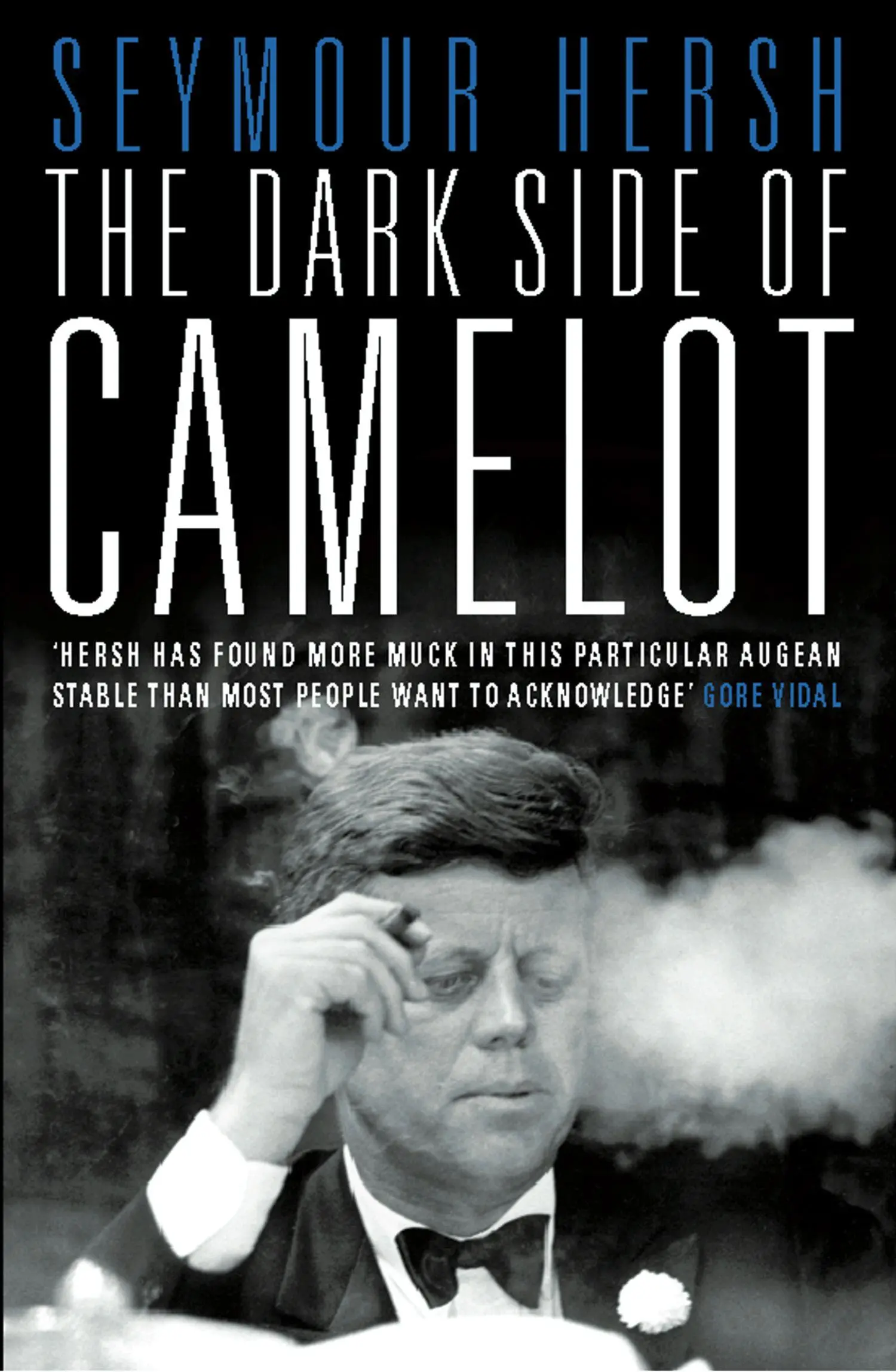
- Название:The Dark Side of Camelot
- Автор:
- Жанр:
- Год:неизвестен
- ISBN:нет данных
- Рейтинг книги:5 / 5. Голосов: 1
-
Избранное:Добавить в избранное
- Отзывы:
-
Ваша оценка:
The Dark Side of Camelot: краткое содержание, описание и аннотация
Предлагаем к чтению аннотацию, описание, краткое содержание или предисловие (зависит от того, что написал сам автор книги «The Dark Side of Camelot»). Если вы не нашли необходимую информацию о книге — напишите в комментариях, мы постараемся отыскать её.
The Dark Side of Camelot — читать онлайн ознакомительный отрывок
Ниже представлен текст книги, разбитый по страницам. Система сохранения места последней прочитанной страницы, позволяет с удобством читать онлайн бесплатно книгу «The Dark Side of Camelot», без необходимости каждый раз заново искать на чём Вы остановились. Поставьте закладку, и сможете в любой момент перейти на страницу, на которой закончили чтение.
Интервал:
Закладка:
One uncontested fact is that Joe Kennedy, through his liquor importing activities, defied all the risks and all the gossip—a defiance his son Jack would emulate in later years—by doing retail liquor business with the most notorious organized crime families throughout the post-Prohibition 1930s and well into the 1940s.
The most direct assertion of Kennedy’s involvement in bootlegging came from Frank Costello, the most powerful Mafia boss of the 1940s and 1950s, who sought in his later years to cast himself as a successful businessman. In February 1973, at the age of eighty-two, Costello decided to begin telling his life story to Peter Maas, the prize-winning New York journalist. Ten days after he began, he suffered a heart seizure and died, before Maas could fully explore the Kennedy-Costello relationship. Maas later told the New York Times that Costello had confided that he and Kennedy had been “partners” in the bootleg liquor business during Prohibition—a partnership that began, Costello said, after Kennedy sought him out and asked for his help. In an interview for this book, Maas said that Costello specifically recalled arranging for the delivery by sea of bootleg scotch to a Cape Cod beach party celebrating the tenth reunion of Joe Kennedy’s Harvard class of 1912. “We were together in the liquor business,” Costello told Maas, adding that Kennedy was responsible for the shipping of liquor to the United States from abroad.
Similarly, in his 1983 memoir, A Man of Honor , Joseph Bonanno, the retired New York Mafia boss, said that Costello always told him, “and I have no reason to doubt it, that during Prohibition he and Joe Kennedy of Boston were partners in the liquor business.… I would sometimes go to Sag Harbor, Long Island, in the summer. This was one of the coves, so I was told, that the Kennedy people used to transport whiskey during Prohibition.” *
Some of Joe Kennedy’s hired hands—those silent men whose names were appropriated for Kennedy’s buying and selling of real estate and stock—also told me their secret stories about the Kennedy link to Costello. Harold E. Clancy of South Boston, one of the few Joe Kennedy employees still alive in the mid-1990s, said in an interview for this book that it was commonly supposed by the staff that Kennedy and Costello worked together during Prohibition. Kennedy “had trucks and he also had boats,” Clancy said. “I heard anecdotes, rumors, and stories of bringing Haig & Haig scotch from Canada to Cape Cod and to Carson’s Beach in South Boston.” Another senior Kennedy aide once told him, Clancy recalled, that Costello, who made big money in the early 1930s running slot machines in New York and New Orleans, once “tried to interest the ambassador [Kennedy] in buying into the company that made the machines, but he was too smart.” (The slot machines were manufactured in Chicago by a firm controlled by the Capone syndicate.)
Clancy was recruited by Kennedy for his personal staff in the late 1950s, after spending years as an investigative reporter and editor for the Boston Traveler . He told me that the more senior members of Kennedy’s staff would share cryptic stories of Kennedy’s derring-do. Many involved Kennedy’s willingness to stand up to organized crime shakedowns in the years after Prohibition, when he was heavily involved in the legitimate sale and shipping of liquor. Kennedy, for example, was said to have hired “people from Murder, Incorporated” to deal with gangster-led unions that were threatening labor trouble. “I knew,” Clancy told me, “that Joe had hired some very hard cases to deal with these gangsters who were in control of unions and giving him a hard time.” Clancy provided no further details. *
Yet another suggestion of an early Kennedy connection to bootlegging came from a 1996 interview with Q. Byrum Hurst, an attorney in Hot Springs, Arkansas, who for more than twenty years represented Owney Madden, the notorious gangster, until Madden’s death in 1965. Madden, born in England, had in his youth been a sadistic killer in New York City, but he emerged in the 1920s as a sophisticated racketeer who moved as an equal among the crooked politicians and major crime figures along the East Coast. He ended his career as a Hot Springs casino operator, whose facilities—never challenged by local police—were always available for criminal leaders needing a quiet retreat. “Owney and Joe Kennedy were partners in the bootleg business for a number of years,” said Hurst. “I discussed the Kennedy partnership with him many times.… Owney controlled all the nightclubs in New York then. He ran New York more than anyone in the 1920s, and Joe wanted the outlets for his liquor.” Hurst, who served in the Arkansas state senate for more than twenty years, added that Madden “told me he valued Kennedy’s business judgment. He recognized Kennedy’s brains.”
Another insider, Abraham Lincoln Marovitz of Chicago, who represented many leading organized crime figures before beginning a forty-year career as a local and federal court judge in Chicago, also insisted that Joe Kennedy had been a bootlegger. “I know about that era,” the ninety-two-year-old Marovitz said in an interview for this book. “I represented some people. Kennedy was bootlegging out there in New England, and he knew all these guys. He had mob connections. Kennedy couldn’t have operated the way he did without mob approval. They’d have knocked him off, too.” Marovitz, a longtime associate of legendary Chicago mayor Richard J. Daley, was appointed a U.S. district court judge in 1963 by President John F. Kennedy.
There is further anecdotal evidence alleging that Kennedy was trying to profit, as were scores of other bootleggers, in the huge shipments of illicit scotch and gin that were off-loaded from ships anchored off the beaches of Massachusetts south of Boston. The liquor would then be trucked in convoys via nearby Brockton to New York City, where it could fetch higher prices than in Boston. The arrival of the first of the so-called rum fleets in 1923 was extensively reported by leading newspapers, including the New York Times .
In 1985 a New Jersey journalist, Mark A. Stuart, an assistant editor of the Newark Record , published a biography of Longy Zwillman in which he described Joe Kennedy’s rage at Zwillman for Zwillman’s involvement, so Kennedy believed, in the hijacking of a truck convoy of Kennedy-financed bootleg whiskey in 1923. The Stuart biography quoted Joseph Reinfeld, Zwillman’s bootlegging partner, explaining that “I told Joe Kennedy that his shipment, the one that was hijacked outside of Brockton … couldn’t have been done by one of our people. I don’t think he believed me.… [Kennedy] said it must have been that punk kid Zwillman, making a deal to hijack his whiskey, … said he’d get Longy if it was the last thing he did.” *
A description of the hijacking that suggested that Reinfeld was right in denying involvement was provided by Meyer Lansky to three Israeli journalists, Dennis Eisenberg, Uri Dan, and Eli Landau. They published a sympathetic biography of Lansky in 1979, based in part on extensive interviews. Lansky was then living quietly in Israel and trying to avoid extradition to the United States. In a chapter entitled “The Feud with Joseph Kennedy,” Lansky and his longtime associate Joseph “Doc” Stacher claimed that their organization—and not Zwillman—was responsible for the hijacking, which they recalled as taking place four years later, in 1927. The subsequent shoot-out, they said, took the lives of eleven men. The whiskey had been shipped into New England from Ireland by Joe Kennedy, and Kennedy knew who was responsible for its diversion. “Kennedy lost a fortune in the hijack,” the three Israelis wrote, “and for months afterward he was beset by pleas for financial help from the widows and relatives of the killed guards who were supposed to protect the cargo.” Lansky and Stacher remained convinced, the Israeli authors wrote, that Kennedy “held his grudge” and passed on his hostility toward some organized crime bosses to his son Robert. “They were out to get us,” Lansky said at his retirement home in Tel Aviv.
Читать дальшеИнтервал:
Закладка:
Похожие книги на «The Dark Side of Camelot»
Представляем Вашему вниманию похожие книги на «The Dark Side of Camelot» списком для выбора. Мы отобрали схожую по названию и смыслу литературу в надежде предоставить читателям больше вариантов отыскать новые, интересные, ещё непрочитанные произведения.



Обсуждение, отзывы о книге «The Dark Side of Camelot» и просто собственные мнения читателей. Оставьте ваши комментарии, напишите, что Вы думаете о произведении, его смысле или главных героях. Укажите что конкретно понравилось, а что нет, и почему Вы так считаете.