Will Wiles - Plume
Здесь есть возможность читать онлайн «Will Wiles - Plume» — ознакомительный отрывок электронной книги совершенно бесплатно, а после прочтения отрывка купить полную версию. В некоторых случаях можно слушать аудио, скачать через торрент в формате fb2 и присутствует краткое содержание. Жанр: unrecognised, на английском языке. Описание произведения, (предисловие) а так же отзывы посетителей доступны на портале библиотеки ЛибКат.
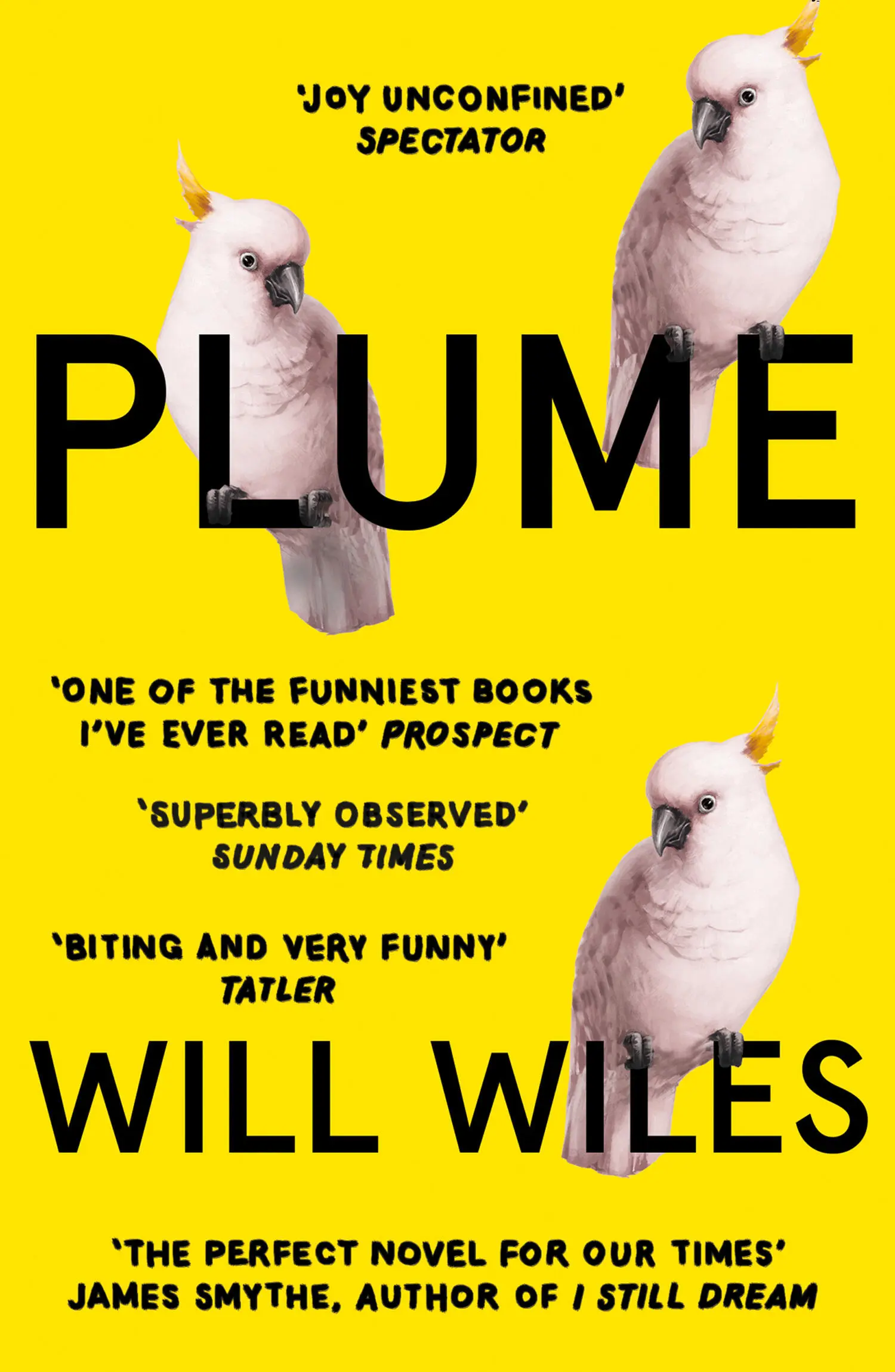
- Название:Plume
- Автор:
- Жанр:
- Год:неизвестен
- ISBN:нет данных
- Рейтинг книги:5 / 5. Голосов: 1
-
Избранное:Добавить в избранное
- Отзывы:
-
Ваша оценка:
Plume: краткое содержание, описание и аннотация
Предлагаем к чтению аннотацию, описание, краткое содержание или предисловие (зависит от того, что написал сам автор книги «Plume»). Если вы не нашли необходимую информацию о книге — напишите в комментариях, мы постараемся отыскать её.
Plume — читать онлайн ознакомительный отрывок
Ниже представлен текст книги, разбитый по страницам. Система сохранения места последней прочитанной страницы, позволяет с удобством читать онлайн бесплатно книгу «Plume», без необходимости каждый раз заново искать на чём Вы остановились. Поставьте закладку, и сможете в любой момент перейти на страницу, на которой закончили чтение.
Интервал:
Закладка:
Pierce had the top two floors of the house – a flat more than twice the size of mine. At once I wondered if he owned or rented: the usual London question. Except that’s not the London question, not exactly. The question is: How are you here? How do you make it work? How do you supply what the city demands? More than half my salary went on the rent of my dark little flat and I dreaded the next increase. I was not making it work. How, then, did Pierce? The secret, shameful side of the London question was the accompanying desire to hear that the answerer was not making it work, that they were drowning in debt or crippled by mortgage payments or the flat had untreatable toxic mould or was the site of a recent and savage string of murders. Anything that would make one’s own failure sting a little less.
The flat was, at first, as you’d expect: I was led into a short corridor lined with knee-high piles of books, magazines, loose papers and copies of the Guardian and Standard . Like my own home. I knew at once what I’d find in the living room: a wall given over to bookshelves, either Ikea or built-in, wedged with books and decorated with a self-conscious sprinkling of postcards, invitations, photographs, mementoes and so on.
Wrong. At least two upstairs rooms had been knocked through to form Pierce’s living room, which ran all the way from the front of the house to the back, with big windows at each end. This yielded a long side wall that would have been perfect for metres of shelves. But this wall was instead filled with a huge map of London.
‘Map’ is in fact not a useful term to describe what Pierce had made. In the south, Biggin Hill and Purley were at skirting board level; the northern stretch of the M25, where it runs past Waltham Abbey, was at the ceiling cornice. The outer outline of Greater London was just about recognisable, as was the blue vein of the Thames where it widened in the east, and a few exposed green patches at Richmond, Blackheath, Epping and elsewhere. The rest of the city was obscured by a thick aggregation of matter, which lifted and shivered when Pierce threw open the door and walked into the room. It was a layer of sticky notes, index cards and clippings – several layers, from the look of it, anchored by hundreds of coloured thumb-tacks. Further notes encrusted the wall to the left and right of the map; the room also contained four metal filing cabinets and the usual living-space furniture: a three-piece suite facing a telly at one end of the room, a dining table and chairs at the other.
‘Wow,’ I said.
‘The map?’ Pierce said with a pained expression. ‘I’ve been meaning to take it down.’
‘What? Why? What is it for?’
He didn’t answer, and instead waved an arm in the direction of the cracked brown leather sofa. ‘Sit. Sit. Coffee? Tea?’
‘Coffee would be great,’ I said, taking off my coat. I had to move a couple of magazines off the sofa in order to make a place for me to sit: a TLS and a Time Out . But before I sat I remembered the need for colour. Ignore Pierce’s instruction, check out the room. I approached the map.
The cacophony of information from the wall was overwhelming, and the accumulated ephemera was rarely less than five layers deep, obscuring most recognisable features. I traced the line of the river upstream until I found Pimlico. Notes on the surface included ‘Monster Tavern’, ‘Millbank Prison – Austr.’ and ‘Dolphin Square sex ring’. These were all scrawled in black and red biro on small Post-its and snippets of notepaper, some no larger than postage stamps. But beneath them was a much larger note, an index card inscribed with fat black marker pen, obviously one of the first things pinned to the wall when the map was new. To read it I had to move other accretions out of the way, revealing the letters one by one. It said: MISTRESS CITY.
‘Bick,’ Pierce said, making me jump. An orange Post-it, its adhesive exhausted, floated to the floor; I saw one or two were already there. ‘Unusual name – as in Bic ballpoints?’
‘With a k,’ I said, realising that Pierce must know the spelling perfectly well, having seen my name in emails. ‘As in Bicker. Or Bickle.’
‘Ha,’ Pierce said – definitely said, spoken, not a laugh. ‘“You talkin’ to me?”’
‘That’s why I’m here.’
‘It’s a pity it’s not Bic like the pens,’ Pierce said. He spoke with his back to me, busy making coffee in a small kitchen through an arch. ‘That would be a good name for a writer. I’m interested in nominative determinism. The idea that your name has power, that it influences what you choose to do in life. You’re, I don’t know, Mr Heal, so you become a doctor.’
Should I be recording this? I wondered. I fumbled one of my digital voice recorders out of my bag, switched it on, and dropped it into the breast pocket of my shirt. ‘Like our mutual friend,’ I said.
Pierce stopped what he had been doing – pouring milk into a little jug – and frowned over his shoulder at me.
‘F.A.Q.,’ I said, surprised he needed prompting. ‘Given that he’s all over the internet.’
‘Aha,’ Pierce said. ‘Well, that doesn’t count. It’s concocted. Francis is his middle name. Eric Francis Quin. He ditched the Eric and added the A in the nineties. The A doesn’t stand for anything.’
‘I didn’t know that,’ I said.
‘Not many people do, I think,’ Pierce said. ‘He doesn’t publicise the fact. I only know ’cause I’ve been to his flat. I saw some post there and asked about it. I think he’s embarrassed by it now. I mean, FAQs are a bit dated. A bit web one-point-oh for Francis. A bit of sleight-of-hand with the facts on some bulletin board twenty years ago and it ends up haunting him like that.’
‘Yeah, embarrassing,’ I said. I was starting to feel a bit wobbly. In the past, my legs had betrayed me when others were watching and it was a misfortune I wanted to avoid with Pierce. Especially as it was all going well so far – my lateness barely remarked upon, not having to compete with Alan, Pierce proving chatty, not the surly, laconic artist-hermit I had expected. ‘He should update it.’
‘Ha, yes,’ said Pierce. ‘S.T.F.U., maybe.’
I returned to the sofa. ‘Did Alan get any pictures of you with the map?’ I asked, full of hope. It would make a great opening-spread image, Pierce against this conspiracy-theorist palimpsest, the city and the surgeon of its dark heart. What a way into the piece. It would write itself.
Pierce approached carrying a tray, on which there were two steaming mugs, a bowl of sugar and a milk jug. This struck me as a touch genteel, the little white milk jug in particular, which isn’t bad as material goes – people acting against type. What would an ‘in character’ Oliver Pierce have offered me? Supermarket whisky? A line of speed? A punch to the throat?
Mention of the map made Pierce wince again. He settled into an armchair. ‘Yeah, he did. But do you have to talk about the map? Like I say, I’ve been meaning to get rid of it.’
‘Sorry. It’s hard to ignore. Perhaps if you told me what it was for, and why it’s not needed any more … Wait, hang on.’ I didn’t want to take any chances with this, and fished my other DVR from my bag. ‘Do you mind if I record this?’
Pierce shook his head, assenting. I turned on the DVR and set it on the coffee table between us. Two DVRs, one on the table, one in my pocket – one would have to work.
‘After I wrote Night Traffic – no, before that, even, I had been lumped in with all that psychogeography lot, Iain Sinclair and Will Self and so on, and I … well, I didn’t like that. There are so many people doing that shit now. All the fucking lost rivers, ghost Tube stations, all that shit – I’m just so fucking sick of that. It makes me want to puke. It was getting boring ten years ago, it’s just intolerable now. And the whole ideological project that goes along with it, all about tracing out the London of the Kray twins and the industrial past as a revolt against the corporate takeover of … I mean, I fucking hate what London is becoming, what it has become. Fucking hate it. This fucking shiny cloakroom for the biggest bastards in the world. But one of the reasons they come here is because of the trendiness, the grit, all that fucking mystique-sludge that’s getting dredged up from the Thames 24/7. Did you read my eels piece, with the Russian girls, the oligarchs’ daughters, Anastasia and that? They fucking loved all that. They had read Mile End Road , that’s why they got in touch with me, like I was a fucking tour guide. One of them had a copy of Ackroyd’s London biography, she brought it along. The East End, that’s what they wanted. The Blind Beggar, sarees, National Front, Jack the Ripper, they wanted all that as much as Knightsbridge and Chelsea. So what could I do? Trying to get the city back by writing about all that stuff, that was doomed. It’s just advertising, it just sucks in more cash. In the end, that’s one of the things that motivated me to write Night Traffic , to do something that wasn’t shabby-chic but terrifying, something …’
Читать дальшеИнтервал:
Закладка:
Похожие книги на «Plume»
Представляем Вашему вниманию похожие книги на «Plume» списком для выбора. Мы отобрали схожую по названию и смыслу литературу в надежде предоставить читателям больше вариантов отыскать новые, интересные, ещё непрочитанные произведения.



Обсуждение, отзывы о книге «Plume» и просто собственные мнения читателей. Оставьте ваши комментарии, напишите, что Вы думаете о произведении, его смысле или главных героях. Укажите что конкретно понравилось, а что нет, и почему Вы так считаете.