Mark Dery - Born to Be Posthumous
Здесь есть возможность читать онлайн «Mark Dery - Born to Be Posthumous» — ознакомительный отрывок электронной книги совершенно бесплатно, а после прочтения отрывка купить полную версию. В некоторых случаях можно слушать аудио, скачать через торрент в формате fb2 и присутствует краткое содержание. Жанр: unrecognised, на английском языке. Описание произведения, (предисловие) а так же отзывы посетителей доступны на портале библиотеки ЛибКат.
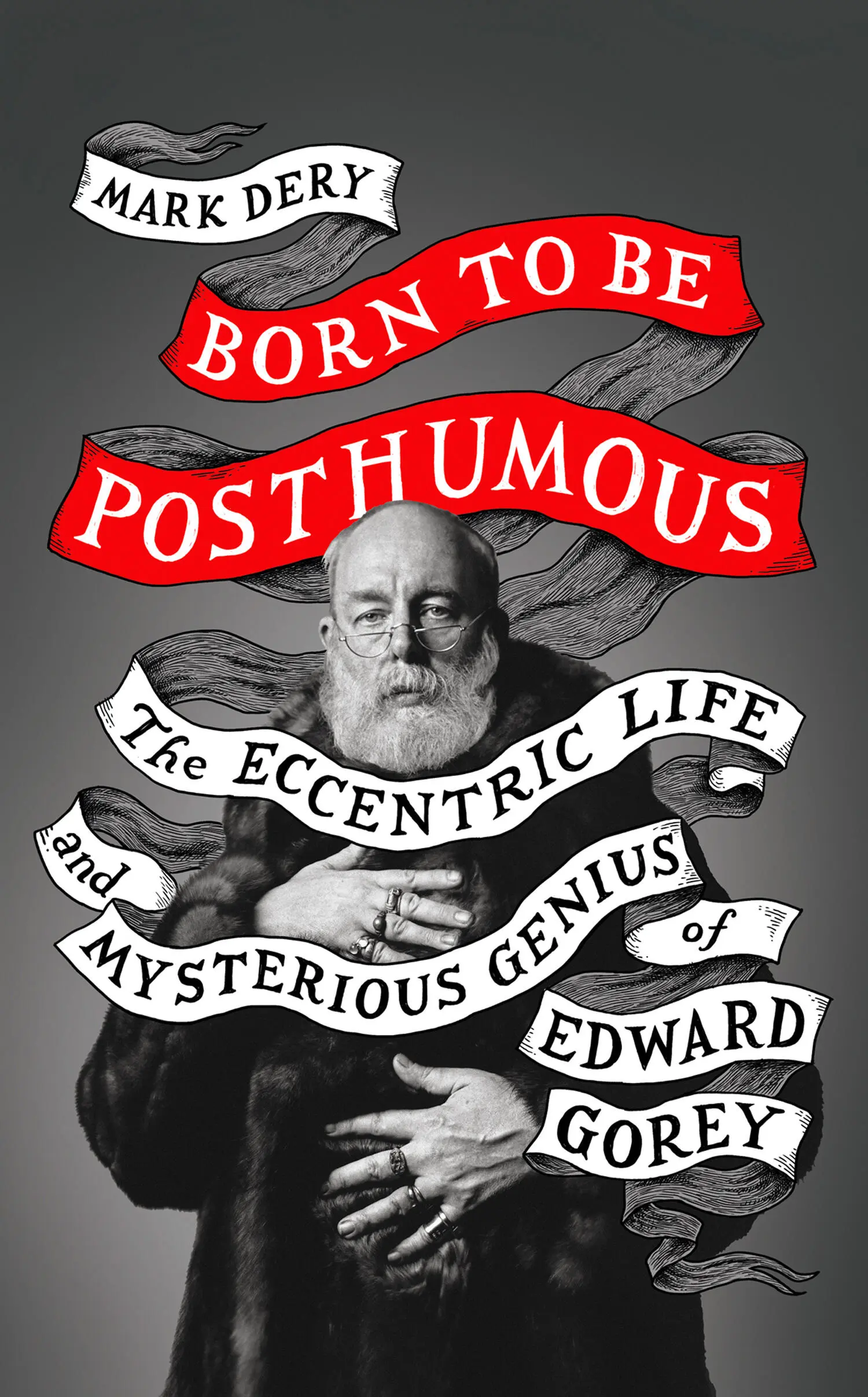
- Название:Born to Be Posthumous
- Автор:
- Жанр:
- Год:неизвестен
- ISBN:нет данных
- Рейтинг книги:3 / 5. Голосов: 1
-
Избранное:Добавить в избранное
- Отзывы:
-
Ваша оценка:
Born to Be Posthumous: краткое содержание, описание и аннотация
Предлагаем к чтению аннотацию, описание, краткое содержание или предисловие (зависит от того, что написал сам автор книги «Born to Be Posthumous»). Если вы не нашли необходимую информацию о книге — напишите в комментариях, мы постараемся отыскать её.
Born to Be Posthumous — читать онлайн ознакомительный отрывок
Ниже представлен текст книги, разбитый по страницам. Система сохранения места последней прочитанной страницы, позволяет с удобством читать онлайн бесплатно книгу «Born to Be Posthumous», без необходимости каждый раз заново искать на чём Вы остановились. Поставьте закладку, и сможете в любой момент перейти на страницу, на которой закончили чтение.
Интервал:
Закладка:
Yet despite dialogue so over the top it sounds, at times, like a John Waters remake of The Picture of Dorian Gray , Gorey’s Dugway plays are remarkable if we remember that the author was only nineteen or twenty. 13Too clever by half and too obviously derivative, they’re self-indulgent juvenilia. But the dialogue does move right along: the characters riff off each other, volleying surrealist non sequiturs. A glimmer, at least, of the Gorey we know is recognizable in his first attempts at translating his sensibility onto the page.
The Victorian, Edwardian, and Jazz Age settings he’ll revisit endlessly in his little books are already in place. He’s resurrecting nineteenth-century words long ago fallen into disuse, such as distrait and fantods , words that will become Gorey trademarks. His Anglophilia is in full flower, down to the use of British spellings. The love of nonsensical titles, preposterous names (Centaurea Teep, Mrs. Firedamp), even more preposterous place names (Galloping Fronds, Crumbling Outset), and absurd deaths (suicide by eating live coals, homicide by defenestration from a railway carriage) is amply in evidence. Speaking of names, he’s already indulging his love of pseudonyms: all the plays are penned by “Stephen Crest.”
As well, he’s exploring what will become recurrent themes: the melancholy of lost time (“THE SCENE: An antique room, obscurely decaying”); the stealthy tiptoe of our approaching mortality (symbolized for Gorey by crepuscular or autumnal or wintry light); and, of course, angst, ennui, the banal horrors of everyday life, arbitrary and unpredictable turns of events, cruelty to children (a governess kills her charge’s pet canary), the cruelty of children (a little girl bashes her big sister’s head in with a silver salver), and murder most foul (a woman shoves her friend over a balustrade). 14
His instinctive aversion to religion—specifically, Roman Catholicism—makes itself known, too. In Les Aztèques , a character jokes about painting a Crucifixion “with Christ nailed facing the cross instead of with his back to it,” which would have the happy effect of making believers “hideously embarrassed”; in the untranslatably titled L’Aüs et L’Auscultatrice , 15a man is fatally brained by a falling crucifix: an Act of God, played for laughs.
This is a far gothier, more calculatedly outrageous Gorey than we’ll ever meet in his books. He’s clearly in thrall to the Decadent movement associated with Dorian Gray , Baudelaire, and the perverse, pornographic drawings of Aubrey Beardsley. Already he knows that aestheticism, not naturalism, is the stylistic language he’ll speak for the rest of his artistic life.
Yet in one startling way, the Gorey who speaks to us in the Dugway plays is utterly unlike the Gorey we know from his little books. The plays touch repeatedly on homosexuality and gay culture, and their treatment of these subjects is startlingly frank, given his later reticence on the subject of sexuality—his or anyone’s. While obviously gay characters do have walk-on roles in his little books (and in his freelance illustration work, such as his cartoons for National Lampoon ), their sexuality is usually treated lightly, with knowing, deadpan wit. With rare exception, Gorey’s gays are Victorians or Edwardians or Jazz Age sophisticates, at a safe historical remove from the controversies of his historical moment (not to mention his private life).
In the Dugway plays, he takes us inside gay bars, something he never does in his books. There is talk, in Les Aztèques , of “chic dykes” and “violet eyed castrati” and boys dancing with boys, lilacs tucked coquettishly behind their ears. 16In one scene, we’re introduced to a guy who’s “just broken up with some boy” who owns “an enormous mauve teddy bear named Terence,” an image rich in gay symbolism. The teddy bear is borrowed from Evelyn Waugh’s eccentric gay aristocrat Sebastian Flyte, who is never without his beloved childhood companion. And mauve was synonymous in the Victorian mind with aestheticism and gay bohemia, thanks to Wilde’s signature mauve gloves; the association persists to this day in our linkage of lavender with gay culture. Gorey, who by Dugway was already well versed in Victorian literature and culture, was undoubtedly aware of the color’s symbolism. When a character in Les Aztèques observes, “Incredibly mauve sunset,” it’s hard not to imagine that Gorey isn’t sending up the Catholic conservative critic G. K. Chesterton’s famous swipe at the dandified—and, by implication, gay—aesthete who, “if his hair does not match the mauve sunset against which he is standing,…hurriedly dyes his hair another shade of mauve.” 17
In the Dugway plays, Gorey is attempting to resolve the fuzzy outline of his creative consciousness—a welter of inspirations and affinities—into a sharply defined artistic voice all his own. At the same time, like everyone crossing the threshold between adolescence and adulthood, he’s struggling toward self-definition as a person, questioning the parental wisdom and societal verities he’s grown up with. Deciding who he wants to be includes coming to terms with his sexuality, however he defines it—or doesn’t.
On the title page of Les Aztèques , Gorey uses an unattributed quotation for an epigraph. Each of us is given a theme all our own at birth, the anonymous author observes. The best we can hope for, in this life, is to “play variations on it.” Fatalistic sentiments for a twenty-year-old. Is he resignedly accepting some aspect of himself he hadn’t fully confronted until that moment, something he thought might be part of a passing phase but has come to realize is innate, irrevocable? On the cover sheet of A Scene from a Play , we read an even more enigmatic comment, an inscription to Brandt written in Gorey’s flowing script: “For Bill—Because my friendship is inarticulate and indirection is the only alternative.” He signs his inscription with the campy nom de plume he’ll use, at Harvard, in all his letters to Brandt: “Pixie.”
Gorey was formally discharged from the army on February 2, 1946, at the Separation Center at Fort Douglas, near Salt Lake City. He and Brandt maintained an affectionate, if fitful, correspondence afterward, but it seems to have trailed off after Gorey graduated from Harvard.
In later life, Gorey rarely mentioned his army years. “After more than twenty-five years of knowing him,” says Alexander Theroux in The Strange Case of Edward Gorey , his memoir of his friendship with Gorey, “I had never once heard a single reference, never mind anecdote, of his Army life, or for that matter, of the state of Utah.” 18When the subject did come up in interviews, Gorey inevitably deflected it with a quip about the mysterious incident of the dead sheep, an event straight out of The X-Files .
In March of 1968, upwards of 3,800 sheep grazing in the aptly named Skull Valley, near Dugway, died from unknown causes. Although an internal investigation conceded, in the words of one Dugway commander, “that an open-air test of a lethal chemical agent at Dugway on 13 March 1968 may have contributed to the deaths of the sheep,” the army did not, and does not, accept responsibility for the event, contending that the evidence is inconclusive. 19Whatever the cause, the incident became a flash point for outrage among antiwar activists and environmentalists—and a punch line for Gorey, who found a kind of black humor in the event.
When Dick Cavett asked him, in a 1977 interview, about his time in the army, he said, “Every time I pick up a paper and see, you know, that 12,000 more sheep died mysteriously out in Utah, I think, ‘Oh, they’re at it again.’” 20Still, his memories of Dugway can’t have been all that grim, given his tossed-off remark in a 1947 letter to Brandt: “If you ever get this, slob, write, and let me know what’s been what since we parted at Dugway (do you ever think about the place?—Rosebud [a pet name for a mutual friend at Dugway] and I find ourselves getting sentimental about it every now and then).” 21
Читать дальшеИнтервал:
Закладка:
Похожие книги на «Born to Be Posthumous»
Представляем Вашему вниманию похожие книги на «Born to Be Posthumous» списком для выбора. Мы отобрали схожую по названию и смыслу литературу в надежде предоставить читателям больше вариантов отыскать новые, интересные, ещё непрочитанные произведения.



Обсуждение, отзывы о книге «Born to Be Posthumous» и просто собственные мнения читателей. Оставьте ваши комментарии, напишите, что Вы думаете о произведении, его смысле или главных героях. Укажите что конкретно понравилось, а что нет, и почему Вы так считаете.