Mark Dery - Born to Be Posthumous
Здесь есть возможность читать онлайн «Mark Dery - Born to Be Posthumous» — ознакомительный отрывок электронной книги совершенно бесплатно, а после прочтения отрывка купить полную версию. В некоторых случаях можно слушать аудио, скачать через торрент в формате fb2 и присутствует краткое содержание. Жанр: unrecognised, на английском языке. Описание произведения, (предисловие) а так же отзывы посетителей доступны на портале библиотеки ЛибКат.
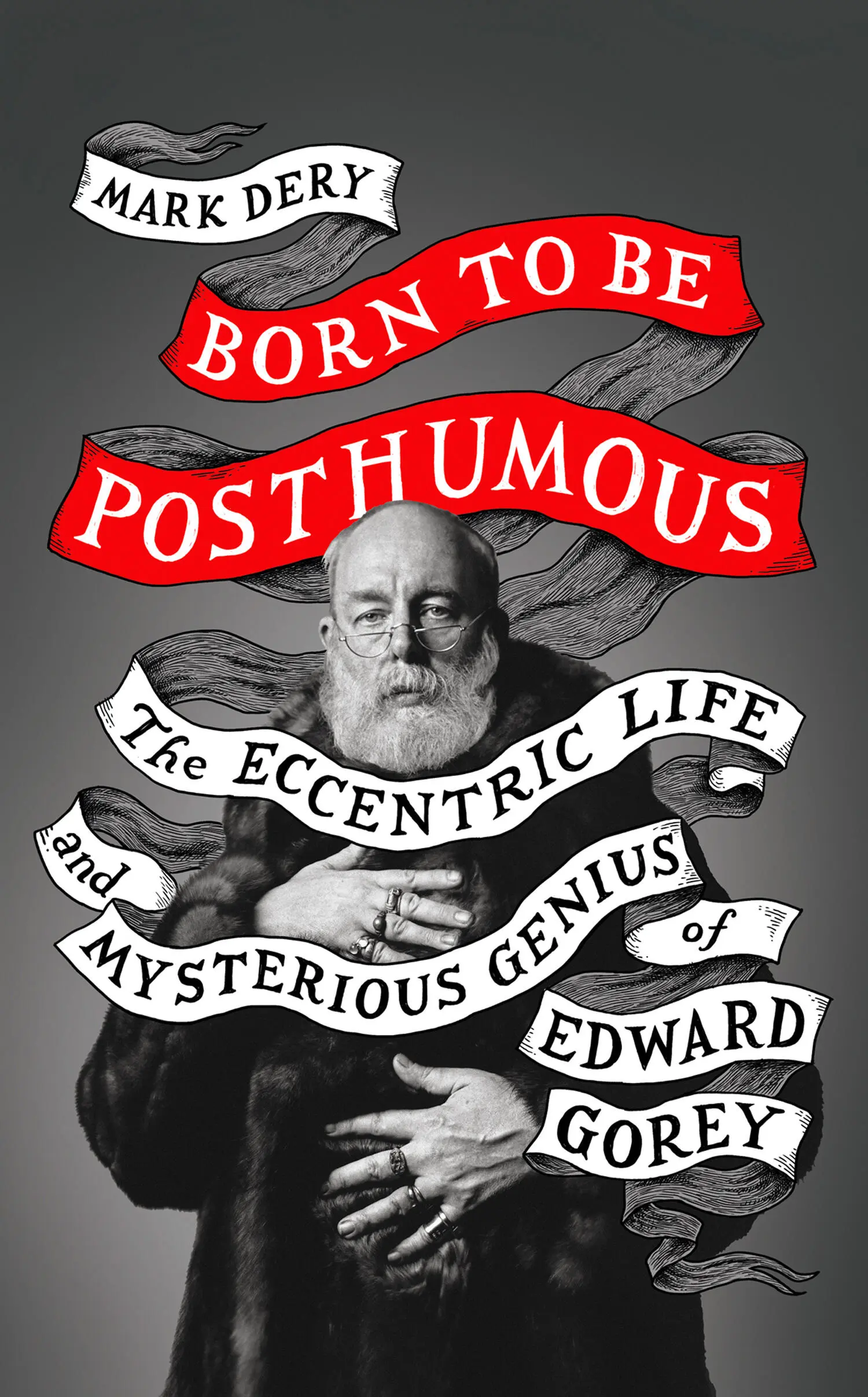
- Название:Born to Be Posthumous
- Автор:
- Жанр:
- Год:неизвестен
- ISBN:нет данных
- Рейтинг книги:3 / 5. Голосов: 1
-
Избранное:Добавить в избранное
- Отзывы:
-
Ваша оценка:
Born to Be Posthumous: краткое содержание, описание и аннотация
Предлагаем к чтению аннотацию, описание, краткое содержание или предисловие (зависит от того, что написал сам автор книги «Born to Be Posthumous»). Если вы не нашли необходимую информацию о книге — напишите в комментариях, мы постараемся отыскать её.
Born to Be Posthumous — читать онлайн ознакомительный отрывок
Ниже представлен текст книги, разбитый по страницам. Система сохранения места последней прочитанной страницы, позволяет с удобством читать онлайн бесплатно книгу «Born to Be Posthumous», без необходимости каждый раз заново искать на чём Вы остановились. Поставьте закладку, и сможете в любой момент перейти на страницу, на которой закончили чтение.
Интервал:
Закладка:
Dugway, 1944–46
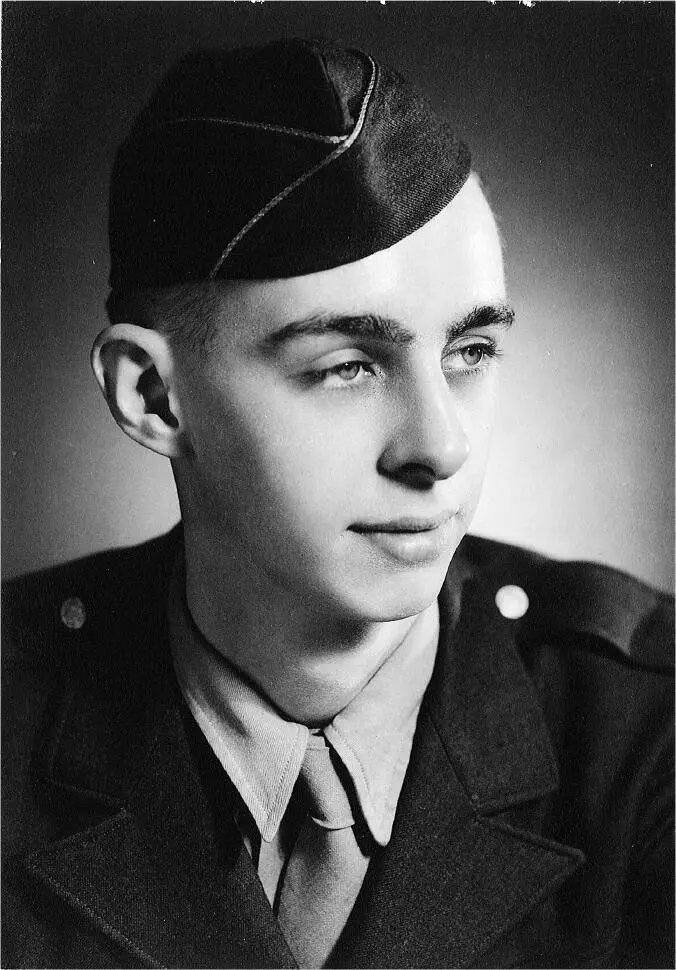
Private Gorey, US Army, circa 1943. (Elizabeth Morton, private collection)
Dugway sits about seventy-five miles southwest of Salt Lake City in a no-man’s-land the size of Rhode Island. In the wake of Pearl Harbor, the army had gone looking for a suitably godforsaken patch of land where its Chemical Warfare Service could test chemical, biological, and incendiary weapons. It found it in Dugway Valley, as far from human habitation as any place in the Lower Forty-Eight and cordoned off by mountain ranges, helpful in shielding top-secret experiments from prying eyes.
Dugway Proving Ground was “activated”—officially opened—on March 1, 1942; when Gorey arrived, a little more than two years later, it still had a ramshackle, frontier feel. The high-security areas devoted to top-secret research and testing would’ve been off-limits to Gorey, restricting him to a cluster of buildings about the size of a large city block, maybe two blocks at best.
All around lay wastelands: salt flats, sand dunes, and, from the base to the jagged mountains rearing up to the north and south, the never-ending desert, tufted with saltbush and sagebrush. The stillness was profound, a ringing in the mind. The sky was painfully clear, by day a vaulted blue vastness, at night a black dome powdered with stars.
Not for nothing was the base’s mimeographed newspaper called The Sandblast . “Dust from the local sand dunes, augmented by ancient lake-bed deposits (Lake Bonneville) and volcanic ash beds, pervaded everything each time the wind blew, which was most of the time,” a former Dugwayite recalled. 1New arrivals were greeted with the cheerful salutation, scrawled on the MP gatehouse, “Abandon hope, all ye who enter here,” until top brass caught wind of the offending phrase and ordered it removed. 2
Gorey was not enamored of Dugway. “It was a ghastly place, with the desert looming in every direction, so we kept ourselves sloshed on tequila, which wasn’t rationed,” he recalled in 1984. “The only thing the Army did for me was delay my going to college until I was twenty-one, and that I am grateful for.” 3His daily routine, as company clerk—technician fourth grade in the 9770th Technical Service Unit, in armyspeak—didn’t exactly challenge Camp Grant’s all-time high scorer on the army IQ test. He typed military correspondence, sorted mail, and kept the company’s books. “There was this one company: it had all of three people,” he remembered. “One man was in jail, one was in the hospital and one was AWOL for the entire time I was there. But every morning I had to type out this idiot report on the company’s progress.” 4
It seems not to have occurred to Gorey, at the time, that swilling tequila and filing absurdist reports was preferable to crawling on your belly through the malarial swamps of some Pacific atoll under withering fire from the Japanese or rotting in a German POW camp. You had hot chow, cold beer—hell, even a bowling alley—and weekend passes to Salt Lake City. Best of all, your chances of dying were next to nil.
Of course, Ted had to grouse. His image, well defined by the time he arrived at Dugway, required that he do his best impression of Algernon Moncrieff from The Importance of Being Earnest , distraught at the impossibility of finding cucumber sandwiches in the middle of the desert. There’s no way of knowing how much of his horror was genuine and how much of it was part of a studied pose.
Gorey’s time at Dugway wasn’t all lugubrious attitudinizing. Relief arrived in the form of a dark-haired, bespectacled Spokane native named Bill Brandt. A gifted pianist and aspiring composer, Brandt was Dug-way’s librarian of classified materials, an assignment that freed him, on weekends, to work on his composing and counterpoint studies. (He would go on to a distinguished career as a professor of music at Washington State University.) “Bill was assigned to the Chemical Warfare Division and Gorey was assigned as company clerk,” Brandt’s wife, Jan, recalled. “Bill had to go to him to order supplies and one day found him reading an avant-garde book. Bill said, ‘Oh! You’re reading one of my favorite books.’ A conversation started and they found they had many interests in common.” 5
Five years younger than Brandt, Gorey impressed the older man “as a spare, gawky … boy who played with words,” Jan remembers. Brandt, too, had a quick wit and a knack for wordplay—specifically, puns. Brandt’s own recollection, in an unpublished memoir, of his first encounter with the “new company clerk” portrays Gorey as “a slim, blond man, younger than I, who, I discovered, was literate, in contrast to the professional chemists or old Army types that made up the rest of the outfit. He had actually read the poetry of T. S. Eliot, and Somerset Maugham’s novels!” 6
Ted and Bill bonded over their shared interest in Eliot, classical music, and the movies. When Gorey came back from furlough in Chicago with Adolf Busch’s four-record set of Bach’s Brandenburg Concertos , he and Brandt commandeered the phonograph in the post library and listened to it “a couple of times late in the evening, when the others in the place had gone.” 7
Often, they’d work on creative projects. “I copied music, read, and composed while Gorey wrote the too, too decadent little plays,” remembers Brandt, “or drew the equally decadent Victorians that he later became famous for.” At some point, Gorey painted a cover illustration for Brandt’s unpublished Quintet for Piano and String Quartet, op. 11 (1943), a whimsical depiction of Harlequin in a piebald body stocking, lounging in a lunar emptiness that suggests Gorey’s idea of Dugway Valley. Overhead, fireworks whizbang against the night sky, a white-on-black fantasia of streaks and curlicues and chrysanthemum bursts. From Harlequin’s rainbow-colored costume to the naïf, Chagall-ish looseness of the rendering, it’s poles apart from the precise, sharp-nibbed aesthetic of Gorey’s little books.
In time, their peas-in-a-pod rapport, artsiness, and manifest lack of interest in barhopping and skirt chasing in Salt Lake City invited the suspicion that Gorey and Brandt were more than good buddies. “Most of the other servicemen thought they were both gay,” says Jan, “but Gorey never put his foot under the bathroom partition,” so to speak. Brandt took Gorey’s sexuality, or what he perceived to be Gorey’s sexuality, in stride: “He was gay, but at that time, naive as I was, I had no idea what that meant and treated him just like anyone else, and his relationship to me was equally straight.”
At Dugway, Gorey tried his hand at writing, hammering out a full-length play and a handful of one-acts. “The first things that I wrote seriously, for some unknown reason, were plays,” he recalled. “I suppose there must have been some strong dramatic urge at the time. I never tried to get them put on or anything. [T]hey were all very, very exotic and … pretentious, in a way. In another way, I don’t think they were as pretentious as they might have been. I mean, I didn’t go in for endless, dopey, poetic monologues for people; they moved right along. They were rather bizarre, I think, and were rather overwritten …” 8Elsewhere, he added, “I always wonder what I thought I was doing then, because what I was writing was clearly unpresentable—closet dramas, for instance. I had very little sense of purpose, which was just as well, because then I wasn’t disappointed about the outcome.” 9
Gorey’s Dugway plays are indeed overwrought. All but one of their titles—typical Gorey kookiness such as Une Lettre des Lutins (a letter from the elves) and Les Serpents de Papier de Soie (the tissue-paper snakes)—are in French, though the plays themselves are in English, with the exception of a five-page effort untranslatably titled Les Scaphandreurs . The dialogue is sprinkled with French phrases, in the manner of Gorey’s correspondence at the time. The characters have names like Piglet Rossetti and Basil Prawn and dress more or less the way you’d imagine people named Piglet Rossetti and Basil Prawn would dress—in purple espadrilles and “mauve satin ribbons [that] cling like bedraggled birds to bosom, thigh, and wrist.” 10They exclaim—there’s a lot of exclaiming—things like “How unutterably mad!” and “How hideously un- chic ,” and, of course, “Divine!” 11When they’re not exclaiming, they’re declaiming, in prose so purple it would bring a blush to Walter Pater’s cheek: “Have you ever danced naked before a lesbian sodden with absinthe?” 12
Читать дальшеИнтервал:
Закладка:
Похожие книги на «Born to Be Posthumous»
Представляем Вашему вниманию похожие книги на «Born to Be Posthumous» списком для выбора. Мы отобрали схожую по названию и смыслу литературу в надежде предоставить читателям больше вариантов отыскать новые, интересные, ещё непрочитанные произведения.



Обсуждение, отзывы о книге «Born to Be Posthumous» и просто собственные мнения читателей. Оставьте ваши комментарии, напишите, что Вы думаете о произведении, его смысле или главных героях. Укажите что конкретно понравилось, а что нет, и почему Вы так считаете.