Gustave Flaubert - Gustave Flaubert - Madame Bovary, Salammbô & Sentimental Education (3 Books in One Edition)
Здесь есть возможность читать онлайн «Gustave Flaubert - Gustave Flaubert - Madame Bovary, Salammbô & Sentimental Education (3 Books in One Edition)» — ознакомительный отрывок электронной книги совершенно бесплатно, а после прочтения отрывка купить полную версию. В некоторых случаях можно слушать аудио, скачать через торрент в формате fb2 и присутствует краткое содержание. Жанр: unrecognised, на английском языке. Описание произведения, (предисловие) а так же отзывы посетителей доступны на портале библиотеки ЛибКат.
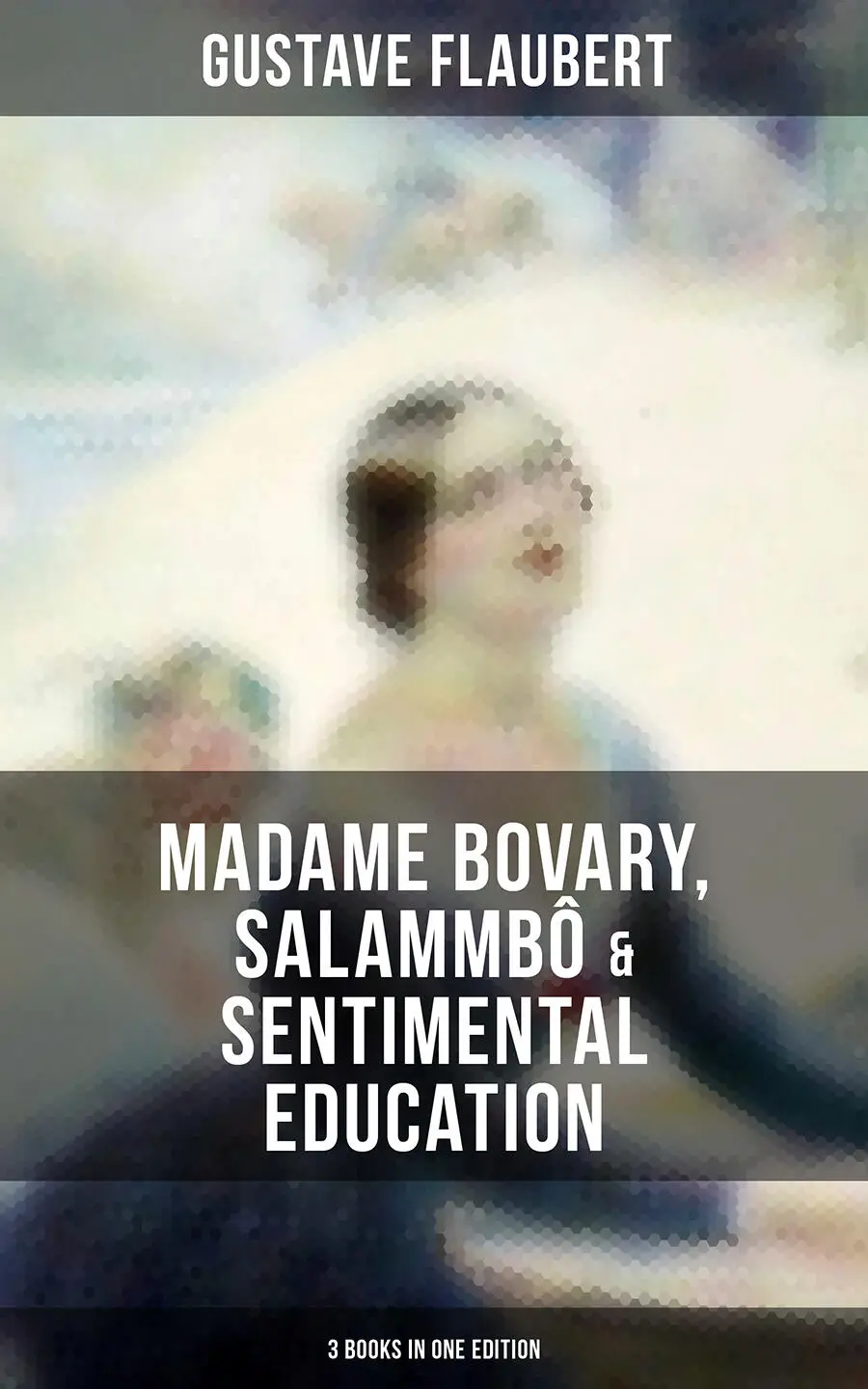
- Название:Gustave Flaubert: Madame Bovary, Salammbô & Sentimental Education (3 Books in One Edition)
- Автор:
- Жанр:
- Год:неизвестен
- ISBN:нет данных
- Рейтинг книги:4 / 5. Голосов: 1
-
Избранное:Добавить в избранное
- Отзывы:
-
Ваша оценка:
Gustave Flaubert: Madame Bovary, Salammbô & Sentimental Education (3 Books in One Edition): краткое содержание, описание и аннотация
Предлагаем к чтению аннотацию, описание, краткое содержание или предисловие (зависит от того, что написал сам автор книги «Gustave Flaubert: Madame Bovary, Salammbô & Sentimental Education (3 Books in One Edition)»). Если вы не нашли необходимую информацию о книге — напишите в комментариях, мы постараемся отыскать её.
Gustave Flaubert ( 1821 – 1880) was an influential French writer who is counted among the greatest novelists in Western literature. He is known especially for his first published novel, Madame Bovary (1857), for his Correspondence, and for his scrupulous devotion to his art and style.
Gustave Flaubert: Madame Bovary, Salammbô & Sentimental Education (3 Books in One Edition) — читать онлайн ознакомительный отрывок
Ниже представлен текст книги, разбитый по страницам. Система сохранения места последней прочитанной страницы, позволяет с удобством читать онлайн бесплатно книгу «Gustave Flaubert: Madame Bovary, Salammbô & Sentimental Education (3 Books in One Edition)», без необходимости каждый раз заново искать на чём Вы остановились. Поставьте закладку, и сможете в любой момент перейти на страницу, на которой закончили чтение.
Интервал:
Закладка:
“Monsieur Guillaumin”; and with the utmost coolness she added, “I don’t trust him overmuch. Notaries have such a bad reputation. Perhaps we ought to consult — we only know — no one.”
“Unless Leon —” replied Charles, who was reflecting. But it was difficult to explain matters by letter. Then she offered to make the journey, but he thanked her. She insisted. It was quite a contest of mutual consideration. At last she cried with affected waywardness —
“No, I will go!”
“How good you are!” he said, kissing her forehead.
The next morning she set out in the “Hirondelle” to go to Rouen to consult Monsieur Leon, and she stayed there three days.
18 The worker lives by working, do what he will.
Chapter Three
Table of Contents
They were three full, exquisite days — a true honeymoon. They were at the Hotel-de-Boulogne, on the harbour; and they lived there, with drawn blinds and closed doors, with flowers on the floor, and iced syrups were brought them early in the morning.
Towards evening they took a covered boat and went to dine on one of the islands. It was the time when one hears by the side of the dockyard the caulking-mallets sounding against the hull of vessels. The smoke of the tar rose up between the trees; there were large fatty drops on the water, undulating in the purple colour of the sun, like floating plaques of Florentine bronze.
They rowed down in the midst of moored boats, whose long oblique cables grazed lightly against the bottom of the boat. The din of the town gradually grew distant; the rolling of carriages, the tumult of voices, the yelping of dogs on the decks of vessels. She took off her bonnet, and they landed on their island.
They sat down in the low-ceilinged room of a tavern, at whose door hung black nets. They ate fried smelts, cream and cherries. They lay down upon the grass; they kissed behind the poplars; and they would fain, like two Robinsons, have lived for ever in this little place, which seemed to them in their beatitude the most magnificent on earth. It was not the first time that they had seen trees, a blue sky, meadows; that they had heard the water flowing and the wind blowing in the leaves; but, no doubt, they had never admired all this, as if Nature had not existed before, or had only begun to be beautiful since the gratification of their desires.
At night they returned. The boat glided along the shores of the islands. They sat at the bottom, both hidden by the shade, in silence. The square oars rang in the iron thwarts, and, in the stillness, seemed to mark time, like the beating of a metronome, while at the stern the rudder that trailed behind never ceased its gentle splash against the water.
Once the moon rose; they did not fail to make fine phrases, finding the orb melancholy and full of poetry. She even began to sing —
“One night, do you remember, we were sailing,” etc.
Her musical but weak voice died away along the waves, and the winds carried off the trills that Leon heard pass like the flapping of wings about him.
She was opposite him, leaning against the partition of the shallop, through one of whose raised blinds the moon streamed in. Her black dress, whose drapery spread out like a fan, made her seem more slender, taller. Her head was raised, her hands clasped, her eyes turned towards heaven. At times the shadow of the willows hid her completely; then she reappeared suddenly, like a vision in the moonlight.
Leon, on the floor by her side, found under his hand a ribbon of scarlet silk. The boatman looked at it, and at last said —
“Perhaps it belongs to the party I took out the other day. A lot of jolly folk, gentlemen and ladies, with cakes, champagne, cornets — everything in style! There was one especially, a tall handsome man with small moustaches, who was that funny! And they all kept saying, ‘Now tell us something, Adolphe — Dolpe,’ I think.”
She shivered.
“You are in pain?” asked Leon, coming closer to her.
“Oh, it’s nothing! No doubt, it is only the night air.”
“And who doesn’t want for women, either,” softly added the sailor, thinking he was paying the stranger a compliment.
Then, spitting on his hands, he took the oars again.
Yet they had to part. The adieux were sad. He was to send his letters to Mere Rollet, and she gave him such precise instructions about a double envelope that he admired greatly her amorous astuteness.
“So you can assure me it is all right?” she said with her last kiss.
“Yes, certainly.”
“But why,” he thought afterwards as he came back through the streets alone, “is she so very anxious to get this power of attorney?”
Chapter Four
Table of Contents
Leon soon put on an air of superiority before his comrades, avoided their company, and completely neglected his work.
He waited for her letters; he re-read them; he wrote to her. He called her to mind with all the strength of his desires and of his memories. Instead of lessening with absence, this longing to see her again grew, so that at last on Saturday morning he escaped from his office.
When, from the summit of the hill, he saw in the valley below the church-spire with its tin flag swinging in the wind, he felt that delight mingled with triumphant vanity and egoistic tenderness that millionaires must experience when they come back to their native village.
He went rambling round her house. A light was burning in the kitchen. He watched for her shadow behind the curtains, but nothing appeared.
Mere Lefrancois, when she saw him, uttered many exclamations. She thought he “had grown and was thinner,” while Artemise, on the contrary, thought him stouter and darker.
He dined in the little room as of yore, but alone, without the tax-gatherer; for Binet, tired of waiting for the “Hirondelle,” had definitely put forward his meal one hour, and now he dined punctually at five, and yet he declared usually the rickety old concern “was late.”
Leon, however, made up his mind, and knocked at the doctor’s door. Madame was in her room, and did not come down for a quarter of an hour. The doctor seemed delighted to see him, but he never stirred out that evening, nor all the next day.
He saw her alone in the evening, very late, behind the garden in the lane; in the lane, as she had the other one! It was a stormy night, and they talked under an umbrella by lightning flashes.
Their separation was becoming intolerable. “I would rather die!” said Emma. She was writhing in his arms, weeping. “Adieu! adieu! When shall I see you again?”
They came back again to embrace once more, and it was then that she promised him to find soon, by no matter what means, a regular opportunity for seeing one another in freedom at least once a week. Emma never doubted she should be able to do this. Besides, she was full of hope. Some money was coming to her.
On the strength of it she bought a pair of yellow curtains with large stripes for her room, whose cheapness Monsieur Lheureux had commended; she dreamed of getting a carpet, and Lheureux, declaring that it wasn’t “drinking the sea,” politely undertook to supply her with one. She could no longer do without his services. Twenty times a day she sent for him, and he at once put by his business without a murmur. People could not understand either why Mere Rollet breakfasted with her every day, and even paid her private visits.
Читать дальшеИнтервал:
Закладка:
Похожие книги на «Gustave Flaubert: Madame Bovary, Salammbô & Sentimental Education (3 Books in One Edition)»
Представляем Вашему вниманию похожие книги на «Gustave Flaubert: Madame Bovary, Salammbô & Sentimental Education (3 Books in One Edition)» списком для выбора. Мы отобрали схожую по названию и смыслу литературу в надежде предоставить читателям больше вариантов отыскать новые, интересные, ещё непрочитанные произведения.











Обсуждение, отзывы о книге «Gustave Flaubert: Madame Bovary, Salammbô & Sentimental Education (3 Books in One Edition)» и просто собственные мнения читателей. Оставьте ваши комментарии, напишите, что Вы думаете о произведении, его смысле или главных героях. Укажите что конкретно понравилось, а что нет, и почему Вы так считаете.