Leo Tolstoy - WAR & PEACE
Здесь есть возможность читать онлайн «Leo Tolstoy - WAR & PEACE» — ознакомительный отрывок электронной книги совершенно бесплатно, а после прочтения отрывка купить полную версию. В некоторых случаях можно слушать аудио, скачать через торрент в формате fb2 и присутствует краткое содержание. Жанр: unrecognised, на английском языке. Описание произведения, (предисловие) а так же отзывы посетителей доступны на портале библиотеки ЛибКат.
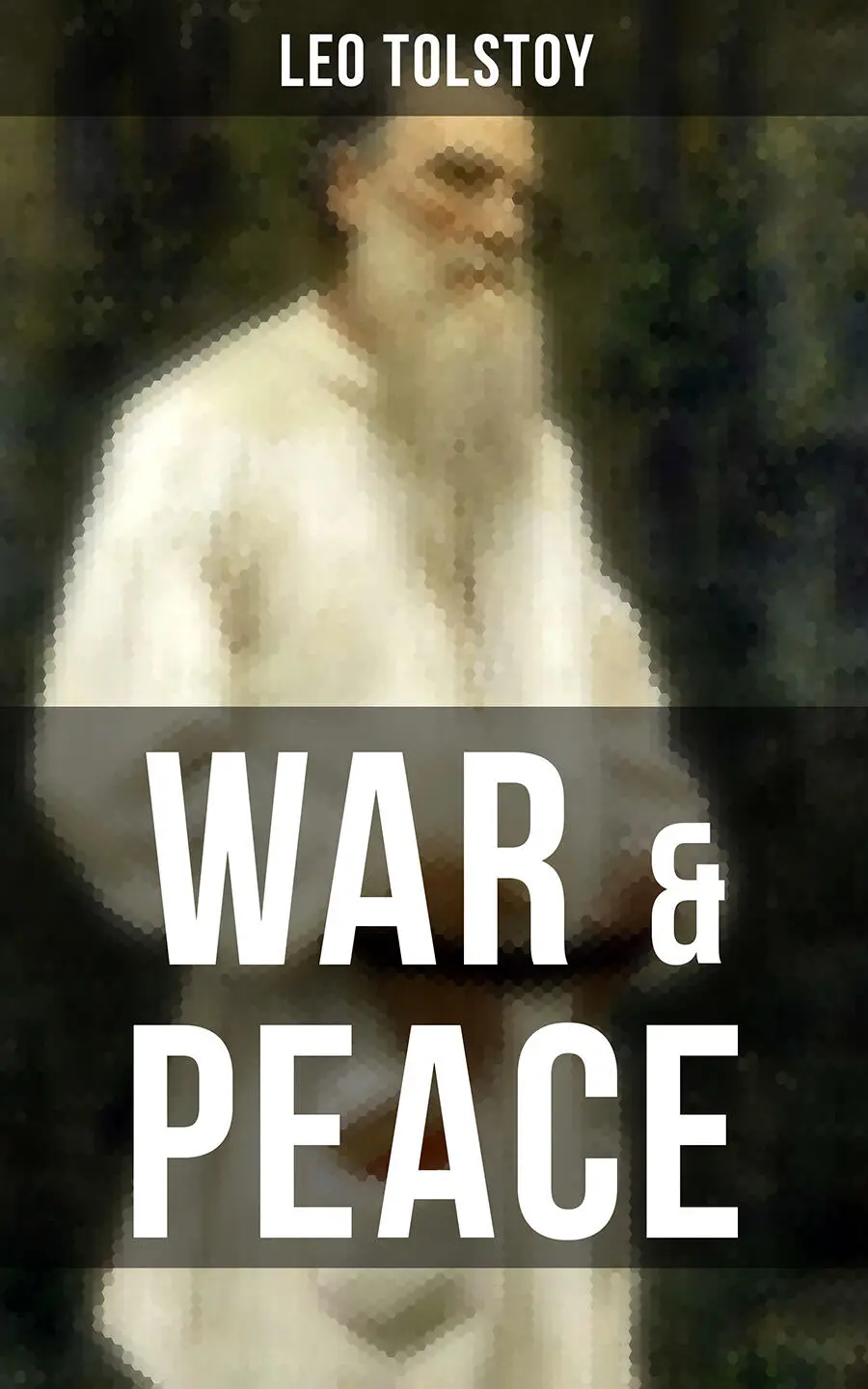
- Название:WAR & PEACE
- Автор:
- Жанр:
- Год:неизвестен
- ISBN:нет данных
- Рейтинг книги:5 / 5. Голосов: 1
-
Избранное:Добавить в избранное
- Отзывы:
-
Ваша оценка:
WAR & PEACE: краткое содержание, описание и аннотация
Предлагаем к чтению аннотацию, описание, краткое содержание или предисловие (зависит от того, что написал сам автор книги «WAR & PEACE»). Если вы не нашли необходимую информацию о книге — напишите в комментариях, мы постараемся отыскать её.
WAR & PEACE — читать онлайн ознакомительный отрывок
Ниже представлен текст книги, разбитый по страницам. Система сохранения места последней прочитанной страницы, позволяет с удобством читать онлайн бесплатно книгу «WAR & PEACE», без необходимости каждый раз заново искать на чём Вы остановились. Поставьте закладку, и сможете в любой момент перейти на страницу, на которой закончили чтение.
Интервал:
Закладка:
Bilibin liked conversation as he liked work, only when it could be made elegantly witty. In society he always awaited an opportunity to say something striking and took part in a conversation only when that was possible. His conversation was always sprinkled with wittily original, finished phrases of general interest. These sayings were prepared in the inner laboratory of his mind in a portable form as if intentionally, so that insignificant society people might carry them from drawing room to drawing room. And, in fact, Bilibin’s witticisms were hawked about in the Viennese drawing rooms and often had an influence on matters considered important.
His thin, worn, sallow face was covered with deep wrinkles, which always looked as clean and well washed as the tips of one’s fingers after a Russian bath. The movement of these wrinkles formed the principal play of expression on his face. Now his forehead would pucker into deep folds and his eyebrows were lifted, then his eyebrows would descend and deep wrinkles would crease his cheeks. His small, deep-set eyes always twinkled and looked out straight.
“Well, now tell me about your exploits,” said he.
Bolkonski, very modestly without once mentioning himself, described the engagement and his reception by the Minister of War.
“They received me and my news as one receives a dog in a game of skittles,” said he in conclusion.
Bilibin smiled and the wrinkles on his face disappeared.
“Cependant, mon cher,” he remarked, examining his nails from a distance and puckering the skin above his left eye, “malgre la haute estime que je professe pour the Orthodox Russian army, j’avoue que votre victoire n’est pas des plus victorieuses.” *
* “But my dear fellow, with all my respect for the Orthodox
Russian army, I must say that your victory was not
particularly victorious.”
He went on talking in this way in French, uttering only those words in Russian on which he wished to put a contemptuous emphasis.
“Come now! You with all your forces fall on the unfortunate Mortier and his one division, and even then Mortier slips through your fingers! Where’s the victory?”
“But seriously,” said Prince Andrew, “we can at any rate say without boasting that it was a little better than at Ulm…”
“Why didn’t you capture one, just one, marshal for us?”
“Because not everything happens as one expects or with the smoothness of a parade. We had expected, as I told you, to get at their rear by seven in the morning but had not reached it by five in the afternoon.”
“And why didn’t you do it at seven in the morning? You ought to have been there at seven in the morning,” returned Bilibin with a smile. “You ought to have been there at seven in the morning.”
“Why did you not succeed in impressing on Bonaparte by diplomatic methods that he had better leave Genoa alone?” retorted Prince Andrew in the same tone.
“I know,” interrupted Bilibin, “you’re thinking it’s very easy to take marshals, sitting on a sofa by the fire! That is true, but still why didn’t you capture him? So don’t be surprised if not only the Minister of War but also his Most August Majesty the Emperor and King Francis is not much delighted by your victory. Even I, a poor secretary of the Russian Embassy, do not feel any need in token of my joy to give my Franz a thaler, or let him go with his Liebchen to the Prater… True, we have no Prater here…”
He looked straight at Prince Andrew and suddenly unwrinkled his forehead.
“It is now my turn to ask you ‘why?’ mon cher,” said Bolkonski. “I confess I do not understand: perhaps there are diplomatic subtleties here beyond my feeble intelligence, but I can’t make it out. Mack loses a whole army, the Archduke Ferdinand and the Archduke Karl give no signs of life and make blunder after blunder. Kutuzov alone at last gains a real victory, destroying the spell of the invincibility of the French, and the Minister of War does not even care to hear the details.”
“That’s just it, my dear fellow. You see it’s hurrah for the Tsar, for Russia, for the Orthodox Greek faith! All that is beautiful, but what do we, I mean the Austrian court, care for your victories? Bring us nice news of a victory by the Archduke Karl or Ferdinand (one archduke’s as good as another, as you know) and even if it is only over a fire brigade of Bonaparte’s, that will be another story and we’ll fire off some cannon! But this sort of thing seems done on purpose to vex us. The Archduke Karl does nothing, the Archduke Ferdinand disgraces himself. You abandon Vienna, give up its defense—as much as to say: ‘Heaven is with us, but heaven help you and your capital!’ The one general whom we all loved, Schmidt, you expose to a bullet, and then you congratulate us on the victory! Admit that more irritating news than yours could not have been conceived. It’s as if it had been done on purpose, on purpose. Besides, suppose you did gain a brilliant victory, if even the Archduke Karl gained a victory, what effect would that have on the general course of events? It’s too late now when Vienna is occupied by the French army!”
“What? Occupied? Vienna occupied?”
“Not only occupied, but Bonaparte is at Schonbrunn, and the count, our dear Count Vrbna, goes to him for orders.”
After the fatigues and impressions of the journey, his reception, and especially after having dined, Bolkonski felt that he could not take in the full significance of the words he heard.
“Count Lichtenfels was here this morning,” Bilibin continued, “and showed me a letter in which the parade of the French in Vienna was fully described: Prince Murat et tout le tremblement… You see that your victory is not a matter for great rejoicing and that you can’t be received as a savior.”
“Really I don’t care about that, I don’t care at all,” said Prince Andrew, beginning to understand that his news of the battle before Krems was really of small importance in view of such events as the fall of Austria’s capital. “How is it Vienna was taken? What of the bridge and its celebrated bridgehead and Prince Auersperg? We heard reports that Prince Auersperg was defending Vienna?” he said.
“Prince Auersperg is on this, on our side of the river, and is defending us—doing it very badly, I think, but still he is defending us. But Vienna is on the other side. No, the bridge has not yet been taken and I hope it will not be, for it is mined and orders have been given to blow it up. Otherwise we should long ago have been in the mountains of Bohemia, and you and your army would have spent a bad quarter of an hour between two fires.”
“But still this does not mean that the campaign is over,” said Prince Andrew.
“Well, I think it is. The bigwigs here think so too, but they daren’t say so. It will be as I said at the beginning of the campaign, it won’t be your skirmishing at Durrenstein, or gunpowder at all, that will decide the matter, but those who devised it,” said Bilibin quoting one of his own mots, releasing the wrinkles on his forehead, and pausing. “The only question is what will come of the meeting between the Emperor Alexander and the King of Prussia in Berlin? If Prussia joins the Allies, Austria’s hand will be forced and there will be war. If not it is merely a question of settling where the preliminaries of the new Campo Formio are to be drawn up.”
“What an extraordinary genius!” Prince Andrew suddenly exclaimed, clenching his small hand and striking the table with it, “and what luck the man has!”
“Buonaparte?” said Bilibin inquiringly, puckering up his forehead to indicate that he was about to say something witty. “Buonaparte?” he repeated, accentuating the u: “I think, however, now that he lays down laws for Austria at Schonbrunn, il faut lui faire grace de l’u! * I shall certainly adopt an innovation and call him simply Bonaparte!”
Читать дальшеИнтервал:
Закладка:
Похожие книги на «WAR & PEACE»
Представляем Вашему вниманию похожие книги на «WAR & PEACE» списком для выбора. Мы отобрали схожую по названию и смыслу литературу в надежде предоставить читателям больше вариантов отыскать новые, интересные, ещё непрочитанные произведения.








Обсуждение, отзывы о книге «WAR & PEACE» и просто собственные мнения читателей. Оставьте ваши комментарии, напишите, что Вы думаете о произведении, его смысле или главных героях. Укажите что конкретно понравилось, а что нет, и почему Вы так считаете.