Various Authors Various Authors - Talmud
Здесь есть возможность читать онлайн «Various Authors Various Authors - Talmud» — ознакомительный отрывок электронной книги совершенно бесплатно, а после прочтения отрывка купить полную версию. В некоторых случаях можно слушать аудио, скачать через торрент в формате fb2 и присутствует краткое содержание. Жанр: unrecognised, на английском языке. Описание произведения, (предисловие) а так же отзывы посетителей доступны на портале библиотеки ЛибКат.

- Название:Talmud
- Автор:
- Жанр:
- Год:неизвестен
- ISBN:нет данных
- Рейтинг книги:4 / 5. Голосов: 1
-
Избранное:Добавить в избранное
- Отзывы:
-
Ваша оценка:
Talmud: краткое содержание, описание и аннотация
Предлагаем к чтению аннотацию, описание, краткое содержание или предисловие (зависит от того, что написал сам автор книги «Talmud»). Если вы не нашли необходимую информацию о книге — напишите в комментариях, мы постараемся отыскать её.
Table of Contents
Book 1: Tract Sabbath
Book 2: Tracts Erubin, Shekalim, Rosh Hashana
Book 3: Tracts Pesachim, Yomah and Hagiga
Book 4: Tracts Betzah, Succah, Moed Katan, Taanith, Megilla and Ebel Rabbathi or Semahoth
Book 5: Tracts Aboth, Derech Eretz-Rabba, Derech Eretz-Zuta, and Baba Kama (First Gate)
Book 6: Tract Baba Kama (First Gate), Part II and Tract Baba Metzia (Middle Gate)
Book 7: Tract Baba Bathra (Last Gate)
Book 8: Tract Sanhedrin: Section Jurisprudence (Damages)
Book 9: Tracts Maccoth, Shebuoth, Eduyoth, Abuda Zara, and Horioth
Book 10: History of the Talmud
Talmud — читать онлайн ознакомительный отрывок
Ниже представлен текст книги, разбитый по страницам. Система сохранения места последней прочитанной страницы, позволяет с удобством читать онлайн бесплатно книгу «Talmud», без необходимости каждый раз заново искать на чём Вы остановились. Поставьте закладку, и сможете в любой момент перейти на страницу, на которой закончили чтение.
Интервал:
Закладка:
Suddenly it occurred to him again, that the rows of entries might have had protruding roofs, which would make communication with each other possible, hence they were enabled to make an Erub; but in the case of those houses that could not make an independent Erub, he again concluded that apertures were necessary. Finally, however, he recollected, that Mar the son of Pipidatha of Pumbaditha made an Erub for the entire city of Pumbaditha and merely excluded his straw-shed underneath the city. Hence he again concluded, that no apertures for the houses were necessary. In conclusion he said: "I see now, after all this trouble, why my master cautioned me against provoking the comment of the colleges."
" R. Simeon, however, holds, that it is sufficient, if three courts ," etc. Said R. Hama bar Guria in the name of Rabh: "The Halakha prevails according to R. Simeon." R. Itz'hak, however, said, that one house in one court is sufficient.
Asked Abayi of R. Joseph: "Whence does R. Itz'hak adduce his statement? From a tradition or an opinion?" Answered R. Joseph: What is the difference? (The Halakha prevails according to R. Simeon?) Rejoined Abayi: Shall we learn the Gemara as we do a song?
MISHNA: Should a man (on the eve of Sabbath) be at the east of his domicile and say to his son: "Place my Erub towards the west," or being at the west of his domicile say to his son: "Place my Erub towards the east": if the distance from the place where he stands to his domicile be within two thousand ells and to his Erub farther than that, he must take his Sabbath-rest at his domicile, but must not take it where his Erub is deposited; if the distance to his Erub, however, be within two thousand ells, and to his domicile farther than that, he must take his Sabbath-rest where his Erub is placed and not at his domicile. If a man has deposited his Erub within the limits (allowance of seventy and two-thirds ells) of a town, he has (legally) accomplished nothing and it counts for nothing; if he, however, deposited the Erub outside of the legal limit, be it but a single ell, whatever ground he gains in one direction, he loses in the opposite direction.
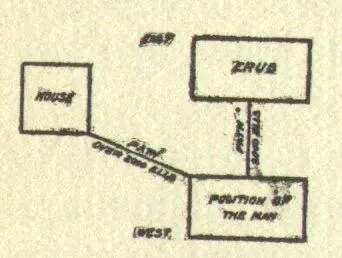
GEMARA: What is meant by "towards the east"? "Towards the east of his son" said R. Itz'hak, "and towards the west also of his son." Rabba bar R. Shila, however, says, that both "towards the east" and "towards the west" refer to the house, but the question will arise how will it be possible for the house to be farther than the Erub, because if he told his son to make an Erub there, the son must have stood between the house and the Erub? In this case, the house was diagonally opposite the place where the son stood while the Erub was directly opposite (as shown in illustration).
" If he, however, deposited the Erub outside of the legal limit , etc. Is it possible to assume, that he really overstepped the legal limit? Read: "If he placed the Erub outside of the seventy and two-thirds ells allowed the town."
" Whatever ground he gains in one direction, he loses in the opposite ." He loses only what he gains, no more? Have we not learned in a Boraitha: "If he placed his Erub within the allowance (of seventy and two-thirds ells) of the city, he has accomplished nothing and it counts for naught; if, however, he placed his Erub outside of such allowance even one ell, he loses (his right to) the whole city, because the measure of the city will be counted to him in the legal limit effected by the Erub"?
This presents no difficulty. According to the Boraitha, he loses the whole city only when the two thousand ells of his limit terminate in the centre of the city; but if they terminate at the end of the city, which is the case in our Mishna, he loses nothing, as R. Idi said in the name of R. Jehoshua ben Levi: If he measured the limit and it terminated in the centre of a town, he has only half the town; but if it terminated at the end of the town, the whole town becomes as four ells and he may complete his entire limit of two thousand ells outside of the town." R. Idi said, however: "This is merely a prophetic assertion! For what is the difference whether it terminate in the centre of the city or at the end!" Said Rabha: "This is by no means a prophetic assertion. Thou wilt learn this in the succeeding Mishna."
R. Joseph said in the name of Rami bar Abba quoting R. Huna: "If a town was standing on the steep banks of a lake and there was a partition made on the brink of the banks four ells high, the measurement of the legal limits may be commenced from that partition. If there was no partition, however, the measurement must be commenced from the entrance of the house (nearest the lake)." Said Abayi: "Why dost thou require in this case a partition four ells high? Generally four spans are sufficient!" Because usually, no fear is entertained as to the use of the place, while in this case there is constant fear of falling over the banks (hence that place cannot be taken into consideration and the measurement must be made from the houses).
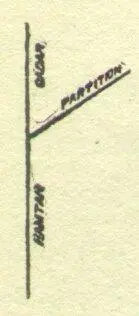
Said R. Joseph: Whence do I adduce this teaching? From the following Boraitha: "Rabbi permitted the inhabitants of Gadar to descend to Hamtan but forbade the people of Hamtan to ascend to Gadar." Why did Rabbi decree thus? We must assume, because the inhabitants of Gadar (who lived above the people of Hamtan on the slope of a mountain) made a partition at the foot of their city while the inhabitants of the city of Hamtan did not make a partition at the foot of their city; hence Gadar which had a partition was safe from falling, and the legal limit, which was measured from any part of the city included Hamtan, but the people of Hamtan, which had no partition and was consequently not safe, could measure their legal limits only from their houses and thus it did not include the city of Gadar.
When R. Dimi came from Palestine, however, he assigned a different reason for the above Boraitha, saying: "Rabbi decreed thus, because the Gadarites would maltreat the Hamtanites; hence he prohibited the latter to ascend to Gadar on a Sabbath." Why on Sabbath, why not also on a week-day! Because on Sabbath there is more drunkenness (and in consequence more brutality). Why did he then permit the Gadarites to descend to Hamtan? Cannot they maltreat the Hamtanites even there? Because a dog that has no home will not bark even in seven years (meaning that in their own homes the Hamtanites could better protect themselves). Is there not danger, however, that the Hamtanites will maltreat the Gadarites? The Hamtanites would not dare do this (because they were in the minority).
R. Safra said: There is a different reason for the Boraitha, viz.: The city of Gadar was built in the form of an arch and the two ends of the arch were more than four thousand ells apart. We have learned in connection with this that the legal limits must be measured from the houses of the individuals; hence when the inhabitants of Gadar measured their limit, it included the city of Hamtan, but when the people of Hamtan, who were opposite the space of the arch, measured their limit, it terminated in the empty space between the two sides of the arch, and that space being over four thousand ells, could not be counted as part of the city.
R. Dimi bar Hinana said: (There is another reason for the Boraitha.) The city of Gadar was a large city whereas Hamtan was a small town and the laws concerning this will be explained in the following Mishna.
Читать дальшеИнтервал:
Закладка:
Похожие книги на «Talmud»
Представляем Вашему вниманию похожие книги на «Talmud» списком для выбора. Мы отобрали схожую по названию и смыслу литературу в надежде предоставить читателям больше вариантов отыскать новые, интересные, ещё непрочитанные произведения.












Обсуждение, отзывы о книге «Talmud» и просто собственные мнения читателей. Оставьте ваши комментарии, напишите, что Вы думаете о произведении, его смысле или главных героях. Укажите что конкретно понравилось, а что нет, и почему Вы так считаете.