Louise Warwick-Booth - Contemporary Health Studies
Здесь есть возможность читать онлайн «Louise Warwick-Booth - Contemporary Health Studies» — ознакомительный отрывок электронной книги совершенно бесплатно, а после прочтения отрывка купить полную версию. В некоторых случаях можно слушать аудио, скачать через торрент в формате fb2 и присутствует краткое содержание. Жанр: unrecognised, на английском языке. Описание произведения, (предисловие) а так же отзывы посетителей доступны на портале библиотеки ЛибКат.
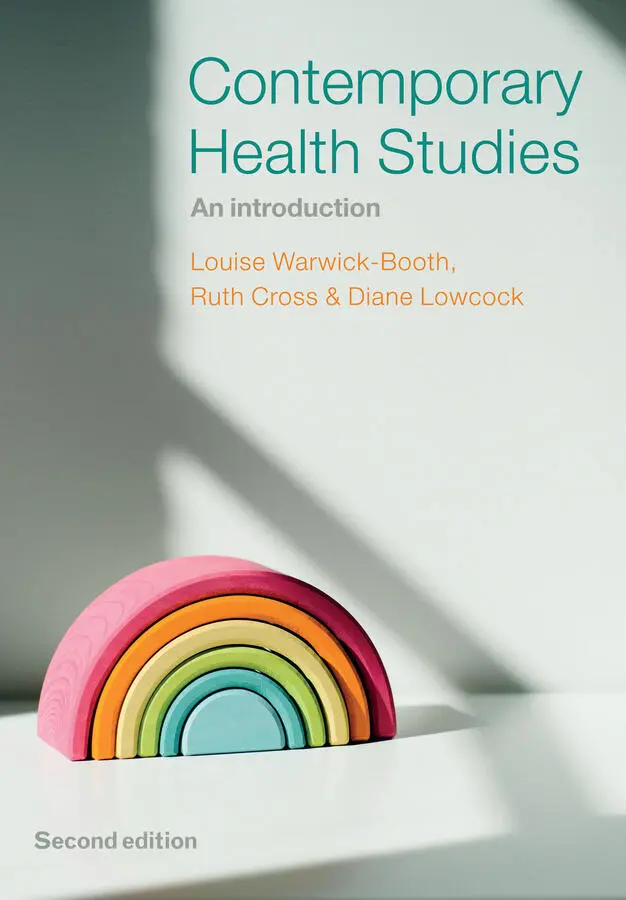
- Название:Contemporary Health Studies
- Автор:
- Жанр:
- Год:неизвестен
- ISBN:нет данных
- Рейтинг книги:3 / 5. Голосов: 1
-
Избранное:Добавить в избранное
- Отзывы:
-
Ваша оценка:
Contemporary Health Studies: краткое содержание, описание и аннотация
Предлагаем к чтению аннотацию, описание, краткое содержание или предисловие (зависит от того, что написал сам автор книги «Contemporary Health Studies»). Если вы не нашли необходимую информацию о книге — напишите в комментариях, мы постараемся отыскать её.
Contemporary Health Studies
Contemporary Health Studies — читать онлайн ознакомительный отрывок
Ниже представлен текст книги, разбитый по страницам. Система сохранения места последней прочитанной страницы, позволяет с удобством читать онлайн бесплатно книгу «Contemporary Health Studies», без необходимости каждый раз заново искать на чём Вы остановились. Поставьте закладку, и сможете в любой момент перейти на страницу, на которой закончили чтение.
Интервал:
Закладка:
Case study 2
Global antibiotic resistance
The WHO (2019a) lists antimicrobial resistance as one of the top ten global health threats. This is the ability of bacteria, bugs and parasites to resist antibiotic medicines, commonly used to treat infections such as pneumonia and tuberculosis. Furthermore, surgical procedures will be compromised without the availability of effective antibiotics. Since 1930 these drugs have transformed how medicine treats diseases, protected the sick (e.g. cancer patients with weakened immune systems from chemotherapy) and supported global food production (Kirchhelle and Roberts, 2019). However, economic interests (profit-making) have meant that the development of new antibiotics has failed because investment has focused upon more lucrative options (medication that needs to be taken for longer). However, bacteria have become more resistant to existing drugs, compounded by the overuse of antimicrobials in people, but also in animals, especially those used for food production, as well as in the environment (WHO, 2019f).
Some governments have created action plans which include public-health awareness campaigns, attempting to educate communities about correct usage. Haenssgen (2019) suggests that such approaches assume that knowledge will lead to behaviour change but that the effectiveness of health education needs evaluation. Mohammed and Millard (2019) highlight an alternative approach where scientists are trying to use viruses as an alternative to antibiotics in the treatment of bacterial infections. WHO has also called upon Big Pharma to invest more money in the development of new antibiotics. There has been one positive development of a drug called pretomanid, now approved for use with patients who have drug resistant TB, developed by a not-for-profit organization called TB Alliance (Boseley, 2020a). Kirchhelle and Roberts (2019) point out that the market is broken, as even the injection of £520 million of public money since 2016 has not stopped industry departments responsible for antibiotic development from shrinking. Instead they call for a publicly owned approach, which will be better able to respond to need rather than prioritizing commercial interests.
Summary
Identifying substantive health threats is constructed by definitions of health, considerations of determinants of health, magnitude, seriousness as well as media and moral panics about health threats.
Epidemiological transition has changed global patterns from infectious diseases at the start of the twentieth century to chronic diseases in the twenty-first century and this pattern is predicted to continue.
Health threats in the twenty-first century will require global action around the major determinants of health such as poverty, inequity, climate change and population growth.
Questions
1 This chapter shows that risk is a complex and multi-faceted concept. Can you identify all of the factors that influence the construction of health-related risk perceptions?
2 Identify one area of risk to public health, for example, a newly emerging infectious disease. Now think about all of the consequences of risk perceptions in relation to this. Reflect upon the likely political, economic and health consequences of risk perceptions in relation to this area.
3 Consider the role of science in relation to the conceptualization and management of health risks. How important is science within this process?
Further reading
World Health Organization (2020) web-pages specifically. https://www.who.int/news-room/feature-stories/ten-threats-to-global-health-in-2019This is an excellent summary of the complex global health risks presented in a structured easy-to-read format, a top-ten list. The web-pages highlight the major health risks and provide some detail about each of them.
Roig, B., Weiss, K. and Thireau, V., eds (2018) Management of Emerging Public Health Issues and Risks . London, Academic Press.This book discusses the emerging public-health risks from the technological, environmental, health and energy sectors, as well as their social impacts, exploring how increased scientific knowledge determines understanding. The book also offers readers a range of case studies from across the world.
Rushton, S. (2019) Security and Public Health . Cambridge, Polity.This book explores the ways in which governments manage threats of infectious disease and try to protect the public from pandemics. The politics and security of pandemics in the contemporary world is explored, looking at the impact on civil liberties, treatment rather than prevention and the diseases that gain attention.
See also the website accompanying this book at www.politybooks.com/chs
Конец ознакомительного фрагмента.
Текст предоставлен ООО «ЛитРес».
Прочитайте эту книгу целиком, купив полную легальную версию на ЛитРес.
Безопасно оплатить книгу можно банковской картой Visa, MasterCard, Maestro, со счета мобильного телефона, с платежного терминала, в салоне МТС или Связной, через PayPal, WebMoney, Яндекс.Деньги, QIWI Кошелек, бонусными картами или другим удобным Вам способом.
Интервал:
Закладка:
Похожие книги на «Contemporary Health Studies»
Представляем Вашему вниманию похожие книги на «Contemporary Health Studies» списком для выбора. Мы отобрали схожую по названию и смыслу литературу в надежде предоставить читателям больше вариантов отыскать новые, интересные, ещё непрочитанные произведения.










Обсуждение, отзывы о книге «Contemporary Health Studies» и просто собственные мнения читателей. Оставьте ваши комментарии, напишите, что Вы думаете о произведении, его смысле или главных героях. Укажите что конкретно понравилось, а что нет, и почему Вы так считаете.