John Ballou Newbrough - Oahspe
Здесь есть возможность читать онлайн «John Ballou Newbrough - Oahspe» — ознакомительный отрывок электронной книги совершенно бесплатно, а после прочтения отрывка купить полную версию. В некоторых случаях можно слушать аудио, скачать через торрент в формате fb2 и присутствует краткое содержание. Жанр: unrecognised, на английском языке. Описание произведения, (предисловие) а так же отзывы посетителей доступны на портале библиотеки ЛибКат.
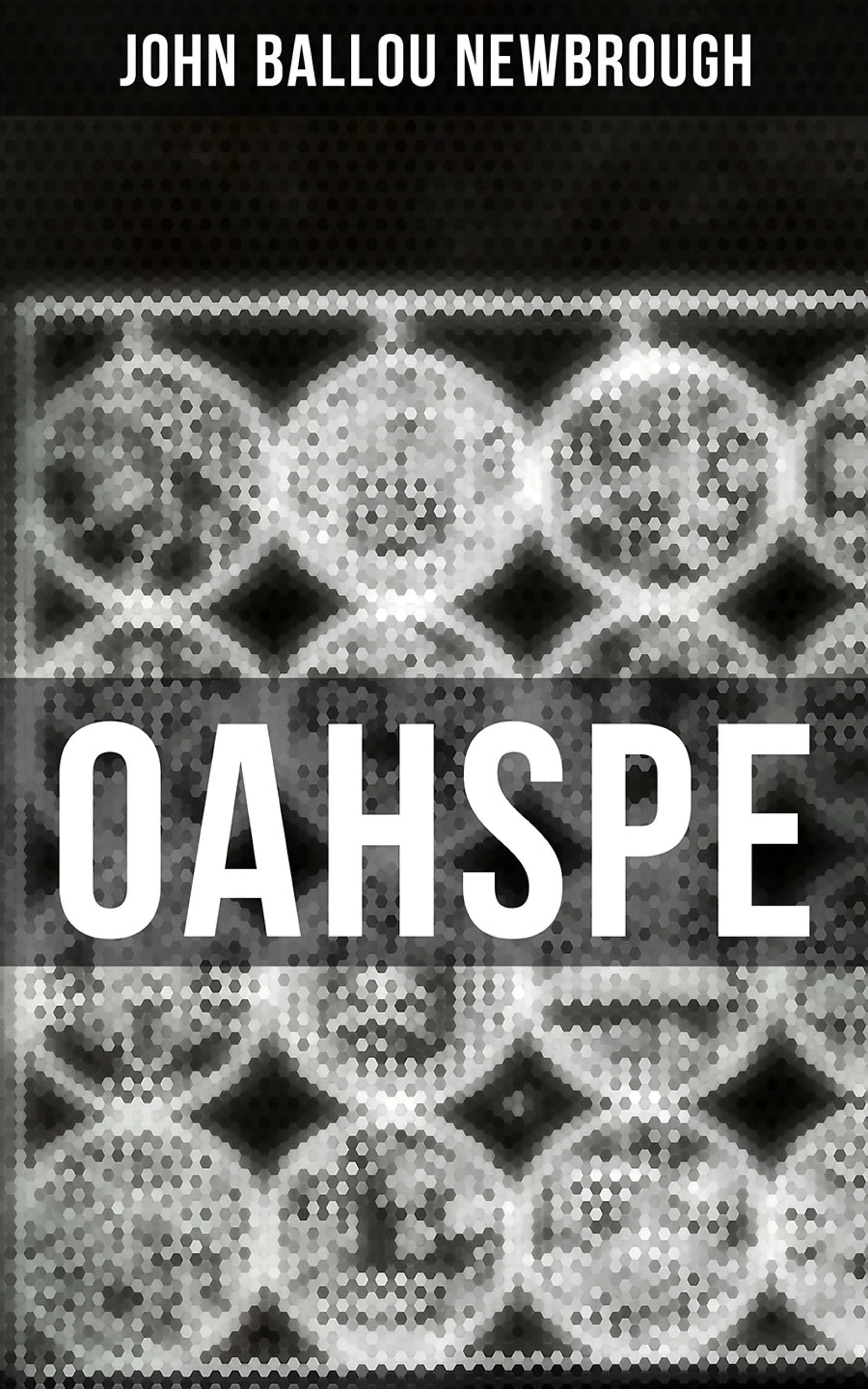
- Название:Oahspe
- Автор:
- Жанр:
- Год:неизвестен
- ISBN:нет данных
- Рейтинг книги:3 / 5. Голосов: 1
-
Избранное:Добавить в избранное
- Отзывы:
-
Ваша оценка:
Oahspe: краткое содержание, описание и аннотация
Предлагаем к чтению аннотацию, описание, краткое содержание или предисловие (зависит от того, что написал сам автор книги «Oahspe»). Если вы не нашли необходимую информацию о книге — напишите в комментариях, мы постараемся отыскать её.
Oahspe — читать онлайн ознакомительный отрывок
Ниже представлен текст книги, разбитый по страницам. Система сохранения места последней прочитанной страницы, позволяет с удобством читать онлайн бесплатно книгу «Oahspe», без необходимости каждый раз заново искать на чём Вы остановились. Поставьте закладку, и сможете в любой момент перейти на страницу, на которой закончили чтение.
Интервал:
Закладка:
6. The I'hins feared for the judgments of God, and they called out to him for a remedy.
7. But God answered them, saying: Because of the enmity betwixt these two races, behold, they will not marry. Suffer ye the I'huans to do in their own way. For of what profit is it to bring forth heirs that cannot inherit my exalted heavens? Because the tribes of darkness cannot be made to understand, behold their souls go out of being as a lamp that is burned out.
8. So it came to pass that the I'huans made eunuchs of the tribes of darkness; of both sexes did they thus; and they made slaves of them also.
9. The Lord said: The I'huans shall have laws of their own. Let my chosen go unto them and make laws for them, saying: Thus saith the Lord.
10. The I'huans shall be guardians over the I'hins, the sacred people; and through the I'hins will I bless the I'huans, and make them mighty.
11. Since it is not lawful for the I'hins to kill beast, nor bird, nor serpent, behold, their cities and mounds are invaded by all manner of evil beasts and serpents.
12. The I'huans shall slay all such evil beasts and serpents.
13. And they shall guard around about the cities and mounds, where abide my chosen.
14. Servants shall the ground people and the Yaks be unto the I'huan. And the latter shall cast their servants, that they shall not multiply on the earth.
15. Hear ye then, the law of God betwixt the I'huans, one with another.
16. Whoso doth an injury to his neighbor or to a stranger, the same shall be done unto him.
17. Whoso taketh from another, an equivalent shall he render two fold.
18. Whoso killeth a man, or woman, or child, shall be put to death.
19. Whoso marrieth his sister or mother, or his half-sister or half-mother, they shall all suffer death together.
20. Whoso oppresseth another shall be cast out of the tribe of his people.
21. He that blasphemeth the Great Spirit shall be put to death.
22. He that respecteth not the time of woman shall be put to death.
23. The fields have I given to the I'hins, but the forests and wilderness have I, the Lord, given unto the I'huans.
24. And it was so; the I'huans began to be carnivorous. But both the I'hins and the tribes of darkness ate neither flesh nor fish.
Chapter III
Table of Contents
1. IN all the great divisions of the earth these things were; nor had one division of the earth much preference over another. But in the regions of summer weather, where the earth brought forth abundantly, the I'huans and ground people dwelt most numerously.
2. Though the I'hins dwelt in both the warm and the cold countries. For they clothed themselves; and built habitations. But the I'huans wore only a covering about the loins; neither built they any habitations. And they roved about far and near.
3. But the ground people traveled not; and they mingled with their own kin, bringing forth heirs of darkness.
4. The I'huans learned the laws and obeyed them; and they looked upon the I'hins as a sacred people, doing them no harm.
5. And it came to pass that the I'huans were a very prolific people; four times more prolific than the I'hins, or the ground people.
6. And they spread rapidly over the earth, in all the regions where the earth brought forth fruit and roots, and flesh, and fish, that were good to eat.
7. For two thousand years the I'huans prospered; and they became mighty in many countries.
8. But in course of time they began to war upon one another.
9. And for hundreds of years they descended lower and lower in darkness.
10. And they obeyed no longer the commandments of God. But they mingled with the ground people, bringing forth heirs of darkness.
END OF THE LORDS' SECOND BOOK.
Book of Apollo, Son of Jehovih
Table of Contents
BEING THE HEAVENLY ADMINISTRATION OF APOLLO, AN ETHEREAN GOD.
Chapter I
Table of Contents
1. APOLLO, Son of Jehovih, resident of Pti'mus, in etherea, and God of Suf'ad and Don'ga and Tah, in the South Province of Buru, Orian Chief, controller of vortices, said:
2. I, Apollo, once a mortal, proclaim: First, wisdom, peace and patience unto all men, and comprehensive judgment whereof I speak; second, to perceive the reason of things, as to what seemeth to have been, and of what cometh after.
3. For the Great Spirit is all Harmony and Perfection, abounding in time and in worlds to accomplish all possible imaginings; wherefore, be ye magnified in conception, not judging by the little understanding of mortals.
4. So that he that asserteth harmony being more to the order of Jehovih than that which is ill-formed or out of time, hath little reason to prove his assertion before a wise man. As one may assert that ripe fruit is nearer perfection than that which is green, which assertion is self-evident without proof, so, in the understanding of Gods in the management of worlds, are things past and present, not things past and present in fact, but more like the immature and the mature.
5. Since, then, man perceiveth that words, at best, are but slow and coarse representations of the soul's conception of things, how much farther distant lieth a God's wisdom beyond the reach of mortal understanding! Remember, O man, that couldst thou in a moment of time recollect all thou hadst ever learned thou wouldst be wise indeed. Wert thou in tune with thyself, such would be thy wisdom. To advance in such direction, whereby man becometh attuned, first with himself, then with his immediate surroundings, then with the magnitude of worlds, and then with Jehovih, so that he moveth, acteth, and comprehendeth harmoniously, is to become one with the Father.
6. Which condition awaiteth all men, and is called in high heaven, Nirvana, because, to him that hath attained it, things past and things to come are as an open book. He can look back to his own beginning in the world, and even beyond, and whithersoever he directeth his eye, he can see and hear even as if the matter now were.
7. Marvel not, O man, that the Gods reveal the words and signs of things long since perished corporeally; the proofs he could give, thou couldst not understand, for the basis of spiritual entity lieth not within the measure of the corporeal senses. Nevertheless, Jehovih hath given thee comparisons; as a portrait of a man showeth his looks even after his corporeal body hath perished; and yet, the picture is but a representative. To the spirit, a corporeal body is but a representative, being a manifested production of a spirit.
8. As out of corporeal things a new thing is produced and born into the world, so out of Jehovih is born the spirit of man; neither leadeth the corporeal the spirit, nor the spirit the corporeal; but Jehovih doeth all. Think not, then, that when the corporeal body is dead and moldereth back to original elements, that in like manner the spirit of man will resolve itself back into Jehovih, for spirit is not bound by similar rules. As the corporeal body groweth by aggregating to itself, so not so groweth the spirit of man, but by the opposite, which is giving away.
9. Remember, O man, the more thou puttest forth thy soul to give light and wisdom to others, the more thou receivest; wherein thou shalt comprehend in the reason of things everlasting life to the spirit of man. So also, to him that desireth to comprehend Jehovih, let him describe the All Highest constantly. To him that desireth to comprehend the etherean worlds, the homes of spirits long risen in Nirvana, let him describe them. Fear not, O man, that thou shalt err; all the imagery thou canst devise is surpassed millions of times in the magnitude of the Father's kingdoms. Till thou canst shoot an arrow without striking the air, fear not for thy weak thoughts shooting amiss in Jehovih's worlds.
Читать дальшеИнтервал:
Закладка:
Похожие книги на «Oahspe»
Представляем Вашему вниманию похожие книги на «Oahspe» списком для выбора. Мы отобрали схожую по названию и смыслу литературу в надежде предоставить читателям больше вариантов отыскать новые, интересные, ещё непрочитанные произведения.







Обсуждение, отзывы о книге «Oahspe» и просто собственные мнения читателей. Оставьте ваши комментарии, напишите, что Вы думаете о произведении, его смысле или главных героях. Укажите что конкретно понравилось, а что нет, и почему Вы так считаете.